
Ackee
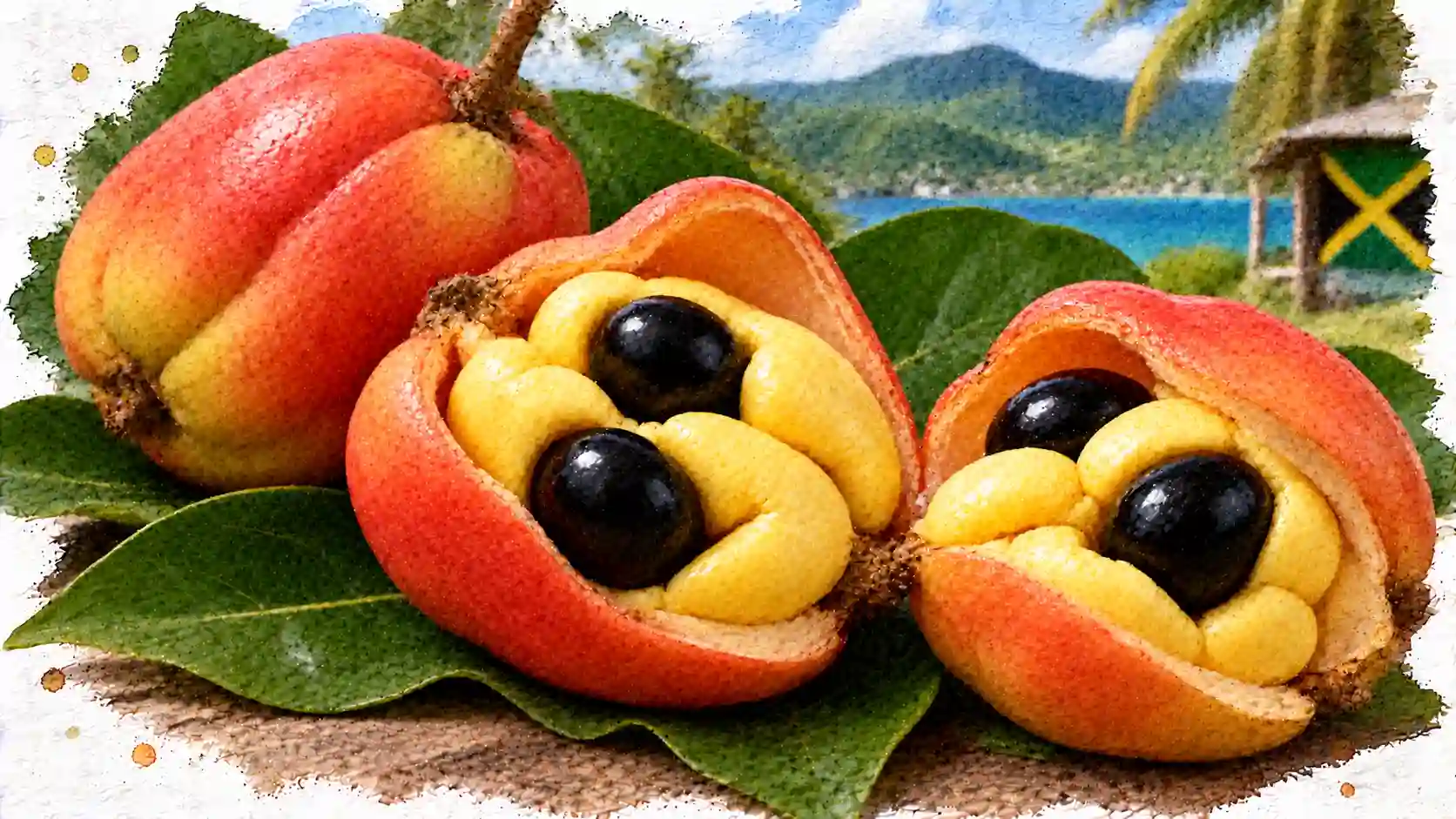
Ackee is a striking tropical fruit with bright red or yellow pods that split open when naturally ripe, revealing pale yellow flesh surrounding glossy black seeds. Best known as Jamaica’s national fruit and a central ingredient in the beloved dish ackee and saltfish, it has a delicate texture and mild, buttery flavor that pairs well with onions, peppers, and salted cod. But ackee has an important safety rule: only the fully ripened and properly processed edible arils are safe to eat. Unripe fruit, along with its seeds and rind, can contain dangerous levels of natural toxins.
What Is Ackee?
Ackee is the fruit of Blighia sapida, a tropical tree in the soapberry family, Sapindaceae. Although it is strongly associated with Jamaica, the species is native to tropical West Africa and was introduced to the Caribbean during the colonial era.
The fruit develops in a thick pod that changes color as it matures. When fully ripe, the pod naturally splits open into sections, exposing pale yellow or cream-colored arils. Each aril surrounds a shiny black seed. The arils are the edible part of the fruit when properly ripened and processed. The seeds and rind must never be eaten.
Ackee’s texture is soft, rich, and slightly creamy. Its flavor is often described as mild and buttery, making it a natural partner for salty, savory ingredients. When cooked, the arils can resemble scrambled eggs in appearance, although their taste is distinct.
Ripeness is not just a matter of flavor with ackee. The fruit contains hypoglycin A, a natural toxin that can cause severe illness by dangerously lowering blood sugar. As the fruit ripens naturally and the pod opens fully, toxin levels in the edible arils fall substantially. Cooking does not make unripe ackee safe to eat.
Quick Facts
Quick Facts
- Food name: Ackee
- Region of origin: Tropical West Africa
- Strongest culinary association: Jamaica
- Scientific name: Blighia sapida
- Plant family: Sapindaceae
- Appearance: Red or yellow pod that splits open to reveal pale arils and black seeds
- Flavor: Mild, buttery, and savory
- Texture: Soft and delicate when cooked
- Signature dish: Ackee and saltfish
- Safety note: Only fully ripened, properly processed arils are safe to eat
Common Ingredients
Ackee is most famously prepared as part of a savory Jamaican meal. Its delicate flavor pairs with ingredients that add saltiness, aroma, and a little heat. Common ingredients include:
- Properly prepared ackee arils: The soft, pale-yellow edible portion of the fully ripe fruit.
- Saltfish: Usually salted cod, soaked and prepared before cooking.
- Onion: Adds sweetness and a savory base.
- Sweet peppers: Often used for color and mild, fresh flavor.
- Scotch bonnet pepper: Adds the distinctive heat used in many Jamaican dishes.
- Tomato: Included in some versions for moisture and acidity.
- Thyme: Provides an aromatic herbal note.
- Cooking oil: Helps sauté the seasonings and combine the ingredients.
- Black pepper and other seasonings: Round out the dish according to taste.
Recipes vary from household to household. Some cooks keep the seasoning simple so the ackee’s soft texture stands out, while others add more peppers, herbs, or vegetables.
How Ackee Is Prepared
Ackee must be harvested and handled with particular care. The fruit should be allowed to ripen naturally until its pod opens fully on its own. Unripe fruit must not be forced open or cooked in an attempt to make it safe, because the toxin hypoglycin A is heat-stable.
During proper processing, the edible arils are separated from the rind and black seeds, and the surrounding membrane and attached red tissue are removed as required. Commercially prepared ackee is commonly sold canned or frozen. These products offer a convenient option, but processing quality matters: choose products from reputable manufacturers that follow appropriate food safety controls.
In Jamaica, ackee is most often associated with ackee and saltfish. The saltfish is prepared separately, then cooked with onion, peppers, thyme, and other seasonings. Properly prepared ackee is added gently because the arils are delicate and can break apart if stirred too vigorously.
The finished dish is commonly served with traditional accompaniments such as fried dumplings, boiled green bananas, breadfruit, or other starchy foods. Ackee can also appear in other savory preparations, but ackee and saltfish remains its most famous expression.
Because the toxin can cause serious poisoning, fresh ackee should not be prepared by inexperienced foragers or cooks. Never eat the seeds or rind, and never eat fruit that has not naturally opened fully. Cooking cannot make unripe ackee safe. When using packaged ackee, follow the product instructions and choose a trusted, properly processed source.
History & Origins
Ackee originated in tropical West Africa and later became established in Jamaica and other parts of the Caribbean. It was introduced to Jamaica during the colonial era, probably through the forced migration of enslaved West Africans. By the late eighteenth century, the tree was established on the island and gradually became part of Jamaican food culture.
Over generations, ackee developed an especially strong connection with Jamaica’s national cuisine. Its mild, buttery arils complement salted cod, an ingredient shaped by long-standing trade and preservation traditions. Together, they became the defining components of ackee and saltfish, a dish commonly served at breakfast and enjoyed at other times of day.
Ackee is recognized as Jamaica’s national fruit. Its importance extends beyond a single recipe: the tree grows in the island’s tropical climate, and the fruit appears in markets, home gardens, and food traditions across the country.
The fruit’s history also reflects the movement of plants and foods between continents. Its African origins and Jamaican cultural significance are both essential to understanding ackee, not simply as an unusual tropical fruit, but as a food with a complex history.
Varieties & Differences
Ackee is generally discussed as one species, Blighia sapida, though cultivated trees can produce arils that differ in color and firmness. In Jamaica, two familiar culinary categories describe differences in the texture and appearance of the edible arils.
- Butter ackee: Typically has softer, more yellow arils that can break apart easily during cooking.
- Cheese ackee: Usually has firmer, cream-colored arils that tend to hold their shape better in the pan.
- Fresh ackee: Requires full natural ripening and careful processing before the edible arils can be used safely.
- Canned ackee: A widely available option that has been processed for convenient cooking.
- Frozen ackee: Another processed option, often used in homes and restaurants where fresh fruit is unavailable.
These descriptions mainly concern culinary texture and appearance. They do not replace the essential safety rule: any ackee intended for food must be fully ripened and properly processed, regardless of its type or color.
How Ackee Is Enjoyed
Ackee and saltfish is the dish most closely associated with the fruit and is recognized as Jamaica’s national dish. The combination of soft ackee, savory salted cod, peppers, onions, and herbs creates a balanced meal with contrasting textures and flavors. It is frequently served with dumplings, boiled provisions, or other filling sides.
Outside Jamaica, ackee is available in Caribbean grocery stores and specialty food shops, often in cans. It is also used by Jamaican communities abroad to prepare familiar home-style meals. Because the fresh fruit requires careful handling, properly processed products have helped make the dish more accessible internationally.
Ackee’s appearance can surprise people who have never eaten it. The pale arils resemble soft scrambled eggs once cooked, but their flavor is milder and more buttery. They readily absorb the seasonings around them, making the other ingredients especially important to the finished dish.
Although ackee is botanically a fruit, it is usually treated as a savory ingredient rather than eaten like a sweet snack. Its culinary appeal comes from its texture and its ability to complement strong, salty seasonings, not from sweetness.
Safety remains central to enjoying ackee. Hypoglycin A in unripe fruit can cause severe hypoglycemia and potentially fatal poisoning. Cooking alone does not remove the danger, so only fully ripened and properly processed arils should be eaten. The rind and seeds are never edible.
Did You Know?
Ackee is Jamaica’s national fruit, but the species originally comes from West Africa. Its signature dish, ackee and saltfish, combines the fruit’s soft, buttery arils with salted cod and seasonings. The fruit must ripen naturally and split fully open before its edible portions can be safely processed. Cooking unripe ackee does not make it safe.