
Akutaq
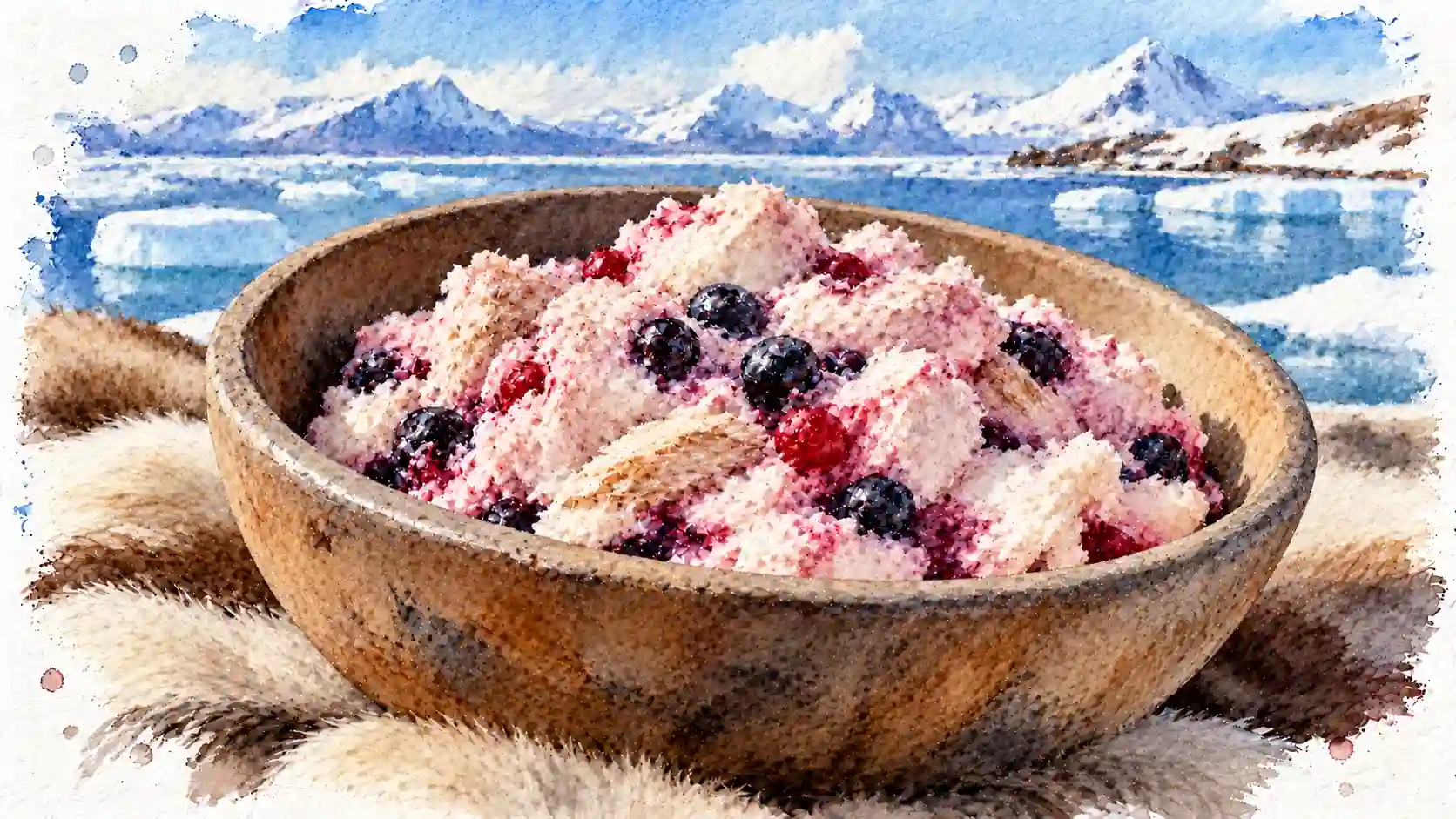
Akutaq is a traditional Alaska Native food made by whipping animal fat or oil into a lighter mixture and combining it with berries, fish, meat, or other local ingredients. Sometimes called “Eskimo ice cream” by outsiders, it differs from conventional dairy ice cream because traditional versions get their richness from animal fat and oil rather than cream. Sweet versions often feature colorful wild berries, while other recipes include fish or meat. Associated with Yup’ik, Iñupiaq, and other Alaska Native food traditions, akutaq reflects generations of knowledge about local ingredients, seasonal harvesting, and preparing nourishing food from the land and sea.
What Is Akutaq?
Akutaq, also spelled akutuq, agutuk, or agutaq in different contexts, is a traditional food associated with Alaska Native communities, including Yup’ik, Iñupiaq, and Athabascan peoples. The word is commonly associated with mixing or stirring. Names and recipes vary by language, region, and family, so no single version represents every community.
Traditional akutaq often begins with rendered animal fat, such as caribou or reindeer tallow, and may include seal oil or other locally available fats. The base is worked or whipped until lighter, then combined with ingredients such as berries, fish, fish eggs, or meat. Some versions are sweet, while others are savory or combine both kinds of flavor.
Wild berries such as salmonberries, blueberries, crowberries, and lowbush cranberries are popular additions. Folded into the fat base, they add color and tartness to the rich mixture. Some recipes are chilled or frozen, creating a soft, airy texture that helps explain the comparison to ice cream.
Modern recipes may use vegetable shortening or other widely available ingredients instead of traditional animal fats. Sugar and other additions may also appear in contemporary versions. These adaptations are part of the food's continuing evolution, although their flavor, texture, and nutritional composition can differ from preparations made with traditional ingredients.
Quick Facts
- Food name: Akutaq
- Other spellings: Akutuq, agutuk, agutaq
- Region: Alaska and related Arctic food traditions
- Food type: Traditional whipped food, sweet or savory
- Traditional base: Rendered animal fat, sometimes combined with seal oil
- Common additions: Wild berries, fish, fish eggs, or meat
- Flavor: Rich and fatty, with sweet, tart, or savory notes depending on the recipe
- Texture: Whipped and airy, sometimes served chilled or frozen
- Cultural role: Food for sharing, travel, gatherings, and celebrations
Common Ingredients
Akutaq recipes reflect the foods available in a particular community and the preferences of the people preparing it. Traditional ingredients may come from hunting, fishing, and berry gathering, while contemporary versions can include store-bought products. The exact combination depends on the recipe.
- Rendered caribou or reindeer fat: A traditional base that contributes richness and helps give the mixture its structure.
- Seal oil: Used in some regional preparations for its distinctive flavor and contribution to the mixture's texture.
- Wild berries: Salmonberries, blueberries, crowberries, and lowbush cranberries are among the fruits used in different recipes.
- Fish: Cooked fish may be included in savory versions or mixed with berries.
- Fish eggs: Used in some local preparations, depending on regional and family traditions.
- Wild game: Cooked or dried meat from animals such as caribou may be incorporated into certain versions.
- Water or clean snow: Used in some recipes to help lighten or cool the mixture.
- Sugar: Included in some contemporary or sweeter berry versions, but not essential to every recipe.
- Vegetable shortening: A modern substitute for animal fat used in some household and community recipes.
These ingredients are not all combined in every version. A berry-based akutaq may be served as a sweet treat, while a preparation containing fish or meat can be a more substantial food. Some regional recipes also use other ingredients, including greens or potatoes.
How Akutaq Is Prepared
Traditional preparation begins with animal fat that has been rendered and prepared for food. Depending on the recipe, the fat is softened, finely worked, or whipped by hand until the mixture becomes lighter. Oil, water, or clean snow may be incorporated gradually as the ingredients are mixed.
Once the base is ready, berries or other ingredients are added. Berries may be folded in whole or lightly crushed, depending on the desired texture. In some recipes, cooked fish, fish eggs, or meat is mixed in as well. The result can range from a sweet, berry-filled mixture to a savory preparation built around animal foods.
Some versions are served cool or frozen, while others are eaten at a softer consistency. Historically, akutaq could provide concentrated energy in a portable food for travel and outdoor work. Combining fat with locally harvested ingredients made it useful in environments where people relied on seasonal hunting, fishing, and gathering.
Contemporary recipes sometimes use shortening, sugar, and other supermarket ingredients. These versions can be practical when traditional ingredients are unavailable, but they are not identical to preparations made with caribou fat or seal oil. Akutaq is best understood as a family of related foods rather than one fixed recipe.
Food safety matters when preparing akutaq, especially when it includes animal fat, fish, or meat. Use ingredients that have been handled and stored safely, cook fish or meat thoroughly before adding it, and refrigerate or freeze the finished mixture as appropriate. If using wild-harvested ingredients, follow reliable local food-safety guidance rather than assuming every traditional preparation method is interchangeable.
History & Origins
Akutaq developed within Alaska Native food traditions shaped by Arctic and subarctic environments. For generations, communities relied on hunting, fishing, and gathering to obtain food, making careful use of available resources. Animal fats, fish, game, and wild berries all played important roles in regional foodways.
Mixing these ingredients into a single preparation brought together foods that could provide substantial energy. Akutaq was used as more than a dessert: depending on the recipe, it could be eaten during travel, outdoor work, everyday meals, or communal gatherings. Ingredients reflected local environments, with some recipes featuring caribou fat and berries and others including marine-mammal oil, fish, or fish eggs.
Alaska is home to many distinct Indigenous peoples and language communities, and the names and preparation traditions associated with akutaq vary accordingly. Akutaq is a Yup’ik word, while akutuq is also used in Iñupiaq contexts. Athabascan communities have their own related traditions and terminology, including vanhgiq in Deg Xinag. These names reflect related food traditions, not a single recipe shared identically by every community.
Today, akutaq remains part of family gatherings, potlucks, and cultural celebrations. Store-bought ingredients have influenced some contemporary recipes, while many people continue to prepare it with traditional fats, locally gathered berries, and foods connected to their families and home regions.
Varieties & Differences
Akutaq is best understood as a group of related preparations rather than a dish with standardized varieties. Recipes differ in the type of fat used, whether the mixture contains berries or animal foods, and how it is served.
- Berry akutaq: A sweet version made with a fat base and wild berries such as blueberries, salmonberries, or crowberries.
- Fish akutaq: Includes cooked fish or, in some traditions, fish eggs. Some recipes combine fish with berries.
- Game-based versions: Incorporate meat alongside fat and other local ingredients, creating a more savory preparation.
- Traditional-fat preparations: Use rendered animal fat and, in some regions, oil from marine mammals.
- Modern adaptations: May substitute vegetable shortening and include sugar or other widely available ingredients.
The differences are cultural as well as culinary. Ingredients and techniques often reflect local availability and knowledge passed down through generations. A modern berry version made with shortening may resemble a dessert, while a traditional version containing fish or meat can serve as a substantial meal or travel food.
How Akutaq Is Enjoyed
Akutaq may be served at family gatherings, potlucks, celebrations, and other community occasions. Berry versions are often enjoyed as a sweet treat, especially when chilled. The richness of the whipped base contrasts with the fresh, tart flavor of the berries.
Other versions are not simply desserts. When fish, fish eggs, or meat are included, akutaq can function as a filling traditional food that brings together ingredients harvested from the surrounding environment. Calling it “ice cream” captures one possible texture, but does not fully describe its range of uses.
The dish can also carry meaning beyond its ingredients. Preparing akutaq helps pass on family knowledge about local foods, seasonal harvesting, and traditional techniques. In some Yup’ik traditions, a small portion may be offered to ancestors, reflecting cultural and spiritual relationships connected with food sharing. Practices differ among communities and families.
For people encountering akutaq for the first time, one surprising feature may be that traditional versions do not rely on dairy cream. Their texture comes from working animal fat or oil with other ingredients, while berries, fish, and other additions shape the flavor. The result is distinct from conventional dairy ice cream and closely tied to Alaska Native foodways.
Although recipes continue to change, akutaq remains connected to Alaska Native identity, family, and place. Its many variations show how traditional foods can adapt to changing circumstances while retaining important links to community knowledge and local ingredients.
Did You Know?
Akutaq is often called “Eskimo ice cream” by outsiders, but traditional versions do not depend on dairy cream. The mixture is made with animal fat or oil and can include wild berries, fish, fish eggs, or meat. Recipes vary by community and family, so two bowls of akutaq may look and taste quite different.