
Basashi
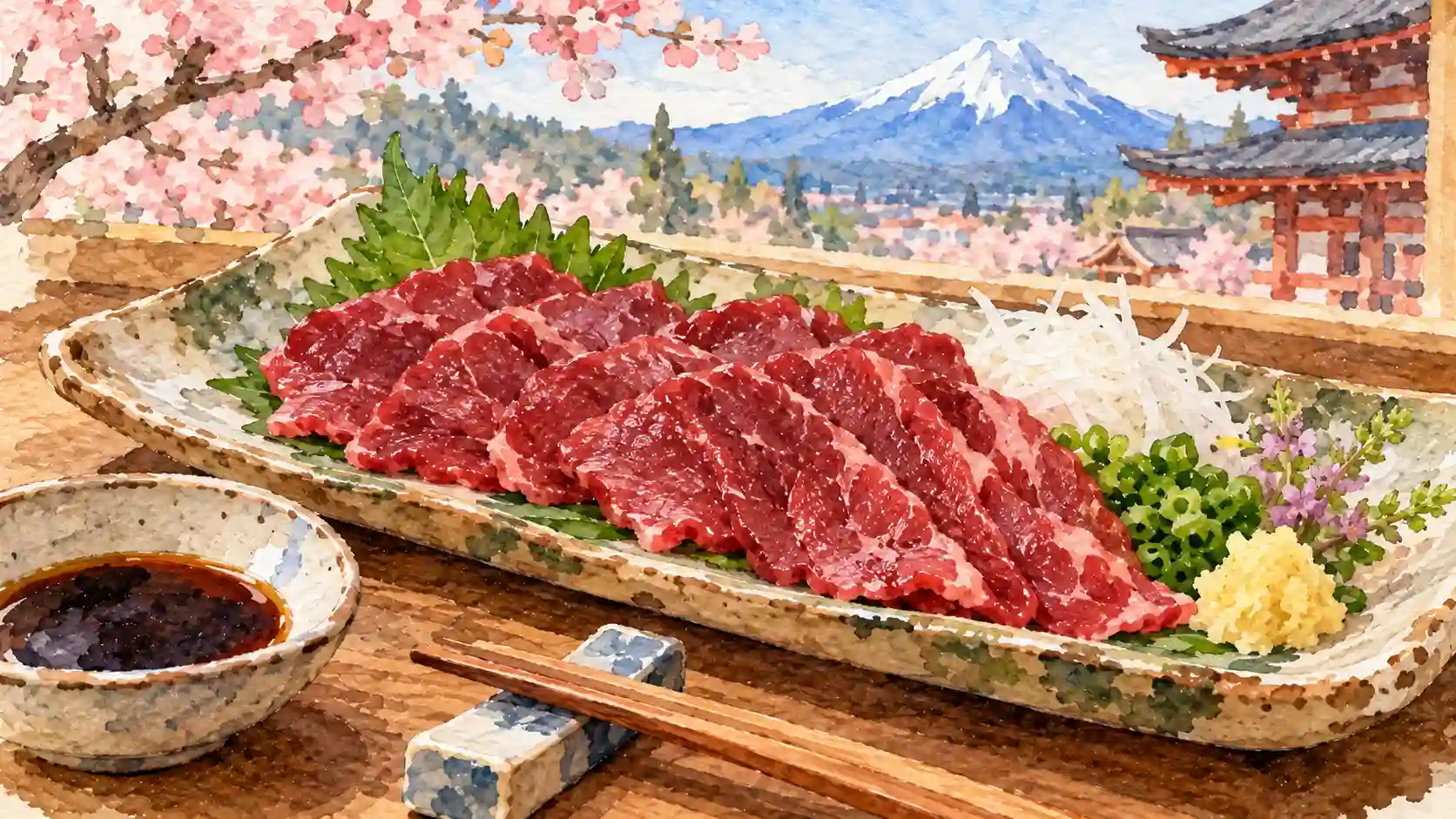
Japan’s basashi is a dish that puts the quality of its main ingredient front and center: thinly sliced raw horse meat, served much like fish sashimi. Often accompanied by grated ginger, garlic, sliced onions, and a sweet soy-based dipping sauce, it is especially associated with Kumamoto Prefecture on the island of Kyushu. The meat’s flavor and texture vary by cut, from lean red slices to richly marbled pieces and the pale fat beneath the mane. Basashi is a distinctive part of Japan’s regional food culture, although eating horse meat raw carries food-safety risks.
What Is Basashi?
Basashi (馬刺し) is Japanese horse meat served raw in thin slices. The name refers to horse meat prepared in a sashimi style. The slices are typically arranged neatly on a plate and eaten with seasonings that complement the meat’s mild, slightly sweet flavor.
Kumamoto is the region most strongly associated with basashi and is Japan’s leading horse-meat-producing prefecture. The dish is also enjoyed in places such as Yamanashi and Fukushima, where local customs influence the cuts and condiments served.
Basashi differs from fish sashimi in its texture and flavor, but the serving style is similar: the ingredient is sliced thinly, presented simply, and accompanied by carefully chosen seasonings. Some cuts are lean and fine-grained, while others have delicate marbling or layers of fat that create a softer, richer mouthfeel.
Quick Facts
- Origin and main association: Japan, especially Kumamoto Prefecture
- Japanese name: Basashi (馬刺し)
- Main ingredient: Horse meat
- Preparation: Thinly sliced and served raw
- Common condiments: Soy sauce, ginger, garlic, and green onions
- Texture: Varies from lean and firm to tender and marbled
- Related name: Sakura-niku, or “cherry-blossom meat”
- Common occasions: Celebrations, special meals, and restaurant dining
Common Ingredients
Basashi is usually served with a small selection of condiments rather than a complex marinade. The goal is to complement the meat without overwhelming its flavor.
- Horse meat: The central ingredient, served in thin slices. Depending on the cut, it may be lean and deep red or contain fine marbling.
- Soy sauce: A classic accompaniment. In Kumamoto, a sweeter style of soy sauce is often preferred.
- Fresh ginger: Grated ginger adds a bright, peppery note that balances the richness of the meat.
- Garlic: Often served grated or finely chopped, adding a stronger savory flavor.
- Green onions: Finely sliced green onions provide freshness and a mild sharpness.
- Sliced onion and shiso: These may be used to line or garnish the plate, adding crispness and herbal aroma.
The exact accompaniments vary by region. In Aizu, Fukushima, basashi is commonly eaten with spicy mustard miso, while Kumamoto-style servings are strongly associated with sweet soy sauce, ginger, garlic, and onion.
How Basashi Is Prepared
Basashi should be prepared from horse meat specifically processed and handled for raw consumption. In Japan, official guidance for meat intended to be eaten raw includes freezing treatments designed to control parasite risks. This does not make raw meat completely risk-free, so appropriate sourcing, hygiene, and temperature control remain essential.
The meat is sliced thinly across the grain, helping make each piece easier to chew. The slices are arranged on a chilled plate, often over onion or shiso leaves, and served with condiments on the side. In restaurants, the meat is commonly kept chilled until it is sliced for serving.
Different cuts create different eating experiences. Lean meat offers a clean, meaty flavor, while marbled portions can feel softer and richer. A fatty cut from beneath the mane, commonly called kōne or kone in Kumamoto, is especially distinctive for its pale appearance and delicate texture.
Because basashi is eaten raw, it carries a risk of foodborne illness even when the meat looks and smells fresh. Japan’s Ministry of Health warns that raw horse meat can cause food poisoning. Choose reputable establishments that follow the applicable handling and freezing requirements, and remember that freezing controls certain parasite risks but does not eliminate every possible pathogen.
History & Origins
Basashi has a long history in Japan, although the exact origin of the dish is uncertain. A well-known local legend links its popularity in Kumamoto to the warlord Katō Kiyomasa, who is said to have eaten horse meat when provisions ran short during military campaigns in Korea in the late sixteenth century. The story is widely repeated in regional accounts, but it is best treated as a traditional explanation rather than a fully verified account of the dish’s beginnings.
Horse meat was not an everyday food throughout Japan. In some areas, horses were valued primarily for transport, agriculture, and military use. Over time, however, horse meat became an established local food in regions where horses were raised or readily available.
Kumamoto developed a particularly strong reputation for basashi. Japan’s Ministry of Agriculture, Forestry and Fisheries identifies it as one of the prefecture’s best-known specialties. The meat is served raw as basashi and is also used in cooked preparations. Basashi is part of the culinary traditions of Yamanashi and Fukushima as well, where different local histories and condiments shape how it is enjoyed.
The meat is sometimes called sakura-niku, meaning “cherry-blossom meat,” because freshly cut horse meat can have a pinkish-red color reminiscent of sakura blossoms. The name adds a poetic touch to a dish closely associated with regional Japanese food culture.
Varieties & Differences
Basashi is not made from a single uniform cut. The part of the horse used influences the color, richness, and texture of each serving.
- Akami: Lean red meat with a clean flavor and relatively firm texture. It is a common choice for people trying basashi for the first time.
- Shimofuri: Finely marbled meat with thin streaks of fat that contribute tenderness and richness.
- Futaego: A cut from the belly area with alternating layers of meat and fat, giving it a distinctive layered texture.
- Kōne: Fatty tissue from beneath the mane, especially associated with Kumamoto. It is pale in color and has a distinctive, delicate texture.
- Sakura natto: A related dish in which finely chopped horse meat is combined with natto, often topped with a quail egg and green onions and seasoned with sweet soy sauce.
Regional differences are just as important as the cut. Kumamoto-style basashi commonly comes with sweet soy sauce, ginger, and garlic, while Aizu-style servings in Fukushima are known for spicy mustard miso. In Yamanashi, horse meat is also part of a wider local food tradition and may be served with ginger, green onions, and other condiments.
How Basashi Is Enjoyed
Basashi may be served as a starter, a shared plate, or part of a larger regional meal. In Kumamoto, it is available at specialist restaurants and is often associated with celebrations and special occasions, though it can also be found in everyday dining.
The usual approach is to take a slice with chopsticks, add a little ginger or garlic, and dip it into soy sauce. The amount of condiment is a matter of preference: a light touch allows the meat’s own flavor to come through, while stronger accompaniments add more heat and sharpness.
Basashi is also commonly paired with Japanese alcoholic drinks such as sake or shōchū. Its relatively restrained seasoning makes it suitable for a shared meal in which diners can compare different cuts and appreciate their contrasting textures.
For travelers, trying basashi in Kumamoto offers a way to explore a regional specialty in the place most closely associated with it. Understanding the local customs, choosing a reputable restaurant, and recognizing that the dish is raw all form part of approaching this food thoughtfully.
Did You Know?
Basashi is sometimes called sakura-niku, or “cherry-blossom meat.” The nickname refers to the pinkish color of freshly cut horse meat. The meat can darken as it oxidizes, so its appearance changes after slicing.
A Distinctive Part of Japanese Regional Cuisine
Basashi reflects the diversity of Japanese food culture, where regional ingredients and local customs shape dishes that may be unfamiliar elsewhere. Thinly sliced horse meat, carefully chosen condiments, and an emphasis on texture make it distinct from fish sashimi while sharing the same spirit of simple presentation. From Kumamoto’s sweet soy sauce and ginger to Fukushima’s mustard miso, basashi remains a notable expression of regional culinary tradition.