
Beondegi
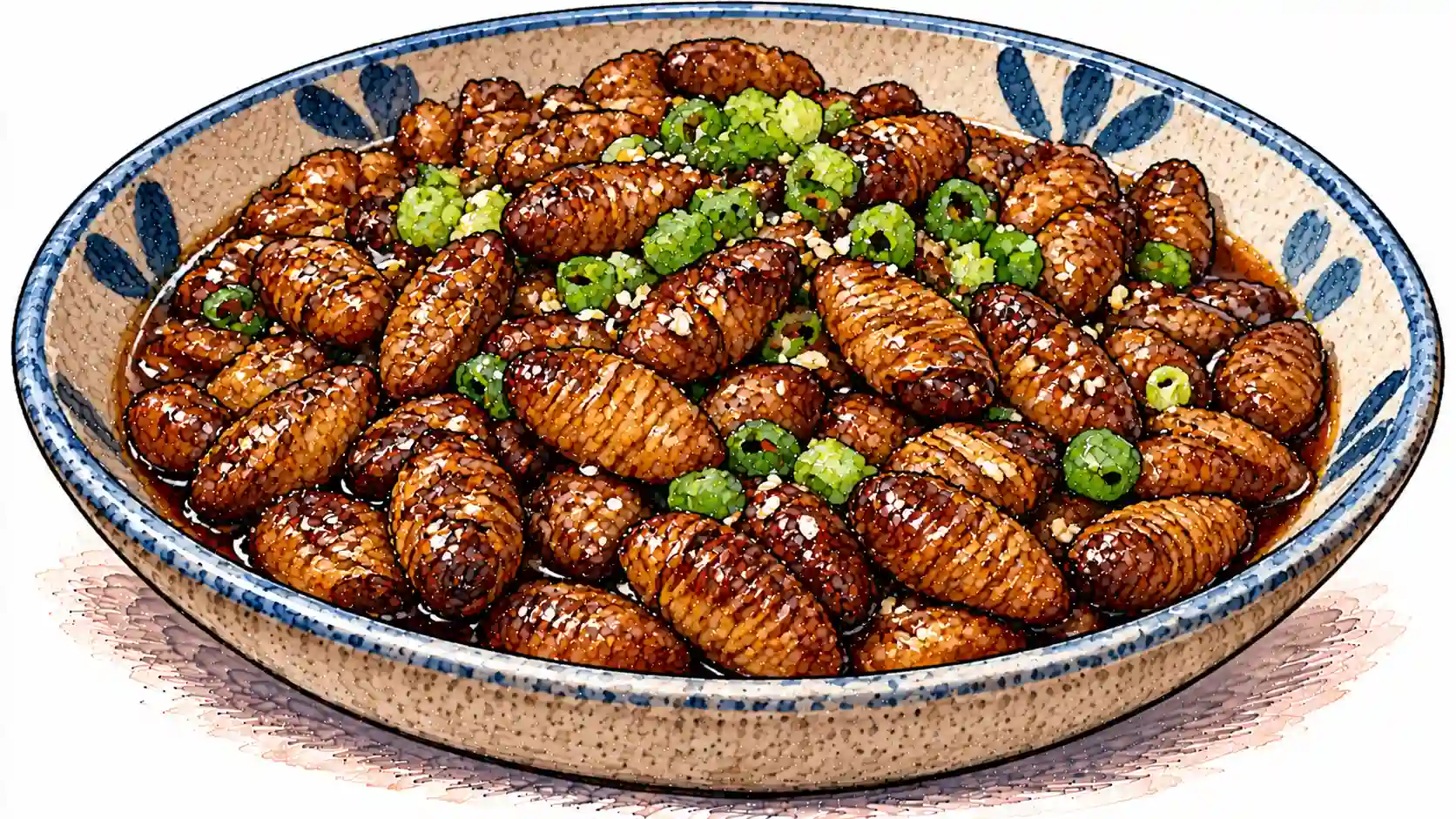
Savory, earthy, and instantly recognizable by its distinctive aroma, beondegi is one of South Korea’s best-known traditional insect foods. Made from the pupae of domesticated silkworms, these small morsels are typically boiled or steamed and may be seasoned before serving. Once closely associated with affordable food and the country’s silk industry, beondegi became a familiar street snack sold by vendors and later in cans at shops and supermarkets. Its soft, slightly chewy texture and strong flavor can surprise first-time tasters, but it remains a recognizable part of Korea’s regional and everyday food culture.
What Is Beondegi?
Beondegi is a Korean food made from the pupal stage of the domesticated silkworm moth, Bombyx mori. The pupae are a byproduct of sericulture, the raising of silkworms for silk production, and have also been used as food in Korea and other parts of Asia.
The pupae are usually boiled or steamed before serving, sometimes in a seasoned broth. Their texture is soft but can be slightly firm or chewy, while their flavor is often described as earthy, nutty, and savory. Beondegi is particularly associated with Korean street food, where vendors may serve it warm in small cups. Canned versions are also widely available, making the snack easy to store and prepare at home.
Quick Facts
- Food Category: Edible insects and traditional Korean snacks
- Origin: South Korea
- Main Ingredient: Domesticated silkworm pupae (Bombyx mori)
- Common Seasonings: Salt, soy sauce, garlic, and chili in some preparations
- Typical Flavor: Earthy, savory, and slightly nutty
- Preparation: Usually boiled or steamed, sometimes simmered with seasonings
- Common Uses: Street snacks, side dishes, soups, and canned foods
Common Ingredients
Traditional beondegi is relatively simple, allowing the flavor of the silkworm pupae to remain prominent. The ingredients depend on whether the pupae are served as a straightforward street snack, simmered in a seasoned broth, or sold in a prepared can.
- Silkworm Pupae: The main ingredient, obtained from the domesticated silkworm used in silk production.
- Water: Used to boil or simmer the pupae until cooked.
- Salt: Adds a simple savory note in some preparations.
- Soy Sauce: May be added to deepen the salty, savory flavor.
- Garlic: Used in some seasoned versions and soups to add aroma.
- Chili and Green Onions: Common additions to more heavily seasoned preparations, including beondegi soup.
Not every version includes all these ingredients. Street vendors and packaged products may use different seasonings, and some preparations rely mainly on the pupae and cooking liquid.
How Beondegi Is Prepared
Beondegi is made from silkworm pupae produced during silk farming. Silkworms spin cocoons around themselves before entering the pupal stage, and silk processing typically involves treating the cocoons with heat to loosen the silk filaments. The pupae can then be collected and used as a food ingredient rather than discarded.
The pupae are commonly boiled in water until cooked. Depending on the recipe, salt or other seasonings may be added during cooking. Some vendors serve them in a relatively simple form, while other preparations use a more strongly seasoned broth.
Beondegi can also be used in beondegi-tang, a soup that may include ingredients such as soy sauce, garlic, green onions, and chili. This is a more elaborate preparation than the simple warm snack commonly sold in small cups.
Commercial versions are packed into cans with liquid and sometimes seasonings. These products should be stored and prepared according to their labels; once opened, any leftovers should be handled and refrigerated as directed.
Food safety is particularly important for anyone with allergies. Silkworm pupae contain proteins that can trigger allergic reactions, including severe reactions in susceptible individuals. Some allergens may remain active after heating, so cooking should not be assumed to make the food safe for someone with a silkworm-pupa allergy.
History & Origins
Beondegi is closely connected to South Korea’s history of silk production. Silkworm farming supplied cocoons for the textile industry, while the pupae left over from silk processing provided another potential source of food.
Although silkworm pupae were eaten in some silk-producing communities earlier, beondegi became particularly familiar as an affordable food in the decades following the Korean War. As silk production expanded, the availability of pupae helped support their use as a snack at a time when inexpensive sources of nourishment were important to many households.
Street vendors helped establish beondegi as a recognizable part of everyday food culture. Its distinctive smell and appearance made it easy to recognize at markets and busy public areas, while its low cost helped make it accessible to a broad range of consumers.
As Korea’s economy and food industry developed, beondegi remained available through street stalls and packaged products. Canned versions made the snack easier to buy and store beyond traditional vending settings.
Today, beondegi remains a familiar symbol of traditional Korean street food, although it is not universally eaten and its popularity varies among individuals and generations. Its history illustrates how an agricultural byproduct became an established food through local resourcefulness, changing economic conditions, and everyday eating habits.
Varieties & Differences
Beondegi is generally made from the pupae of the same domesticated silkworm species, but preparation methods, seasonings, and presentation can produce noticeably different results. Common versions include:
- Simply Boiled Beondegi: Cooked in water and served with little additional seasoning, allowing the pupae’s natural flavor to stand out.
- Seasoned Beondegi: Cooked or simmered with salt, soy sauce, or other seasonings for a more pronounced savory flavor.
- Beondegi-Tang: A soup made with silkworm pupae and a seasoned broth that may include garlic, green onions, and chili.
- Street-Vendor Beondegi: Served warm in small cups, often with some cooking liquid.
- Canned Beondegi: Packaged with liquid and sometimes seasonings for convenient storage and preparation at home.
Texture and flavor vary with the cooking method and product. Some versions are tender and moist, while others have a firmer, chewier bite. Seasoned varieties and soup preparations can taste more aromatic or salty than simply boiled pupae.
How Beondegi Is Enjoyed
Beondegi is traditionally eaten as a snack, particularly at outdoor markets, fairs, and street-food stalls. Vendors commonly serve it warm in small cups, allowing customers to eat the pupae individually with toothpicks or small utensils.
Its rich, savory flavor makes it a distinctive alternative to more familiar street snacks. Some people enjoy its taste and texture, while others associate it with childhood memories of markets, public events, and inexpensive food sold by street vendors.
Beondegi-tang offers another way to enjoy the pupae, particularly in settings where the soup is served as part of a meal or alongside drinks. Canned beondegi is also available for home consumption and can be prepared according to the product instructions.
For visitors to South Korea, trying beondegi can offer an introduction to the country’s traditional use of silkworms as a food source. Its unusual appearance may initially draw attention, but its place in Korean cuisine is also a story of silk production, food resourcefulness, and changing eating habits.
Did You Know?
Beondegi turns a byproduct of silk production into a familiar Korean snack!
Silkworm pupae remain after the cocoons are processed for their silk fibers. Using the pupae as food gives this stage of silkworm production another purpose and helps explain the historical connection between beondegi and Korea’s silk industry.