
Black Sapote
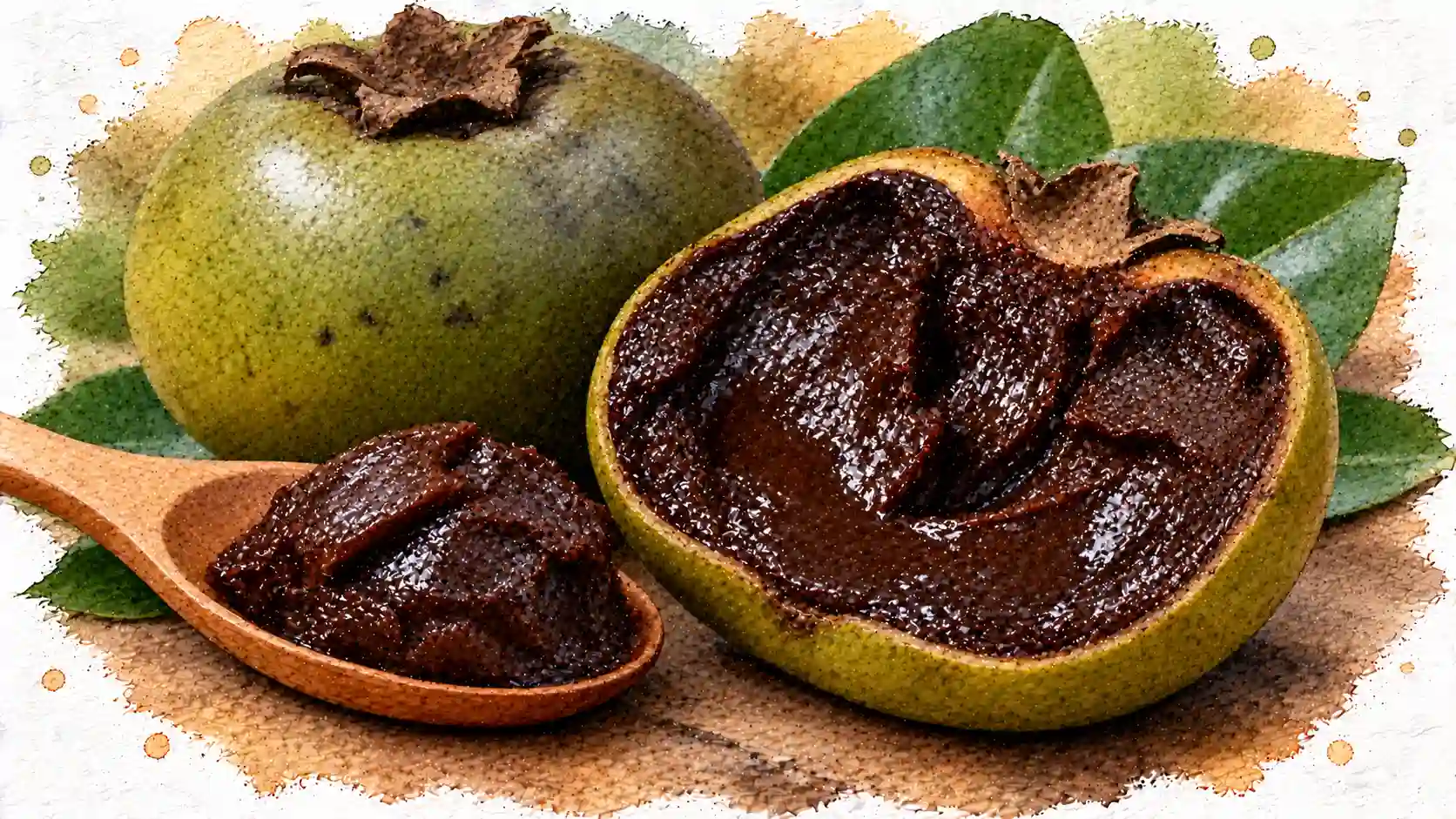
Black sapote is a tropical fruit that looks ordinary on the outside but becomes surprisingly dark and pudding-like when fully ripe. Native to Mexico and Central America, this unusual fruit is often nicknamed “chocolate pudding fruit” because its soft, brown-black flesh resembles a chocolate dessert. Despite the name, it does not taste exactly like chocolate. Its flavor is generally mild and sweet, with subtle fruity notes, making it a curious ingredient for smoothies, mousses, cakes, and other desserts.
What Is Black Sapote?
Black sapote is the fruit of Diospyros nigra, a tropical tree in the Ebenaceae family, which also includes persimmons and ebony trees. It is also known as sapote negro, black persimmon, or chocolate pudding fruit. The fruit typically has smooth green skin and a rounded shape, sometimes resembling a small tomato or persimmon. The scientific name Diospyros digyna is also widely encountered as a synonym.
The dramatic change happens inside as the fruit ripens. Immature black sapote is firm, and its flesh is pale, strongly astringent, and unpleasant to eat. When fully ripe, the flesh becomes very soft and changes to dark brown or nearly black. Its consistency can resemble thick pudding or custard, which inspired its popular nickname.
Although the comparison with chocolate pudding is appealing, the fruit does not naturally have the rich cocoa flavor of chocolate. Its taste is often subtle, and some people enjoy it plain while others prefer to combine it with ingredients such as vanilla, citrus, or a little sweetener.
Quick Facts
- Food name: Black sapote
- Region of origin: Mexico and Central America
- Scientific name: Diospyros nigra
- Plant family: Ebenaceae, the same family as persimmons
- Appearance: Green skin with soft, dark brown to nearly black flesh when ripe
- Flavor: Mild, sweet, and subtly fruity
- Texture: Smooth, soft, and pudding-like
- Common uses: Fresh fruit, smoothies, mousses, cakes, and chilled desserts
- Nickname: Chocolate pudding fruit
Common Ingredients
Black sapote can be eaten by itself once fully ripe, but its soft flesh also works well in sweet recipes. Ingredients commonly paired with it include:
- Ripe black sapote: The main ingredient, providing a soft texture and gentle sweetness.
- Lime or orange juice: Adds brightness and balances the fruit’s mild flavor.
- Vanilla: Brings a familiar dessert aroma.
- Honey or sugar: Used when additional sweetness is desired.
- Milk, cream, or yogurt: Creates a smoother base for shakes, puddings, and chilled desserts.
- Cocoa powder: Adds a more recognizable chocolate flavor when making chocolate-inspired desserts.
- Bananas and other tropical fruits: Pair well with the fruit in smoothies and fruit bowls.
- Flour, eggs, and baking ingredients: Used when black sapote pulp is incorporated into cakes, breads, and other baked goods.
Because black sapote is naturally soft, it can often be mashed or blended without much effort. The best combinations depend on how sweet and chocolate-like the finished dish is meant to be.
How Black Sapote Is Prepared
The most important step in preparing black sapote is allowing it to ripen completely. A mature fruit may still be firm when picked and need several days at room temperature to soften. The skin may remain green even when the fruit is ready, so softness is an important sign of ripeness.
Once ripe, the fruit can be cut open and the soft pulp scooped out. Remove the seeds, if present, and discard the skin. The flesh can then be eaten fresh, mashed into a dessert, or blended into a drink. A ripe black sapote should have very soft, dark flesh rather than a firm, pale interior.
For a simple pudding-style dessert, cooks mash the pulp until smooth and mix it with citrus juice or vanilla. Some recipes add cocoa powder to strengthen the chocolate impression, while others use milk, cream, or sweetener to create a richer texture. Black sapote pulp can also be blended with banana or other fruit for a smoothie.
The fruit is useful in baking, too. It can be incorporated into cakes, quick breads, mousses, and other recipes that benefit from a soft fruit purée. Its mild flavor means that other ingredients often play an important role in shaping the final taste.
Do not eat black sapote while it is still immature and firm. The flesh can be strongly astringent and unpleasant. Allow the fruit to soften fully before eating, and refrigerate ripe fruit if it will not be consumed promptly.
History & Origins
Black sapote has a long history in Mexico and Central America, where Indigenous communities consumed the fruit before it spread to other tropical regions. Historical accounts describe its later distribution to the Caribbean and parts of Asia through Spanish trade and plant distribution.
The tree grows best in warm tropical and subtropical climates. Although it is not as widely recognized internationally as mangoes or papayas, it has found a home in places with suitable growing conditions, including parts of Florida. Home gardeners and small-scale growers value it as an unusual fruit tree that can produce generous crops in favorable conditions.
The name “sapote” is used for several different tropical fruits, so the term can be confusing. Black sapote is not the same as mamey sapote or white sapote. Its botanical relationship to persimmons is a useful clue to its identity, while its dark, pudding-like ripe flesh sets it apart in the kitchen.
Varieties & Differences
Black sapote varies in size, shape, seed count, sweetness, and pulp quality. Some fruits are nearly round, while others are more flattened. Depending on the cultivar and growing conditions, a fruit may contain several seeds or very few.
- Seeded fruits: May contain several smooth, flattened, brown seeds embedded in the flesh. The seeds should be removed before eating the pulp.
- Low-seed selections: Some cultivated trees produce fruits with few seeds, making the pulp easier to use in recipes.
- Different ripeness stages: Firm, immature fruit has pale, astringent flesh, while fully ripe fruit has very soft, dark flesh.
- Fresh versus prepared pulp: Fresh fruit has a delicate flavor, while blended or sweetened preparations can taste more like a conventional dessert.
Unlike fruits that are judged mainly by a bright color change, black sapote is best assessed by its maturity and softness. The outside may remain green even when the flesh is ready, so appearance alone is not always enough.
How Black Sapote Is Enjoyed
In its native range and other tropical growing regions, black sapote is often eaten fresh once ripe. The pulp can be scooped directly from the fruit or used as an ingredient in drinks and desserts. Its soft texture makes it especially convenient for recipes that call for a purée.
Its chocolate-pudding nickname has helped introduce the fruit to curious eaters and adventurous home cooks. Black sapote mousse, cakes, smoothies, milkshakes, and frozen desserts are among the ways it is used. Some recipes combine the pulp with citrus to brighten its flavor, while others add cocoa to make the finished dish more chocolate-forward.
However, the fruit is not a perfect substitute for chocolate. Its appeal lies in the combination of dark color, creamy consistency, and mild sweetness rather than a strong cocoa taste. For people who enjoy discovering unusual tropical produce, that difference is part of the experience.
When buying black sapote, look for fruit from a reputable seller and allow it to soften fully before eating. Once ripe, it is delicate and should be handled carefully. Florida agricultural guidance recommends eating it fresh or refrigerating it for a short period after ripening.
Did You Know?
Black sapote belongs to the same botanical family as persimmons. Its green skin can make it look unripe even when the fruit is nearing maturity, so ripeness is judged largely by how much the fruit has softened. The famous “chocolate pudding” comparison refers mainly to its color and texture, not a strong natural chocolate flavor.