
Buddha’s Hand Citron
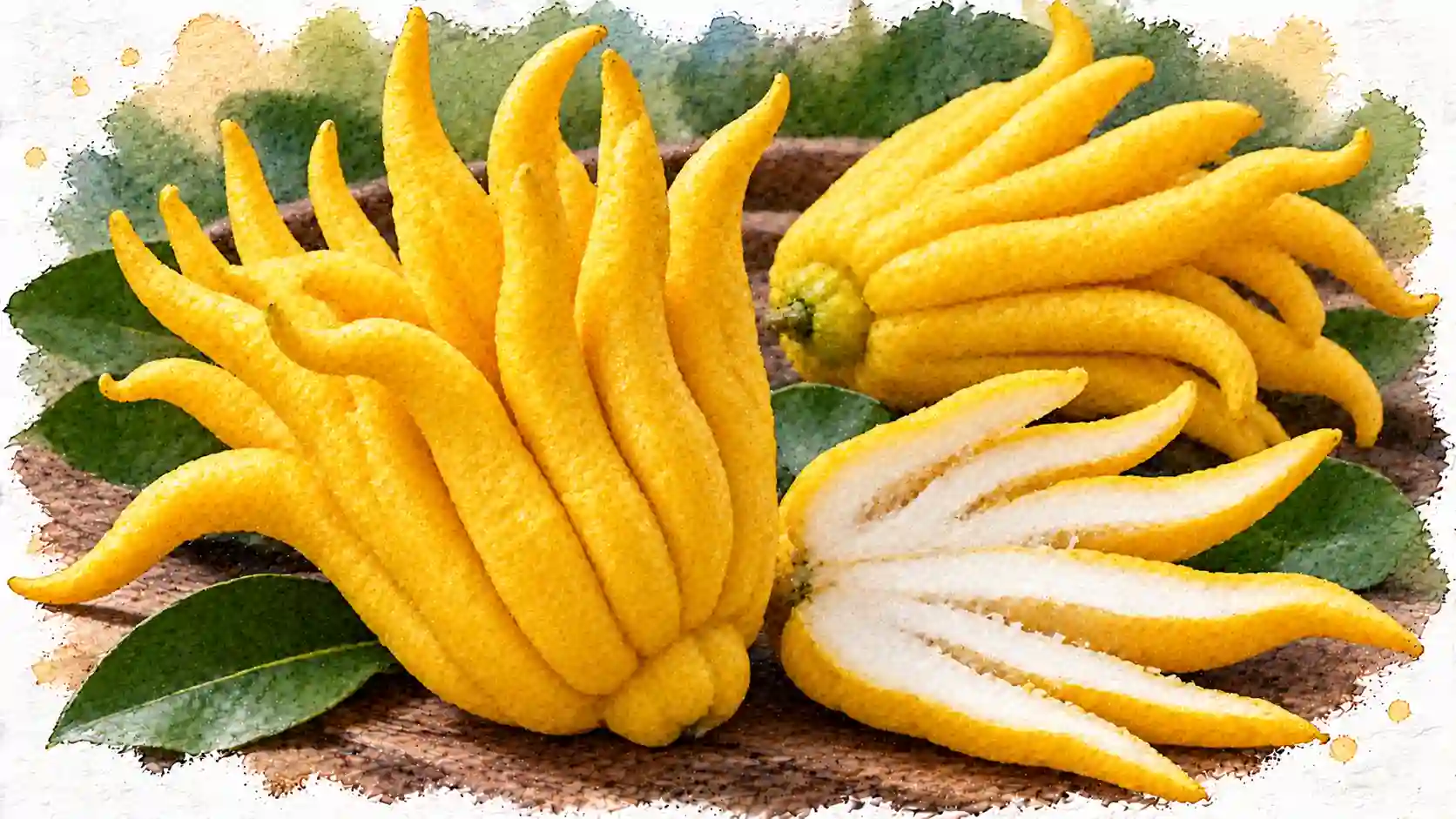
Buddha’s Hand citron is one of the most unusual-looking fruits in the citrus family. Instead of the familiar round shape of a lemon or orange, this fragrant yellow fruit splits into long, curved sections resembling the fingers of a human hand. Cultivated for centuries in East Asia, it is valued for its striking appearance, powerful citrus fragrance, cultural symbolism, and versatile edible rind. Although it looks like a citrus fruit that has grown in an unusual way, Buddha’s Hand has very little or no juicy pulp. Its greatest culinary value lies in the aromatic peel and thick white pith.
What Is Buddha’s Hand Citron?
Buddha’s Hand, also known as fingered citron, is a distinctive form of citron belonging to the species Citrus medica. It is commonly identified botanically as Citrus medica var. sarcodactylis. The fruit develops distinctive finger-like segments that may spread outward like an open hand or remain close together in a shape resembling a closed fist.
When mature, its rind usually turns bright yellow and releases a strong, fresh citrus aroma. Unlike lemons, oranges, and many other citrus fruits, Buddha’s Hand typically has no juicy interior. Instead, the fruit consists largely of fragrant yellow peel and thick, white pith, both of which can be used in cooking.
Its aroma is often described as lemony, floral, and slightly sweet. The outer zest provides concentrated citrus flavor, while the white pith is relatively mild in bitterness compared with the pith of many familiar citrus fruits. This makes the fruit useful for candied peel, preserves, syrups, desserts, and savory dishes.
Quick Facts
- Food name: Buddha’s Hand citron
- Other name: Fingered citron
- Region: Long cultivated in China and Japan
- Scientific name: Citrus medica var. sarcodactylis
- Appearance: Yellow citrus fruit divided into finger-like segments
- Flavor: Bright, aromatic citrus with floral notes
- Texture: Fragrant outer zest and thick, edible white pith
- Juice: Usually absent or extremely limited
- Common uses: Candied peel, preserves, drinks, desserts, and savory dishes
- Cultural significance: Associated with happiness, longevity, and good fortune in Chinese traditions
Common Ingredients
Buddha’s Hand is generally used as a flavoring ingredient rather than eaten like a conventional juicy fruit. Its fragrant peel and mild white pith can be incorporated into many recipes. Common ingredients paired with it include:
- Fresh Buddha’s Hand: The source of the aromatic zest and edible pith.
- Sugar: Used to candy the peel, make syrups, and prepare preserves.
- Honey: Adds sweetness to drinks, dressings, and citrus-infused preparations.
- Water: Helps extract the fruit’s aroma when preparing syrups or infusions.
- Tea: The zest can add a bright, floral citrus note to brewed drinks.
- Salt: Used in some preserved citrus preparations and savory recipes.
- Fish and seafood: Pair well with small amounts of finely grated zest.
- Cakes, biscuits, and pastries: Benefit from the fruit’s fragrant citrus flavor.
Because Buddha’s Hand has such an expressive aroma, a small amount of zest can provide plenty of flavor. It is often used much like lemon zest, although its floral fragrance can give a dish a character of its own.
How Buddha’s Hand Is Prepared
Preparing Buddha’s Hand is relatively straightforward because its rind is the main edible component. Wash the fruit thoroughly before use. The yellow outer layer can then be finely grated or sliced into thin strips, depending on the recipe. The thick white pith can also be cut into pieces for candying, marmalade, or preserves.
One of the best-known preparations is candied Buddha’s Hand. The rind and pith are cut into strips or small pieces, softened in water if needed, and simmered in sugar syrup until they become tender and translucent. The resulting pieces are intensely fragrant and can be eaten as sweets, dipped in chocolate, or added to baked goods.
Fresh zest can also be mixed into cake batter, cookies, salad dressings, marinades, and sauces. A little grated peel can brighten a dish without adding the acidity or liquid that lemon juice would contribute. Thin slices or small pieces can be infused into syrups, teas, and other beverages.
In savory cooking, the aromatic peel may be used to season fish, vegetables, rice dishes, or sauces. Its citrus fragrance can add freshness without overwhelming the other ingredients. Some cooks also use the fruit to infuse spirits or create homemade citrus extracts.
Unlike most familiar citrus fruits, Buddha’s Hand is not usually squeezed for juice. Its lack of a substantial juicy interior is not a defect; it is simply part of what makes this variety distinctive. The rind and pith are the ingredients worth preserving and exploring.
History & Origins
Citron is one of the oldest cultivated citrus fruits, and its origins are associated with northeastern India and nearby parts of Asia. Buddha’s Hand is a distinctive fingered form of citron that became particularly important in East Asian horticulture and culture. It has been cultivated in southern China and Japan for at least a thousand years, with historical references and artistic depictions reflecting its long-standing popularity.
In China, Buddha’s Hand is known as fo shou. Its name and unusual shape have helped make it a symbol of happiness, longevity, and good fortune. The fruit may be displayed in homes, given as a gift, or offered at Buddhist temples. Its fragrance also makes it a natural choice for scenting rooms and other indoor spaces.
In Japan, the fruit is known as bushukan and is associated with New Year traditions and good luck. It may be displayed as a decorative fruit or used in seasonal arrangements. These traditions show that Buddha’s Hand is more than a culinary curiosity: its appearance and fragrance have given it cultural significance beyond the kitchen.
Today, the fruit is grown in parts of Asia and by specialist citrus growers elsewhere, including California and Florida. It is often sold at specialty produce markets, farmers markets, and Asian grocery stores, particularly when the fruit is in season.
Varieties & Differences
Buddha’s Hand is not always identical from one fruit to another. Cultivated forms can vary in the length, number, and arrangement of their finger-like segments, as well as the fruit’s size and the shape of the growing tree.
- Open-hand forms: The segments spread outward, making the fruit resemble an open palm with extended fingers.
- Closed-hand forms: The fingers remain close together, creating a compact shape that may resemble a hand held in prayer.
- Partially fingered forms: Some fruits have segments that divide only near the tip, giving them a less dramatic appearance.
- Variegated forms: Certain cultivated trees produce foliage with contrasting colors, making them especially attractive as ornamentals.
In China, growers recognize multiple named varieties and subvarieties based on fruit shape, growth habit, and intended use. Some are cultivated primarily for their fruit, while compact forms are valued as ornamental plants. Despite these differences, the varieties share the characteristic fragrance and distinctive shape that make Buddha’s Hand easy to recognize.
How Buddha’s Hand Is Enjoyed
Buddha’s Hand is appreciated both as food and as a decorative fruit. In the kitchen, its zest is used to flavor cakes, cookies, sauces, salads, marinades, teas, syrups, and alcoholic drinks. Candied peel is another popular preparation, turning the fragrant rind into a sweet treat that can be enjoyed on its own or incorporated into other desserts.
Its appearance also makes it a natural centerpiece. The bright yellow fingers look striking in a fruit bowl, on a dining table, or in a seasonal display. Because the fruit has such a powerful aroma, it can perfume a room without being cut open. Some people place it in closets or other enclosed spaces to enjoy its fragrance.
In Chinese traditions, the fruit's association with happiness and longevity makes it a meaningful gift or temple offering. In Japan, it is also used as a decorative symbol of good fortune, particularly around the New Year. The specific customs vary, but its unusual shape gives it a significance that ordinary citrus fruits do not share.
When choosing Buddha’s Hand for cooking, look for a fragrant fruit with firm skin and no obvious soft or moldy patches. Wash it before using the rind, and store it in a cool place or refrigerate it if keeping it for longer. Since the fruit is usually used for its peel rather than its juice, even a small amount can provide a memorable citrus aroma.
Did You Know?
Buddha’s Hand can look like a whole cluster of lemons fused together, but its finger-like shape develops naturally as the fruit grows. Many fruits contain almost no juice or pulp, yet their thick pith is edible and relatively mild in bitterness. That means the part people might normally discard from a citrus fruit is one of Buddha’s Hand’s most useful ingredients.