
Caesar Salad
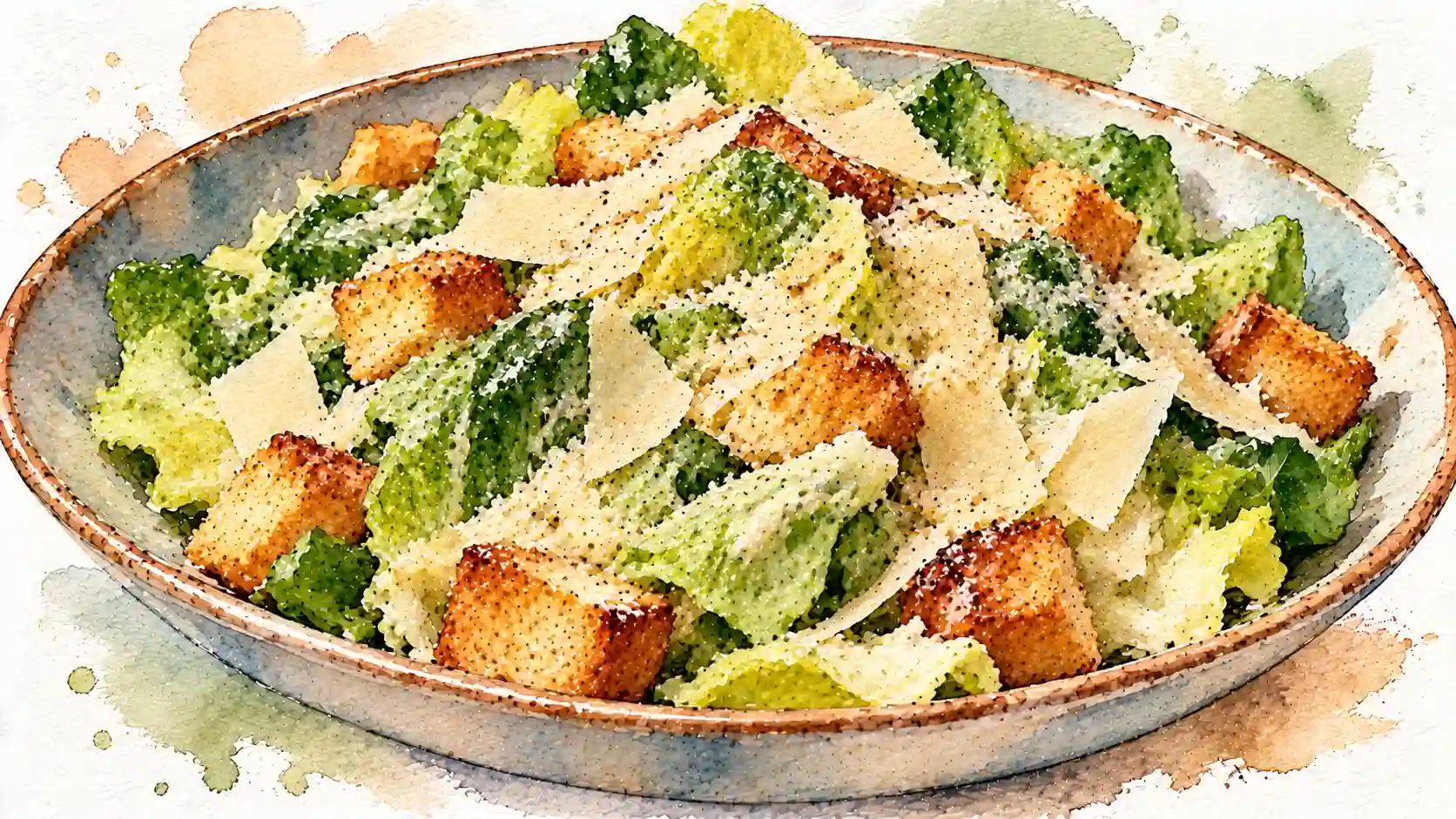
Caesar salad is a popular salad known for its crisp romaine lettuce, crunchy croutons, grated Parmesan cheese, and rich, tangy dressing. Although it is often associated with Italian cuisine, the dish originated in Tijuana, Mexico, and later became popular internationally. Its combination of fresh greens, savory flavors, and contrasting textures has made it a familiar menu item in restaurants around the world.
What Is Caesar Salad?
Caesar salad is a salad traditionally made with romaine lettuce, croutons, Parmesan cheese, and a dressing that combines creamy, salty, tangy, and garlicky flavors. The dressing is the defining feature, often incorporating ingredients such as egg, olive oil, lemon juice, garlic, Worcestershire sauce, and, in many modern recipes, anchovies.
Despite its Italian-sounding name, Caesar salad is not named after Julius Caesar. It is generally credited to Caesar Cardini, an Italian-born restaurateur who operated a restaurant in Tijuana, Mexico. The original preparation was comparatively simple, while modern versions often include extra ingredients such as grilled chicken, bacon, or additional vegetables.
Caesar salad can be served as a starter, a side dish, or a main course when topped with protein. Its appeal comes from the balance between crisp lettuce, crunchy bread, sharp cheese, and a dressing that coats the ingredients with a distinctive savory flavor.
Quick Facts
- Main Ingredients: Romaine lettuce, croutons, Parmesan, and Caesar dressing
- Origin: Tijuana, Mexico
- Associated Figure: Caesar Cardini
- Commonly Cited Date: 1924
- Flavor Profile: Savory, tangy, garlicky, and salty
- Typical Dressing Ingredients: Olive oil, egg, garlic, lemon or lime juice, and Worcestershire sauce
- Common Additions: Grilled chicken, shrimp, bacon, or extra Parmesan
- Serving Style: Starter, side dish, or main-course salad
Common Ingredients
The classic Caesar salad relies on a relatively short list of ingredients. Each contributes a particular flavor or texture, from the freshness of the lettuce to the salty richness of the cheese and dressing.
- Romaine Lettuce: Provides the crisp, sturdy leaves that hold the dressing well.
- Croutons: Small pieces of toasted or baked bread add crunch.
- Parmesan Cheese: Contributes a nutty, salty, umami-rich flavor.
- Olive Oil: Forms an important part of the dressing's base.
- Lemon or Lime Juice: Adds acidity and freshness to balance the rich ingredients. Accounts of the original recipe differ on which citrus fruit was used.
- Garlic: Gives many versions of the dressing its characteristic pungent aroma.
- Egg or Egg Yolk: Helps create a smooth dressing in traditional-style recipes.
- Worcestershire Sauce: Adds a complex savory flavor and traditionally supplies some of the dressing's anchovy character.
- Anchovies: Common in modern Caesar dressings, although accounts of Cardini's original recipe generally describe Worcestershire sauce rather than whole anchovies as the source of the fish flavor.
- Black Pepper: Adds a gentle bite and completes the seasoning.
Some modern dressings use mayonnaise as a convenient creamy base, while others rely on egg and oil to form an emulsion. Recipes also vary in whether they include anchovies as a separate ingredient. These differences reflect the evolution of the salad rather than one universally followed recipe.
How Caesar Salad Is Prepared
Caesar salad is usually quick to assemble, but a few preparation details help preserve its signature texture. The lettuce should be crisp and dry, the croutons crunchy, and the dressing well balanced.
Preparing the Lettuce and Croutons
Romaine lettuce is washed, dried thoroughly, and torn or cut into bite-sized pieces. Removing excess water is important because it can dilute the dressing and prevent it from coating the leaves properly.
Croutons are made by cutting bread into cubes and toasting or baking them until golden and crisp. They may be tossed with olive oil, garlic, or herbs before cooking. Homemade croutons allow cooks to control their size, texture, and seasoning.
Making the Dressing
For a traditional-style dressing, garlic is combined with ingredients such as lemon or lime juice, Worcestershire sauce, egg, and black pepper. Some recipes also use anchovies or Dijon mustard. Olive oil is gradually whisked in to create a smooth emulsion, and finely grated Parmesan may be added for extra flavor.
The dressing should taste balanced rather than overwhelmingly rich, with acidity cutting through the cheese and oil. Modern recipes may use mayonnaise or another prepared base to simplify the process. Because dressings made with raw or lightly cooked eggs can carry a risk of Salmonella, pasteurized eggs are a safer choice when the eggs will not be thoroughly cooked.
Assembling the Salad
The lettuce is tossed with enough dressing to coat the leaves without making them soggy. Croutons and Parmesan are added just before serving so that the bread retains its crunch. Freshly ground black pepper is a common finishing touch.
Some restaurants prepare Caesar salad tableside, mixing the dressing and lettuce in a large bowl in front of diners. This presentation is associated with the dish's early restaurant history, although it is not essential to the recipe.
History & Origins
Caesar salad is widely credited to Caesar Cardini, an Italian-born restaurateur who operated a restaurant in Tijuana during the early twentieth century. The dish is commonly dated to July 4, 1924. According to a frequently repeated account, Cardini improvised a salad from ingredients available during a busy service and prepared it tableside for his guests. Although this story is widely accepted, some details of the salad's creation remain disputed.
Cardini's original salad is often described as containing romaine lettuce, olive oil, egg, Parmesan, citrus juice, Worcestershire sauce, and croutons. Early versions were reportedly served with whole lettuce leaves that diners could pick up and eat. Accounts of the original recipe differ, particularly over the citrus used and the role of garlic and anchovies. Cardini's daughter maintained that the original dressing did not contain separate anchovies, with Worcestershire sauce providing the fish-derived flavor.
As the salad spread to restaurants in the United States and elsewhere, its ingredients and preparation evolved. Anchovies became a common addition to the dressing, and grilled chicken and other proteins helped turn it into a more substantial meal. Bottled dressings made its flavor easy to reproduce at home. Despite these changes, the combination of romaine, Parmesan, croutons, and savory dressing remains central to its identity.
Varieties & Differences
Caesar salad has inspired many variations, from traditional restaurant preparations to convenient meal-sized versions.
- Classic Caesar Salad: Romaine lettuce, croutons, Parmesan, and the characteristic savory dressing.
- Chicken Caesar Salad: Adds grilled or roasted chicken for extra protein and a more filling meal.
- Shrimp Caesar Salad: Uses grilled or sautéed shrimp for a seafood variation.
- Bacon Caesar Salad: Includes crispy bacon for a smoky, salty addition.
- Vegetarian Versions: Omit anchovies and use a dressing without fish-based Worcestershire sauce. Parmesan-style cheese may also need to be made with vegetarian-friendly rennet.
- Caesar Wraps: Place dressed lettuce, cheese, croutons, and optional protein inside a tortilla or flatbread.
- Lighter Versions: Use less oil or cheese, or replace some of the dressing's richness with yogurt or another alternative.
These variations can be delicious, but ingredients matter for dietary needs. Traditional and modern Caesar dressings may contain egg, dairy, anchovies, or fish-based Worcestershire sauce. Anyone avoiding these ingredients should check the dressing and cheese carefully.
How Caesar Salad Is Enjoyed
Caesar salad is served in restaurants, cafés, hotels, and homes around the world. As a starter, it provides a crisp contrast to richer main courses. As a side dish, it pairs well with grilled meat, fish, pasta, and other savory foods. When topped with chicken or shrimp, it can serve as a substantial lunch or light dinner.
The salad is best assembled shortly before eating. Once dressed, romaine begins to soften, and croutons gradually lose their crunch. Keeping the dressing separate until serving is useful when preparing the salad ahead of time.
Its enduring popularity comes from its balance of textures and flavors: fresh, crunchy leaves; crisp bread; salty cheese; and a creamy, tangy dressing. Although recipes continue to evolve, these contrasting elements make Caesar salad recognizable wherever it is served.
For food safety, refrigerate perishable ingredients promptly and keep prepared salad chilled until serving. If making dressing with raw or lightly cooked eggs, use pasteurized eggs or a commercially prepared dressing made with pasteurized ingredients. The FDA Food Code specifically addresses the use of pasteurized eggs in ready-to-eat foods such as Caesar salad.
Did You Know?
Caesar salad is generally credited to Caesar Cardini, an Italian-born restaurateur working in Tijuana, Mexico. Its name refers to Cardini and not the ancient Roman leader Julius Caesar. The dish became famous for its tableside preparation and later evolved into the many versions served around the world today.