
Chapulines
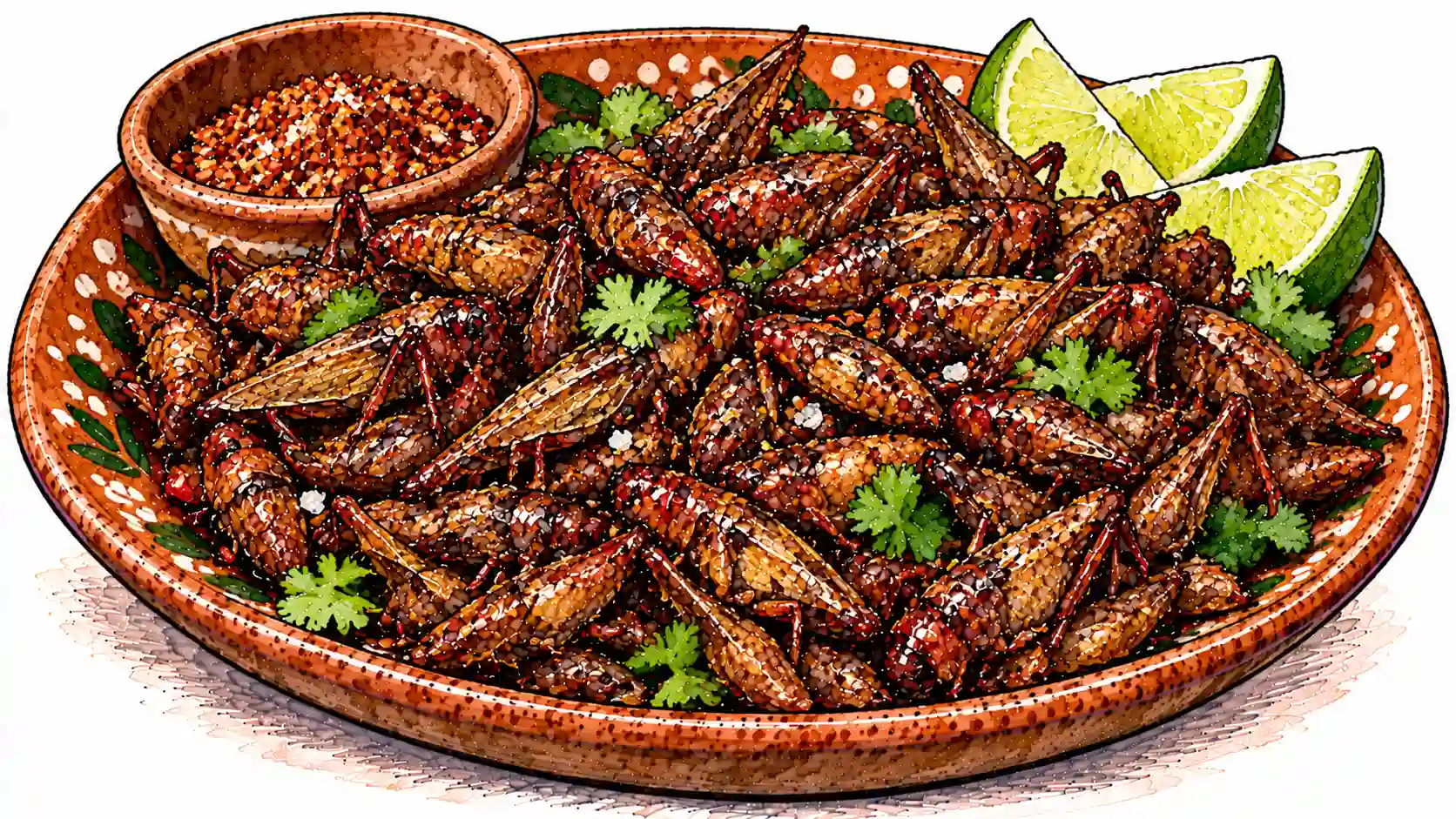
Crunchy, savory, and often finished with a squeeze of lime, chapulines are one of Mexico’s best-known traditional foods made from insects. These toasted grasshoppers are seasoned with ingredients such as garlic, salt, chili, and lime juice to create a bold combination of earthy, tangy, and spicy flavors. Especially popular in Oaxaca, chapulines have been enjoyed for generations and remain an important part of regional Mexican food culture. They are sold in local markets, eaten as snacks, and used in tacos and other dishes. For visitors unfamiliar with edible insects, chapulines offer a taste of a living culinary tradition rather than simply an unusual food experience.
What Are Chapulines?
Chapulines are edible grasshoppers commonly toasted or roasted and seasoned before being eaten. The Spanish word comes from the Nahuatl term chapōlin, meaning grasshopper. In Mexico, the name is especially associated with grasshoppers prepared as food in regions such as Oaxaca.
Chapulines sold in Oaxaca can include more than one grasshopper species, including Sphenarium purpurascens and Melanoplus mexicanus. They are typically cooked until crisp and flavored with salt, garlic, chili peppers, and sometimes lime juice. Their texture is crunchy, while their flavor is often described as earthy, savory, and slightly nutty. The seasonings add a tangy or spicy kick, making them a popular snack and taco filling.
Quick Facts
- Food Category: Edible insects and traditional Mexican foods
- Origin: Mexico, especially Oaxaca
- Main Ingredient: Edible grasshoppers
- Common Seasonings: Chili, lime, garlic, and salt
- Typical Flavor: Earthy, savory, tangy, and spicy
- Preparation: Cleaned, boiled in some methods, and toasted or pan-cooked
- Common Uses: Snacks, tacos, salsas, and regional Mexican dishes
Common Ingredients
Chapulines are usually prepared with a handful of ingredients that enhance their natural flavor without making the dish overly complicated. Recipes vary by region, vendor, and household, but several seasonings are commonly used.
- Grasshoppers: The main ingredient, collected or sourced from suitable species and cleaned before cooking.
- Lime Juice: Adds acidity that balances the earthy, roasted flavor. It may be squeezed over the grasshoppers after cooking.
- Chili Peppers: Provide heat and a distinctive flavor in many Mexican preparations.
- Garlic: Contributes a savory aroma and depth of flavor.
- Salt: Enhances the taste and helps round out the seasoning.
- Cooking Oil: Sometimes used during pan-cooking, although grasshoppers can also be toasted with little or no added oil.
Not every preparation includes all these ingredients. Some vendors keep the seasoning simple, while others offer spicier versions or combine chapulines with additional herbs and regional ingredients.
How Chapulines Are Prepared
Preparing chapulines begins with collecting or sourcing suitable grasshoppers. In Oaxaca, traditional harvesting takes place in agricultural fields, including alfalfa fields and milpas, where corn and other crops are grown. The insects are commonly collected during the warmer, rainy months, although the timing depends on the species, location, and local farming conditions.
After collection, the grasshoppers are sorted and cleaned to remove plant material and other unwanted matter. Some traditional processing methods involve holding the insects temporarily before cleaning, followed by boiling or drying. The exact sequence varies, but proper cleaning and heat treatment are important parts of food-safe preparation.
The grasshoppers are commonly toasted on a hot surface or cooked in a pan until they develop a crisp texture. Garlic, salt, and chili may be added during cooking or mixed in as seasoning. Lime juice is often added toward the end or squeezed over the finished chapulines to provide a bright, tangy contrast to their roasted flavor.
Cooking time affects the final texture. Lightly toasted grasshoppers may retain some tenderness, while those cooked longer become noticeably crisp. Because wild or field-collected insects can carry contaminants, they should come from reliable sources intended for human consumption and be handled hygienically. Thorough heat treatment is important; lime juice alone does not make raw insects safe to eat.
History & Origins
Chapulines have a long history in Mexican cuisine, particularly among Indigenous communities in Oaxaca and other parts of Mesoamerica. Eating insects was an established food practice before Spanish colonization, when people made use of the edible resources available in their local environments.
The Nahuatl origin of the word chapulín reflects the Indigenous linguistic heritage of the food. Grasshoppers were collected seasonally and prepared as a source of nourishment, with harvesting knowledge and cooking techniques developing within local communities.
Oaxaca is especially well known for its chapulines. They are sold in traditional markets, where vendors may offer different sizes and levels of seasoning. Research on rural Oaxacan food systems describes chapulines as an important seasonal food and documents the work of women who harvest, prepare, and sell them. This trade connects the snack to household food traditions and local livelihoods.
Today, chapulines appear in traditional markets, restaurants, and contemporary Mexican dishes. Their popularity among visitors has also helped make them internationally recognizable. Yet for many people in Oaxaca, chapulines are not simply a novelty or luxury food; they remain a familiar seasonal snack and an ingredient in everyday regional cuisine.
Varieties & Differences
Chapulines vary according to their species, size, seasoning, and preparation method. Some are eaten as simple toasted snacks, while others are incorporated into more elaborate dishes. Common styles include:
- Chili-Lime Chapulines: Seasoned with chili, salt, and lime juice for a spicy, tangy flavor.
- Garlic Chapulines: Cooked with garlic to create a more pronounced savory taste.
- Salted Chapulines: Simply toasted and seasoned with salt, allowing their earthy flavor to stand out.
- Spicy Chapulines: Prepared with stronger chili seasonings for those who enjoy extra heat.
- Chapulines Tacos: Toasted grasshoppers served in tortillas, often accompanied by salsa, onion, or guacamole.
- Chapulines with Mezcal: A familiar pairing in Oaxaca, where seasoned grasshoppers may be served alongside the region’s well-known agave spirit.
The size and developmental stage of the grasshoppers also influence the eating experience. Smaller specimens often become especially crisp, while larger adults have a more noticeable texture. The species present in market batches can vary depending on where and when the insects were collected.
How Chapulines Are Enjoyed
Chapulines are commonly eaten by the handful as a snack, particularly in markets throughout Oaxaca. Their combination of salt, chili, garlic, and lime makes them a flavorful option for casual meals and social gatherings.
They are also used as toppings or fillings in Mexican dishes. Sprinkled over tacos or folded into warm tortillas, chapulines add crunch and a concentrated savory flavor. Some cooks combine them with salsa, fresh vegetables, or creamy ingredients to balance their crisp texture and seasoning.
In Oaxaca, chapulines are also enjoyed alongside mezcal and other regional foods. Their place in markets and local food businesses reflects not only culinary tradition but also the work of the people who harvest, prepare, and sell them.
For visitors unfamiliar with edible insects, chapulines can be an introduction to a food tradition deeply rooted in Mexican culture. Their bold seasoning and crunchy texture help explain their appeal, while their seasonal availability and regional trade connect them to the agricultural landscape and communities of Oaxaca.
Did You Know?
The word “chapulines” comes from Nahuatl, an Indigenous language of Mexico!
The name is a reminder that eating grasshoppers is not simply a modern food trend. Edible insects have long been part of regional food traditions in Mexico, and chapulines continue to appear in local markets and traditional dishes today.