
Chhurpi
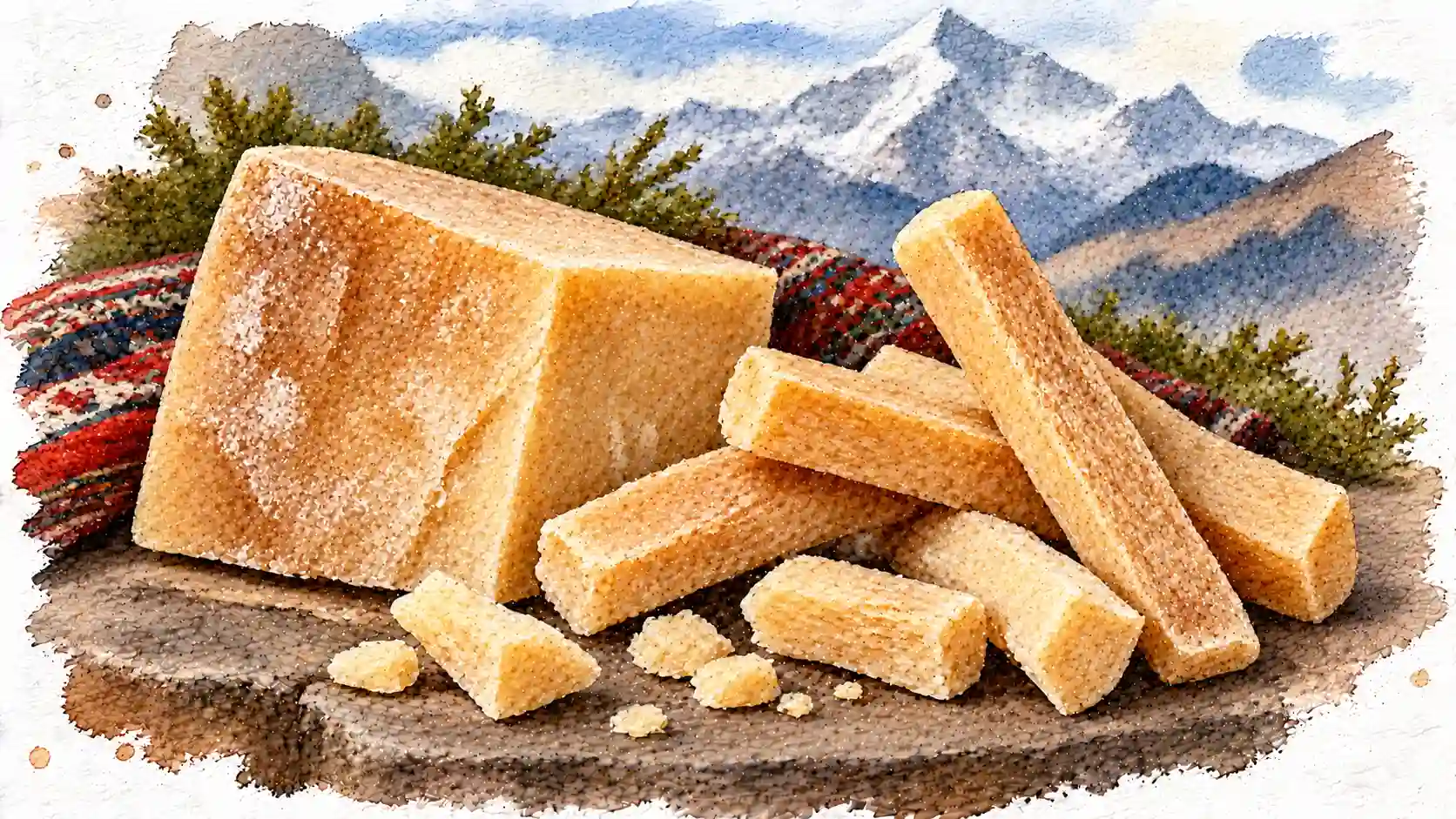
Chhurpi is a traditional Himalayan cheese known for its remarkable range of textures, from soft and fresh to so hard that a small piece can be chewed for a long time. Made from dairy products such as yak, cow, chauri, or sometimes buffalo milk, this regional specialty is enjoyed in Nepal, Bhutan, Tibet, and parts of India. The soft variety is used in everyday cooking, while the hard variety is pressed and dried, and sometimes smoked, until it becomes a durable, intensely chewy food. Chhurpi reflects the resourcefulness of mountain communities that developed ways to preserve milk in regions where long-lasting foods are especially useful.
What Is Chhurpi?
Chhurpi, also spelled churpi or chhurpee, is a traditional cheese associated with the Eastern Himalayan region. It can be made from soured buttermilk or from milk that is coagulated to separate the curds from the liquid whey. The curds are drained and shaped into cheese, with further pressing and drying used to make the hard variety.
There are two broad forms of chhurpi. Soft chhurpi is moist, mild, and slightly tangy, making it suitable for cooking with vegetables, mixing into chutneys, or serving with rice. Hard chhurpi undergoes further pressing and drying, sometimes with exposure to smoke from a household hearth. This removes much of the moisture and produces an extremely dense cheese.
The hard variety is famous for its toughness. Rather than biting into it immediately, people generally hold a small piece in the mouth until it gradually softens, then chew it slowly. Depending on the piece and its preparation, this can take a considerable amount of time. Its flavor is concentrated and savory, sometimes with a tangy or smoky quality.
Quick Facts
- Main ingredients: Dairy solids from yak, cow, chauri, or other milk sources, depending on the regional method
- Region: The Himalayas and adjoining mountain areas
- Associated countries and areas: Nepal, Bhutan, Tibet, Sikkim, Darjeeling, and other parts of the Himalayan region
- Preparation methods: Coagulating milk, draining whey, pressing, drying, and sometimes smoking
- Texture: Soft and moist or exceptionally hard and chewy
- Flavor profile: Mild and tangy when soft; concentrated, savory, and sometimes smoky when dried
- Common uses: Rice dishes, curries, chutneys, soups, dumplings, and long-lasting snacks
Common Ingredients
Chhurpi is made from relatively simple dairy ingredients. Traditional methods vary by community and altitude, but the central aim is to separate the milk solids, remove moisture, and create a cheese suited to its intended use.
- Yak milk: Commonly associated with hard chhurpi in high-altitude herding communities.
- Cow milk: Used for several regional varieties, including soft chhurpi.
- Chauri milk: Milk from a chauri, an animal crossbred from yak and cattle, can also be used.
- Buffalo milk: Used in some regional preparations, including varieties made from mixed milk sources.
- Soured buttermilk: A traditional starting ingredient in many preparations, particularly after butter has been separated.
- Coagulants: Depending on the method, milk may coagulate through natural acidity, soured whey, or other suitable coagulants.
- Smoke from a cooking hearth: Not used in every version, but an important influence on the flavor of some hard cheeses.
Soft chhurpi is often eaten with additional ingredients, such as tomatoes, onions, chilies, leafy vegetables, or herbs. These belong to the finished dish rather than the basic cheese itself. Hard chhurpi, by contrast, may be eaten in small pieces without elaborate seasoning.
How Chhurpi Is Prepared
Traditional chhurpi production uses a sequence of coagulating, separating, pressing, and drying. The details vary across Himalayan communities, and the exact method depends on the type of milk and the desired texture. Moisture removal is particularly important when making the hard variety.
Separating the Dairy Solids
In one traditional method, soured buttermilk is gently heated in a large pot. As the mixture warms, milk proteins gather into solid curds while a watery liquid separates. The curds are then strained from the whey and collected in a cloth.
Using the dairy solids left after butter-making is a practical way to turn a by-product into a useful food. Other methods start with whole or skimmed milk and use a suitable coagulant to separate the curds. These approaches can produce cheeses with different fat contents and textures.
Draining and Pressing
The curds are wrapped in cloth and allowed to drain. For soft chhurpi, the process may end once enough liquid has been removed to create a cohesive but still moist cheese. It can then be shaped into pieces or balls and used relatively soon after preparation.
Hard chhurpi requires more extensive pressing. The curds are compressed to remove additional moisture, sometimes using heavy weights or other traditional pressing methods. Once firm, the cheese can be cut into smaller blocks for drying.
Drying and Smoking
The shaped cheese is dried over time, using sun, airflow, low heat, or a combination of methods depending on the local tradition. Some varieties are hung or placed above a cooking hearth, where warmth and smoke help dry the cheese and develop a stronger flavor.
As moisture decreases, the cheese becomes denser and harder. This is a key reason for its long chewing time and its usefulness as a portable food. Drying conditions affect the final texture, color, flavor, and keeping quality.
Preparing Chhurpi for Meals
Soft chhurpi can be crumbled or sliced into savory dishes, mixed with vegetables, or ground with tomatoes and chilies to make a chutney. It can also be used as a filling for dumplings such as momos or added to soups.
Hard chhurpi is usually cut or broken into small pieces. It is best approached gradually: the cheese is held in the mouth until it softens enough to chew comfortably. Biting down forcefully on an extremely hard piece can damage teeth, so slow chewing is the safer approach.
History & Origins
Chhurpi developed within the pastoral food traditions of the Himalayan region, where herding animals provide milk in areas with challenging terrain and seasonal conditions. Fresh dairy products spoil relatively quickly, so turning milk solids into cheese that can be dried and stored offers an important practical advantage.
In high-altitude communities, yak and chauri milk have long been valuable resources. Processing dairy products into soft cheese provides food for everyday meals, while further drying creates a more durable product that can be carried during travel or stored for later use.
Chhurpi is associated with several cultural and linguistic traditions across Nepal, Bhutan, Tibet, Sikkim, Darjeeling, and other Himalayan areas. Names and techniques differ from place to place, and no single version represents the entire region.
Today, both soft and hard chhurpi remain part of local food traditions. Hard chhurpi has also become known internationally, including as a long-lasting chew marketed for dogs. That modern use is distinct from its traditional role as a human food and does not replace its importance in Himalayan culinary heritage.
Varieties & Differences
The biggest distinction is between soft chhurpi, which is used as a cooking ingredient, and hard chhurpi, which is dried for longer storage and slow chewing.
- Soft chhurpi: A moist, mildly tangy cheese that can be eaten with rice, cooked with vegetables, or used in chutneys and dumplings.
- Hard chhurpi: A densely pressed and dried cheese that can take a long time to soften in the mouth.
- Smoked chhurpi: Some regional varieties are dried over household fires, giving them a stronger smoky aroma and flavor.
- Yak-milk chhurpi: Common in high-altitude pastoral areas where yak herding is important.
- Cow-milk chhurpi: Found in various regional settings and used for both soft and hard preparations.
- Related regional cheeses: Products with similar traditions have local names, including chugo in Bhutan. Their preparation and presentation may differ from one community to another.
These variations demonstrate how a shared cheese-making tradition can adapt to different animals, environments, and culinary needs. The final product may be fresh and mild or dry, smoky, and exceptionally hard.
How Chhurpi Is Enjoyed
Soft chhurpi is often served with rice and vegetables or incorporated into curries and other savory meals. In Nepal, it may be mixed with onions, tomatoes, and chilies to make a tangy chutney, or used as a filling for momos. Its mild dairy flavor works well with the heat of chilies and the freshness of vegetables.
Hard chhurpi is enjoyed differently. It can be carried as a durable snack and slowly chewed, allowing its flavor to emerge as the dense cheese softens. This makes it useful during long journeys and in mountain settings where portable food is valuable.
The hard variety's texture is a defining feature, but it is not intended to be bitten through like an ordinary piece of cheese. Chewing patiently is part of the experience, and a small piece can last much longer than a typical snack.
Chhurpi also reflects the practical relationship between food and the Himalayan environment. By transforming milk into a durable product, communities have been able to preserve food for later use and make practical use of their dairy resources. Its continued use connects everyday cooking with longstanding regional traditions.
Because chhurpi is a dairy product, people with milk allergies should avoid it. Those who are lactose intolerant may respond differently depending on the product and their individual sensitivity. For the hard variety, chewing slowly and avoiding forceful bites helps reduce the risk of dental injury.
Did You Know?
Hard chhurpi has traditionally served as a portable food in Himalayan mountain communities. Its low moisture content helps it keep much longer than fresh cheese when properly prepared and stored, while its dense texture allows a small piece to be chewed slowly over an extended period.