
Chicken Feet
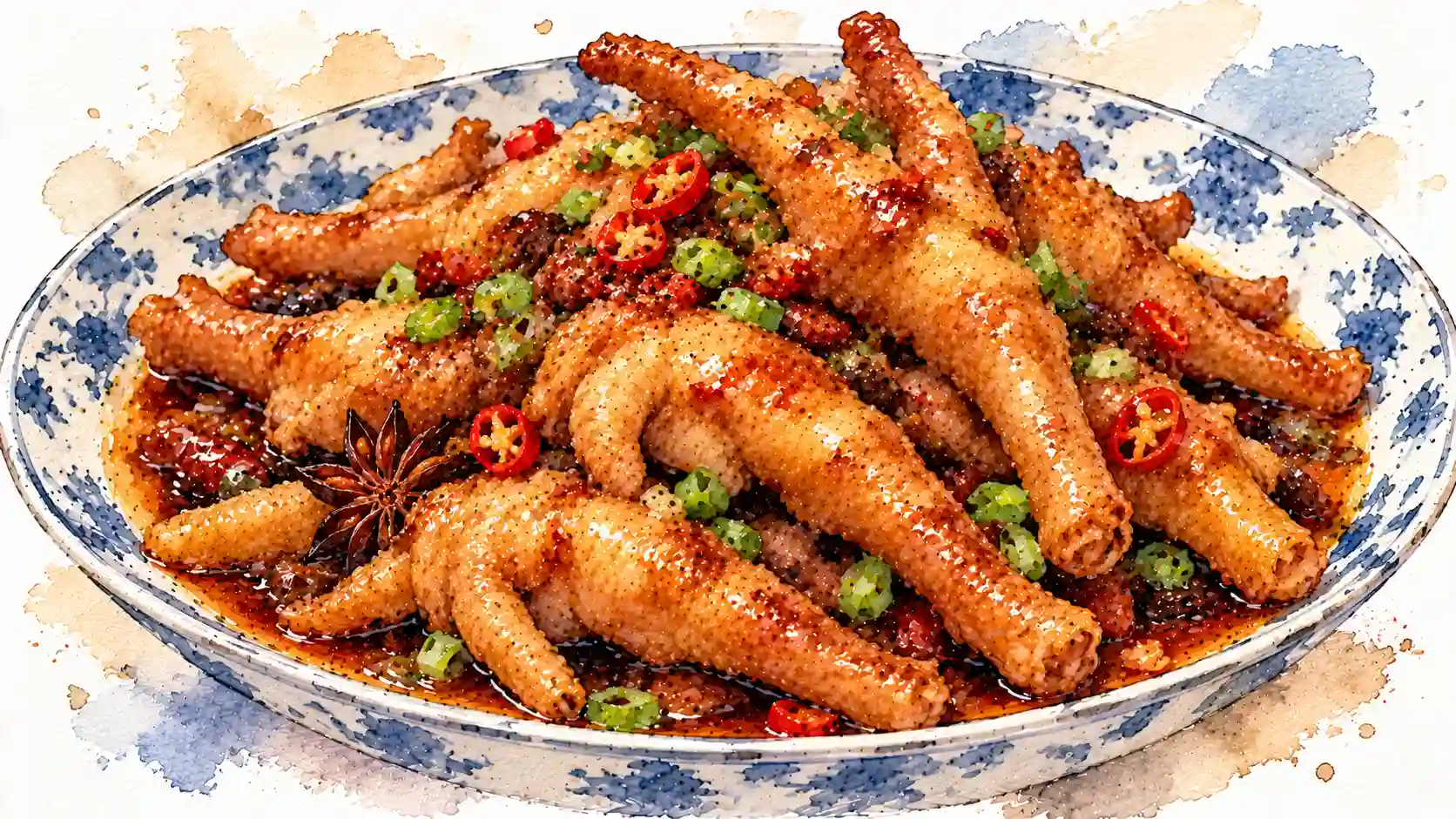
Tender, richly seasoned, and prized for their distinctive texture, chicken feet are enjoyed in many food cultures, especially in China, where they are braised, steamed, or fried before being coated in flavorful sauces. Often served as a Cantonese dim sum favorite, a street-food snack, or a home-cooked dish, chicken feet turn a less commonly eaten part of the bird into a celebrated culinary specialty. Their gelatin-rich skin and connective tissue absorb sauces beautifully, making them popular far beyond Chinese cuisine.
What Are Chicken Feet?
Chicken feet are the lower portions of a chicken's legs, including the toes, skin, tendons, and small bones. Unlike chicken breast or thigh meat, they contain relatively little muscle. Instead, their appeal comes from the skin and connective tissue, which become soft and gelatinous during prolonged cooking.
In Chinese cuisine, chicken feet are often called feng zhao, meaning “phoenix claws.” The name gives the ingredient an elegant description and reflects the imaginative naming conventions found in Chinese culinary traditions. Chicken feet are especially familiar in Cantonese cooking, where they appear on dim sum menus and are commonly served in small portions.
Their texture can range from firm and chewy to exceptionally tender, depending on the preparation. Because chicken feet contain many small bones, they are generally eaten by carefully nibbling the softened skin and connective tissue away from the bones rather than eating them like boneless chicken.
Quick Facts
Quick Facts
- Main Ingredient: Chicken feet
- Associated Cuisine: Chinese, particularly Cantonese
- Common Cooking Methods: Braising, steaming, deep-frying, and simmering
- Typical Flavors: Savory, garlicky, spicy, sweet, or fermented
- Common Serving Styles: Dim sum, appetizers, snacks, and shared dishes
- Texture: Tender, gelatinous, and chewy, sometimes with a crisp or blistered surface before braising
Common Ingredients
Chicken feet readily absorb the flavors of marinades, stocks, and sauces. Ingredients depend on the cooking method and regional recipe, but Chinese-style preparations often include a combination of the following:
- Chicken Feet: Cleaned and trimmed before cooking.
- Soy Sauce: Adds saltiness, color, and savory depth.
- Garlic and Ginger: Provide aromatic flavor and help balance the richness.
- Star Anise and Other Spices: May contribute warm, fragrant notes to braising liquids.
- Fermented Black Beans: Used in some Cantonese dim sum preparations for a deeply savory flavor.
- Chili and Pepper: Add heat to spicy versions.
- Sugar or Other Sweeteners: Balance salty and spicy seasonings.
- Vinegar: Sometimes used in marinades, sauces, or pickled preparations to add acidity.
- Oyster Sauce or Bean Paste: May add further savory depth, depending on the recipe.
- Sesame Oil: Sometimes used as a finishing ingredient for extra aroma.
The result can be glossy and richly seasoned, lightly spiced, or intensely aromatic, depending on the cook's preferences. Not every preparation uses all these ingredients.
How Chicken Feet Are Prepared
Preparation usually begins with cleaning the feet and trimming the nails. Some recipes blanch them briefly before further cooking. The method chosen afterward has a major effect on the final texture, particularly whether the skin becomes soft and wrinkled or remains firmer.
Braised Chicken Feet
Braising is one of the best-known approaches in Chinese cooking. In a classic Cantonese dim sum preparation, the feet may first be fried until the skin blisters, then soaked in water before being braised or steamed in a seasoned sauce. Soy sauce, garlic, ginger, fermented black beans, spices, and sometimes oyster sauce are common flavorings.
This multi-step process creates the distinctive wrinkled appearance and tender texture associated with Cantonese phoenix claws. The extended cooking softens the connective tissue and allows the feet to absorb the savory sauce.
Other braised versions skip the frying stage and simmer the feet directly in a seasoned liquid. These can develop a softer, less blistered surface while still becoming tender and flavorful.
Steamed Chicken Feet
Steaming allows the feet to cook gently while retaining the flavors of their seasoning. They may be marinated first and steamed with garlic, chili, fermented black beans, or other aromatics. In Cantonese dim sum service, steamed chicken feet are often presented in a small dish with sauce coating the skin and tendons.
Fried Chicken Feet
Frying can give chicken feet a firmer exterior and a more pronounced surface texture. In some Chinese preparations, frying is followed by soaking and additional cooking rather than serving the feet immediately. Other versions are fried or crisped and then tossed with spices or sauce.
Because chicken feet contain bones and connective tissue rather than substantial pieces of meat, cooking them until properly tender is important for texture and enjoyment. As with other poultry, they should be handled hygienically and cooked thoroughly; U.S. food-safety guidance recommends an internal temperature of 165°F (74°C) for poultry.
History & Origins
Chicken feet are part of a long-standing tradition of using many parts of an animal rather than focusing only on familiar cuts of meat. In China, this approach has contributed to a wide variety of dishes made from ingredients that may be considered unusual in other food cultures.
Their prominence in Cantonese cuisine is closely associated with dim sum, the tradition of serving small dishes alongside tea. Chicken feet became a recognizable choice in this setting because they take well to elaborate seasoning and slow cooking and can be served in modest portions for sharing.
Chicken feet are also eaten in many other parts of the world. They appear in soups, stews, braises, and snacks across parts of Southeast Asia, Africa, the Caribbean, and Latin America. Seasonings and serving styles differ, reflecting local ingredients and culinary traditions. Rather than belonging to a single cuisine, chicken feet demonstrate how a widely available ingredient can take on many regional identities.
Varieties & Differences
Chicken feet dishes vary considerably in taste and preparation:
- Cantonese Phoenix Claws: Often fried, soaked, and braised or steamed in a savory sauce, frequently with fermented black beans.
- Spicy Chicken Feet: Seasoned with chili, pepper, garlic, or hot sauce for a stronger kick.
- Pickled Chicken Feet: Found in several food traditions, these are cooked or otherwise prepared according to the recipe, then marinated in an acidic, seasoned mixture and often served chilled.
- Chicken Feet Soup: Simmered with vegetables, herbs, or other ingredients, allowing their connective tissue to contribute body to the broth.
- Street-Food Versions: Depending on the region, feet may be braised, grilled, fried, or coated in a spicy sauce for convenient snacking.
Even within China, recipes can differ from restaurant to restaurant and household to household. Some emphasize a dark, deeply savory sauce, while others focus on chili heat, fragrant spices, or a softer, more delicate texture.
How Chicken Feet Are Enjoyed
In Chinese restaurants, chicken feet are commonly served as part of a dim sum meal, alongside dumplings, buns, rice rolls, and tea. Diners share several small dishes at the table, making chicken feet one option among a wide range of savory bites. They are also sold as prepared snacks and appear in home cooking.
In other regions, chicken feet may be added to soups and stews or served as a seasoned snack. Their connective tissue releases gelatin during prolonged cooking, giving broths a fuller body. Some people value them for this texture as much as for their flavor.
Eating chicken feet can take a little practice because the pieces contain many small bones. Diners generally use their fingers or chopsticks to hold a piece and carefully separate the softened skin and tendons from the bones. They are not usually eaten like a boneless piece of chicken.
As with all poultry, chicken feet should be handled hygienically and cooked thoroughly. Pickling or marinating does not automatically make them safe to eat raw; preparation should follow a reliable food-safety method.
Did You Know?
In Chinese cuisine, chicken feet are often called “phoenix claws.” The name is an elegant culinary expression for a humble part of the bird. Cantonese dim sum versions are especially recognizable for their dark, glossy sauce and the soft, wrinkled texture created by frying, soaking, and braising.