
Daulat Ki Chaat
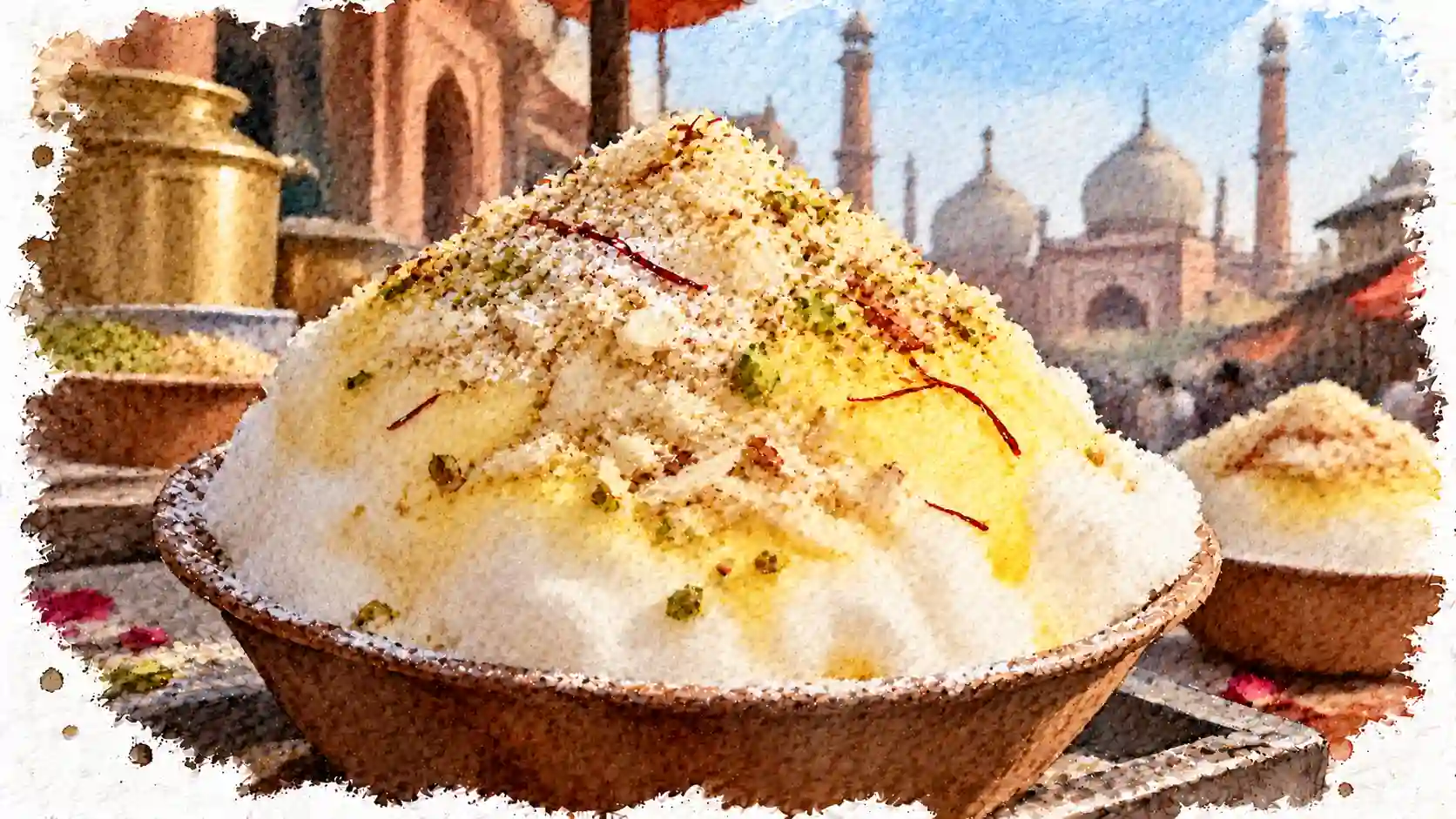
Imagine a dessert so light that it seems to dissolve almost as soon as it touches your tongue. Daulat ki chaat is a celebrated winter delicacy from Old Delhi, India, made from delicately whipped milk and cream foam and finished with toppings such as powdered sugar, saffron, nuts, and khoya. Despite the word “chaat” in its name, this is not a spicy snack but an airy, cloud-like sweet. Its fleeting texture, labor-intensive preparation, and seasonal appearance make finding a fresh serving part of the experience.
What Is Daulat Ki Chaat?
Daulat ki chaat is a traditional North Indian milk dessert most closely associated with the lanes and markets of Old Delhi. Its defining feature is an exceptionally delicate foam made by whisking or churning rich milk, often combined with cream. The light froth is carefully collected and served in small bowls, then garnished with sweet and aromatic ingredients.
The texture is closer to a fragile milk soufflé than to ice cream or pudding. Each spoonful feels airy and soft, with a creamy dairy flavor that quickly melts away. Depending on the vendor, toppings may include powdered sugar, saffron-infused milk, khoya, chopped almonds, pistachios, or edible silver leaf.
The word daulat means wealth or prosperity, and the name suits a dessert associated with indulgence and delicate craftsmanship. Although it is commonly sold by street vendors, its fragile appearance and elaborate preparation give it a special place among North India's traditional sweets.
Quick Facts
- Origin: North India, especially Old Delhi
- Type: Seasonal milk-foam dessert
- Main ingredients: Full-fat milk and cream
- Common toppings: Powdered sugar, saffron, khoya, and nuts
- Texture: Extremely light, airy, and quick to melt
- Season: Traditionally associated with winter
- Typical serving time: Early morning in traditional Delhi markets
- Serving style: Freshly portioned into small bowls
Common Ingredients
Daulat ki chaat relies on a few dairy-based ingredients, with technique and temperature playing a greater role than a long list of flavorings.
- Full-fat milk: The foundation of the dessert. Milk proteins and fat contribute to the structure and creamy flavor of the foam.
- Cream or malai: The rich cream that rises from milk, or cream added separately, increases the fat content and helps create a luxurious mouthfeel.
- Sugar: Adds sweetness, commonly sprinkled on the dessert or incorporated into the finishing ingredients.
- Saffron: Often used in a small amount to provide a golden hue and a subtle, fragrant note.
- Khoya: Reduced milk solids, sometimes crumbled or roasted and sprinkled over the foam for a richer finish.
- Nuts: Almonds and pistachios are popular garnishes that add color and a little crunch.
- Edible silver leaf: Known as varq, it is used by some vendors as a decorative finish.
Not every vendor uses exactly the same combination. Some versions are relatively simple, while others are more lavishly garnished. The milk-and-cream foam remains the essential element, and the proportions and finishing touches vary between makers.
How Daulat Ki Chaat Is Prepared
Making daulat ki chaat requires patience and careful handling. Traditionally, makers begin with rich milk and cream, keeping the mixture thoroughly chilled. It is then repeatedly whisked or churned, often by hand with a traditional wooden churner called a mathani.
As air is incorporated, a delicate layer of foam develops. The maker gently skims this froth from the surface and transfers it to a separate vessel, repeating the process to collect enough for serving. The foam must be handled carefully because rough movement or warming can cause it to collapse.
Cold temperatures are central to the traditional method. In winter, the cool air helps the dairy fat remain firm enough to support the air bubbles. Stories often credit overnight dew with a special role in the preparation, and some traditional makers have left milk outdoors overnight. However, dew itself is not necessary to create the foam: keeping the ingredients cold and working them skillfully are crucial, and modern refrigeration can provide temperature control.
Once the froth is ready, it is portioned into small bowls and garnished just before serving. Because its airy structure gradually loses volume, daulat ki chaat is best enjoyed fresh rather than stored for later. Vendors traditionally prepare it ahead of the morning market, when the foam is at its best.
History & Origins
Daulat ki chaat is closely linked with the culinary traditions of Old Delhi, where specialist vendors have sold the dessert during the colder months for generations. Its exact inventor and date of origin are uncertain, and popular stories about royal kitchens or a single creator are difficult to verify.
The dessert belongs to a wider North Indian tradition of milk-based winter sweets. Similar preparations are known by different regional names, including nimish in Lucknow, malai makhan in Kanpur, and malaiyo in Varanasi. These related sweets share an emphasis on light, aerated milk or cream, though their recipes, textures, and garnishes differ from place to place.
In Old Delhi, daulat ki chaat became a familiar seasonal feature of market life. Vendors traditionally begin preparation well before sunrise so they can serve customers while the weather is cool and the foam is still fresh. The brief selling season and the skill required to make it have helped preserve its reputation as a special winter treat.
Accounts of the dessert's past sometimes connect it with royal or Mughal-era food traditions, but a precise origin story has not been firmly established. Its enduring place in Old Delhi's winter food culture is better documented than any single claim about who first created it.
Varieties & Differences
Daulat ki chaat does not have one universally fixed recipe. Individual vendors adjust the richness, sweetness, and toppings, while related regional sweets offer their own interpretations of the milk-foam tradition.
- Classic Old Delhi style: Delicate milk-and-cream foam finished with powdered sugar, saffron-infused milk, and sometimes khoya or nuts.
- Rich, garnished versions: More elaborate servings that include extra cream, roasted khoya, pistachios, almonds, or edible silver leaf.
- Nimish: A related specialty from Lucknow, known for its delicate texture and subtle flavor. Its preparation and finishing ingredients can differ from Delhi's version.
- Malai makhan: A similar winter sweet associated with Kanpur, usually featuring airy dairy foam.
- Malaiyo: Varanasi's well-known seasonal counterpart, also prized for its light texture and milk-based flavor.
Although these desserts resemble one another, their names are not always interchangeable locally. Each has its own culinary associations and preferred style of preparation. Daulat ki chaat is most strongly identified with Old Delhi and its particular combination of airy foam and sweet toppings.
How Daulat Ki Chaat Is Enjoyed
Daulat ki chaat is traditionally eaten in the morning, when its delicate foam is still fresh. In Old Delhi, it is commonly sold from street carts and small stalls during winter. The vendor adds the final toppings to each portion, creating a contrast between the soft foam and the slight crunch of nuts or sugar.
Its flavor is usually gentle rather than intensely sweet. Creamy milk forms the base, saffron may add a subtle aroma, and khoya gives some versions a deeper dairy richness. The dessert is best eaten immediately, as the foam gradually settles and loses the airy structure that makes it distinctive.
For visitors, tasting daulat ki chaat can be as much about season and place as flavor. Finding it in the cool morning air of Old Delhi connects the dessert to the markets and food traditions that have kept it alive. It is a reminder that a memorable sweet does not need elaborate decoration or bold flavors: sometimes, its appeal lies in a texture that lasts only a moment.
Did You Know?
The word “chaat” usually brings to mind savory Indian street foods, but daulat ki chaat is sweet. Its name is commonly interpreted as a reference to wealth or luxury, although the exact origin of the name is uncertain. Its delicate foam has also earned it comparisons to edible clouds.
A Fleeting Taste of North Indian Winter
Daulat ki chaat is a celebration of dairy, cold weather, and careful technique. Its feather-light foam, gentle sweetness, and seasonal availability set it apart from more familiar Indian desserts. Closely associated with Old Delhi and related to other North Indian milk-foam sweets, it offers a distinctive taste of winter food culture in a form that is best enjoyed soon after it is made.