
Dondurma
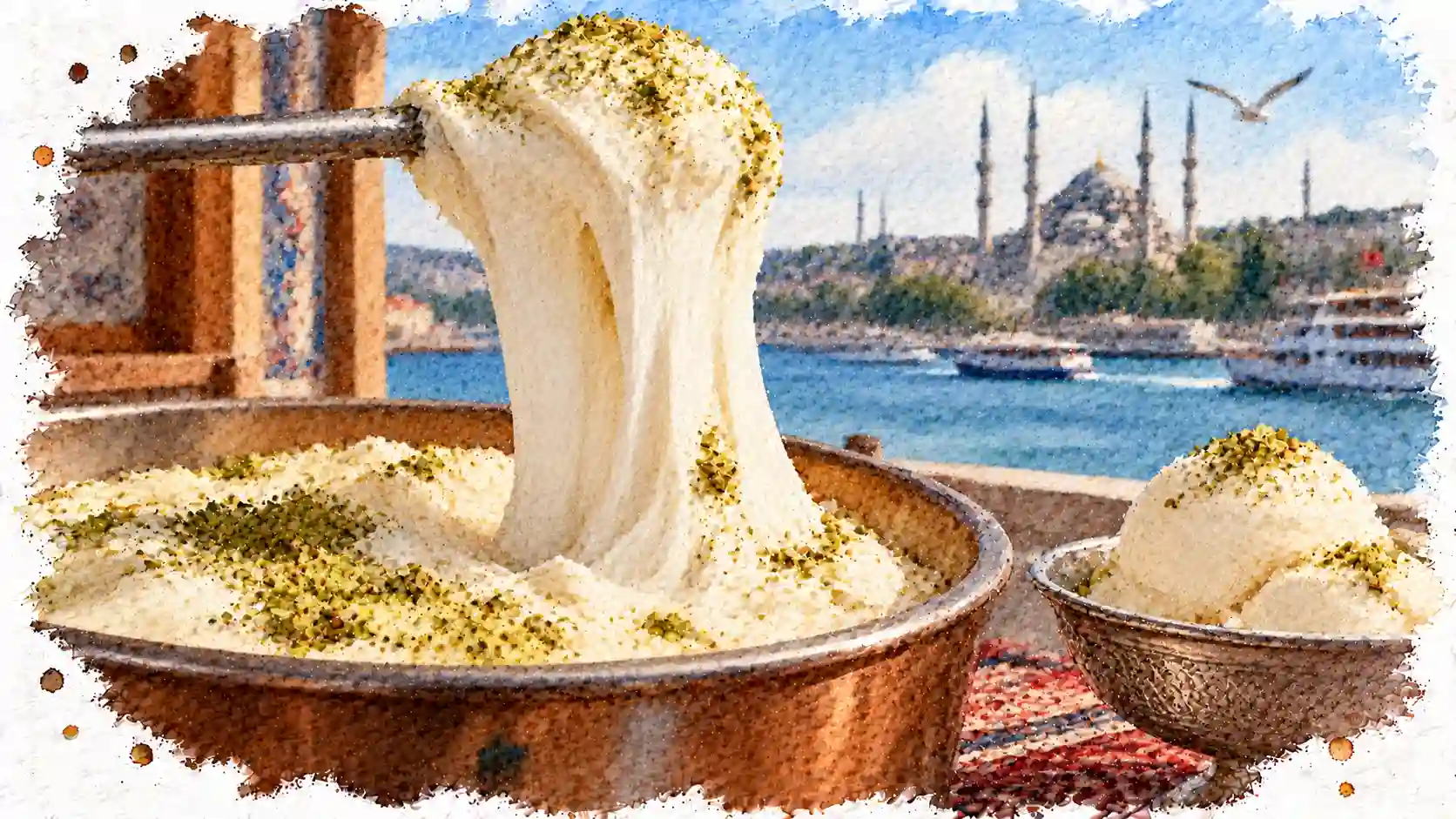
Turkish dondurma is ice cream with a surprising twist: instead of melting into a soft puddle as quickly as many ordinary ice creams, the traditional stretchy style can bend, pull, and form long, elastic strands. This distinctive texture has made it a favorite across Türkiye, where vendors often turn serving it into a playful street performance. The best-known variety, Maraş dondurması, comes from Kahramanmaraş and is prized for its dense consistency, rich dairy flavor, and unusual chew.
What Is Dondurma?
Dondurma is the Turkish word for ice cream, but the term is especially familiar internationally as a name for Türkiye’s stretchy traditional style. Unlike many soft, airy ice creams, Maraş-style dondurma is dense, resilient, and sometimes firm enough to slice or eat with a fork.
Its signature texture comes largely from salep, a powder made from the dried tubers of certain orchid species. Salep contains glucomannan, a natural polysaccharide that binds water and helps create a thick, elastic mixture. Some other Turkish ice cream recipes also use mastic, an aromatic plant resin, but mastic is not a defining ingredient of the registered traditional Maraş formulation.
Maraş dondurması is the celebrated variety associated with Kahramanmaraş in southern Türkiye. Its traditional formulation uses goat’s milk, sugar, and salep, with the milk’s characteristics and the preparation method contributing to its distinctive flavor and texture. Other dondurma recipes may be softer, less elastic, or flavored with ingredients such as fruit, chocolate, and nuts.
Quick Facts
- Country: Türkiye
- Famous regional style: Maraş dondurması
- Regional home: Kahramanmaraş, southern Türkiye
- Traditional Maraş ingredients: Goat’s milk, sugar, and salep
- Texture: Dense, stretchy, chewy, and elastic
- Flavor: Rich and milky, with a distinctive character from salep
- Preparation: Heated, cooled, frozen, and repeatedly worked or beaten
- Common serving styles: Cones, cups, or firm portions served on a plate
Common Ingredients
Traditional Maraş dondurması uses a small number of ingredients, but their quality and proportions strongly influence the finished texture.
- Goat’s milk: The defining milk for traditional Maraş dondurması. Local accounts associate its characteristic flavor with goats grazing on the region’s native vegetation. Other Turkish ice creams may use cow’s milk.
- Salep: The key thickener in traditional Maraş dondurması. Made from the tubers of certain orchid species, it contains glucomannan, which binds water and helps create the ice cream’s elastic consistency.
- Sugar: Sweetens the mixture and affects its freezing behavior and final texture.
- Mastic: An aromatic plant resin used in some other ice cream preparations. It can contribute a resinous, slightly pine-like flavor, but it is not required for traditional Maraş dondurması.
- Additional flavorings: Modern dondurma products may include ingredients such as chocolate, fruit, vanilla, or nuts, depending on the recipe.
Authentic salep can be expensive, and harvesting orchid tubers from the wild can threaten orchid populations. Conservation research has documented pressure on wild orchids associated with salep production. Some commercial ice creams therefore use alternative thickeners or stabilizers. These substitutes can produce enjoyable frozen desserts, but their texture may differ from traditional salep-based dondurma.
How Dondurma Is Prepared
Traditional Maraş dondurması begins with goat’s milk, sugar, and salep. The ingredients are heated and stirred to hydrate the thickener and form a smooth, viscous base. The mixture is then rested, cooled, and prepared for freezing. Exact temperatures and resting times depend on the producer’s method.
As the base freezes, it is worked and kneaded to develop its dense, elastic consistency. Traditional makers use long metal paddles to beat and stretch the mixture. This labor-intensive process, combined with salep’s water-binding properties, helps create the characteristic texture that distinguishes Maraş-style ice cream from many conventional varieties.
Once ready, the ice cream can be shaped into cones or portions, or served in thicker pieces. Because it can be unusually firm and stretchy, vendors sometimes use long metal utensils to cut, lift, and manipulate it during serving.
The exact method varies between producers, and not every Turkish ice cream is made in the same way. The quality of the salep, the milk and sugar proportions, temperature, and the amount of working all influence the final result.
History & Origins
Dondurma belongs to Türkiye’s broader history of chilled sweets, which includes preparations made with snow and ice. One traditional precursor mentioned in local accounts of Maraş ice cream is karsambaç, a cold preparation associated with snow or ice mixed with sweet ingredients.
The development of the dense, elastic style is particularly associated with Kahramanmaraş. Local culinary histories credit salep with helping give the ice cream its distinctive body and stretch. A popular origin story describes a seller known as Maraşlı Osman Ağa discovering the texture after burying a mixture of milk, sugar, and salep in snow. This is best treated as a traditional story rather than a verified account of a single invention.
Over time, Maraş dondurması became a regional specialty and an emblem of local food culture. It is now sold throughout Türkiye, from traditional ice cream shops to busy street stalls, and has gained international recognition for both its texture and theatrical presentation. Maraş dondurması is registered as a geographical indication associated with Kahramanmaraş.
Varieties & Differences
Not all dondurma has the same degree of stretch. In Turkish, the word refers broadly to ice cream, while the highly elastic version most familiar to international audiences is particularly associated with Maraş.
- Maraş dondurması: A dense, highly elastic regional specialty from Kahramanmaraş, traditionally made with goat’s milk, sugar, and salep.
- Mastic-flavored ice cream: Some Turkish and neighboring regional recipes use mastic for its distinctive aromatic flavor and contribution to texture. It is not essential to the traditional Maraş formulation.
- Fruit-flavored dondurma: Ice creams flavored with ingredients such as strawberry or other fruits, which may be softer and less elastic than classic Maraş-style ice cream.
- Modern commercial dondurma: Products that use alternative stabilizers or thickeners to approximate a dense texture when salep is unavailable or too costly.
It is useful to distinguish dondurma as a general category from the particular stretchy style. Many ice creams sold in Türkiye are smooth and easy to scoop, whereas pronounced elasticity and firmness are defining features of the best-known Maraş variety.
How Dondurma Is Enjoyed
Dondurma is enjoyed year-round, but it is especially popular as a refreshing treat during warm weather. Street vendors often serve it in cones and cups, sometimes lifting the portion high into the air or stretching it with a long paddle before handing it over. These playful tricks have become part of the experience for visitors and locals alike.
The ice cream can be eaten on its own, allowing its creamy flavor and chewy texture to take center stage. It may also be paired with Turkish sweets such as baklava or served alongside warm desserts for a contrast between hot pastry and cold ice cream.
Because Maraş-style dondurma can be quite firm, it is not always eaten in the same way as softer ice cream. Some versions are served in slices or pieces on a plate, and particularly dense preparations may be cut with a knife and fork.
Did You Know?
Salep comes from the tubers of certain orchid species, not from a cereal grain. Its glucomannan helps bind water and contributes to the remarkable elasticity of traditional Maraş dondurması. Because harvesting wild orchid tubers can damage orchid populations, responsible sourcing and conservation are important considerations.
A Turkish Ice Cream Unlike Any Other
Dondurma stands out because its appeal goes beyond flavor. In traditional Maraş dondurması, goat’s milk, salep, careful preparation, and skilled working create an ice cream that stretches and resists melting in a distinctive way. From the celebrated Maraş tradition to modern variations, it remains a memorable part of Türkiye’s culinary identity, turning a simple serving of ice cream into a small performance.