
Duck Tongues
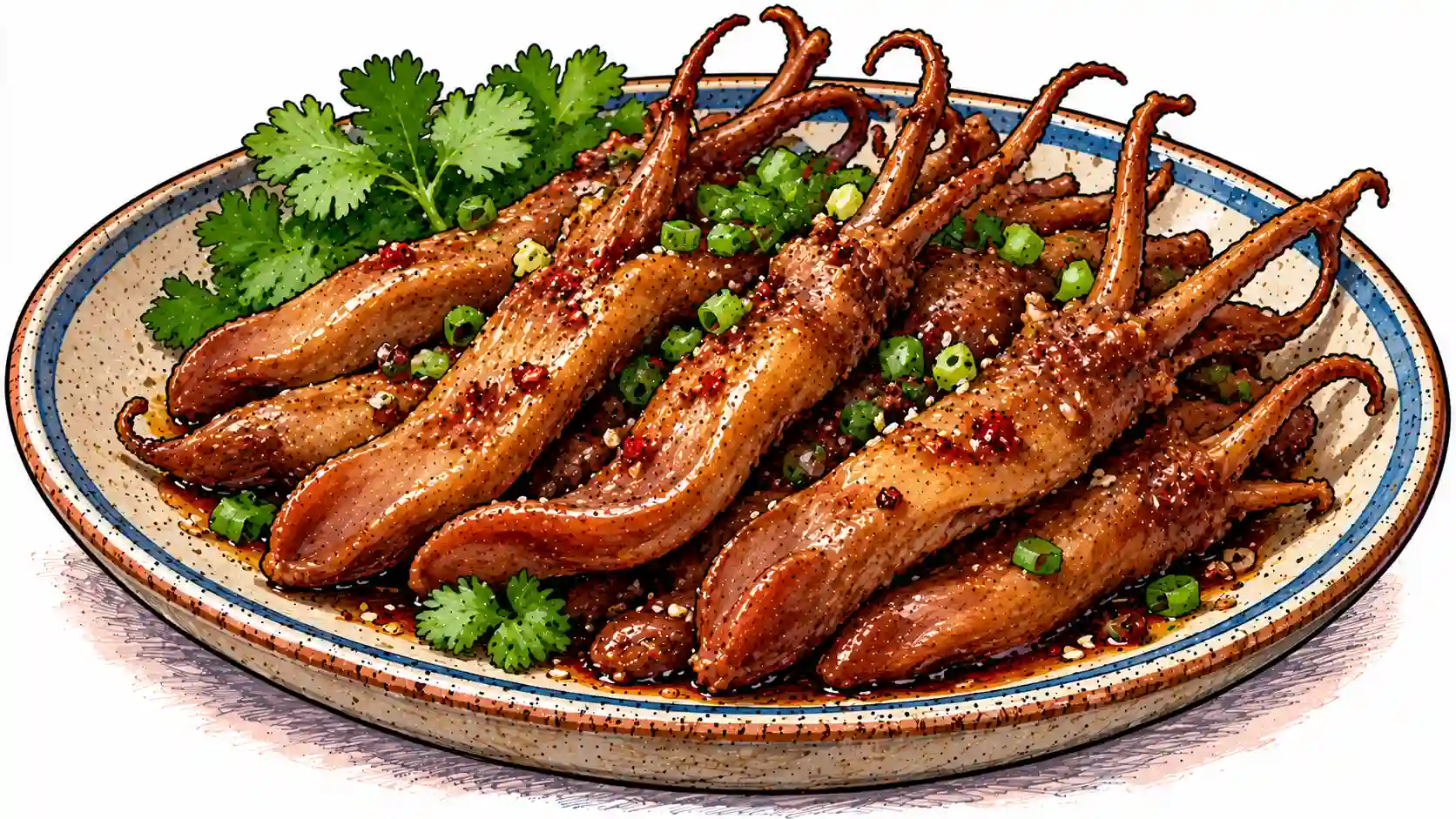
Small, richly seasoned, and prized for their distinctive texture, duck tongues are a specialty in several Chinese regional cuisines. Often braised, marinated, steamed, or fried, they are especially associated with Cantonese and Sichuan cooking. Despite their unusual appearance, duck tongues are valued for their tender soft tissue, fatty richness, and firm, slightly crunchy central structure. Served as a cold appetizer, a dim sum dish, or a savory snack, they show how Chinese culinary traditions use a wide range of ingredients and cooking techniques to create distinctive eating experiences.
What Are Duck Tongues?
Duck tongues are the tongues of domestic ducks, prepared as food in several Chinese regional cuisines. They are small and contain relatively little soft tissue around a supporting structure of bone and cartilage. This combination gives them a distinctive texture that can be tender, slightly chewy, fatty, and sometimes faintly crunchy, depending on how they are prepared.
In China, duck tongues are generally served in small portions as an appetizer, snack, or shared dish rather than as a large main course. They may be braised in a soy-based sauce, steamed with seasonings, marinated after cooking, or fried. Prepared duck tongues are also sold in specialty food shops and packaged snack ranges.
The flavor is generally savory, with much of the dish's character coming from its seasonings and cooking method. Some preparations are mildly sweet and soy-forward, while others are fragrant, spicy, or numbing from Sichuan peppercorns. In Cantonese cooking, the emphasis may be on a rich braising sauce or a delicately seasoned steamed preparation.
For diners unfamiliar with eating animal tongues, the ingredient may seem unusual. However, using different parts of poultry and livestock is an established feature of many food traditions. Duck tongues are one example of how regional Chinese cooking transforms a small cut into a carefully prepared delicacy.
Quick Facts
- Origin: China, with preparations across several regional cuisines
- Main Ingredient: Duck tongues
- Common Cooking Methods: Braising, steaming, marinating, stir-frying, and frying
- Texture: Tender, fatty, slightly chewy, and sometimes crunchy
- Flavor: Savory and aromatic, shaped by the seasoning
- Common Seasonings: Soy sauce, ginger, garlic, star anise, chili, and Sichuan peppercorns
- Typical Serving Style: Small appetizer, dim sum dish, or savory snack
- Food Category: Poultry delicacy and offal-style snack
Common Ingredients
Duck tongues are prepared with seasonings that enhance their savory flavor and complement their distinctive texture. Ingredients vary by region and recipe, ranging from aromatic braising spices to chili-rich marinades.
- Duck Tongues: The main ingredient, cleaned and prepared before cooking.
- Soy Sauce: Adds saltiness, color, and savory depth to braised and marinated versions.
- Ginger: Provides a warm, fresh aroma and is commonly used in poultry preparations.
- Garlic: Adds a pungent, savory flavor to sauces and marinades.
- Star Anise and Other Spices: Used in some braising liquids to create a warm, fragrant flavor.
- Sichuan Peppercorns: Used in certain regional preparations for their citrus-like aroma and characteristic tingling sensation.
- Chili Peppers or Chili Oil: Provide heat in spicy versions.
- Sugar: Sometimes added in small amounts to balance salty and spicy flavors.
- Sesame Oil or Sesame Seeds: May be used as finishing ingredients for extra aroma and richness.
How Duck Tongues Are Prepared
Preparation begins with cleaning the duck tongues and trimming any unwanted tissue. They are often briefly blanched before being cooked further. Some recipes also remove part or all of the central supporting structure, while others leave it in place. The method depends on the desired texture and the style of the finished dish.
One popular approach is braising. The tongues are simmered in a seasoned liquid containing ingredients such as soy sauce, ginger, garlic, star anise, and other spices. Gentle cooking allows the soft tissue to absorb the flavors of the braising liquid and develop a tender texture.
In Cantonese cooking, duck tongues may also be steamed with black bean sauce and served as a small dim sum dish. Other preparations are marinated after cooking and served cold, while some are stir-fried or deep-fried for a different texture. Packaged snack versions may use their own combinations of cooking, seasoning, and preservation techniques.
Once cooked, duck tongues may be tossed with chili oil, sesame oil, spices, or other aromatics. They are generally served in small portions because the ingredient itself is small and the seasoning can be intense. As with other poultry products, hygienic handling, thorough cooking, and proper storage are important for food safety.
History & Origins
Duck has long been an important ingredient in Chinese cuisine, appearing in regional dishes ranging from roast duck to braised and preserved preparations. The use of different parts of the animal reflects a broader culinary tradition of making the most of available ingredients and developing specialized techniques for each cut.
Duck tongues are part of this wider food culture, but their precise culinary origins are difficult to trace to a single place or date. They have been used in multiple regional cuisines, and their preparation reflects local preferences for sauces, spices, textures, and serving styles.
In Cantonese cooking, duck tongues may be braised in a richly flavored master stock or steamed with black bean sauce. Other Chinese regional cuisines use different approaches, including spicy preparations associated with Sichuan cooking. These variations reflect the diversity of Chinese cuisine rather than one standardized national recipe.
Duck tongues are also sold in prepared-food shops and packaged snack ranges, making them available beyond restaurant dining. Their popularity among some diners reflects an appreciation for distinctive textures and flavorful small dishes, although they remain a specialty rather than a universal everyday food across China.
Varieties & Differences
Duck tongues can be prepared in several styles, with regional preferences influencing the seasoning, cooking technique, and final texture. Common preparations include:
- Soy-Braised Duck Tongues: Simmered in a soy-based liquid with ginger, garlic, and aromatic spices for a savory, sometimes slightly sweet flavor.
- Cantonese Steamed Duck Tongues: Steamed with seasonings such as black bean sauce and served as a small dish, including in some dim sum settings.
- Sichuan-Style Duck Tongues: Prepared with chili and sometimes Sichuan peppercorns for a spicy, fragrant, and potentially numbing finish.
- Cold Marinated Duck Tongues: Cooked, chilled, and seasoned so that the marinade develops flavor as the dish rests.
- Fried Duck Tongues: Cooked at higher heat to create a firmer or crispier exterior, sometimes with additional seasoning.
- Packaged Duck-Tongue Snacks: Ready-to-eat products seasoned and packaged for convenient snacking.
These are broad preparation styles rather than rigid categories. Individual restaurants and producers use their own blends of spices and sauces, resulting in different balances of sweetness, saltiness, heat, and aroma.
How Duck Tongues Are Enjoyed
Duck tongues are generally served in small portions, making them suitable for sharing or eating as a snack. They may appear on appetizer menus, in dim sum settings, at prepared-food counters, or in packaged snack collections. Their compact size and concentrated seasoning make them a natural fit for meals where diners sample several dishes at once.
In braised versions, the tongues may be served warm or chilled, depending on the recipe. Steamed Cantonese preparations are generally served hot, while some marinated varieties are presented as cold appetizers. Spicy versions can accompany other Sichuan-style dishes, and soy-braised varieties pair well with milder foods that balance their rich seasoning.
The eating experience is distinctive because there is relatively little soft tissue compared with the central supporting structure. Some diners enjoy the tender, fatty texture and slight crunch, while others need time to become accustomed to it. Personal preference plays a major role in the appeal of this specialty.
For people exploring Chinese cuisine, duck tongues offer an example of how cooking techniques can bring out flavor and texture in small or less familiar cuts. Their place in the wider world of braised, steamed, and seasoned snacks also highlights the variety found across China's regional food traditions.
Did You Know?
A duck's tongue has a supporting internal structure made of bone and cartilage. Unlike the soft, muscular tongue of a mammal, a duck's tongue contains a central structure that contributes to its distinctive texture when eaten. Depending on the preparation, that structure may remain in the dish or be removed.
This combination of soft tissue and a firmer center is part of what makes duck tongues different from more familiar poultry cuts.