
Durian
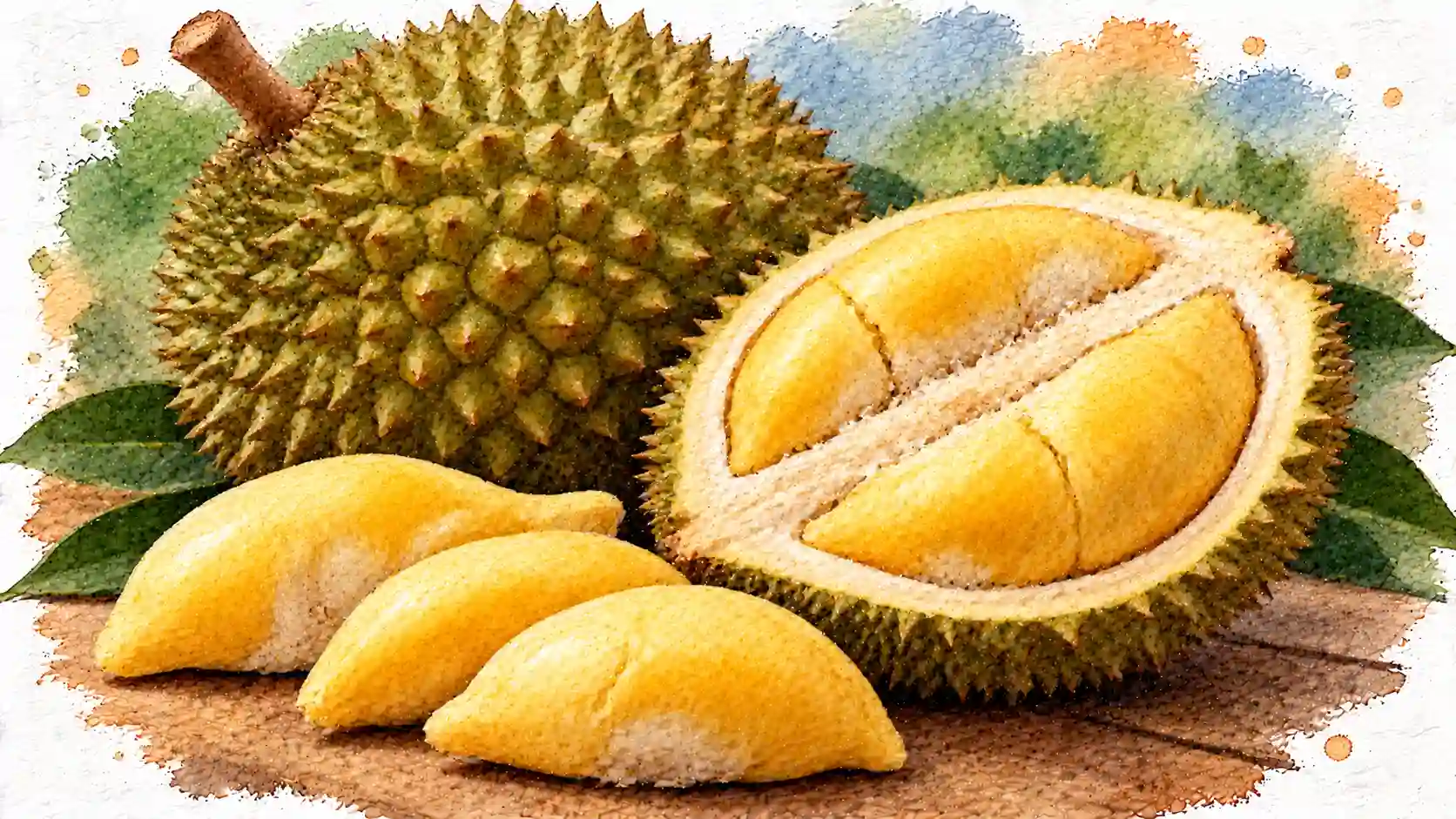
Durian is one of Southeast Asia’s most recognizable fruits, famous for its thick, thorn-covered shell and an aroma that people either love or find overwhelming. Inside its formidable exterior is soft, creamy flesh with a rich flavor that can combine sweet, savory, nutty, and custard-like notes. Often called the “king of fruits,” durian is a seasonal favorite in countries such as Thailand, Malaysia, Indonesia, and the Philippines. It is eaten fresh, blended into desserts, and used in a surprising range of sweet and savory dishes.
What Is Durian?
Durian is a tropical fruit that grows on trees in the genus Durio. The most widely cultivated species is Durio zibethinus, native to Southeast Asia, particularly Sumatra and Borneo. Its large fruit typically has a greenish or brownish husk covered in sharp, pyramid-shaped spines. Depending on the variety, a durian can weigh several kilograms and contain multiple sections of edible flesh surrounding large seeds.
The fruit’s most famous feature is its powerful smell. Some people compare the aroma to ripe cheese, onions, garlic, or fermented foods, while others find it sweet and enticing. This distinctive scent comes from a complex mixture of volatile compounds, including sulfur-containing compounds that contribute to its pungent odor and esters that add fruity notes.
Despite its reputation, durian is not simply a foul-smelling fruit. Its flesh is often golden yellow or pale cream, with a smooth, thick consistency. The flavor varies by variety and ripeness, ranging from sweet and mild to bittersweet and intensely aromatic.
Quick Facts
- Food name: Durian
- Region: Southeast Asia
- Scientific name: Durio zibethinus for the most widely cultivated species
- Plant type: Tropical tree fruit
- Appearance: Large fruit with a thick, sharply spiked husk
- Flavor: Sweet, creamy, nutty, and sometimes bittersweet or savory
- Texture: Soft, rich, and custard-like
- Common uses: Fresh fruit, desserts, pastries, ice cream, and traditional dishes
- Nickname: King of Fruits
Common Ingredients
Fresh durian is often eaten on its own, but its creamy flesh also serves as the foundation for many regional recipes. Common ingredients paired with durian include:
- Fresh durian flesh: The soft, edible pulp surrounding the seeds.
- Coconut milk: Adds richness to sweet soups, puddings, and other desserts.
- Sticky rice: Creates a filling base for durian desserts.
- Sugar or palm sugar: Sweetens durian-based sweets and sauces.
- Flour and pastry ingredients: Used in buns, cakes, pancakes, and pastries filled with durian.
- Ice and dairy ingredients: Help turn the fruit into ice cream, milkshakes, and chilled desserts.
- Rice, spices, and savory ingredients: Feature in certain regional dishes that use durian in less familiar ways.
Because ripe durian already has a rich flavor and texture, recipes do not always require much additional fat or sweetness. The fruit can be the main attraction rather than simply a flavoring.
How Durian Is Prepared
Preparing a whole durian starts with opening its thick, spiny husk, which can be difficult and hazardous to handle without experience. Vendors often make cuts along the natural seams of the shell to separate it into sections. Gloves and careful handling help protect against the sharp spikes, and an experienced seller can often open the fruit safely.
Once opened, the edible flesh is removed from the compartments and separated from the large seeds. Ripe durian is commonly eaten fresh, when its texture is soft and its aroma is fully developed. The flesh may also be chilled before serving, depending on local preferences.
For desserts, durian can be blended into ice cream, mixed into sweetened coconut milk, folded into pastry fillings, or paired with sticky rice. In Malaysia and Singapore, durian-flavored cakes, pancakes, pastries, and other sweets are popular treats. Thailand is also known for durian served with sticky rice and coconut milk.
Some traditional preparations use durian in fermented or preserved foods, and certain regional cuisines incorporate less-ripe fruit into cooked dishes. Methods and flavor profiles vary widely, so durian is not limited to sweet recipes.
The flesh is edible, but durian seeds should not be eaten raw. In some food traditions, the seeds are eaten after proper cooking, such as boiling or roasting. If preparing them at home, use a reliable recipe that specifies thorough cooking.
History & Origins
Durian has deep roots in the tropical forests and agricultural traditions of Southeast Asia. The most widely cultivated species, Durio zibethinus, is native to Sumatra and Borneo. Durian has been cultivated and traded across neighboring countries for generations, and the wider genus Durio includes other species found across the region.
Its name is linked to the Malay word duri, meaning “thorn,” a reference to the fruit’s unmistakable shell. The nickname “king of fruits” reflects its cultural prestige, substantial size, rich flesh, and strong aroma. In some places, the arrival of durian season is eagerly anticipated by growers, traders, and enthusiasts.
As cultivation and trade expanded, durian developed into an important seasonal crop in Thailand, Malaysia, Indonesia, and other parts of the region. Different communities selected and cultivated varieties with preferred flavors, textures, aromas, and flesh colors. Today, durian is sold fresh at roadside stalls and markets, shipped internationally, and used in products ranging from traditional desserts to modern confectionery.
Varieties & Differences
Durian is not a single uniform fruit. Cultivated varieties can differ substantially in sweetness, bitterness, aroma, flesh color, seed size, and texture.
- Monthong: A popular Thai variety, also called Golden Pillow. It is known for substantial flesh, a creamy texture, and a generally sweet flavor.
- Chanee: Another Thai variety, often associated with a pronounced aroma and a rich taste.
- Musang King: A highly prized Malaysian variety known for its deep yellow flesh and complex sweet-bitter flavor.
- Other local varieties: Across Southeast Asia, regional cultivars vary in color, sweetness, intensity of smell, and the amount of flesh surrounding their seeds.
Color alone does not determine quality. Some durians have pale cream flesh, while others are a deeper yellow or golden orange. Even fruits from the same variety can differ according to growing conditions, maturity, and handling after harvest.
How Durian Is Enjoyed
For many durian fans, the best way to experience the fruit is to eat its fresh flesh straight from the opened husk. This allows its creamy texture and complex aroma to stand out without being masked by other ingredients. First-time tasters may prefer a small portion because the flavor can be much stronger and richer than expected.
Across Southeast Asia, durian also appears in sticky-rice desserts, ice cream, cakes, sweet buns, pancakes, puddings, and chilled drinks. Some products emphasize the fruit’s sweetness, while others preserve its intense aroma. In markets during peak season, fresh durian is often sold by variety, allowing customers to compare different flavors and textures.
Its strong smell has also shaped where it is eaten. Some hotels, public transport systems, and shared indoor spaces in parts of Southeast Asia restrict durian because its odor can linger. This contrast between its devoted fans and reluctant tasters is part of what makes the fruit so famous.
When buying durian, choose fruit from a reputable seller who can advise on ripeness and variety. The outer spikes can injure hands, and ripe fruit is perishable, so it should be stored appropriately after opening. Keep cut flesh refrigerated and follow any storage guidance provided by the seller or product packaging.
Did You Know?
Durian’s powerful smell comes from a complex blend of aroma compounds rather than one single substance. Scientific research has identified sulfur-containing compounds that contribute to its onion-like odor and esters that produce fruity notes, helping explain why people describe the same fruit in such dramatically different ways.