
Escamoles
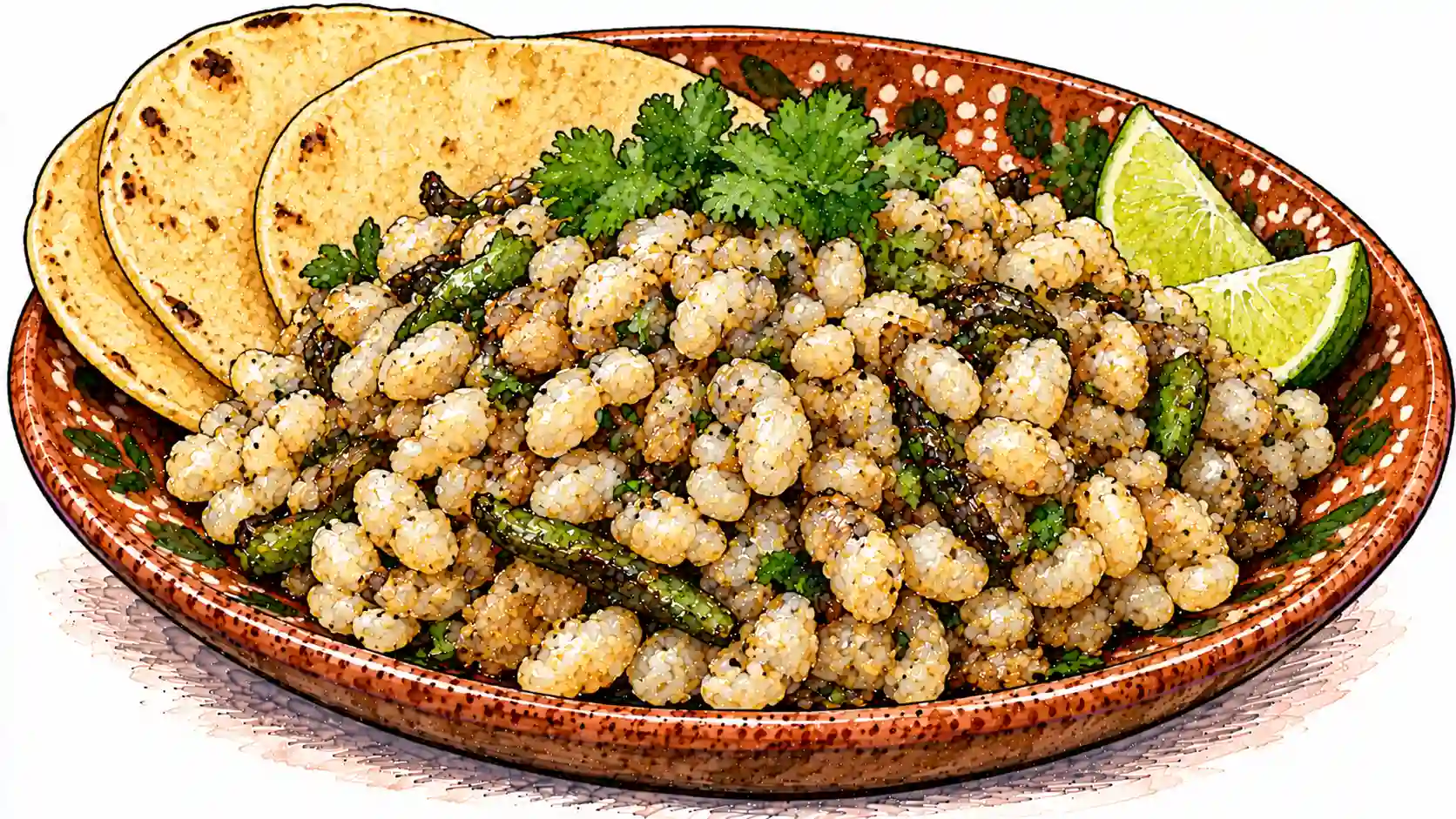
Imagine ordering a plate of caviar and discovering that it comes from an ant colony rather than the sea! Meet escamoles, a traditional Mexican delicacy made primarily from the pupae of certain ants. Prized for their delicate flavor and soft texture, these small, pale morsels have been eaten in central Mexico since pre-Hispanic times. Often called "Mexican caviar," escamoles are valued for their seasonal availability and culinary versatility, with traditional preparations that let their mild, buttery flavor shine.
What Are Escamoles?
Escamoles are an edible ant brood delicacy associated especially with the species Liometopum apiculatum, found across parts of Mexico and the southwestern United States. In traditional Mexican cuisine, particularly in central regions, the term usually refers to the pupae of the ant's reproductive castes.
Although escamoles are often called ant eggs, they are primarily pupae rather than eggs. They are small, pale, and soft, with a delicate flavor commonly described as buttery, nutty, or reminiscent of sweet corn. Their mild taste makes them well suited to simple preparations with butter or oil, onion, garlic, and epazote.
The nickname "Mexican caviar" reflects their status as a prized, relatively expensive delicacy and their small, beadlike appearance. Unlike fish caviar, however, escamoles are immature ants, not fish eggs.
Quick Facts
- Food Category: Edible insects and traditional Mexican cuisine
- Origin: Central Mexico
- Main Ingredient: Primarily ant pupae from reproductive castes
- Associated Species: Liometopum apiculatum
- Common Seasonings: Butter or oil, garlic, onion, epazote, and salt
- Typical Flavor: Mild, buttery, and slightly nutty
- Typical Season: Late winter through spring, often March and April
Common Ingredients
Escamoles can be prepared simply, allowing their delicate flavor to stand out. Traditional recipes often use a small number of familiar Mexican ingredients, although the exact combination varies by cook and region.
- Escamoles: The main ingredient, valued for its soft texture and mild flavor.
- Butter or Oil: Used to sauté the escamoles and add richness.
- Garlic: Adds a savory aroma without overpowering the main ingredient.
- Onion: Provides subtle sweetness and depth of flavor.
- Epazote: An aromatic Mexican herb used in some traditional preparations.
- Salt: Enhances the natural flavors.
- Corn Tortillas: Commonly served with cooked escamoles, particularly in tacos.
Some cooks keep the seasoning minimal, while others add salsa, chili, or other ingredients. The goal is often to complement the escamoles rather than mask their delicate taste.
How Escamoles Are Prepared
Escamoles are traditionally collected from underground ant nests. Harvesters locate the brood chambers and carefully remove the material containing the developing ants. The work requires experience because the nest's structure is delicate and worker ants defend the colony.
After collection, the escamoles are sorted and cleaned, then washed before cooking. One familiar preparation involves gently sautéing them in butter or oil with onion, garlic, and epazote. The cooking method is relatively simple, helping preserve their soft texture and mild flavor.
Escamoles can also be served in tacos or combined with eggs and other ingredients. Cooking should be thorough, and the product should be obtained from a reliable food source and handled hygienically. As with other wild-harvested foods, proper preparation and storage matter for food safety.
Responsible harvesting is especially important because the edible pupae are removed from the colony's brood chamber. Research on Liometopum apiculatum has found that poorly managed extraction can damage nests and reduce their long-term survival. Experienced collectors may use methods designed to limit nest damage, but sustainable outcomes depend on how harvesting is carried out and how often a colony is disturbed.
History & Origins
Escamoles have a long history in Mexican cuisine. Research on the species traditionally harvested for escamoles documents collection in central Mexico dating back to pre-Hispanic times. The delicacy forms part of the broader tradition of eating insects in Mexico, where local communities developed knowledge of seasonal resources and ways to prepare them as food.
The Spanish word escamole is traced to the Nahuatl words azcatl, meaning ant, and molli, meaning mole or sauce. This linguistic connection reflects the food's place in Mexico's Indigenous culinary heritage.
Escamoles are particularly associated with central Mexican states such as Hidalgo and San Luis Potosí, as well as other regions where the ants occur and are harvested. Their short season and labor-intensive collection have helped make them a prized ingredient in local markets and restaurants.
Today, escamoles appear in traditional home-style dishes and contemporary restaurant menus. Some cooks prepare them simply with butter, garlic, and herbs, while others incorporate them into tacos, egg dishes, or more elaborate regional recipes. Their continued popularity reflects both their distinctive flavor and the knowledge required to find and harvest them.
Varieties & Differences
Escamoles are an ingredient rather than a single fixed recipe. Their presentation and flavor depend on how they are cooked and served. Common preparations include:
- Escamoles al Ajillo: Escamoles sautéed with garlic and oil or butter.
- Escamoles with Epazote: A preparation flavored with the aromatic Mexican herb.
- Escamoles Tacos: Cooked escamoles served in warm corn tortillas, sometimes with salsa.
- Escamoles with Eggs: Escamoles combined with eggs for a savory breakfast or light meal.
- Escamoles in Sauces: Escamoles served with regional sauces or incorporated into more elaborate dishes.
Unlike fish caviar, which consists of fish eggs, escamoles are primarily the pupae of ants from reproductive castes. The nickname "Mexican caviar" is a comparison of culinary prestige and appearance, not a description of their biological origin.
How Escamoles Are Enjoyed
Escamoles are often eaten in tacos, served with warm corn tortillas, or enjoyed as a small dish alongside other Mexican specialties. Their delicate flavor pairs well with simple seasonings, fresh salsa, and herbs that do not overpower their texture.
Unlike roasted grasshoppers or other crunchy insect snacks, escamoles are generally soft and tender when cooked. Their mild taste makes them adaptable to different recipes, from straightforward sautéed preparations to egg dishes and more elaborate restaurant creations.
For people unfamiliar with edible insects, escamoles can be an unexpected introduction to Mexico's diverse culinary traditions. Their appeal comes not only from their unusual source but also from their seasonality, flavor, and the specialized knowledge involved in harvesting them.
The future of escamoles also depends on careful management of the ant colonies that produce them. Supporting knowledgeable harvesters and responsible sourcing helps preserve the ecological resource and the regional food traditions connected to it.
Did You Know?
Escamoles are often called ant eggs, but the prized harvest consists primarily of ant pupae!
In Liometopum apiculatum, worker ants tend the developing brood inside an underground nest. Harvesters collect the pupae associated with the reproductive castes, which are then cleaned and prepared as food.
Their small, pale appearance helps explain the comparison with caviar, but their soft texture and mild flavor make escamoles a distinctive ingredient in their own right.