
Faloodeh
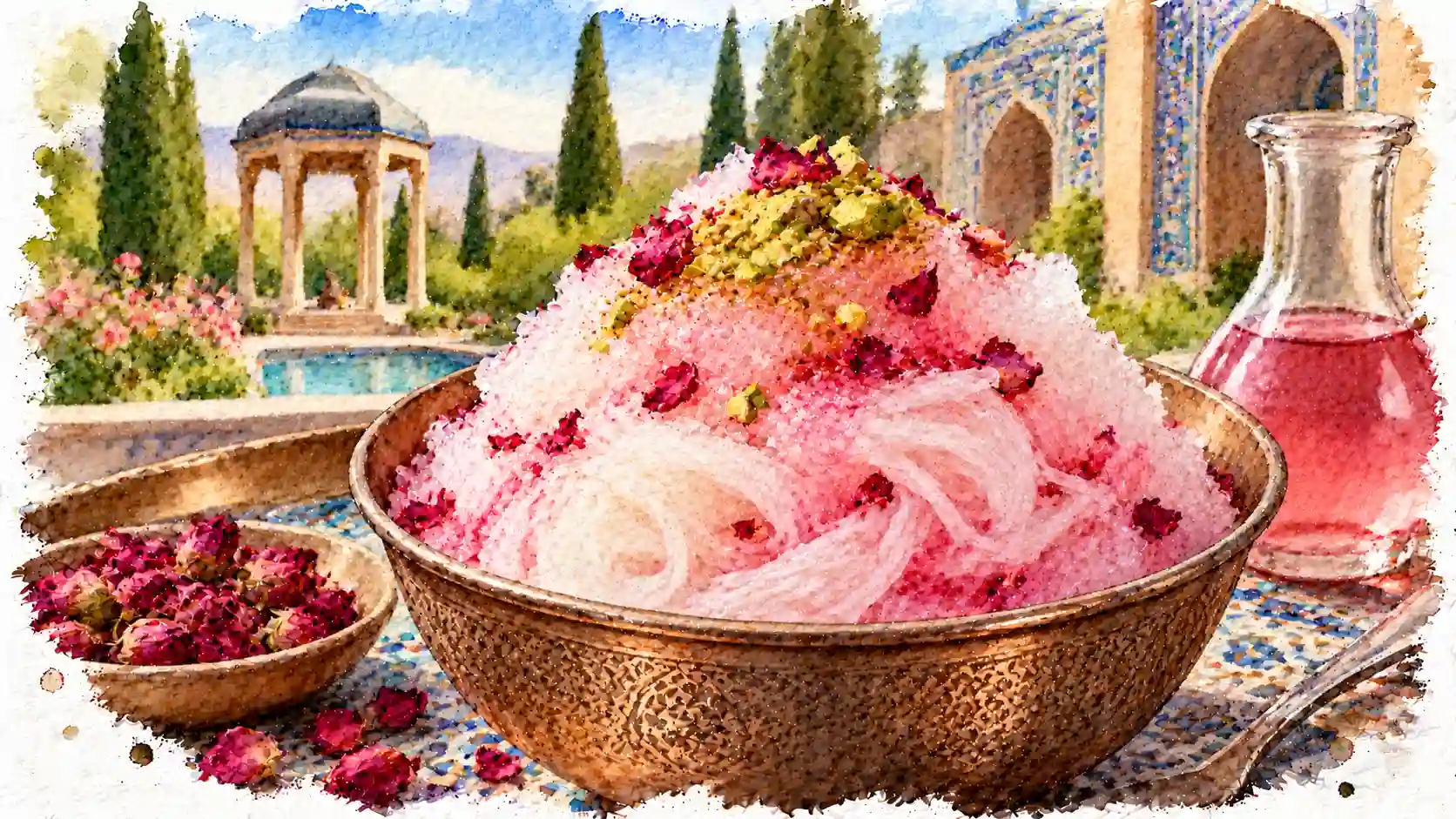
Sweet, floral, and refreshingly icy, faloodeh is one of Iran’s most distinctive frozen desserts. It combines delicate, threadlike starch noodles with a semi-frozen syrup scented with rosewater, creating a treat that is part sorbet and part chewy noodle dessert. Closely associated with the historic city of Shiraz, faloodeh is especially appealing on hot days, when a squeeze of tart lime balances its fragrant sweetness.
What Is Faloodeh?
Faloodeh, also spelled faludeh or paloodeh, is a traditional Iranian cold dessert made from very thin starch noodles served in sweet syrup. The noodles are made from starch, which may come from rice, wheat, or other sources depending on the recipe. Unlike pasta used in savory dishes, these strands are designed to be delicate and pleasant to eat when chilled.
The best-known version is faloodeh Shirazi, named after Shiraz in southern Iran. It has a light, crystalline texture rather than the smooth creaminess of conventional ice cream. Rosewater provides its signature floral aroma, while lime juice or sour-cherry syrup adds a tangy contrast.
Traditional faloodeh is generally dairy-free. Its unusual combination of icy syrup and soft, resilient noodles distinguishes it from both fruit sorbet and milk-based frozen desserts.
Quick Facts
- Origin: Iran
- Regional association: Shiraz, Fars Province
- Main ingredients: Starch noodles, sugar syrup, and rosewater
- Texture: Icy, crystalline, and delicately chewy
- Flavor: Floral and sweet, often balanced with citrus
- Common toppings: Lime juice, sour-cherry syrup, and sometimes pistachios
- Type: Traditional cold or frozen dessert
- Typical serving: Chilled in a bowl or dessert dish
Common Ingredients
Faloodeh relies on a short ingredient list, but each component contributes to its distinctive character.
- Starch noodles: Thin strands made from starch provide the dessert’s characteristic chewy element. Recipes may use rice, wheat, corn, or other starch sources.
- Rosewater: This fragrant ingredient gives classic faloodeh its unmistakable floral aroma. The amount matters because too much can overpower the other flavors.
- Sugar and water: These create the sweet syrup that chills or freezes around the noodles, contributing to the dessert’s icy consistency.
- Lime or lemon juice: Citrus adds brightness and balances the sweetness, particularly in the Shirazi style.
- Sour-cherry syrup and pistachios: Optional additions contribute fruity tartness, color, or a nutty finish.
Although rosewater is central to the familiar version, the balance of sweetness, floral aroma, and acidity varies from one recipe or shop to another. Regional preparations may also use different flavorings and additions.
How Faloodeh Is Prepared
Preparation begins with making very fine starch noodles. The starch is mixed with water and cooked until it forms a thick paste. The paste is then pressed through a fine sieve or suitable nozzle into cold water, forming narrow strands that cool and hold their shape.
Separately, sugar is dissolved in water to make a syrup. Once cooled, the syrup is flavored with rosewater. For the Shirazi style, the syrup is frozen or partially frozen, then stirred or scraped to create loose ice crystals rather than one solid block. The noodles are combined with the icy mixture, with the exact sequence varying by recipe.
The finished dessert should be cold and refreshing, with distinct strands surrounded by fine ice or chilled syrup. Faloodeh is best served when the noodles remain tender and the frozen mixture is still easy to scoop.
History & Origins
Faloodeh belongs to Iran’s long tradition of chilled sweets and drinks. Before modern refrigeration, ice gathered or produced during colder months could be stored in specialized structures known as yakhchals. These traditional ice-storage systems helped make cold refreshments possible during warmer weather.
Shiraz is particularly famous for faloodeh, and the name faloodeh Shirazi identifies the regional style most widely recognized today. The dessert is enjoyed throughout Iran, while other cities have their own local preparations. Faloodeh Yazdi, for example, is a distinctive regional version associated with Yazd.
Stories sometimes describe faloodeh as the world’s first frozen dessert or assign its exact invention to ancient Persia. Although Iran has a long history of ice storage and chilled refreshments, the precise origin date of the modern noodle-and-rosewater dessert is difficult to establish. The popular claim that the present-day recipe dates to around 400 BCE is not securely documented. Faloodeh’s cultural importance is clear even without a definitive founding date.
Varieties & Differences
Faloodeh varies by region and preparation style. The most familiar varieties differ in how the syrup is served, which flavorings are used, and whether the dessert is icy or simply chilled.
- Faloodeh Shirazi: The best-known style, featuring thin starch noodles with a semi-frozen, rosewater-scented syrup. Lime juice and sour-cherry syrup are common accompaniments.
- Faloodeh Yazdi: A regional specialty associated with Yazd. It is often served chilled in a thicker, sweet syrup rather than as the icy, granita-like Shirazi version. Some preparations include seeds or other additions that affect the texture.
- Faloodeh Kermani: A regional variation associated with Kerman, with recipes that may use mint syrup or other local flavorings.
- Fruit-accented faloodeh: Some versions are served with sour-cherry syrup or other fruit flavors that add color and tartness.
- Faloodeh with ice cream: Some shops pair it with bastani sonnati, a traditional Persian ice cream commonly flavored with saffron and rosewater.
Faloodeh should not be confused with South Asian falooda, which commonly combines noodles with milk, sweet syrup, basil seeds, and ice cream. The names and noodle-based elements are related, but the desserts are prepared and served differently.
How Faloodeh Is Enjoyed
Faloodeh is often enjoyed as an afternoon refreshment or after a meal, particularly in warm weather. In Shiraz, specialty shops have helped make it a celebrated local treat. Its cool temperature and lively texture are central to the experience: each spoonful combines delicate noodles with small crystals of flavored ice.
A squeeze of fresh lime is a classic finishing touch. The citrus sharpness balances the syrup’s sweetness and lifts the floral fragrance of rosewater. Sour-cherry syrup offers another popular contrast, bringing fruity tartness and deeper color. Some servings include crushed pistachios for additional texture.
Pairing faloodeh with Persian ice cream creates a contrast between the dairy-rich creaminess of bastani and the light, icy character of the noodle dessert. It can also be enjoyed on its own, allowing the rosewater aroma and distinctive texture to stand out.
Did You Know?
Faloodeh’s noodles are not simply ordinary pasta added to a frozen dessert. They are made from cooked starch formed into fine strands specifically suited to the dish. Their gentle chew, paired with icy syrup, is what makes faloodeh feel so different from an ordinary fruit granita.
A Persian Classic with a Distinctive Texture
Faloodeh brings together a few simple ingredients in an unexpectedly memorable way. Floral rosewater, sweet syrup, icy crystals, and fine starch noodles create a dessert that is light yet textured, familiar yet unlike most frozen sweets. Closely associated with Shiraz and enjoyed throughout Iran, it remains a refreshing expression of Persian dessert tradition.