
Fried Tarantulas
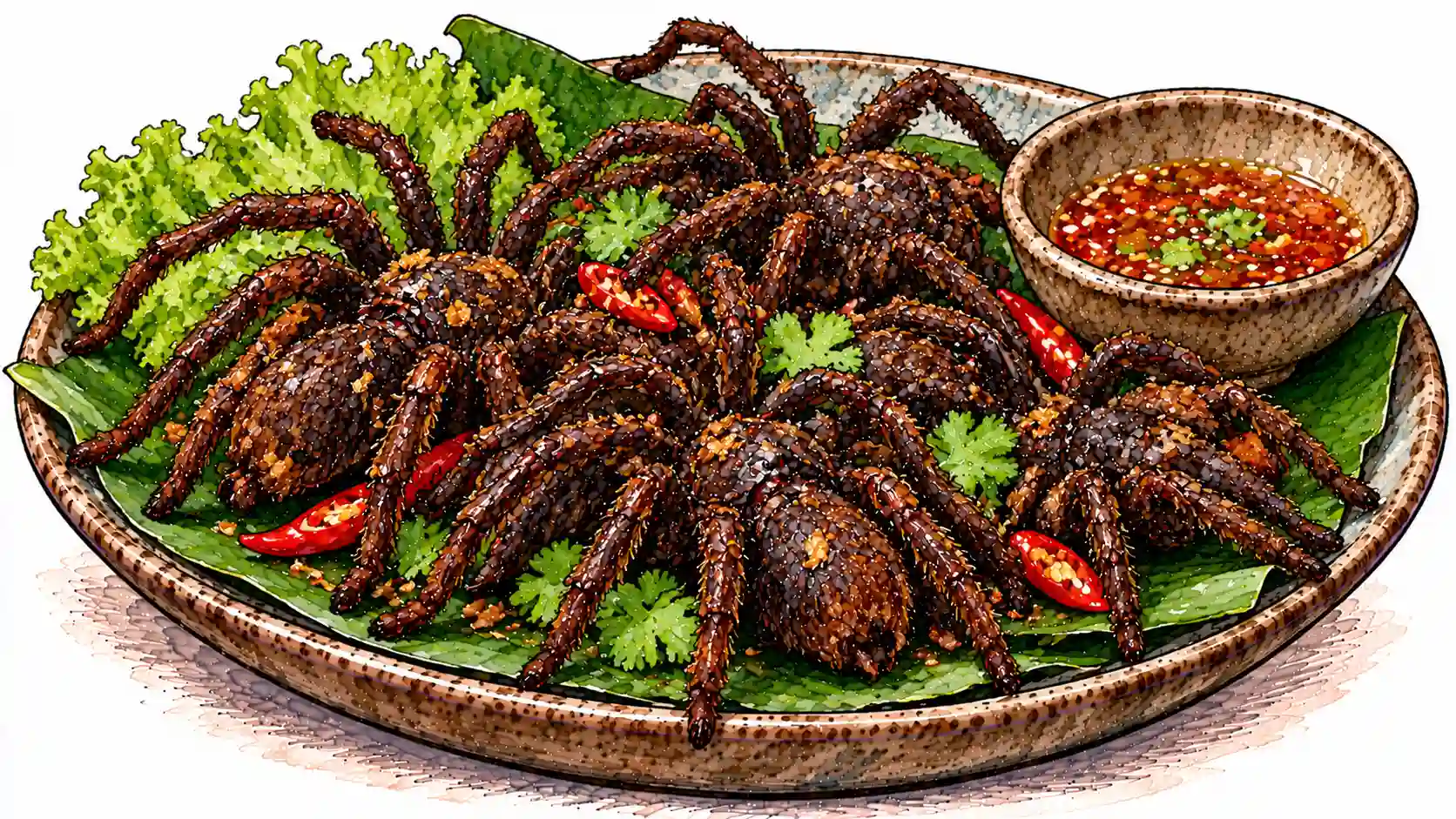
Crispy on the outside and softer inside, fried tarantulas are one of Cambodia’s most distinctive regional foods. Known as a-ping, these whole spiders are commonly seasoned with garlic and salt before being fried until their legs become crunchy and their bodies are cooked through. The town of Skuon is particularly famous for selling them as a street-food snack. Although they may seem unusual to visitors, fried tarantulas have a place in Cambodian food culture that goes beyond novelty, reflecting rural food traditions, periods of food scarcity, and a trade that has grown alongside tourism.
What Are Fried Tarantulas?
Fried tarantulas are whole spiders that have been cleaned, seasoned, and cooked in hot oil. They are particularly associated with Cambodia, where they are sold as street food and market snacks. The Khmer name a-ping is commonly used for this delicacy.
The town of Skuon, in Kampong Cham Province, is especially famous for its fried spiders and is often nicknamed Spider Town or Spiderville. The cooked spiders typically have crisp legs and a softer abdomen. Their flavor depends on the seasoning and cooking method, but descriptions often emphasize a savory, earthy taste, with the garlic and other seasonings contributing much of the flavor.
The exact species sold as a-ping has not been consistently established across the trade. These spiders are tarantulas, which are arachnids rather than insects, and they are generally sold whole rather than separated into individual parts.
Quick Facts
- Food Category: Edible arachnids and Cambodian street food
- Origin: Cambodia, especially Skuon
- Main Ingredient: Tarantulas
- Common Seasonings: Garlic, salt, and sometimes sugar, soy sauce, or other spices
- Typical Flavor: Savory, earthy, and influenced by the seasonings
- Preparation: Cleaned, seasoned, and usually deep-fried
- Common Uses: Street snacks and regional food experiences
Common Ingredients
Fried tarantulas are prepared with relatively few ingredients. Seasonings add flavor, while hot oil creates the crisp exterior associated with the dish. Recipes differ among vendors and households, so not every version contains the same ingredients.
- Tarantulas: The main ingredient, generally prepared whole after cleaning.
- Cooking Oil: Used to fry the spiders until the exterior becomes crisp and the interior is cooked through.
- Garlic: Adds a distinctive savory aroma and flavor.
- Salt: Enhances the flavor and helps season the spider evenly.
- Sugar: Sometimes included to balance the savory seasoning.
- Soy Sauce or Other Seasonings: Used in some preparations to add saltiness and depth of flavor.
- Dipping Sauce: Some servings are accompanied by a sauce, with ingredients varying by vendor and local preference.
How Fried Tarantulas Are Prepared
Preparation begins with sourcing and cleaning the spiders. Some are collected from the wild, while others may come from areas where they are gathered or raised for sale. Preparers remove unwanted material, and some remove the fangs before cooking. Handling live tarantulas can be hazardous, so this work is best left to experienced food handlers.
The spiders are then seasoned, commonly with garlic and salt, sometimes with sugar, soy sauce, or other ingredients. They are usually fried whole in hot oil until the legs become crisp and the body is cooked through. The cooking method and timing affect the final texture, with the legs generally becoming crunchier than the softer abdomen.
Fried tarantulas may be served on their own or with a dipping sauce. Preparation should follow hygienic food-handling practices, and the spiders should be fully cooked and obtained from a reliable source intended for food use. Wild-harvested animals can carry contaminants, and people with concerns about allergies should be cautious when trying unfamiliar arthropods.
Responsible sourcing is also important. Research and reporting have raised concerns about declining tarantula availability in some areas as a result of harvesting pressure and changes to their natural habitat. Sustainable collection practices can help reduce the impact on local populations.
History & Origins
Fried tarantulas are strongly associated with Cambodia, particularly Skuon, where vendors have made them a recognizable regional specialty. However, the precise origins of eating tarantulas are uncertain, and accounts of the tradition do not tell a single, definitive story.
Some accounts connect the wider consumption of spiders and other unconventional foods to the severe food shortages under the Khmer Rouge regime in the 1970s. During this period, people facing hunger relied on whatever food resources they could find. Other accounts describe tarantula hunting as part of a longer rural practice of gathering wild foods, including insects and other small animals.
These explanations are not necessarily contradictory: a food may have been known before a crisis and then become more important when other sources of nourishment were scarce. Available accounts do not establish one precise starting date for the dish or show that all communities began eating tarantulas for the same reason.
Over time, Skuon became a center of the fried-spider trade. Its roadside location helped vendors reach passing travelers as well as local customers. As tourism and commerce grew, a-ping became increasingly recognizable beyond the communities where it was eaten.
Today, fried tarantulas remain part of Cambodia’s broader tradition of eating insects and other locally gathered foods. They are also a prominent example of how a regional snack can become an internationally known culinary attraction, even as questions about wildlife harvesting and sustainability become more pressing.
Varieties & Differences
Fried tarantulas are usually prepared using a straightforward technique, but their flavor and presentation can vary according to the cook and local preferences. Common styles and serving methods include:
- Garlic-Fried Tarantulas: Seasoned with garlic and salt for a savory, aromatic flavor.
- Simply Salted Tarantulas: Prepared with a relatively simple seasoning that lets the roasted spider flavor stand out.
- Seasoned Tarantulas: Made with additional ingredients such as sugar, soy sauce, or other spices.
- Grilled Tarantulas: Cooked over a fire rather than deep-fried, creating a different texture and potentially a smoky flavor.
- Tarantulas with Dipping Sauce: Served with a sauce or other accompaniment, depending on the vendor.
The eating experience also varies across the spider’s body. The legs tend to be crisp, while the abdomen is softer and has a different texture. The size of the spider, the cooking method, and the seasoning all influence the final result.
Unlike dishes made with crickets or grasshoppers, a-ping features spiders, which belong to the arachnid group rather than the insect group. This biological distinction is one reason the dish stands out to many first-time visitors.
How Fried Tarantulas Are Enjoyed
Fried tarantulas are commonly sold at roadside stalls and markets, particularly in Skuon. They are generally eaten as a snack rather than as the centerpiece of a full meal, and some vendors serve them with dipping sauces or other accompaniments.
The texture varies across the spider’s body. The legs tend to be crunchy, while the abdomen is softer. Garlic, salt, and other seasonings contribute much of the finished flavor, and different vendors may prepare the spiders in slightly different ways.
For some travelers, trying a fried tarantula is a way to experience a distinctive part of Cambodian food culture. For local customers, it may be a familiar regional snack with a history tied to rural food gathering and the development of Skuon’s market trade.
The dish’s growing reputation also brings attention to the people who collect and sell the spiders, as well as the need to manage wild populations carefully. Enjoying regional foods responsibly includes considering where their ingredients come from and whether harvesting practices can be sustained over time.
Did You Know?
Skuon in Cambodia is widely known as Spider Town because of its fried tarantula trade!
The town became a well-known stop for travelers seeking a-ping, with vendors selling trays of cooked spiders alongside other local snacks. Its reputation helped turn a regional food into one of Cambodia’s most recognizable culinary specialties.