
Hagfish
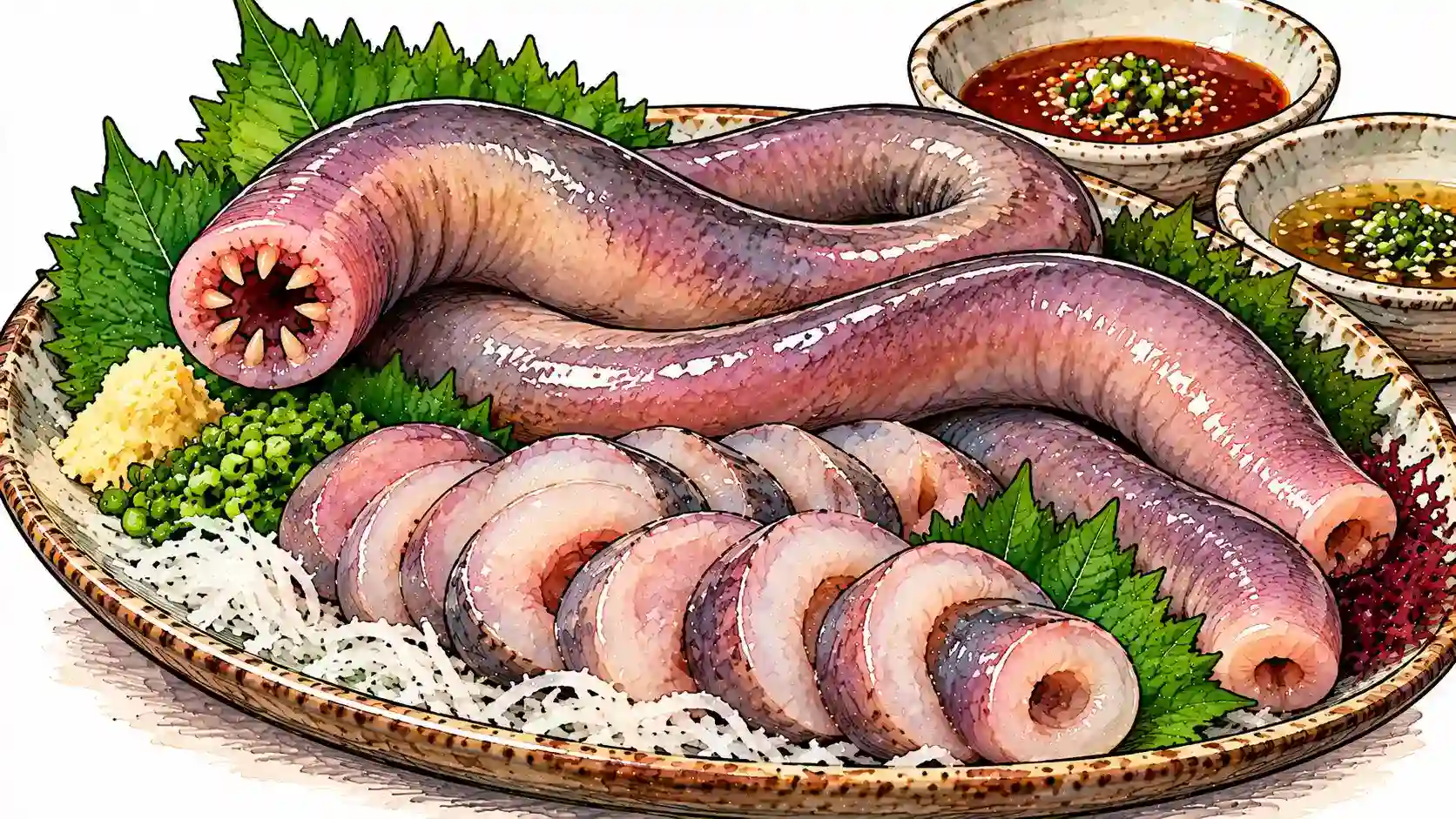
Hagfish are among the ocean’s strangest creatures, famous for producing astonishing amounts of slippery slime when threatened. With their long, eel-like bodies and unusual appearance, they might not look like a tempting meal at first glance. Yet in South Korea, hagfish are a recognized seafood delicacy, especially in coastal dining spots around Busan. Often called kkomjangeo (꼼장어) in Korean, they are commonly grilled over charcoal or cooked on a hot plate and enjoyed for their firm, chewy texture and savory flavor. Despite the name, hagfish are not true eels.
What Is Hagfish?
Hagfish are jawless marine vertebrates that generally live on the ocean floor. Their long, flexible bodies resemble those of eels, but the two belong to very different animal groups. Hagfish have a cartilaginous skull and a flexible notochord rather than the typical series of vertebrae found in most familiar vertebrates. Many feed mainly on dead or dying marine animals, although research has also documented hagfish attacking live prey.
Their most famous feature is their remarkable slime defense. When disturbed, a hagfish releases mucus and tiny protein threads from glands along its body. In seawater, these materials rapidly form a voluminous, slippery network that can clog a predator’s gills and make the hagfish difficult to grasp. Under some conditions, a single hagfish can produce far more slime by volume than its own body.
Despite this unusual defense, hagfish are eaten in several parts of East Asia, particularly South Korea. There, they are commonly prepared by cleaning the animal, removing its skin, cutting the flesh into pieces, and cooking it over high heat. Grilling browns the exterior while leaving the flesh firm and chewy.
Quick Facts
- Common name: Hagfish
- Korean food name: Kkomjangeo (꼼장어)
- Popular food destination: South Korea, especially Busan
- Animal group: Jawless marine vertebrates
- Appearance: Long, eel-like body with smooth skin and no paired fins
- Famous defense: Produces large amounts of slime when threatened
- Common Korean preparation: Charcoal-grilled or cooked on a hot plate
- Texture: Firm and chewy
- Flavor: Savory, often paired with salty or spicy seasonings
Common Ingredients
Korean hagfish dishes are usually prepared with ingredients that complement the seafood’s savory flavor. Recipes vary by restaurant, and some preparations use only a little salt while others feature a spicy marinade.
- Hagfish: The main ingredient, cleaned and prepared before cooking.
- Salt: Used to season the flesh and highlight its natural flavor.
- Sesame oil: Adds a nutty aroma and richness in some preparations.
- Garlic: Provides a fragrant, savory accent.
- Gochujang: Korean fermented chili paste used in spicy marinades and sauces.
- Gochugaru: Korean chili flakes that add heat and color.
- Scallions: Often used as a fresh garnish.
- Perilla leaves and lettuce: Sometimes served alongside the cooked fish for wrapping bites.
- Dipping sauces and side dishes: Vary by restaurant and may include spicy, salty, or tangy accompaniments.
Soju and other beverages are also commonly served with grilled hagfish in Korean restaurants, though they are accompaniments rather than ingredients in the dish.
How Hagfish Is Prepared
Preparing hagfish for food requires careful handling because of its slime-producing ability. Seafood workers use cleaning methods to remove the slime and prepare the animal for cooking. The skin is generally removed, and the flesh is cut into manageable pieces before seasoning and grilling.
One well-known Korean preparation is charcoal-grilled hagfish. The pieces are cooked over high heat until browned and cooked through. Some restaurants season the meat simply with salt, while others coat it in a spicy mixture containing chili paste, garlic, and other seasonings.
Another style uses a hot plate or pan. The hagfish is cooked with a marinade or sauce, allowing the seasonings to coat the pieces as they brown. Depending on the restaurant, vegetables and aromatics may be added during cooking.
The finished dish is typically served hot, sometimes with leafy greens, sliced garlic, chili peppers, and dipping sauces. Its texture is part of the appeal: unlike the flaky flesh of many familiar fish, hagfish tends to be firm and chewy. As with other seafood, hygienic handling and thorough cooking are important.
History & Origins
Hagfish belong to an ancient lineage of jawless fishes and have a distinctive body plan that makes them important subjects of evolutionary research. However, describing living hagfish as “primitive” can be misleading: modern species have continued to evolve, just as other living animals have.
In South Korea, hagfish are associated with coastal seafood culture and are especially well known around Busan. Grilled preparations appear on the menus of casual restaurants and specialist seafood establishments. The animal is often called kkomjangeo in Korean, a food name that can be confusing for visitors because hagfish are not true eels.
Hagfish are also harvested commercially in several countries, although the species caught and the uses of the catch vary by region. Their tough skin has been used to make leather-like products, sometimes marketed as eel leather. Their slime has attracted scientific interest because its combination of mucus and protein threads has unusual physical properties.
Varieties & Differences
Hagfish are a group of animals that includes multiple species living in different ocean regions. The species sold for food can vary by fishery, so not every hagfish dish necessarily comes from the same species. In Korean restaurants, the cooking method and seasoning are often the most noticeable differences for diners.
- Charcoal-grilled hagfish: A familiar Korean preparation that highlights the browned exterior and chewy flesh.
- Spicy grilled hagfish: Coated in a chili-based marinade for a hot, savory flavor.
- Salt-grilled hagfish: Seasoned simply to emphasize the seafood’s natural taste.
- Pan-cooked hagfish: Prepared on a hot plate with sauce and sometimes vegetables.
- Hagfish from other regions: Different species are harvested in parts of the Pacific and elsewhere for food and other commercial uses.
Hagfish should not be confused with true eels. Both have long bodies, but they differ substantially in anatomy and evolutionary relationships.
How Hagfish Is Enjoyed
In South Korea, grilled hagfish is often enjoyed as a shared meal. Diners may cook it at the table or receive it freshly grilled, then eat it in small bites with dipping sauces and side dishes. Spicy versions pair well with fresh vegetables, while salt-grilled preparations offer a simpler combination of smoky flavor and chewy texture.
The dish appeals to people who enjoy distinctive seafood textures. Its unusual appearance may be intimidating to newcomers, but the cooked flesh is more familiar than the animal’s reputation suggests: savory, firm, and well suited to bold Korean seasonings.
Hagfish also attracts attention beyond the dining table because of its slime defense. The same biological feature that fascinates scientists can make the animal messy to handle, which is one reason cleaning and preparation are generally left to experienced seafood workers.
Did You Know?
Hagfish slime can expand dramatically when it contacts seawater. Mucus and protein threads released by a threatened hagfish form a slippery network that can interfere with a predator’s breathing. Researchers study this unusual material for its physical properties, while diners in South Korea know hagfish for a very different reason: its savory, chewy flesh when grilled.