
Haggis
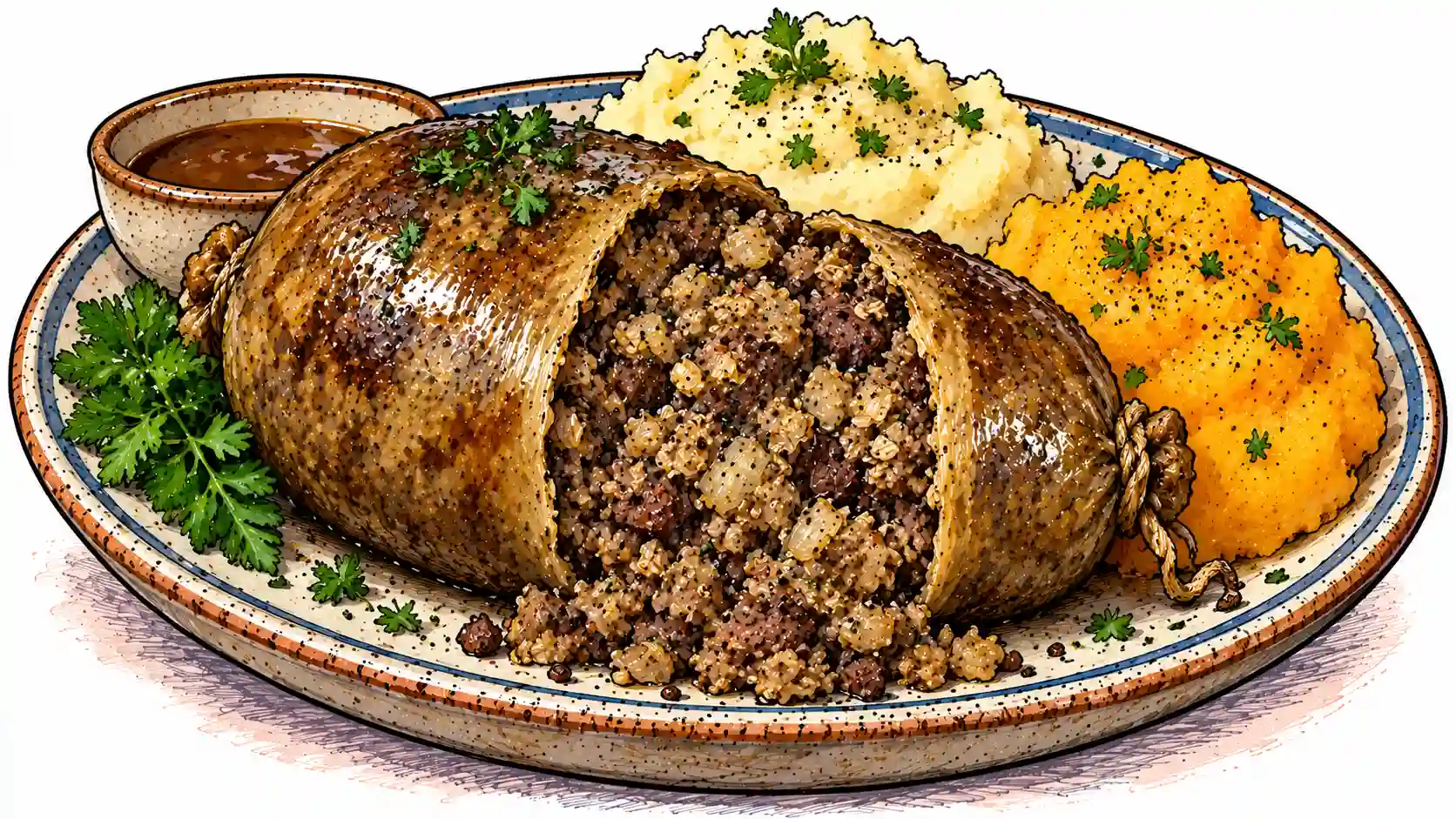
Few traditional dishes are as closely associated with a country as haggis is with Scotland. This hearty Scottish specialty combines sheep offal, oatmeal, onions, fat, and spices to create a savory mixture with a rich flavor and coarse, crumbly texture. Traditionally cooked inside a sheep's stomach, haggis may intrigue or intimidate first-time diners, but it remains an important part of Scottish food culture. It is served at family meals and celebrations, especially Burns Night, when people gather to honor Scotland's national poet, Robert Burns.
What Is Haggis?
Haggis is a traditional savory pudding strongly associated with Scotland. Classic recipes use sheep's pluck, a traditional term for the heart, liver, and lungs, combined with oatmeal, onions, suet or other fat, and seasonings. The mixture is traditionally enclosed in a cleaned sheep's stomach and cooked until the filling is thoroughly done and the ingredients have blended together.
Although the ingredient list may sound unusual to people unfamiliar with offal-based cooking, haggis belongs to a broader tradition of using different parts of an animal after slaughter. Oatmeal absorbs moisture and contributes body and texture, while onions, fat, and spices give the filling its distinctive savory character.
Cooked haggis generally has a moist, coarse, and crumbly consistency, somewhat like a richly seasoned stuffing. Its flavor is earthy and savory, with the seasonings balancing the distinctive taste of the organ meats. Modern versions may be made in synthetic casings or cooked in other suitable containers rather than a traditional stomach.
In Scotland, haggis is more than a meal. It is a national culinary symbol closely linked to Scottish identity, poetry, and celebration. It is especially famous as the centerpiece of a Burns Supper, where it is traditionally brought to the table with ceremony while Robert Burns's poem "Address to a Haggis" is recited.
Quick Facts
- Origin: Strongly associated with Scotland; exact origins are uncertain
- Main Ingredients: Sheep offal, oatmeal, onions, fat, and spices
- Traditional Casing: A cleaned sheep's stomach
- Texture: Moist, coarse, and crumbly
- Flavor: Rich, earthy, savory, and warmly spiced
- Traditional Accompaniments: Neeps and tatties, usually mashed swede and potatoes
- Famous Celebration: Burns Night, held around January 25
- Food Category: Traditional Scottish savory pudding
Common Ingredients
Traditional haggis uses a relatively simple set of ingredients, although proportions and seasonings vary between recipes. Together, they create a hearty filling with a distinctive texture and rich, savory flavor.
- Sheep's Heart: Adds a deep, meaty flavor and contributes to the dish's substantial texture.
- Sheep's Liver: Provides a rich, earthy taste that helps define traditional haggis.
- Sheep's Lungs: Included in many traditional descriptions of haggis, although the use of lungs in food is subject to specific regulations in some countries.
- Oatmeal: Absorbs moisture, helps bind the mixture, and provides a distinctive grainy texture.
- Onions: Add sweetness and aromatic depth.
- Suet or Other Fat: Helps keep the filling moist and gives it richness.
- Black Pepper and Other Spices: Supply warmth and seasoning. Recipes differ, and some include additional spices.
- Sheep's Stomach: Traditionally used as the casing, although modern haggis may be prepared in synthetic casings or other suitable containers.
How Haggis Is Prepared
Traditional haggis preparation begins with preparing the sheep offal according to the recipe. The heart, liver, and lungs are handled and cooked as required, then minced or finely chopped. The ingredients are combined with oatmeal, onions, fat, and seasonings to create a moist mixture that retains some texture rather than becoming a smooth paste.
The filling is traditionally placed inside a cleaned sheep's stomach, which is secured to contain the mixture during cooking. It is then simmered until thoroughly cooked and the flavors have blended. Because haggis contains organ meats, careful handling, hygienic preparation, and adequate cooking are important for food safety.
Modern haggis is often made using food-grade synthetic casings or cooked in other suitable containers. Commercial versions may be sold ready to heat, making the dish easier to prepare at home. The exact method varies, but the characteristic combination of offal, oats, onions, fat, and seasoning remains central to traditional haggis.
Once cooked, haggis is commonly opened and spooned onto plates rather than sliced like a conventional sausage. Its crumbly filling is particularly well suited to being served alongside mashed potatoes and swede.
History & Origins
Haggis is strongly associated with Scotland, although the precise origins of the dish are uncertain. Dishes combining chopped meat, grains, and animal casings have appeared in different culinary traditions, and historical references to haggis do not establish a single inventor or definitive place of origin.
The dish fits a broader history of practical cooking in which households used a wide range of ingredients to make nourishing meals from available livestock. Offal and grains were valuable resources, and combining them created a filling dish that could feed several people without relying exclusively on prime cuts of meat. Historical recipes and references to haggis appear in a wider British context, even though the dish eventually became especially associated with Scotland.
Haggis became particularly prominent in Scottish cultural identity through its association with the poet Robert Burns. His poem "Address to a Haggis" was published in 1786 and celebrates the dish with humor and affection. The poem helped establish haggis as a powerful symbol of Scottish food and national pride, rather than proving that the dish originated during Burns's lifetime.
The first Burns Supper was held by Burns's friends in 1801, five years after his death. Haggis was served at the gathering, and the poem formed part of the celebration. Over time, the tradition developed into the familiar Burns Night event, held around January 25, Burns's birthday.
Today, haggis is the traditional centerpiece of many Burns Suppers. It is often carried to the table with music and ceremony, and a speaker recites "Address to a Haggis" before cutting into it. This ritual has helped preserve the dish as both a culinary tradition and a cultural emblem.
Varieties & Differences
Although traditional haggis follows a recognizable formula, modern versions reflect changing dietary preferences, ingredients, and food regulations. The name is now used for several preparations inspired by the classic dish.
- Traditional Haggis: Made with sheep offal, oatmeal, onions, fat, and spices, traditionally enclosed in a sheep's stomach.
- Commercial Haggis: Often sold in synthetic casings or other packaging for convenient cooking and serving.
- Vegetarian Haggis: Uses ingredients such as pulses, vegetables, mushrooms, seeds, and grains instead of animal offal.
- Vegan Haggis: Avoids all animal-derived ingredients, including meat and animal fat.
- Haggis-Inspired Dishes: Some cooks use the familiar savory mixture in pastries, stuffed vegetables, or other contemporary recipes.
One important distinction is that traditional haggis contains animal organs, while vegetarian and vegan versions are adaptations designed to reproduce its hearty texture and spiced flavor without the traditional meat ingredients. Recipes and ingredient labels should be checked carefully, especially when dietary requirements or food allergies are involved.
How Haggis Is Enjoyed
Haggis is most famously served with neeps and tatties, the Scottish names for swede and potatoes. Swede, also called rutabaga in North America, is commonly mashed and served alongside mashed potatoes and haggis. The mild, creamy vegetables provide a contrast to the rich, savory filling. Some meals also include a whisky-based sauce, although this is not essential to the traditional dish.
Burns Night is the best-known occasion for eating haggis. A typical Burns Supper may include a formal welcome, a meal, poetry, speeches, and a ceremonial presentation of the haggis. The poem "Address to a Haggis" is often recited as the dish is brought to the table, turning an ordinary meal into a celebration of Scottish literature and culture.
Haggis is also enjoyed throughout the year in homes, pubs, and restaurants. It may be served as a main course or incorporated into modern dishes such as haggis-stuffed poultry or haggis-topped potatoes. These variations allow cooks to experiment while retaining the distinctive flavors of the original.
For newcomers, the ingredient list may be the biggest surprise, but the cooked dish is often more approachable than its reputation suggests. Its savory flavor, warm spices, and hearty texture make it a memorable example of Scotland's traditional cooking. Availability and permitted ingredients can vary by country, so commercially sold haggis may differ from traditional recipes.
Did You Know?
Haggis has its own famous poem, written by Robert Burns in 1786. "Address to a Haggis" celebrates the dish with humor and affection. At many Burns Suppers, the haggis is ceremonially brought to the table while the poem is recited, making the meal a distinctive combination of Scottish food, poetry, and national tradition.