
Hormigas Culonas
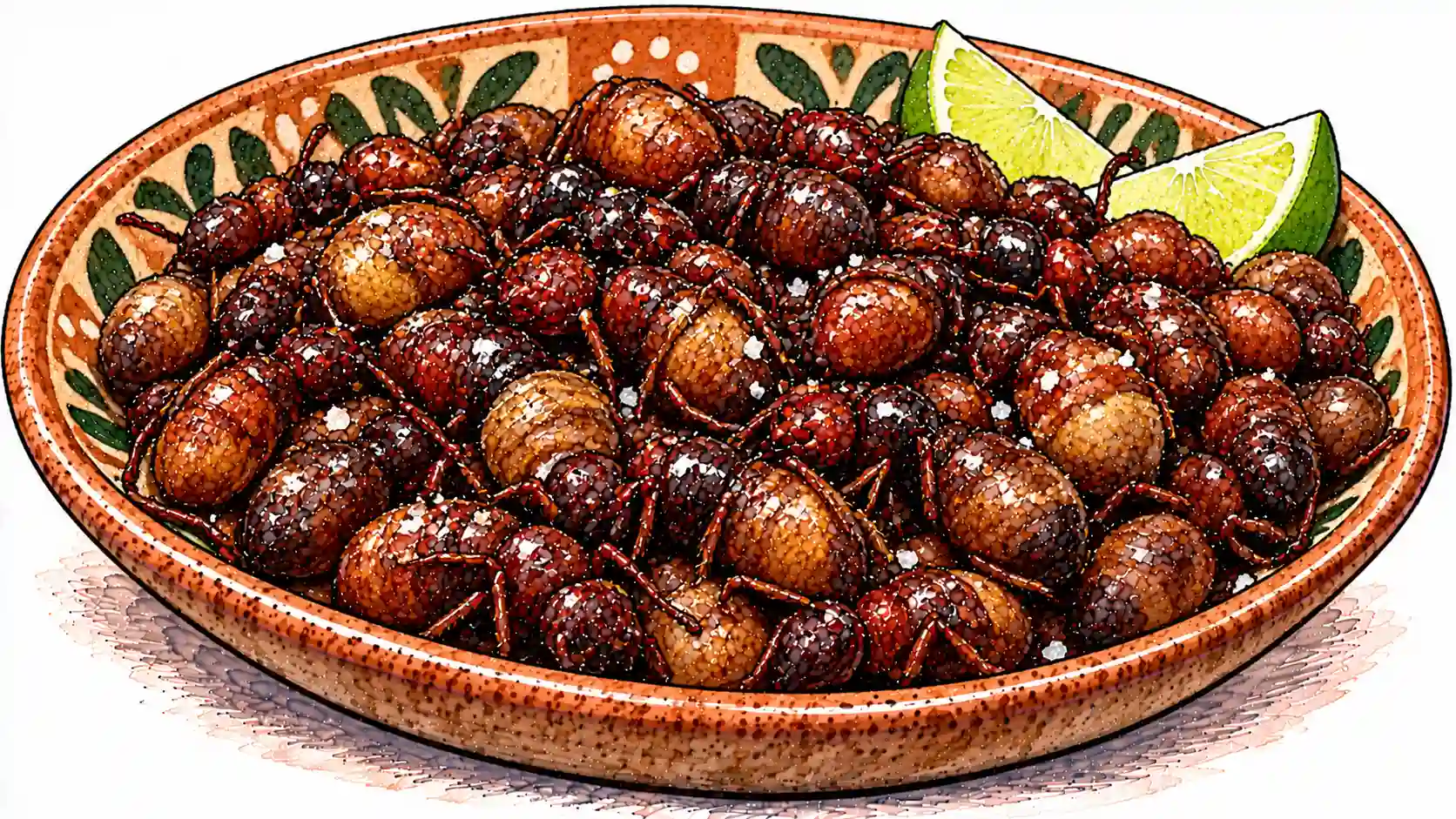
Crunchy, savory, and famous for their distinctive appearance, hormigas culonas are one of Colombia’s best-known traditional delicacies. These large leafcutter ants are usually the reproductive females of Atta laevigata, whose enlarged abdomens give the snack its memorable name. Particularly associated with the Santander region, the ants are collected during their seasonal nuptial flights, then cleaned, salted, and roasted. Their crisp texture and flavor are often compared to roasted nuts. Enjoyed for generations, hormigas culonas remain an important part of local food culture and a distinctive symbol of Santander’s culinary heritage.
What Are Hormigas Culonas?
Hormigas culonas are large leafcutter ants traditionally eaten in Colombia, especially in the northeastern department of Santander. The Spanish name translates roughly to “big-bottomed ants,” referring to the enlarged abdomens of the reproductive females, commonly identified as Atta laevigata, that are collected for food.
These ants are generally cleaned, salted, and roasted or toasted before being eaten as a crunchy snack. Their flavor is often described as nutty, earthy, and savory, with a crisp texture developed during cooking. Although they may seem unusual to people unfamiliar with edible insects, hormigas culonas are a longstanding regional specialty with strong cultural connections to Santander.
Quick Facts
- Food Category: Edible insects and traditional Colombian snacks
- Origin: Santander, Colombia
- Main Ingredient: Reproductive female leafcutter ants, commonly Atta laevigata
- Common Seasonings: Salt and sometimes other simple seasonings
- Typical Flavor: Nutty, earthy, and savory
- Preparation: Cleaned, salted, and roasted or fried
- Common Uses: Snacks, regional specialties, and culinary souvenirs
Common Ingredients
Traditional hormigas culonas are prepared with relatively few ingredients. The aim is to preserve the ants’ distinctive flavor while producing a crisp texture. Exact methods vary among households and commercial producers.
- Leafcutter Ant Queens: The main ingredient, usually the large reproductive females collected during their nuptial flight.
- Salt: Enhances the ants’ natural savory flavor and is commonly used during preparation.
- Water: May be used to rinse the ants or prepare a saltwater bath before roasting.
- Cooking Oil or Fat: Sometimes used to help toast the ants evenly and develop a crisp texture.
- Additional Seasonings: Some modern preparations use spices, although traditional versions are often kept simple.
Not every recipe uses oil or additional spices. Many traditional preparations focus on cleaning, salting, and roasting the ants so their own flavor remains prominent.
How Hormigas Culonas Are Prepared
The preparation of hormigas culonas begins with collecting reproductive females as they emerge from their colonies during their seasonal nuptial flights. In Santander, this usually happens around the beginning of the rainy season. The timing varies with local weather conditions, and the harvest period can be relatively brief.
After collection, the ants are cleaned and unwanted parts are removed. Depending on local practice, this may include the wings, legs, and head. The ants are then rinsed or soaked in salted water before cooking.
Traditionally, hormigas culonas are roasted or toasted in a pan, sometimes with a small amount of oil or fat. The heat removes moisture and develops a crunchy texture while bringing out their roasted flavor. Cooking methods vary between households and producers, but simple seasoning remains characteristic of the snack.
Because the ants are collected from the wild, correct identification and hygienic handling are important. Harvesters should avoid contamination during collection and processing, and the ants should be cooked thoroughly before consumption. Sustainable collection practices also matter because the insects are part of local ecosystems and their seasonal availability depends on environmental conditions.
History & Origins
Hormigas culonas are closely associated with the Santander region of Colombia, particularly areas around San Gil, Barichara, Curití, and Bucaramanga. The tradition of eating these ants is widely linked to the Indigenous Guane people, who lived in parts of the region before Spanish colonization.
Historical accounts and modern research associate Guane food traditions with the collection and consumption of large reproductive leafcutter ants. However, the precise beginnings of the practice and the continuity of particular preparation methods over time are difficult to establish in every detail. The connection remains an important part of how the delicacy is understood and remembered in Santander.
The ants are seasonal, emerging in large numbers during nuptial flights associated with suitable weather and the start of the rainy season. This brief period of availability has helped make hormigas culonas a distinctive regional food rather than an everyday ingredient. Traditionally, families and local harvesters have gathered the ants for food and trade.
Today, hormigas culonas are sold in markets, specialty food shops, and tourist areas throughout Santander. Packaged versions have introduced the snack to consumers elsewhere in Colombia and internationally. The ants are also featured in local celebrations and food events, reinforcing their place in the region’s cultural identity.
Varieties & Differences
Hormigas culonas generally refer to the reproductive females of leafcutter ants, most commonly identified as Atta laevigata. Although the basic preparation is relatively simple, differences in cleaning, seasoning, and cooking create several variations.
- Traditional Salted Ants: Cleaned, salted, and roasted to highlight their natural flavor.
- Dry-Roasted Ants: Toasted with little or no added oil, producing a crisp texture.
- Oil-Roasted Ants: Cooked with a small amount of oil or fat to help develop an even, roasted finish.
- Seasoned Ants: Prepared with additional spices in some modern versions.
- Packaged Hormigas Culonas: Roasted ants sold in sealed bags or containers as snacks, specialty foods, or souvenirs.
Hormigas culonas are different from Mexican chapulines, which are grasshoppers rather than ants. Their unusually large abdomens, seasonal harvest, and characteristic preparation distinguish them from many other edible insects.
How Hormigas Culonas Are Enjoyed
Hormigas culonas are commonly eaten by the handful as a snack. Their crunchy texture and savory flavor make them suitable for enjoying on their own, particularly when freshly roasted and lightly salted.
In Santander, they are also purchased as regional specialties and gifts for visitors. Their unusual appearance and strong local identity have made them a popular culinary souvenir, especially among travelers interested in traditional Colombian foods.
Some contemporary cooks experiment with incorporating roasted ants into other dishes, using them as crunchy toppings or adding them to recipes that benefit from a nutty, savory accent. However, the simple preparation of salted, roasted ants remains one of the most recognizable ways to enjoy this regional delicacy.
Did You Know?
Hormigas culonas are famous for their enlarged abdomens, which give them their memorable Spanish name!
The name translates roughly to “big-bottomed ants” and refers to the large reproductive females traditionally collected for food. Their seasonal appearance during nuptial flights and distinctive size have helped make them an enduring symbol of Santander’s culinary heritage.