
Huitlacoche
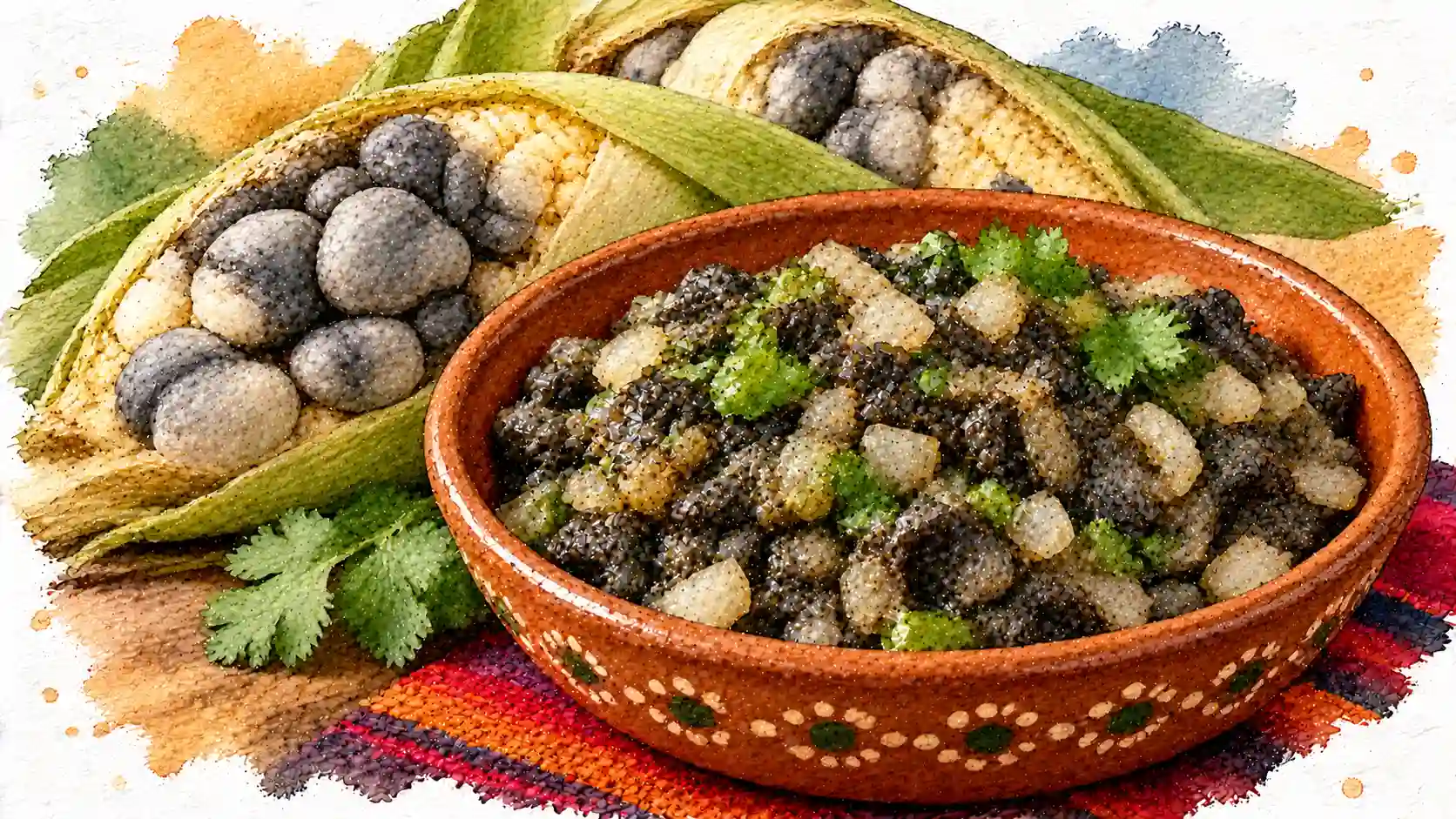
Huitlacoche is one of Mexico’s most distinctive ingredients: a dark, soft fungus that grows on ears of corn and transforms an agricultural problem into a culinary delicacy. Sometimes nicknamed “Mexican truffle,” it has an earthy, savory flavor and a tender texture that works beautifully in tacos, quesadillas, soups, and other dishes. Although the fungus is considered a crop disease in many parts of the world, huitlacoche has become a valued ingredient in Mexican food culture.
What Is Huitlacoche?
Huitlacoche, also spelled cuitlacoche, is an edible fungus caused by Ustilago maydis, commonly known as corn smut. It infects corn plants and produces swollen growths, or galls, on the kernels. These growths begin pale and firm before becoming larger, softer, and darker as the fungus develops. When harvested at a suitable young stage, they are prized as food.
The fungus changes the appearance of an ordinary corn cob dramatically. Instead of rows of familiar yellow or white kernels, an infected ear may contain irregular gray, silver, or nearly black masses. Inside, the tissue is moist and tender, with a flavor often described as earthy, mushroom-like, and savory, sometimes with tangy or smoky notes.
Huitlacoche is not a separate mushroom growing beside the corn. It develops directly within the corn kernels, causing them to swell into distinctive galls. In Mexico, this unusual growth is valued as an ingredient rather than simply treated as a crop loss.
Quick Facts
- Food name: Huitlacoche or cuitlacoche
- Region: Mexico, with growing international culinary interest
- Main ingredient: Young galls formed by the fungus Ustilago maydis on corn
- Flavor: Earthy, savory, mushroom-like, and sometimes tangy
- Texture: Soft and moist when harvested young and cooked
- Common dishes: Quesadillas, tacos, tamales, soups, and sauces
- Other name: Mexican truffle, a culinary nickname
Common Ingredients
Huitlacoche is usually cooked with aromatics and seasonings that complement its deep, earthy flavor. Recipes differ by household and region, but common ingredients include:
- Fresh huitlacoche: The central ingredient, used while tender and moist.
- Onion: Adds sweetness and a savory base.
- Garlic: Deepens the aroma and flavor.
- Chili peppers: Provide gentle heat or a sharper, brighter flavor.
- Epazote: A traditional Mexican herb often paired with corn and beans.
- Corn tortillas: Used to make tacos and quesadillas.
- Cheese: Frequently added to quesadillas for a creamy, melty contrast.
- Tomatoes or other vegetables: Included in some stews, fillings, and sauces.
Because huitlacoche already has a distinctive taste, it often needs little more than onion, garlic, herbs, and a modest amount of seasoning. The exact combination depends on the recipe and the flavor profile the cook wants to achieve.
How Huitlacoche Is Prepared
Fresh huitlacoche is typically removed from the corn cob, cleaned, and cooked before being served. Its tender texture means it generally does not need prolonged cooking. A common method is to sauté it with chopped onion, garlic, chili, and epazote until the mixture softens and its flavors come together.
One of the best-known ways to enjoy it is in a quesadilla. The cooked fungus is spooned into a corn tortilla, sometimes with cheese, and the tortilla is heated until warm and lightly crisp. The filling becomes rich and savory, while the tortilla provides a familiar corn flavor that complements the fungus.
Huitlacoche can also be simmered into soups and sauces, folded into tamales, or used as a filling for tacos and other Mexican antojitos, the small dishes and snacks that are central to everyday Mexican cooking. Modern cooks may add it to pasta, baked dishes, and other recipes that benefit from its earthy flavor.
It is sold fresh when available and can also be found canned or preserved. Since fresh huitlacoche is perishable and seasonal in many growing areas, preserved versions make it possible to use the ingredient beyond its usual harvest period. Fresh huitlacoche should be refrigerated and used promptly, while preserved products should be handled according to their packaging instructions.
History & Origins
Huitlacoche is closely associated with Mexico’s long history of cultivating corn. A sixteenth-century illustration and description in the Florentine Codex document the fungus growing on corn and provide an important early written record of its appearance. However, the precise origins and timeline of its use as food are difficult to establish because the surviving historical evidence is limited.
Its historical status is more complicated than the simple story of an ancient delicacy. Because the fungus deforms kernels and can reduce the value of a corn harvest, it has also been regarded as an undesirable crop problem. In Mexico, however, communities developed culinary uses for the young galls, and the ingredient became part of regional food traditions.
Over time, huitlacoche gained wider recognition as a specialty ingredient. Mexican cooks and agricultural producers value it as a distinctive food, while chefs outside Mexico have incorporated it into contemporary menus. The nickname “Mexican truffle” reflects its reputation as a prized ingredient, although its flavor, texture, and biological characteristics differ from those of true truffles.
Varieties & Differences
Huitlacoche is not usually divided into named culinary varieties in the way that cultivated mushrooms are. Instead, the most noticeable differences involve its maturity, appearance, and how it is sold.
- Young, fresh huitlacoche: Often gray or silvery, with a tender texture and a relatively delicate, earthy flavor. This stage is especially useful for traditional fillings.
- More mature growths: Tend to become darker as the fungus develops. With further maturation, the interior becomes increasingly filled with dark spores and may lose the tender texture prized in cooking.
- Fresh market huitlacoche: Usually sold on or removed from the cob and valued for its delicate texture.
- Canned or preserved huitlacoche: Convenient for cooking outside the fresh harvest season, though its texture and flavor may differ from freshly harvested fungus.
These differences matter in the kitchen. Fresh, tender huitlacoche works well when its texture is meant to stand out, while preserved versions can be useful for sauces, soups, and fillings.
How Huitlacoche Is Enjoyed
In Mexico, huitlacoche is especially associated with quesadillas, where its savory filling pairs naturally with corn tortillas. It is also used in tacos, tamales, soups, and sauces. Depending on the region and recipe, it may be combined with cheese, chili, herbs, or other vegetables.
Its taste is often the biggest surprise for first-time eaters. Despite growing on corn, huitlacoche does not simply taste like sweet corn. It has a deeper, more complex profile, with earthy and mushroom-like notes and a savory quality often described as umami. Its softness allows it to blend into a filling while still contributing a distinctive flavor.
Outside Mexico, huitlacoche is sometimes presented as a gourmet ingredient, particularly in restaurants that highlight Mexican cuisine or unusual seasonal produce. Yet it remains rooted in everyday cooking as much as in fine dining. A simple tortilla filled with sautéed huitlacoche can showcase the ingredient just as effectively as a more elaborate dish.
When buying huitlacoche, choose food from a reputable market or supplier and follow its storage and cooking guidance. Not every dark growth or mold found on corn is huitlacoche suitable for eating. Wild or unidentified fungal growths should not be treated as interchangeable with this known edible fungus.
Did You Know?
Huitlacoche is sometimes called “Mexican truffle,” but it is actually a fungus that grows on corn kernels. Although it can look like spoiled produce, the young galls of Ustilago maydis are a recognized ingredient in Mexican cooking when harvested and handled appropriately.