
Jellied Moose Nose
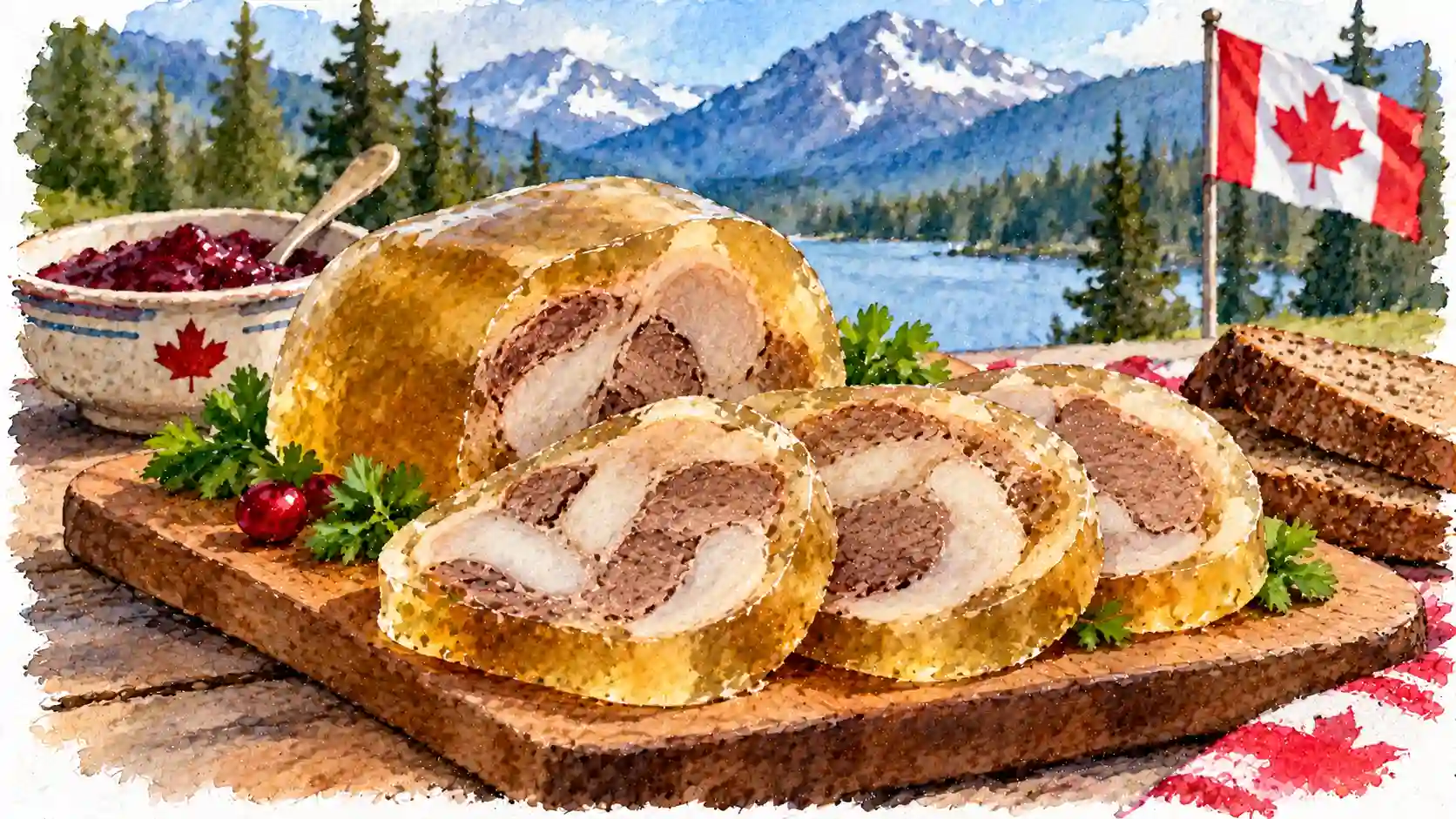
Jellied moose nose is a distinctive traditional dish associated with parts of northern Canada and Alaska. Made by slowly cooking cleaned moose nose meat and chilling it in its own rich broth, the dish sets into a savory jelly that can be sliced and served cold. While its name may surprise people unfamiliar with northern food traditions, it reflects a longstanding practice of using many parts of a harvested animal. For some Indigenous communities, moose nose is a valued food in its own right, prepared in ways that reflect local knowledge, tastes, and traditions.
What Is Jellied Moose Nose?
Jellied moose nose is a meat dish prepared from the fleshy parts of a moose's snout. The meat is cooked until tender, then cooled in broth that becomes firm as it chills. The result resembles other traditional meat jellies, including head cheese, with pale and darker pieces of meat held together by a savory, gelatinous stock.
The dish does not necessarily require powdered gelatin. Prolonged cooking releases collagen from connective tissues into the broth. As the liquid cools, this collagen can form a natural gel around the cooked meat.
Moose nose is documented as a valued food among several Indigenous peoples in northern North America, including Gwich'in and Tutchone communities. However, it is not always prepared as a jelly: some traditions favor singeing, boiling, and slicing the nose, while others use it in soups or combine it with other head meat. Jellied moose nose is one preparation within a broader range of northern food traditions.
Quick Facts
- Region: Parts of northern Canada and Alaska
- Main ingredient: Moose nose meat
- Preparation: Cooked, sliced, and chilled in broth
- Texture: Tender meat in a firm or softly set jelly
- Flavor: Savory and meaty, with seasoning depending on the recipe
- Key technique: Slow cooking followed by chilling
- Traditional role: Making use of valued parts of a harvested moose
- Related dish: Moose head cheese
Common Ingredients
Traditional preparations vary, and not every household uses the same seasonings. The essential elements are the meat itself and the broth that sets around it.
- Moose nose: The main ingredient, including the fleshy portions of the snout. Different sections provide different textures and colors.
- Water or cooking broth: Used to cook the meat and capture the flavor and collagen released during cooking.
- Salt: A basic seasoning that brings out the meat's savory flavor.
- Garlic and onion: Included in some written recipes for additional aroma and depth.
- Spices and vinegar: Some recipes use pickling spices, pepper, or vinegar, while others keep the seasoning simple.
These ingredients should not be treated as a universal formula. Community traditions and household preferences differ, and some preparations focus on the natural flavor of the meat rather than a heavily seasoned broth.
How Jellied Moose Nose Is Prepared
Preparation begins with carefully removing the hair and cleaning the nose. Traditional methods may involve singeing the hair over a fire or loosening it with hot water, followed by thorough scraping and washing. The cleaned meat is then prepared for cooking.
The nose is simmered until tender, sometimes with simple seasonings. Slow cooking softens the meat and allows collagen from connective tissues to enter the broth. After cooking, the meat is separated from bones and cartilage, as appropriate, and sliced or cut into smaller pieces.
For a jellied version, the meat is arranged in a dish or loaf pan and covered with the cooking liquid. Once chilled, the broth may set naturally into a jelly. Some recipes alternate pale meat from the bulb of the nose with darker meat from around the bones and jowls, giving each slice a varied appearance.
This is a description of traditional preparation, not a recommendation to handle wild game without suitable expertise. Safe preparation depends on hygienic field dressing, clean equipment, thorough cooking, and prompt refrigeration. Keep the finished dish refrigerated and follow reliable food-safety guidance for cooked wild game.
History & Origins
Moose have provided food, materials, and other resources for Indigenous peoples across northern North America for generations. In regions where hunting remains important to household and community food systems, using different parts of an animal can reduce waste and provide nourishment beyond the familiar cuts of meat.
Moose nose is documented as a valued food among several northern Indigenous communities. Accounts of Gwich'in food traditions describe the use of the nose and other head meat in boiled dishes and soups. Tutchone food traditions also include boiled moose nose and a related head-cheese preparation made by cooking the head, cutting the meat, and chilling it in its juices. These accounts document particular community practices rather than a single recipe shared throughout the North.
Jellied moose nose also appeared in the Canadian government's Northern Cookbook, published in 1967. The cookbook recorded recipes associated with northern living, including a preparation that combines cooked nose meat, seasoned broth, and chilling to create a sliceable jelly. Its printed recipe is one documented version of the dish, not necessarily a complete record of every community's traditional methods.
Today, moose nose is less familiar to many people outside the regions where it is prepared, but it remains a notable example of northern culinary knowledge. Its different forms reflect hunting practices, local food traditions, and the importance of making full use of a harvested animal.
Varieties & Differences
There is no single standardized recipe for moose nose. Differences often come down to how the meat is cleaned and cooked, how the broth is seasoned, and whether the final dish is served hot or chilled.
- Simply boiled moose nose: In some traditions, the nose is singed, cleaned, boiled until tender, and served sliced with simple seasoning rather than set into a molded jelly.
- Jellied moose nose: The cooked meat is sliced and chilled in its broth until the natural gelatin creates a sliceable dish.
- Seasoned jellied versions: Some written recipes add onion, garlic, vinegar, pepper, or mixed spices to the cooking liquid.
- Moose head cheese: A related preparation made with meat from the head, which is chopped and set in cooking juices. The ingredients and proportions can differ from nose-only versions.
- Moose head soup: Another use for the head and associated meat, prepared as a hot broth-based dish rather than a chilled jelly.
These foods share the principle of using valued parts of the animal, but their ingredients, textures, and serving styles differ. In some documented northern traditions, the nose is cooked and eaten on its own, while other preparations combine it with the tongue, cheek meat, or other parts of the head.
How Jellied Moose Nose Is Enjoyed
When prepared as a jelly, the dish is sliced and served cold. Its texture combines tender meat with the smooth, firm broth surrounding it. Depending on the recipe, the flavor may be lightly seasoned or more pronounced with garlic, pepper, vinegar, and spices.
It may be served as part of a larger meal, alongside foods such as potatoes or bannock, a type of bread enjoyed in many northern communities. Other preparations are served hot or incorporated into soup. Accompaniments and customary ways of serving the dish depend on local traditions, available ingredients, and family preference.
For readers encountering it for the first time, jellied moose nose is best understood in its cultural and practical context. Many culinary traditions around the world turn connective tissues and less familiar cuts into valued foods. In northern communities, knowledge of hunting, cleaning, cooking, and sharing wild game is part of a broader body of food knowledge passed between generations.
Did You Know?
The jelly in traditional jellied moose nose can form without commercial gelatin. Long cooking releases collagen into the broth, and chilling allows it to set around the cooked meat, much like the process used in other traditional meat jellies.
A Distinctive Dish Rooted in Northern Foodways
Jellied moose nose is more than an unusual regional specialty. It represents a practical and deeply rooted approach to food, in which knowledge of the animal, the landscape, and cooking techniques helps make the most of a harvest. From simply boiled nose meat to slices held in naturally set broth, its different forms reflect varied northern traditions. Learning about the dish offers a glimpse into Indigenous foodways across parts of Canada and Alaska, where the history of a meal is inseparable from the land and the people who prepare it.