
Jellyfish Salad
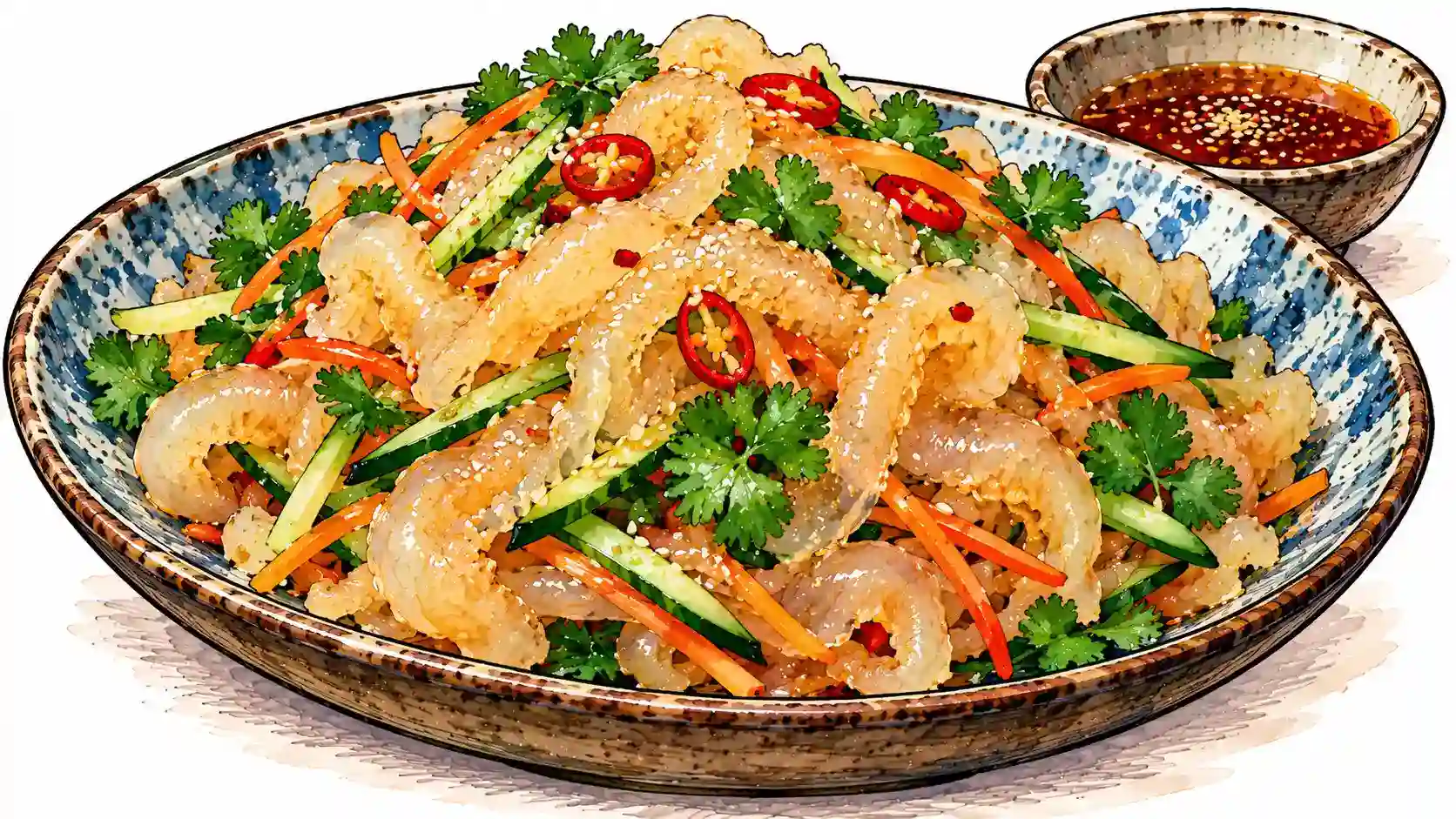
Jellyfish salad is a distinctive Chinese seafood dish that turns a delicate ocean creature into something surprisingly crisp and refreshing. Unlike the soft, slippery texture many people associate with jellyfish, properly processed edible jellyfish has a firm, crunchy bite. Often dressed with vinegar, sesame oil, garlic, and soy sauce, this cold dish is valued for its texture, mild flavor, and ability to complement a larger meal.
What Is Jellyfish Salad?
Jellyfish salad is a cold dish made from edible jellyfish that has been specially processed to create its characteristic crisp texture. It is enjoyed in Chinese cuisine, often as an appetizer or as one of several dishes served at a shared meal.
Fresh jellyfish has a delicate, gelatinous body made up largely of water. Food-grade jellyfish is transformed through processing, commonly involving salt and, in traditional methods, alum. The resulting product is often pale and translucent, with a firm, springy texture. It is typically sold preserved rather than fresh and unprocessed.
Jellyfish itself has a mild flavor, so much of the dish's character comes from its dressing. Common seasonings include Chinese black vinegar, light soy sauce, sesame oil, garlic, and chili. Cucumber, carrot, or other crisp vegetables may be added for freshness and color.
Quick Facts
- Origin: Chinese cuisine, with related preparations found elsewhere in East and Southeast Asia
- Main ingredient: Specially processed edible jellyfish
- Texture: Firm, crisp, and crunchy
- Flavor: Mild and slightly briny, with a tangy, savory dressing
- Common seasonings: Vinegar, soy sauce, sesame oil, garlic, and chili
- Typical serving style: Cold appetizer or side dish
- Food category: Seafood
Common Ingredients
The ingredients in jellyfish salad vary by recipe and region, but the goal is usually to balance the seafood's subtle taste with a bright, flavorful dressing.
- Processed jellyfish: The essential ingredient, commonly sold salted, dried, or otherwise preserved before preparation.
- Chinese black vinegar: Adds a tangy, slightly malty depth. Rice vinegar may be used for a lighter flavor.
- Soy sauce: Provides saltiness and savory depth.
- Sesame oil: Contributes a rich, nutty aroma that complements the mild seafood.
- Garlic: Adds a sharp, fragrant note to the dressing.
- Chili: Brings heat to versions that favor a spicier finish.
- Cucumber and other vegetables: Offer freshness, color, and additional crunch.
- Fresh herbs or scallions: Sometimes added as a fragrant garnish.
How Jellyfish Salad Is Prepared
Preparing jellyfish salad begins well before the dressing is mixed. Only suitable edible species should be used, and jellyfish intended for food must undergo appropriate processing. Traditional commercial methods often involve repeated treatment with salt and alum to remove water and firm the tissue. The product is then sold in forms such as salted, semi-dried, or dried jellyfish.
Before serving, preserved jellyfish may need to be rinsed, soaked, desalted, or rehydrated. The exact process depends on the product: some varieties require extended soaking with changes of water, while ready-to-eat products may need only a brief rinse or the preparation stated on the package. Follow the supplier's instructions rather than assuming every product is prepared in the same way.
The prepared jellyfish is cut into thin strips or other bite-sized pieces. Some recipes briefly blanch certain products, then cool them quickly to help achieve the desired texture. Others use ready-to-eat jellyfish without additional cooking. Ordinary prolonged heating is generally avoided because it can damage the delicate structure and change the texture.
Finally, the jellyfish is tossed with a dressing of vinegar, soy sauce, sesame oil, garlic, and other seasonings. Chopped cucumber or similar vegetables may be added for extra crunch. The salad is usually chilled before serving, allowing the flavors to combine while the jellyfish retains its distinctive bite.
History & Origins
Jellyfish has a long history as a food in China and other parts of East and Southeast Asia. Coastal communities have harvested marine animals for generations, and preservation methods helped make jellyfish easier to store, transport, and prepare for meals.
Processing is central to preparing jellyfish for the table. Fresh jellyfish is highly perishable and has a delicate, water-rich structure. Traditional salt-based methods, often using alum as well, reduce its water content and alter its texture, producing the firm, crisp ingredient familiar in many Asian dishes.
In Chinese cooking, jellyfish salad is a familiar cold dish served in restaurants, at family gatherings, and as part of celebratory meals. Its refreshing flavor and crunchy texture provide contrast to richer, warmer dishes. Although recipes differ, the combination of mild seafood and a tangy dressing remains a common approach.
Varieties & Differences
Jellyfish salad is not one single recipe. The final dish depends on the edible species used, the processing method, the dressing, and local culinary preferences.
- Classic vinegar salad: A simple version dressed with vinegar, soy sauce, and sesame oil, allowing the jellyfish's texture to take center stage.
- Garlic jellyfish salad: Uses a generous amount of minced garlic for a stronger, more aromatic flavor.
- Spicy jellyfish salad: Includes chili oil or fresh chili for a hotter finish.
- Jellyfish and cucumber salad: Combines crunchy jellyfish with cool cucumber for a particularly refreshing dish.
- Restaurant-style cold appetizer: May include additional garnishes and a more elaborate dressing, depending on the restaurant and regional style.
Jellyfish dishes are also found in neighboring East Asian cuisines, including Japanese and Korean food traditions. Seasonings and presentation may differ, but the appeal of the specially processed jellyfish's distinctive texture is shared across many preparations.
How Jellyfish Salad Is Enjoyed
Jellyfish salad is generally served cold or chilled, often at the beginning of a meal. In Chinese restaurants, it may appear among several cold appetizers alongside marinated vegetables, tofu dishes, or other seafood. Its bright dressing and crisp bite help refresh the palate between richer foods.
It can also be part of a shared family-style meal, where diners sample small portions of several dishes at once. Because jellyfish has a mild flavor, it pairs well with assertive seasonings and can provide a textural contrast to steamed fish, braised meats, dumplings, and stir-fried vegetables.
For people trying it for the first time, texture is often the biggest surprise. Rather than melting away like gelatin, properly processed jellyfish is notably crisp and springy. The taste is generally subtle, making the vinegar, sesame oil, garlic, and other dressing ingredients especially important.
As with any seafood, choose food-grade jellyfish from a reliable supplier and follow its storage and preparation instructions. Jellyfish intended for decorative or other non-food uses is not suitable for eating, and wild jellyfish should never be assumed safe simply because some species are edible. Traditional processing may also use alum, so products should be sourced from suppliers that follow applicable food-safety requirements.
Did You Know?
Jellyfish salad is prized more for its texture than its taste. The jellyfish itself is relatively mild, but traditional salt-based processing changes its structure and gives it a firm, crunchy bite. That unusual texture is a major reason it remains a popular cold appetizer in Chinese cuisine.