
Jumiles
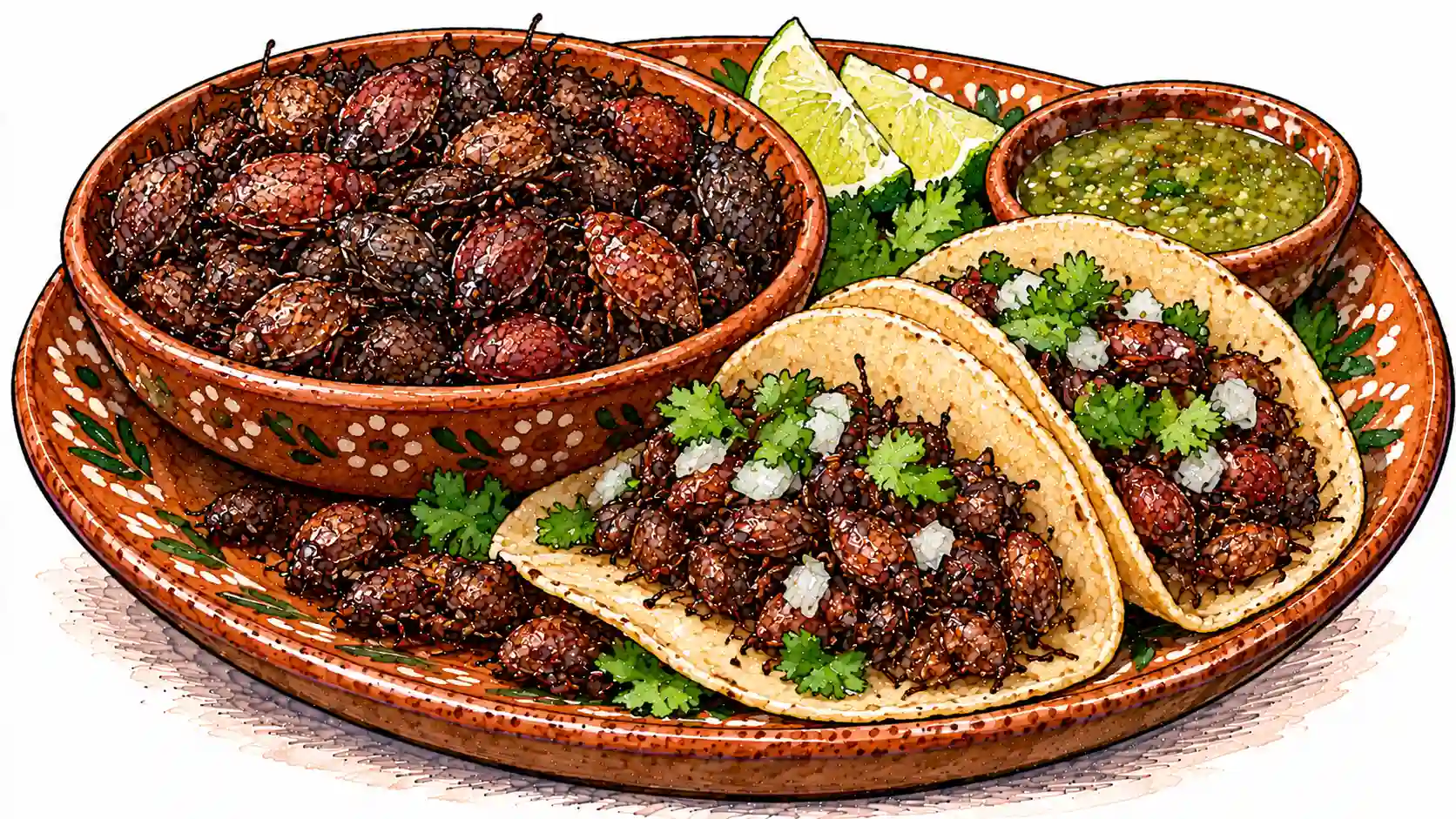
Pungent, distinctive, and deeply rooted in regional tradition, jumiles are edible stink bugs enjoyed in parts of Mexico. These small insects are known for their powerful aroma and bold flavor, sometimes described as herbal, spicy, or reminiscent of cinnamon. Particularly associated with the state of Guerrero and the town of Taxco, jumiles have been eaten for generations and remain part of local food culture. They may be toasted, ground into sauces, or served in tacos, offering a memorable taste of Mexico's diverse culinary heritage.
What Are Jumiles?
Jumiles are small edible stink bugs traditionally collected for food in parts of Mexico. The name does not refer to just one species; different insects may be called jumiles or by related regional names. Research in the community of El Zompantle, near Taxco in Guerrero, documented two edible species: Edessa bifida and Edessa championi.
Unlike many edible insects with relatively mild flavors, jumiles are known for their intense aroma and distinctive taste. Their defensive secretions contribute to their strong smell, which some diners find herbal, spicy, or medicinal. Depending on the regional tradition, jumiles may be eaten alive, toasted, or ground with other ingredients to make a pungent salsa.
Quick Facts
- Food Category: Edible insects and traditional Mexican foods
- Origin: Mexico, particularly Guerrero and the Taxco area
- Main Ingredient: Edible stink bugs from several species
- Common Accompaniments: Chili peppers, tomatoes, onions, and corn tortillas
- Typical Flavor: Strongly aromatic, herbal, and distinctive
- Preparation: Eaten alive in some traditions, toasted, or ground into sauces
- Common Uses: Tacos, salsas, and regional specialties
Common Ingredients
Jumiles can be eaten on their own or combined with other ingredients to make sauces and taco fillings. Because their natural aroma is so strong, they often serve as a distinctive flavoring in a dish. Ingredients vary by recipe, and not every preparation includes all of the items below.
- Jumiles: The main ingredient, collected from species traditionally recognized as edible.
- Chili Peppers: Add heat and complement the insects' intense flavor.
- Tomatoes or Tomatillos: Provide acidity and balance in some salsas.
- Onion: Adds sweetness and aromatic complexity to sauces.
- Salt: Used to season certain preparations.
- Corn Tortillas: A familiar accompaniment for serving jumiles in tacos or alongside salsa.
Garlic and other seasonings may also appear in individual recipes, but they are not essential ingredients in every traditional preparation. In some cases, the jumiles themselves provide most of the dish's distinctive flavor.
How Jumiles Are Prepared
Preparation begins with collecting insects that are recognized locally as suitable for consumption. In the Taxco region, jumiles have traditionally been gathered seasonally, including from beneath fallen leaves and around vegetation where they shelter. Their availability depends on the species, habitat, and time of year.
One common preparation is to toast the insects on a hot cooking surface. Heating changes their texture and can alter their strong aroma. Toasted jumiles may be eaten directly or crushed and combined with other ingredients to make salsa.
Another traditional method involves grinding jumiles with tomatoes, chili peppers, or other ingredients, often using a stone mortar and pestle. The resulting sauce can be served with corn tortillas or used to add a distinctive flavor to other foods. Some regional traditions also involve eating jumiles alive, a practice that may be unfamiliar to visitors.
Because the name jumiles can refer to different species, correct identification is essential. Wild insects should not be assumed edible simply because they resemble a known food species. Commercially sourced insects should come from a reliable food supplier, and preparation should follow appropriate food-safety practices. Eating insects raw or alive carries additional uncertainty because it bypasses cooking, which can reduce some biological hazards.
History & Origins
Jumiles have a long association with traditional food practices in parts of Mexico, where communities have collected and eaten edible insects for generations. Indigenous knowledge of local species, habitats, and seasonal availability has helped shape the country's varied entomophagy traditions, or practices of eating insects.
The state of Guerrero is especially associated with jumiles, and the historic town of Taxco is well known for the delicacy. Scientific research in nearby communities has documented both the consumption of jumiles and the presence of multiple edible stink bug species, illustrating why the name should not be treated as the scientific designation for one insect.
Jumiles are also associated with seasonal harvesting and local markets. Their availability can vary with environmental conditions and the behavior of the insects. In Taxco, the tradition has become a recognizable part of regional food identity, with jumiles appearing in local culinary celebrations and familiar preparations such as salsa and tacos.
Today, jumiles remain one example of Mexico's diverse edible-insect traditions. Although they may be unfamiliar to many visitors, they reflect detailed local knowledge of the natural environment and the ways communities have incorporated native species into their diets.
Varieties & Differences
The word jumiles can refer to more than one species of edible stink bug, and both the insects and their culinary uses vary by region. Their size, appearance, defensive odor, and flavor are not necessarily identical.
- Toasted Jumiles: Heated on a cooking surface and eaten whole or crushed, with their characteristic aroma remaining prominent.
- Jumile Salsa: Ground with ingredients such as tomatoes, chili peppers, and onions to make a strongly flavored sauce.
- Jumile Tacos: Served with corn tortillas, sometimes accompanied by salsa or other toppings.
- Ground Jumiles: Crushed and mixed into sauces or other regional dishes.
- Live Jumiles: Eaten alive in some local traditions, a practice that differs from toasted and cooked preparations.
Jumiles are different from chapulines, the grasshoppers commonly eaten in Mexico. Jumiles are stink bugs, generally belonging to the order Hemiptera, while chapulines belong to the order Orthoptera. Their strong defensive odor and flavor help distinguish jumiles from many other edible insects.
How Jumiles Are Enjoyed
Jumiles are often toasted or incorporated into salsa, where their powerful flavor can be distributed throughout a dish. In some traditions, they are eaten alive. The preferred preparation depends on local customs and personal taste, and there is no single method that represents every community that consumes them.
In Guerrero, jumile salsa may be served with warm corn tortillas, making a simple taco that highlights the insects' distinctive taste. Ground preparations also allow their flavor to blend with tomatoes, chili peppers, and other ingredients.
For visitors exploring Mexican cuisine, jumiles offer an introduction to a regional food tradition that is less internationally familiar than chapulines or other edible insects. Their bold aroma may be an acquired taste, but their continued place in local cooking reflects the depth and diversity of Mexico's culinary heritage.
Did You Know?
Jumiles' powerful smell is linked to the defensive chemicals that stink bugs release when threatened.
These secretions help protect the insects in the wild and contribute to their distinctive culinary character. The aroma is part of what makes jumiles recognizable, although its intensity and flavor can vary among species and preparation methods.