
Kiviak
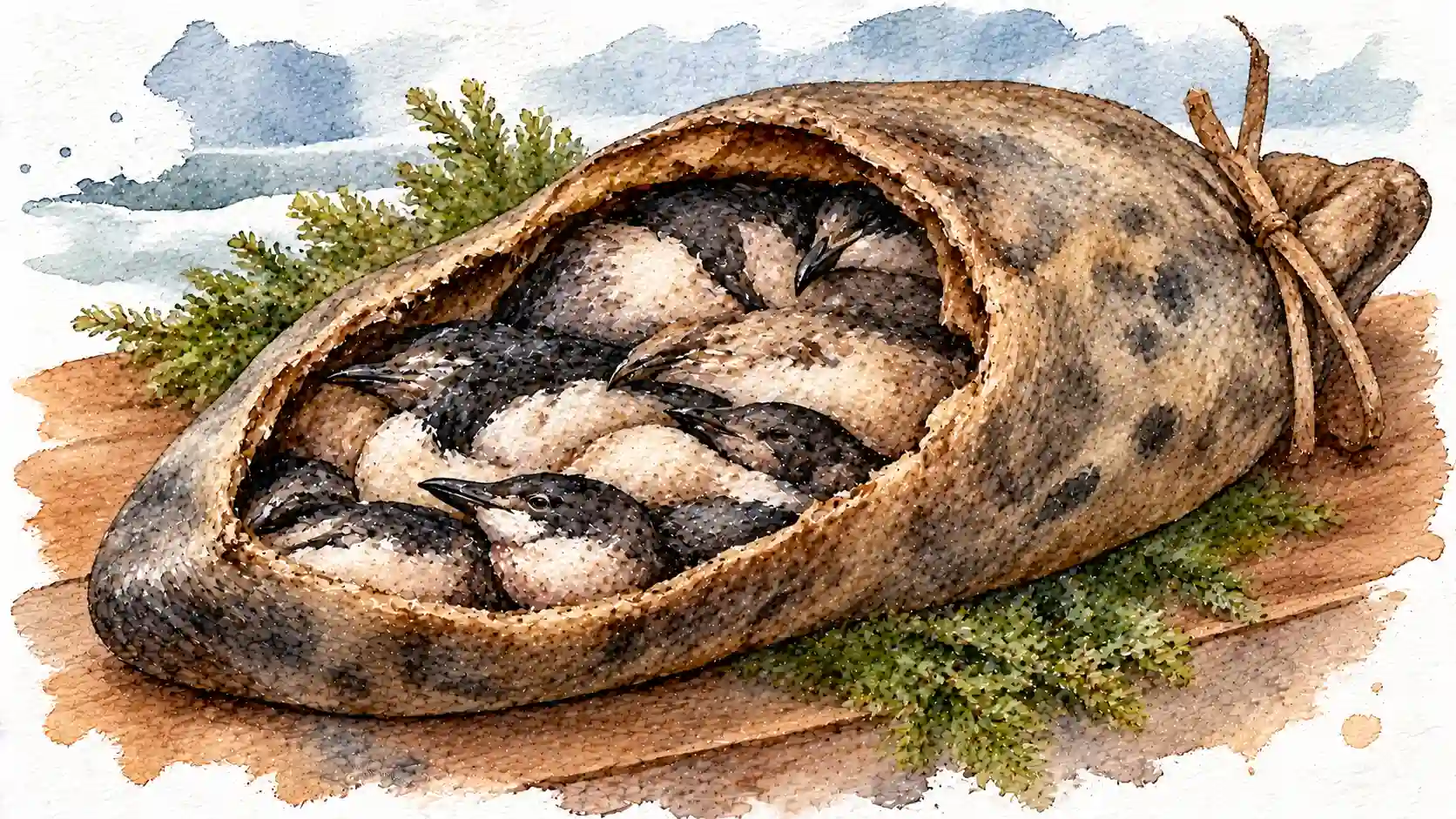
Kiviak, also spelled kiviaq, is a traditional Greenlandic Inuit food made by fermenting small seabirds inside a prepared seal skin. Associated particularly with the Inughuit people of northwestern Greenland, this distinctive Arctic specialty has historically helped preserve seasonal food for winter. After fermenting for several months, the birds develop a powerful aroma and an intensely savory flavor. Although often presented internationally as an unusual food curiosity, kiviak holds deep cultural significance for the communities that prepare and share it.
What Is Kiviak?
Kiviak is a traditional fermented food made most commonly with little auks, also known as dovekies. These small seabirds are abundant in parts of the Arctic during their breeding season. The birds are packed whole into a prepared seal skin, which is sewn closed and sealed to create an environment for fermentation.
Unlike many familiar fermented foods, kiviak is made from whole birds rather than vegetables, milk, or isolated cuts of meat. Traditionally, the birds are packed with their feathers and internal organs intact. During the months-long fermentation process, their tissues soften and develop a distinctive flavor and aroma.
The finished birds are removed from the seal skin, prepared for eating, and shared during winter gatherings and special occasions. Kiviak is especially associated with Inughuit communities in northwestern Greenland, where knowledge of its preparation has been passed down through generations.
Although the dish is sometimes described as a food eaten throughout Greenland, its strongest traditional association is with particular communities in the far north. It is not an everyday meal for every Greenlander, and its preparation reflects specific local knowledge, seasonal conditions, and cultural practices.
Quick Facts
- Main ingredients: Small seabirds, traditionally little auks, and seal skin
- Country: Greenland
- Cultural association: Inughuit food traditions of northwestern Greenland
- Preparation method: Traditional fermentation inside a sealed seal skin
- Fermentation period: Several months, depending on conditions and local practice
- Flavor profile: Intensely savory, gamey, and strongly fermented
- Traditional occasions: Winter gatherings, birthdays, weddings, and celebrations
Common Ingredients
Kiviak relies on a small number of ingredients and materials. Its distinctive qualities come from the birds, the seal skin used as a fermentation vessel, and the environmental conditions that shape the process.
- Little auks: Small Arctic seabirds traditionally used in many kiviak preparations. Their size and characteristics are suited to the established method.
- Seal skin: The prepared skin forms a protective container for the birds during fermentation.
- Seal fat: Traditionally applied to the sewn seams to help seal the bundle and discourage flies from reaching the contents.
- Cold Arctic conditions: The surrounding environment plays an important role in the traditional preservation process.
The ingredients are not interchangeable in a simple recipe. Traditional practitioners understand which birds are appropriate and how local conditions affect fermentation. Kiviak is therefore better understood as a specialized food tradition than as a general method for fermenting any kind of bird.
How Kiviak Is Prepared
Traditional kiviak preparation requires considerable experience and an understanding of local wildlife, seasonal conditions, and food preservation. The process is usually undertaken by knowledgeable community members rather than treated as an improvised kitchen project.
Preparing the Seal Skin and Birds
A seal is traditionally prepared so its skin can serve as a container. Small seabirds are collected during the appropriate season, and whole birds are used in the fermentation process. The number of birds depends on the size of the seal skin and the local method. Some preparations contain several hundred birds.
The birds are packed closely together inside the prepared skin. Traditionally, they remain whole, including their feathers and internal organs. This method differs from ordinary poultry preparation, in which birds are cleaned and cooked before serving.
Sealing the Bundle
Once the seal skin has been filled, it is sewn closed. Practitioners work to minimize trapped air and seal the seams, traditionally using seal fat. The bundle is then placed in a protected location, often beneath a mound of stones.
The stones help protect the bundle and keep it in place. The location and surrounding conditions matter because traditional fermentation depends on maintaining an appropriate environment over an extended period.
Fermenting for Several Months
The sealed bundle is left to ferment for months. The duration varies according to local practice and environmental conditions, including seasonal temperatures. During this time, natural processes transform the birds' tissues and develop the characteristic aroma and flavor.
Experienced practitioners draw on inherited knowledge to judge when a batch is ready. This expertise is particularly important because poorly controlled fermentation can create serious food-safety hazards, including botulism. Traditional methods should not be copied without the specialized knowledge needed to carry them out safely.
Opening and Serving
When the fermentation period is complete, the bundle is opened and the birds are removed. Feathers are taken off before the edible portions are eaten. The birds are traditionally served without the elaborate sauces or seasoning mixtures commonly found in restaurant dishes.
The finished food has a strong aroma and a soft, fermented texture. Its flavor is often described as rich and savory, though the experience varies with the preparation and the preferences of the person tasting it.
History & Origins
Kiviak developed within the food traditions of Greenlandic Inuit communities, particularly the Inughuit of the northwest. In the Arctic, where growing seasons are short and fresh food can be difficult to obtain during winter, preserving seasonal resources has long been an important part of food culture.
Seabirds are available in large numbers during certain periods of the year, but their abundance is seasonal. Fermentation allows a harvest to be transformed into food that can be enjoyed later. The use of seal skin as a container also reflects the practical importance of making use of resources obtained through hunting.
Over generations, the preparation of kiviak became more than a preservation technique. It became part of community life and the transmission of traditional knowledge. The timing of the process, the selection of birds, and the judgment of when the food is ready are connected to experience passed between generations.
Today, kiviak is often served during important gatherings, including celebrations and winter festivities. Its reputation outside Greenland has sometimes focused on its unusual ingredients and strong smell, but within its cultural setting it is also a food associated with hospitality, family, and continuity.
Varieties & Differences
Although little auks are strongly associated with kiviak, regional and family practices can differ. The local environment, available seabirds, and inherited methods influence how the food is prepared.
- Little auk kiviak: The best-known version, traditionally made with small seabirds packed whole inside a prepared seal skin.
- Other seabirds: Some documented preparations have used birds such as eiders or thick-billed murres. These birds differ in size and may require different processing. They should not be treated as simple substitutes for little auks.
- Differences in fermentation time: The duration varies according to environmental conditions and the knowledge of the people making it.
- Family and community methods: Details of preparation, storage, and serving may differ between practitioners.
- Different serving occasions: Kiviak may be presented at birthdays, weddings, winter gatherings, and other important events.
These differences demonstrate that kiviak is not a standardized commercial recipe with a single set of measurements. Its preparation is rooted in local knowledge, and successful fermentation depends on more than simply sealing birds inside a container.
How Kiviak Is Enjoyed
Kiviak is traditionally shared during the Arctic winter, when preserved foods become especially meaningful. It may be served at community gatherings, birthdays, weddings, and other celebrations. Preparing and sharing it can bring people together around a food that connects contemporary life with older seasonal traditions.
The fermented birds are generally eaten in small portions. Their flavor is intensely savory and gamey, while the aroma can be powerful enough to surprise people who have never encountered the dish. The birds are prepared for eating after removal from the seal skin, rather than consumed with their feathers intact.
For visitors, an opportunity to taste kiviak is best approached with respect for the people who make it and the cultural knowledge behind it. It is not simply a dare or novelty food. It is part of a regional food tradition shaped by the Arctic environment and generations of experience.
Food safety is especially important with kiviak. Improperly prepared fermented foods can cause botulism, a potentially fatal illness. A documented outbreak in Greenland involved traditionally preserved eider fowl and resulted in five cases, including two deaths. The incident underscores the importance of using appropriate methods and species-specific knowledge. Traditional fermentation should not be attempted at home by following an informal recipe.
Did You Know?
A single kiviak preparation can contain several hundred small seabirds. The food is traditionally prepared months before it is eaten, making it an example of how Arctic communities developed ways to preserve seasonal harvests for winter celebrations.