
Kokoretsi
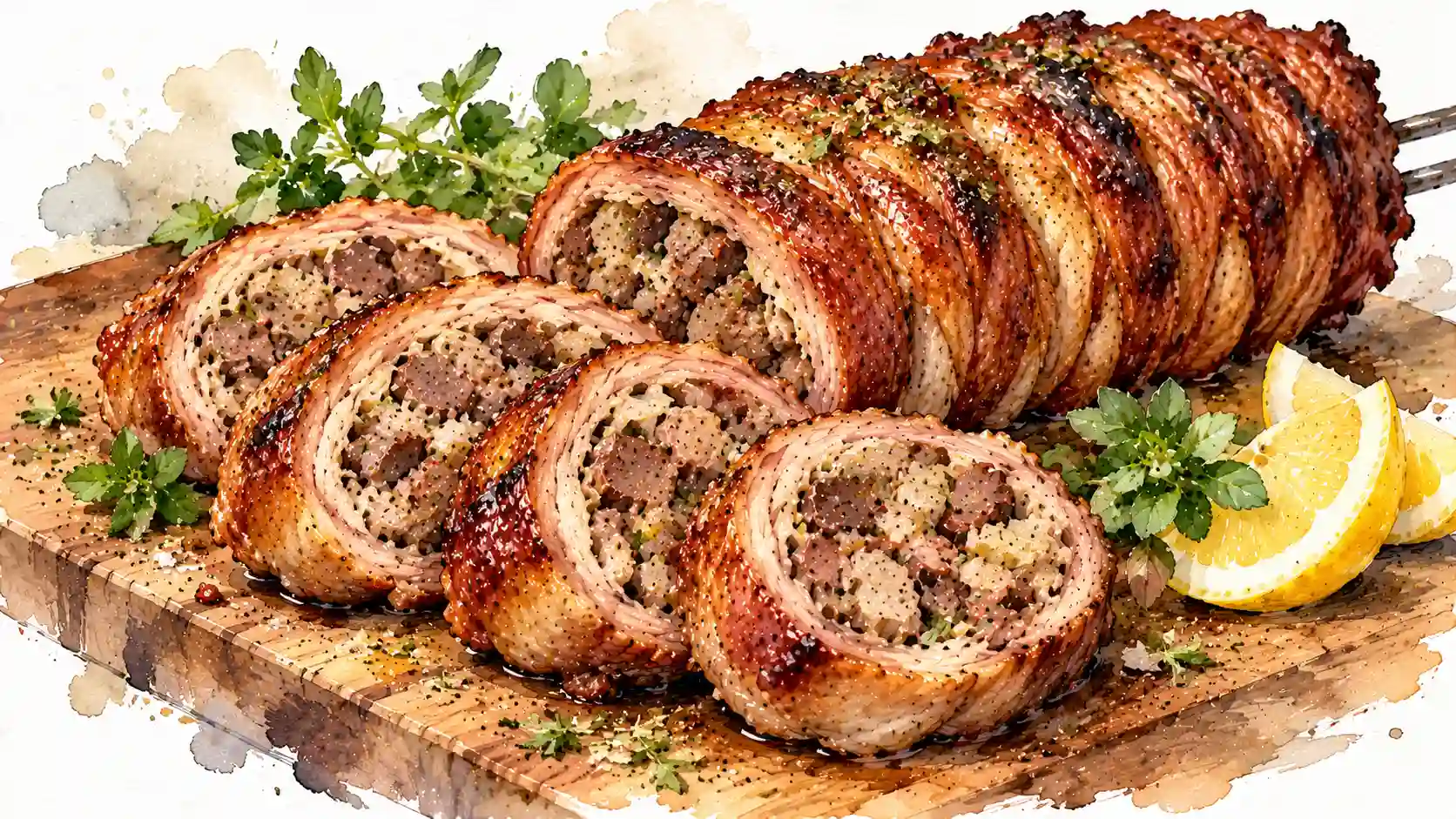
Kokoretsi is a traditional Greek dish made from seasoned animal organs wrapped in cleaned intestines and slowly roasted, often over charcoal. Known for its rich flavor, browned exterior, and tender interior, it is especially associated with Easter celebrations and festive gatherings. Although its ingredients may surprise diners unfamiliar with offal, kokoretsi reflects a long-standing culinary tradition of using different parts of an animal to create a distinctive and deeply savory meal.
What Is Kokoretsi?
Kokoretsi is a Greek preparation of lamb or goat offal, commonly including liver, heart, lungs, and other organs. The pieces are seasoned, threaded onto a long spit, and wrapped tightly with cleaned intestines. As the spit turns over a fire, the outer wrapping cooks and browns while the organs inside become tender and flavorful.
The intestines serve an important practical purpose: they hold the mixture together and help create kokoretsi's characteristic outer layer. When properly roasted, the wrapping can become browned and slightly crisp, contrasting with the softer texture of the organ meat.
Kokoretsi is often prepared in large pieces and sliced into portions before serving. It can be eaten as a main dish, a shared celebratory food, or a filling for bread. Its strong, savory taste and distinctive texture make it one of Greece's best-known traditional offal dishes.
Quick Facts
- Main Ingredients: Lamb or goat organs and cleaned intestines
- Country of Association: Greece
- Cooking Method: Slow roasting on a rotating spit, often over charcoal
- Common Seasonings: Salt, pepper, oregano, and sometimes other herbs or spices
- Texture: Browned, chewy exterior with tender offal inside
- Traditional Occasions: Easter celebrations, feasts, and family gatherings
- Serving Style: Sliced and served on a plate or in bread
Common Ingredients
Traditional kokoretsi recipes vary by region, household, and the availability of ingredients. The central elements are organ meat, intestines, and simple seasonings that complement the natural flavor of the offal.
- Liver: Adds a rich, distinctive flavor and a relatively firm texture.
- Heart: Contributes a dense, meaty bite.
- Lungs: Included in many traditional mixtures, giving the filling a different texture from liver or heart.
- Other Edible Organs: Additional lamb or goat organs may be used, depending on the recipe.
- Small Intestines: Thoroughly cleaned and wrapped around the organ mixture to hold it together during roasting.
- Salt and Black Pepper: Basic seasonings that enhance the savory flavor.
- Oregano and Other Herbs: Used in some recipes for an aromatic note.
- Lemon: Often served alongside the finished dish to provide freshness and acidity.
Not every version contains exactly the same organs or uses the same seasoning. Some cooks keep the flavors simple, while others add herbs or spices according to local and family preferences.
How Kokoretsi Is Prepared
Making kokoretsi requires careful preparation and patience. The organs and intestines must be cleaned properly before assembly, and the roasting process needs steady heat to cook the interior without burning the outside.
Preparing the Offal
The organs are cleaned and cut into pieces of a suitable size for threading onto a spit. They may be seasoned with salt, pepper, and herbs before assembly. The intestines are cleaned thoroughly and prepared for wrapping around the meat.
Threading and Wrapping
The pieces of offal are threaded onto a long metal spit, usually in a compact arrangement. The intestines are then wound around the organs in overlapping layers. This wrapping keeps the filling together as it rotates and gradually cooks, while forming the recognizable exterior of the finished dish.
Slow Roasting Over a Fire
Kokoretsi is traditionally roasted on a rotating spit over charcoal or another suitable fire. The steady turning distributes the heat and helps the outside brown evenly. Cooking can take several hours, depending on the size of the preparation, the heat of the fire, and the arrangement of the ingredients.
As the kokoretsi roasts, fat and juices contribute to its flavor, while the intestinal wrapping becomes browned and firmer. The cook must balance browning with thorough cooking throughout the center. Because the dish contains organ meats and intestines, careful temperature control and safe handling are especially important.
Slicing and Serving
Once cooked through, kokoretsi is removed from the spit and allowed to rest briefly before being sliced. The pieces reveal a mixture of organ meat held together by the roasted wrapping. It is commonly served hot, sometimes with lemon, bread, or simple accompaniments that do not compete with its rich flavor.
History & Origins
Kokoretsi is closely associated with Greek culinary traditions, particularly celebrations involving lamb and goat. Its preparation reflects a practical approach to cooking in which edible organs and other parts of an animal are used alongside more familiar cuts of meat.
The dish is especially linked to Greek Orthodox Easter, when lamb roasting is an important part of many family gatherings. In some communities, kokoretsi is cooked alongside a whole lamb on a spit, allowing several traditional foods to be prepared for the same festive meal. It is also served at tavernas, outdoor gatherings, and other celebrations.
Similar preparations involving organ meat wrapped in intestines exist in other parts of southeastern Europe and the eastern Mediterranean. Their resemblance reflects shared culinary techniques and regional food traditions, though the ingredients, names, and methods can differ. The precise historical development of kokoretsi is difficult to assign to a single origin or date.
Varieties & Differences
Although the basic technique remains recognizable, kokoretsi can differ in several ways:
- Lamb Kokoretsi: A widely recognized version, often prepared for Easter celebrations and other festive occasions.
- Goat Kokoretsi: Made with goat organs where these are preferred or available.
- Herb-Seasoned Versions: Use oregano, pepper, or other seasonings to add aroma and complexity.
- Different Organ Combinations: The balance of liver, heart, lungs, and other edible organs varies according to the cook and local tradition.
- Whole-Spit Preparations: Larger pieces are roasted slowly and sliced for sharing.
- Street-Food Servings: Cooked kokoretsi may be chopped or sliced and placed in bread for a convenient meal.
These variations allow the dish to suit different occasions, from a large family feast to a quick serving at a food stall. Its defining features remain the seasoned offal, the intestinal wrapping, and the flavor developed during roasting.
How Kokoretsi Is Enjoyed
Kokoretsi is often eaten during festive meals, especially around Easter, when families and friends gather for roasted meats and other traditional dishes. Preparing it over a fire can be a social activity, with the spit watched and turned as the food cooks. The finished dish is usually sliced and shared while hot.
At restaurants and street-food stalls, kokoretsi may be served on a plate or tucked into bread. Lemon is a common accompaniment, while salads, bread, and other simple side dishes can balance its richness. Its flavor is savory and pronounced, with the browned wrapping providing a textural contrast to the soft organ meat.
For those trying kokoretsi for the first time, the combination of different organs can make it unlike more familiar grilled meats. It is best approached as a traditional dish with its own texture and preparation rather than as a direct substitute for ordinary cuts of lamb.
Because kokoretsi contains organ meats and intestines, cleanliness, proper refrigeration, and thorough cooking are essential. Raw ingredients should be handled safely from preparation through serving, and the center must reach a safe temperature rather than relying on a browned exterior alone. General food-safety guidance emphasizes using a food thermometer and preventing cross-contamination.
Did You Know?
Kokoretsi is often prepared alongside spit-roasted lamb for Greek Easter gatherings. The tradition makes use of edible organs that might otherwise be overlooked, turning them into a celebratory dish with a distinctive roasted flavor and texture.