
Kungu Cake
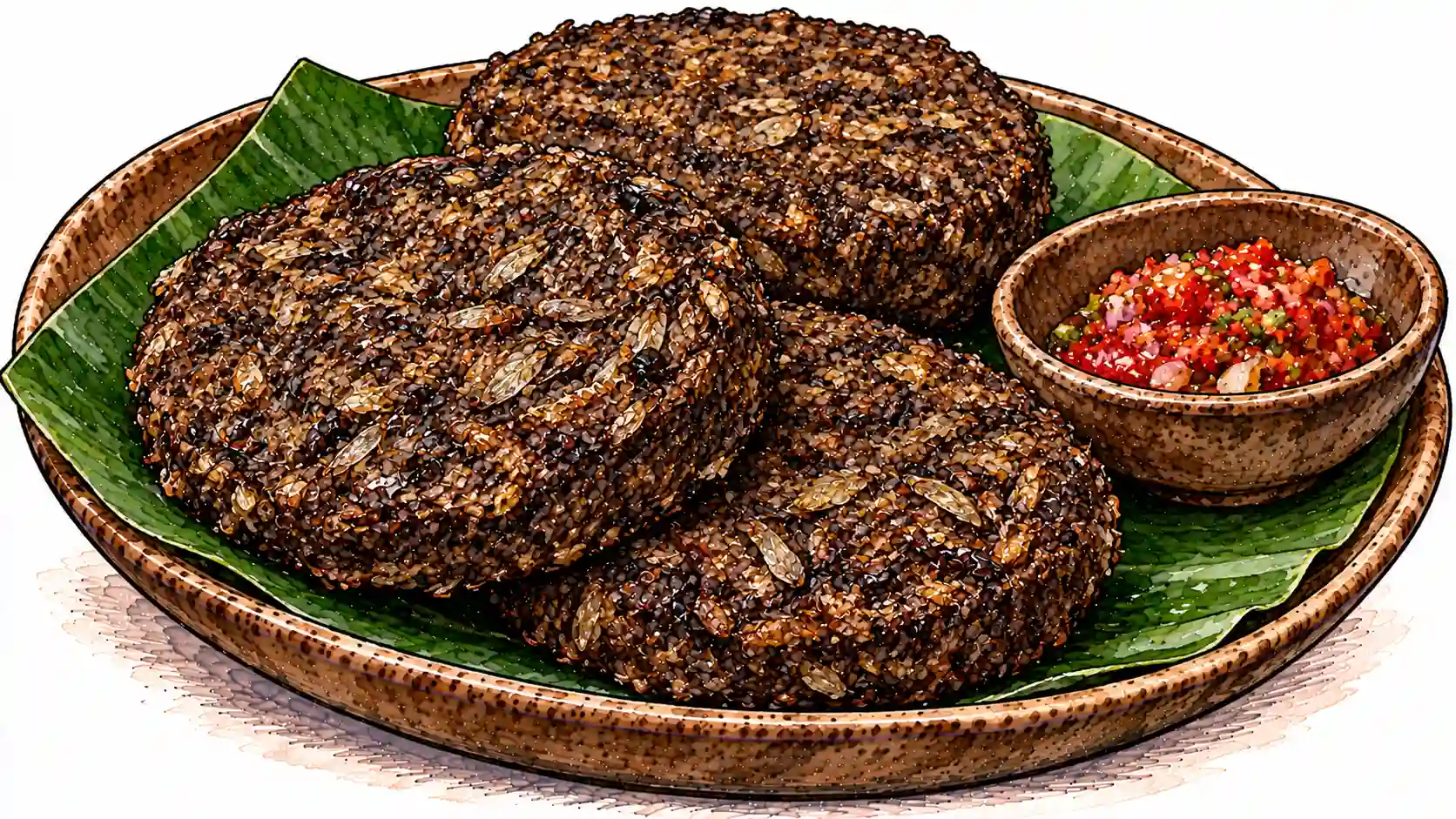
Imagine turning a massive swarm of tiny flying insects into a compact, protein-rich food. In Malawi, this traditional delicacy is known as kungu cake, made by collecting large numbers of lake flies and compressing them into dense patties. Around Lake Malawi, spectacular seasonal swarms create an opportunity for local communities to harvest the insects for food. Although their appearance may surprise newcomers, kungu cakes reflect local food knowledge and the close relationship between people and the lake's natural environment.
What Is Kungu Cake?
Kungu cake is a traditional food associated with Malawi and other communities around the African Great Lakes. It is made by collecting tiny flying insects, commonly known as lake flies or midges, and pressing them together into dense cakes. The insects associated with this food include Chaoborus edulis, a species known for forming enormous swarms over Lake Malawi.
Despite the name, kungu cakes are not baked like conventional cakes. The insects are gathered in large quantities, cleaned to remove unwanted material, and compressed into patties. They may then be baked, boiled, pan-fried, or otherwise dried and prepared according to local practices. The finished food is typically dark and compact, with a flavor and texture that depend on how it is processed.
Quick Facts
- Food Category: Edible insects and traditional foods
- Origin: Malawi and the wider African Great Lakes region
- Main Ingredient: Swarming lake flies, commonly identified as Chaoborus edulis
- Seasonality: Linked to the appearance of large insect swarms
- Typical Flavor: Varies with the preparation method
- Preparation: Collected, cleaned, compressed, and cooked or dried
- Common Uses: A traditional food and seasonal source of nourishment
Common Ingredients
Kungu cakes are notable for their simple composition. The insects themselves make up the main ingredient, and traditional preparations do not necessarily require a separate batter or elaborate seasoning. Additional ingredients and cooking methods can vary from one household or community to another.
- Lake Flies: The principal ingredient, collected from large swarms near the lake.
- Salt: May be added in some preparations, although it is not essential to the basic cake.
- Cooking Oil: Used when the cakes are pan-fried or prepared with added fat.
- Water or Wrapping Materials: Some cooking methods use water, and cakes may be wrapped in banana leaves during cooking.
These additions are not universal. The simplest versions rely primarily on the collected insects, with the preparation method shaping the finished food's texture and flavor.
How Kungu Cake Is Prepared
Preparation begins when large swarms of lake flies appear around Lake Malawi. The insects can gather in extraordinary numbers, forming towering clouds that may resemble smoke above the water. Harvesters collect them using suitable containers, baskets, or other tools, taking advantage of the brief periods when the insects are especially abundant.
After collection, the insects are sorted to remove debris and other unwanted material. They are then pressed together into dense cakes. Because the insects are so small and are collected in large quantities, they can form compact patties without the need for a conventional flour-based batter.
Cooking methods vary. A study of traditionally prepared lake flies from Malawi documented baking, boiling, and pan-frying. In the methods examined, some cakes were wrapped in banana leaves during cooking. The different techniques can affect moisture, texture, flavor, and the food's nutritional composition.
Some cakes are dried or further processed to make them easier to handle and store. Drying can help reduce moisture, but it does not automatically make food safe for indefinite storage. Proper cooking, clean handling, protection from contamination, and suitable storage conditions remain important.
History & Origins
Kungu cake is associated with communities around Lake Malawi, one of Africa's largest freshwater lakes. The lake supports a rich ecosystem, including lake flies that emerge in enormous swarms during particular periods. These insects are part of the local food web and also provide a seasonal food resource for people living along the shoreline.
The insects used in kungu are commonly identified as lake midges, particularly Chaoborus edulis. Their aquatic immature stages develop in the lake, while the short-lived adults gather in striking swarms as part of their reproductive behavior. Although the name and precise insect identification can vary across references, the large swarms are a well-known feature of Lake Malawi.
Local communities have developed ways to turn this temporary abundance into food. Compressing the insects into cakes makes them easier to collect, handle, cook, and potentially preserve than loose insects. This practice is an example of how traditional food knowledge can make use of resources that appear in large quantities for limited periods.
Kungu remains a distinctive part of regional food culture and illustrates the diversity of food traditions across Malawi and the wider African Great Lakes region. Its significance is not simply that it uses an unusual ingredient, but that it reflects generations of knowledge about the local environment and seasonal food resources.
Preparation Methods & Differences
Kungu cake is defined by its insect-based ingredients and compressed form, but the finished food can differ according to how it is cooked and whether it is intended for immediate consumption or storage.
- Freshly Compressed Kungu: Newly collected insects are cleaned and pressed into cakes before further cooking.
- Baked Kungu: Cakes are heated through baking, a method documented in research on lake flies from Malawi.
- Boiled Kungu: Cakes are cooked in water, sometimes while wrapped in banana leaves.
- Pan-Fried Kungu: Cakes are cooked in a pan with oil, producing a different texture and flavor.
- Dried Kungu: Cakes are dried to reduce moisture and make handling and storage easier when appropriate conditions are maintained.
These are preparation methods rather than fixed regional varieties, and not every community uses all of them. Texture and flavor depend on the insects collected, how tightly they are compressed, and the cooking or drying technique.
How Kungu Cake Is Enjoyed
Kungu cakes are eaten as a traditional food and can provide an additional source of nourishment when lake flies are abundant. Their compact form makes them easier to handle and prepare than loose insects, and processing can help communities make use of a seasonal harvest.
The cakes may be eaten after cooking or incorporated into meals, depending on local customs and household practices. Their taste and texture vary with the preparation method, so there is no single flavor profile that describes every version.
For people unfamiliar with edible insects, kungu cake may seem extraordinary. For communities around Lake Malawi, it represents a practical way to use a remarkable natural event as a food resource. The tradition also highlights the diversity of African food cultures and the many ways people have adapted their diets to the environments around them.
Did You Know?
Lake fly swarms over Lake Malawi can be so enormous that they resemble towering clouds of smoke above the water.
The swarms form as part of the insects' reproductive behavior. For local harvesters, these gatherings can create an opportunity to collect large quantities of insects and turn them into kungu cakes, transforming a striking natural phenomenon into a traditional food.