
Lahpet
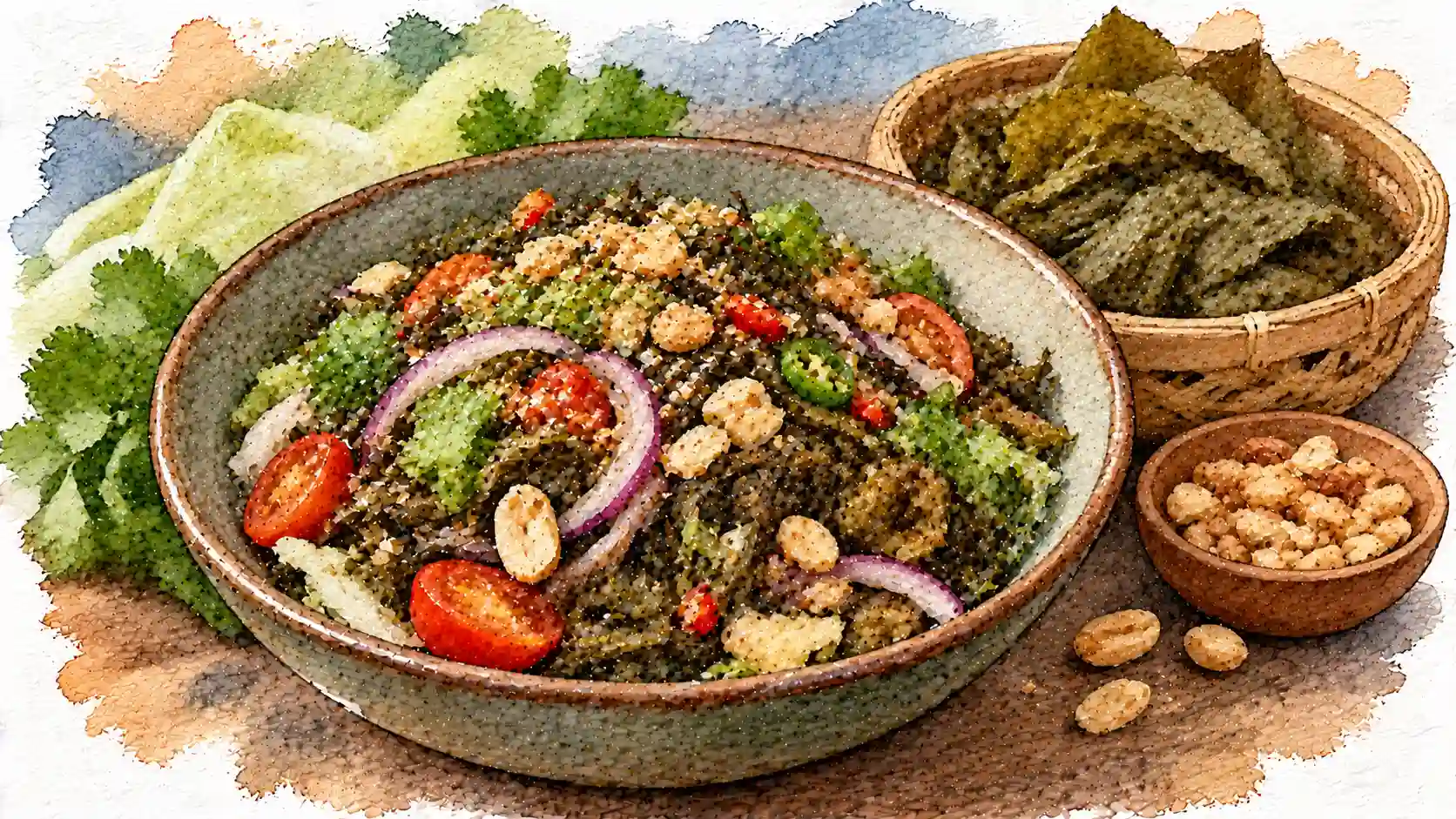
Lahpet is a traditional Myanmar food made from fermented or pickled tea leaves, enjoyed on their own or as the centerpiece of a colorful salad. Known internationally through lahpet thoke, or tea leaf salad, it combines tender, tangy tea leaves with crunchy peanuts, fried beans, sesame seeds, garlic, and fresh vegetables. Unlike most tea traditions, in which leaves are brewed into a drink and discarded, Myanmar’s food culture embraces tea as something to eat, share, and offer to guests.
What Is Lahpet?
Lahpet, also spelled laphet, is the Burmese word for tea leaves prepared for eating, especially fermented or pickled tea. The leaves are generally harvested while young and tender, then processed to develop their distinctive flavor and texture. Depending on the method, they may be steamed, packed tightly, and fermented over an extended period.
The best-known dish made with lahpet is lahpet thoke, a Myanmar-style tea leaf salad. The fermented leaves are mixed with oil and seasonings or arranged with an assortment of toppings, including crunchy legumes, nuts, garlic, tomatoes, and chili. The resulting dish balances sour, bitter, salty, savory, and nutty flavors with a variety of textures.
Lahpet is more than a salad ingredient. In Myanmar, it has a longstanding role in hospitality and social customs, and it is served during family visits, celebrations, and religious or community gatherings. Its importance reflects a distinctive food tradition in which tea is both a drink and an edible delicacy.
Quick Facts
- Main ingredient: Fermented or pickled tea leaves
- Country: Myanmar
- Associated cuisine: Burmese cuisine
- Preparation method: Tea leaves are processed and fermented before serving
- Flavor profile: Tangy, earthy, bitter, savory, and sometimes spicy
- Common toppings: Peanuts, fried beans, sesame seeds, garlic, and chili
- Cultural role: Hospitality, celebrations, and shared meals
Common Ingredients
Lahpet thoke can be prepared in many ways, with ingredients varying by region, household, and personal preference. The fermented tea leaves provide the central flavor, while the other ingredients add freshness, crunch, acidity, and seasoning.
- Fermented tea leaves: The essential ingredient, with an earthy, tangy, and slightly bitter flavor.
- Peanut oil or sesame oil: Helps coat the leaves and carries the flavors of the other ingredients.
- Roasted peanuts: Add nutty flavor and a crunchy texture.
- Fried beans or split peas: Provide a crisp contrast to the soft tea leaves.
- Fried garlic: Contributes a toasted, savory aroma.
- Sesame seeds: Add nuttiness and a delicate crunch.
- Tomatoes and cabbage: Bring freshness, juiciness, and texture to many salad versions.
- Fresh chili: Adds heat according to taste.
- Lime juice: Provides acidity that brightens the fermented flavor.
- Dried shrimp or fish sauce: Used in some recipes for additional savory depth, but omitted in vegetarian versions.
Not every version contains all these ingredients. Some salads emphasize crunchy toppings, while others combine everything into a more uniform mixture. A traditional serving platter may keep the tea leaves and toppings in separate compartments so diners can combine them as they eat.
How Lahpet Is Prepared
Making lahpet begins with processing fresh tea leaves and continues through fermentation. The precise method varies among producers and communities, so there is no single recipe that represents every traditional preparation.
Selecting and Preparing the Tea Leaves
Young tea leaves and buds are commonly selected for fermentation because their tender texture suits the finished dish. The leaves are cleaned and often steamed briefly to soften them and prepare them for further processing. Excess moisture is then removed before the leaves are packed for fermentation.
Fermenting the Leaves
The prepared leaves are packed tightly into a suitable container, traditionally made from materials such as bamboo, baskets, or pits lined with leaves. They may be pressed under weight to remove moisture and reduce the amount of air inside the packed leaves. Fermentation then develops over time as naturally occurring microorganisms transform the tea.
Traditional fermentation can take several months, although timing depends on the producer's method and conditions. As the leaves mature, their color, acidity, aroma, and texture change. The finished leaves are soft and flavorful rather than dry and brittle like tea leaves intended for brewing.
Fermentation requires clean equipment and appropriate controls. A strong smell alone does not show that a batch is safe, and traditional methods should not be improvised without reliable food-safety knowledge.
Seasoning the Lahpet
Once the fermented leaves are ready, they may be washed, drained, chopped, or pounded, depending on the style. Oil, salt, garlic, chili, or citrus may be added to create a seasoned tea-leaf mixture. Some preparations retain the leaves in larger pieces, while others produce a softer paste.
Assembling the Salad
For lahpet thoke, the prepared tea leaves are combined with vegetables, nuts, seeds, and crunchy fried ingredients. Some cooks toss everything together with oil and lime juice, while others arrange the components separately on a divided platter. Mixing the ingredients shortly before eating helps preserve the crunch of the beans and nuts.
The result is a salad with several contrasting elements: soft fermented leaves, crisp toppings, fresh vegetables, and a dressing that balances savory, sour, and bitter notes.
History & Origins
Lahpet is deeply rooted in Myanmar’s tea-growing and food traditions, particularly in regions such as Shan State, where tea cultivation has long been important. The practice of eating processed tea leaves distinguishes Myanmar’s culinary culture from many places where tea is consumed primarily as a brewed beverage.
Tea leaves have played a role in social customs as well as everyday meals. Historical and cultural accounts describe lahpet being offered to guests and used in ceremonies. Traditional accounts also associate pickled tea with settling disputes and making peace. Although the practice is an established part of lahpet's cultural history, some stories about its earliest origins are difficult to verify fully.
Over generations, fermented tea became an important part of celebrations, hospitality, and shared dining. Lahpet thoke developed into one of the best-known ways to enjoy it, combining the tea leaves with ingredients that reflect Myanmar’s varied regional produce and culinary preferences.
Today, lahpet is sold in markets and packaged for home use, while tea leaf salad appears in homes, restaurants, and celebratory meals. Despite modern variations, the dish continues to represent a distinctive connection between tea cultivation, food, and community life.
Varieties & Differences
Lahpet appears in several forms, from seasoned fermented leaves to elaborate salads and ceremonial platters.
- Lahpet thoke: Tea leaf salad mixed or served with nuts, beans, vegetables, garlic, and seasonings.
- Compartmentalized tea-leaf platters: Fermented leaves are placed in the center with crunchy toppings arranged separately around them.
- Seasoned lahpet: Fermented leaves mixed with oil, garlic, chili, and other flavorings, ready to eat or use in a salad.
- Different leaf textures: Some preparations use recognizable whole leaves, while others use chopped or mashed leaves.
- Regional and household variations: The balance of sourness, bitterness, oil, vegetables, and crunchy toppings differs between recipes.
- Vegetarian versions: Omit dried shrimp and fish sauce while retaining the fermented leaves, nuts, vegetables, and other plant-based ingredients.
These variations make lahpet adaptable to different occasions. A simple serving of seasoned leaves may accompany tea, while a more elaborate salad can be a substantial snack or part of a larger meal.
How Lahpet Is Enjoyed
In Myanmar, lahpet is often shared with family, friends, and visitors. Offering tea leaf salad can be a gesture of welcome, and it may appear at weddings, religious ceremonies, festivals, and other gatherings. Its cultural significance goes beyond its flavor: serving lahpet is a way of bringing people together around a familiar food.
Lahpet thoke is commonly eaten as a snack or side dish, but it can also be enjoyed with rice or as part of a broader meal. Plain green tea may be served alongside it, creating a pairing in which tea appears both in the cup and on the plate.
The salad is particularly appealing for its contrasting textures. Fermented leaves provide a soft, tangy base, while peanuts, fried beans, and sesame seeds add crunch. Tomatoes, cabbage, chili, and lime can introduce freshness, acidity, and heat.
Because recipes vary, diners should check ingredients when avoiding particular allergens. Peanuts and sesame are common allergens, while fish sauce and dried shrimp may be present in some versions. Properly produced and stored fermented tea leaves are also important for food safety.
Did You Know?
Lahpet has traditionally been associated with peace-making as well as hospitality. Historical and cultural accounts describe pickled tea being exchanged during dispute settlements, making it a symbol of agreement and reconciliation in addition to a beloved food.