
Lampredotto
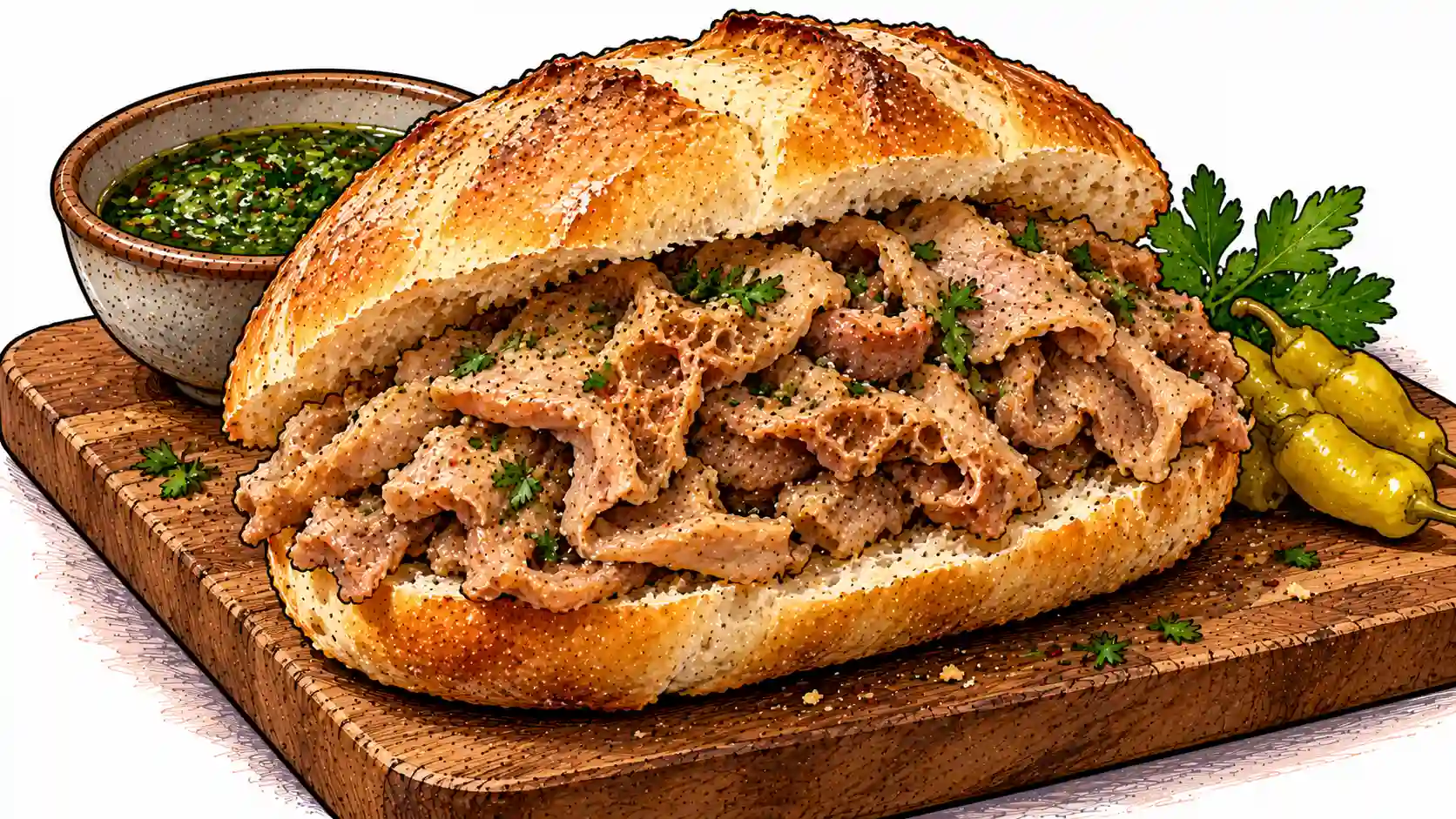
In Florence, Italy, one of the city’s most beloved street foods comes from an unexpected ingredient: a cow’s fourth stomach compartment. Known as lampredotto, this traditional Tuscan dish features beef abomasum slowly simmered in a flavorful broth, sliced, and served inside a crusty bread roll, often topped with green herb sauce or spicy sauce. Sold by street vendors known as trippai or lampredottai, lampredotto has fed generations of Florentines. Its humble ingredients and bold flavors reflect the city’s long tradition of making satisfying meals from affordable cuts of meat.
What Is Lampredotto?
Lampredotto is a traditional Florentine dish made from the abomasum, the fourth compartment of a cow’s stomach. It belongs to the broader family of tripe and offal dishes found in many cuisines, but its distinctive preparation and sandwich-style serving have made it especially associated with Florence.
The meat is simmered slowly in a flavorful broth, often with vegetables and herbs, until tender. It is then sliced or chopped and placed inside a crusty Tuscan bread roll, traditionally called a semelle. Before serving, the vendor may briefly dip the top of the bread into the cooking broth to soften it and add extra flavor.
Lampredotto has a rich, savory taste and a tender, slightly chewy texture. Its flavor comes partly from the meat itself and partly from the broth in which it cooks. Traditional toppings include salsa verde, a bright green sauce made with parsley and other ingredients, or a spicy sauce for extra heat.
Although it may seem unusual to diners unfamiliar with offal, lampredotto is everyday comfort food for many Florentines. It is commonly eaten as a quick lunch, making it one of the city’s most recognizable examples of traditional Italian street food.
Quick Facts
- Origin: Florence, Tuscany, Italy
- Main Ingredient: Cow’s abomasum, the fourth stomach compartment
- Cooking Method: Slowly simmered in broth
- Typical Serving: Sliced or chopped lampredotto in a crusty bread roll
- Texture: Tender, moist, and slightly chewy
- Flavor: Rich and savory, shaped by the cooking broth
- Common Toppings: Green herb sauce, spicy sauce, salt, and pepper
- Traditional Vendors: Florentine tripe sellers known as trippai or lampredottai
Common Ingredients
Lampredotto relies on a relatively simple combination of meat, broth, bread, and condiments. Slow cooking develops flavor and tenderness, while the toppings provide freshness, acidity, or spice. Recipes vary among vendors and households.
- Beef Abomasum: The main ingredient, cleaned and prepared before being simmered until tender.
- Water or Broth: Forms the cooking liquid and helps keep the meat moist during the long simmer.
- Onions: Add sweetness and depth to the broth.
- Carrots and Celery: Common aromatic vegetables that help flavor the cooking liquid.
- Tomatoes: Often included in the broth to add color, acidity, and richness.
- Herbs and Seasoning: Parsley, bay leaf, salt, and black pepper may be used, depending on the recipe.
- Crusty Bread Roll: Traditionally a Tuscan roll called a semelle, used to hold the meat and absorb some of the broth.
- Salsa Verde: A green herb sauce commonly based on parsley, sometimes with garlic, capers, anchovies, olive oil, and other ingredients.
- Spicy Sauce: An optional chili-based condiment for those who prefer a hotter sandwich.
How Lampredotto Is Prepared
Preparing lampredotto begins with thoroughly cleaning the cow’s abomasum. The stomach tissue is then simmered slowly in a pot of water or broth with aromatic vegetables and seasonings. This extended cooking process softens the meat and allows it to absorb flavor from the cooking liquid.
Once tender, the lampredotto is sliced or chopped into bite-sized pieces. Street vendors often keep the cooked meat warm in its broth, allowing them to assemble sandwiches quickly throughout the day.
To make the sandwich, the vendor fills a crusty bread roll with hot lampredotto. In a traditional preparation, the top half of the bread is briefly dipped into the broth, a technique known as bagnato. This adds moisture and a deeper savory flavor. The sandwich is then finished with green sauce, spicy sauce, salt, pepper, or a combination chosen by the customer.
The quality of the dish depends on careful cleaning, patient cooking, and the balance between tender meat, bread, and sauce. The broth is particularly important because it contributes much of the sandwich’s characteristic richness. Proper food handling and thorough cooking are also essential when preparing offal.
History & Origins
Lampredotto is closely tied to Florence’s tradition of cucina povera, or humble cooking. Historically, affordable cuts and organ meats allowed households and street vendors to prepare satisfying meals from parts of an animal that cost less than prime cuts.
Tripe sellers became an established part of Florentine food culture, offering hot, inexpensive dishes to workers, market visitors, and passersby. Lampredotto was well suited to street vending because the meat could be cooked in large pots ahead of time and served quickly in bread rolls.
The dish’s name is commonly traced to the Italian word lampreda, meaning lamprey, an eel-like aquatic vertebrate. The usual explanation is that the appearance of cooked lampredotto reminded people of the lamprey. Although this is the widely repeated etymology, the precise historical details behind the name are not firmly established.
Over time, lampredotto became much more than a budget meal. It developed into a culinary symbol of Florence, representing the city’s practical cooking traditions and the enduring appeal of local street food. Today, visitors seek out traditional tripe stalls alongside residents who continue to enjoy the sandwich as part of everyday life.
Varieties & Differences
While the basic recipe remains recognizable, lampredotto can vary in seasoning, sauce, and presentation. The vendor’s broth and condiments often give each sandwich its own character.
- Classic Lampredotto Sandwich: Tender pieces of simmered abomasum served in a crusty roll, often finished with salsa verde.
- Broth-Dipped Bread: A version in which the top of the roll is dipped into the cooking liquid before the sandwich is served.
- Spicy Lampredotto: Topped with a chili-based sauce for a stronger, hotter flavor.
- Lampredotto with Salsa Verde: Combines the savory meat with a fresh, herbaceous sauce that adds brightness.
- Lampredotto on a Plate: Served without bread, sometimes with vegetables or other accompaniments.
- Other Florentine Tripe Dishes: Florence also has dishes made from other parts of a cow’s stomach. Some, such as tripe cooked with tomato, are served as stews rather than sandwiches.
Lampredotto specifically uses the abomasum, the fourth stomach compartment. Other tripe dishes may use different parts of the stomach, so the terms are related but not interchangeable.
How Lampredotto Is Enjoyed
Lampredotto is most often enjoyed as a casual lunch or a quick bite while exploring Florence. Traditional vendors serve it from street carts and small stalls, where customers can choose their preferred sauces and eat the sandwich on the spot.
The combination of soft, savory meat and crusty bread makes the dish filling without requiring elaborate presentation. Salsa verde adds a fresh, tangy contrast, while spicy sauce introduces heat. Dipping the bread into the broth gives the sandwich a particularly rich and moist finish.
For visitors, trying lampredotto is a way to experience a part of Florence’s food culture that extends beyond its famous restaurants and formal Tuscan meals. For local residents, it remains a familiar street food rooted in the city’s working-class culinary history.
Although lampredotto may be unfamiliar to some diners, it shares a basic idea with offal dishes found throughout Europe and beyond: careful preparation can transform an inexpensive cut into a flavorful, satisfying meal.
Did You Know?
Lampredotto is made from the cow’s fourth stomach compartment, the abomasum. Cattle have four stomach compartments as part of their specialized digestive system. In Florence, this particular cut became the star of a famous street-food sandwich, traditionally served with broth-softened bread and a lively green herb sauce.