
Maniçoba
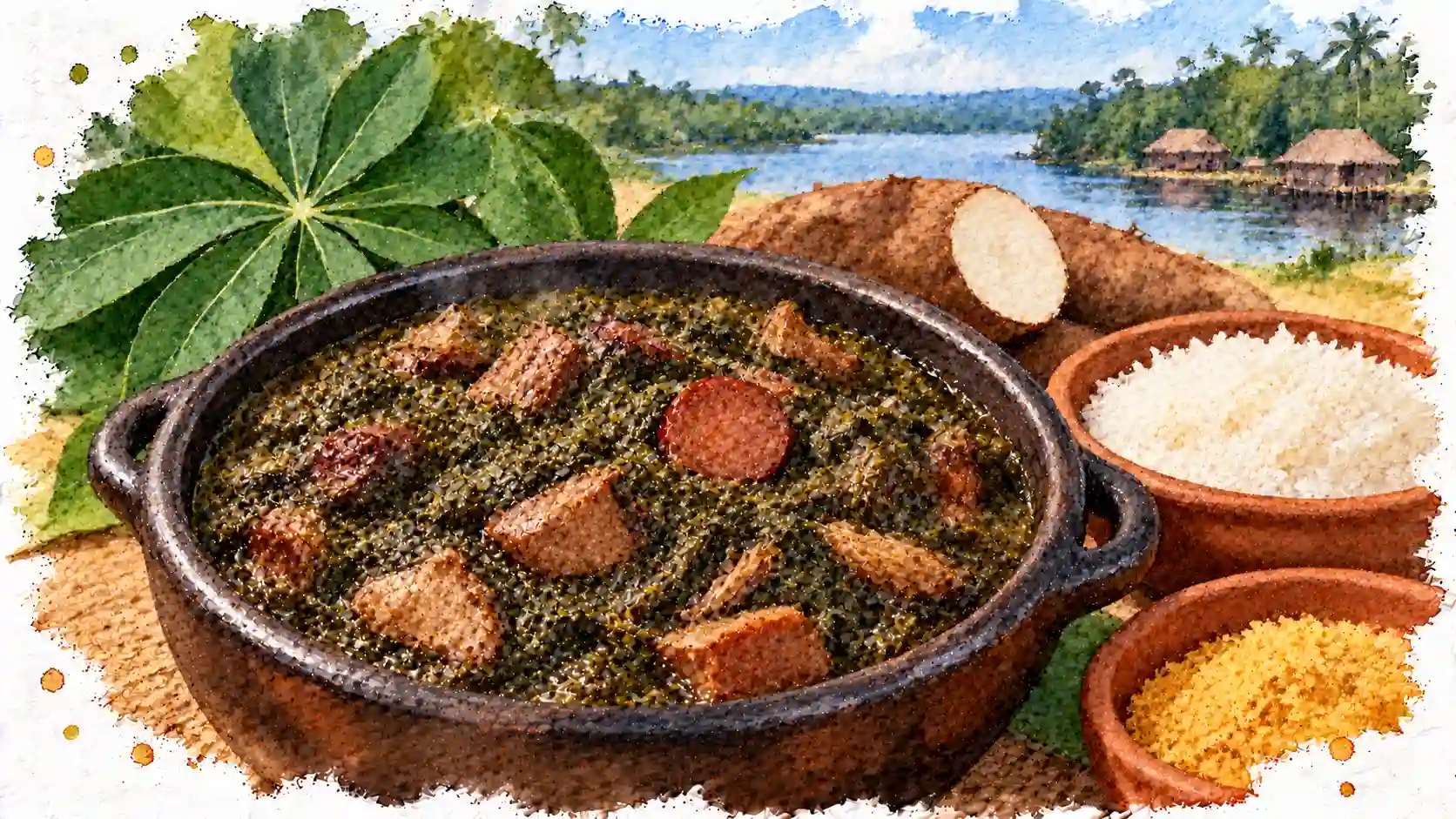
Maniçoba is one of the most distinctive dishes of Brazil’s Amazon region: a dark, hearty stew made with ground cassava leaves, pork, and a variety of salted or smoked meats. Especially associated with the state of Pará, it is sometimes compared to feijoada because of its rich appearance and generous combination of meats. But maniçoba has a defining ingredient that makes its preparation unusually demanding. Cassava leaves contain natural compounds that can release toxic cyanide, so they require carefully controlled processing before they are safe to eat. The result is a deeply savory dish tied to Indigenous food traditions, regional identity, and festive gatherings.
What Is Maniçoba?
Maniçoba is a traditional Brazilian stew whose main ingredient is finely ground cassava foliage, known locally as maniva. The cassava plant, Manihot esculenta, is widely grown throughout tropical regions, particularly for its starchy roots. In maniçoba, however, the leaves take center stage.
The dish is most closely associated with Pará, in northern Brazil, and especially with its capital, Belém. Once the cassava leaves have undergone appropriate processing, they are cooked with pork, bacon, sausages, and other meats. The mixture develops a thick consistency and a very dark green-brown to nearly black color, giving the finished stew an appearance that can remind people of feijoada.
Its flavor is rich, earthy, smoky, and savory. The leaves provide the dish with its distinctive character, while the different meats contribute saltiness, fat, and depth. Maniçoba is often prepared in large quantities for family gatherings, community celebrations, and special occasions.
What makes maniçoba especially notable is the time and care involved in preparing its central ingredient. Raw cassava leaves are not safe to eat, and ordinary quick cooking is not an adequate substitute for an established, validated processing method. Properly processed maniva is essential to the dish.
Quick Facts
- Food name: Maniçoba
- Country: Brazil
- Region: Amazonian Brazil, especially Pará
- Main ingredient: Processed cassava leaves, known as maniva
- Scientific name of cassava: Manihot esculenta
- Flavor: Savory, earthy, rich, and smoky
- Texture: Thick stew with soft leaves and tender pieces of meat
- Common additions: Pork, bacon, sausages, salted meats, and seasonings
- Traditional occasion: Festive meals, including celebrations associated with Círio de Nazaré
- Safety requirement: Cassava leaves must undergo appropriate processing to reduce cyanide-related toxicity
Common Ingredients
Recipes for maniçoba vary between households and regions, but the dish is known for combining processed cassava leaves with a generous selection of meats. Common ingredients include:
- Processed maniva: Finely ground cassava leaves that have undergone an appropriate, validated detoxification process.
- Pork: A major component that contributes richness and a hearty texture.
- Bacon: Adds smoky flavor and fat.
- Smoked or salted meats: Provide concentrated savory flavor and reflect traditional preservation methods.
- Sausages: Often included for seasoning and additional texture.
- Salted pork products: Used in some versions to give the stew a deeper, saltier profile.
- Garlic and other seasonings: Help develop the stew's aroma and flavor.
- White rice: A common accompaniment that balances the richness of the main dish.
- Farinha de mandioca: Toasted cassava flour, often served alongside the stew.
The meat combination is not fixed. Some cooks favor particular cuts or sausages, while others use whichever traditional ingredients are available. The defining feature remains the processed cassava leaves, which distinguish maniçoba from other Brazilian meat stews.
How Maniçoba Is Prepared
Maniçoba is famous for its lengthy preparation. The cassava leaves are ground or finely crushed and must undergo extensive processing to reduce their naturally occurring cyanogenic compounds. These substances can release hydrogen cyanide, a dangerous toxin. Traditional preparation commonly involves prolonged cooking over several days, often around a week. Commercially prepared or pre-cooked maniva may follow a different regulated process with specified processing conditions.
This is not a dish for experimenting with raw cassava leaves or trying to shorten the processing time by guesswork. The leaves can remain hazardous if they are inadequately processed, and the danger cannot reliably be judged by color, smell, or taste. A safer approach for ordinary cooks is to obtain maniva from a reputable producer that follows applicable food-safety requirements and to follow its handling and cooking instructions.
Once properly processed maniva is available, it is cooked with pork and other meats until the flavors combine. The long cooking traditionally associated with maniçoba also develops its characteristic taste and dark appearance. The meats soften, seasonings spread throughout the thick mixture, and the result becomes a substantial stew rather than a simple leafy vegetable dish.
Maniçoba is often prepared in large batches because the process is time-consuming and the dish is commonly served at gatherings. Depending on the recipe, some ingredients may be added at different stages so they retain their texture and contribute flavor gradually.
The finished stew is typically served hot with rice and cassava flour. These accompaniments make the meal more substantial and provide a contrast to the dense, savory stew. Although the preparation requires considerable care, the serving itself is straightforward: a generous portion of maniçoba forms the center of the meal.
History & Origins
Maniçoba has deep roots in Indigenous food traditions in the Amazon region. Its use of cassava foliage reflects long-standing knowledge of the cassava plant and the processing techniques needed to turn potentially toxic plant material into food.
The name is related to maniva, the term used for cassava leaves in parts of northern Brazil. The word maniçoba is generally traced to the Tupi language and refers to cassava leaves. The dish developed over generations and became a defining part of Pará's regional cuisine. Its history also reflects the many influences that have shaped Brazilian cooking, as meat ingredients and seasoning traditions evolved alongside Indigenous methods and local ingredients.
Today, maniçoba is strongly associated with Belém and the wider state of Pará. It is prepared in homes, restaurants, and food businesses, especially during festive periods. The dish is closely connected with Círio de Nazaré, a major religious celebration in Belém held in October, when families and communities gather for celebratory meals.
For many people from Pará, maniçoba is more than a meal. Its labor-intensive preparation, distinctive aroma, and association with shared celebrations give it emotional and cultural importance. The time spent making it is part of the tradition, not simply an obstacle to getting dinner on the table.
Varieties & Differences
Maniçoba does not have one universally fixed recipe. The most important differences usually involve the meat selection, seasoning, consistency, and local cooking traditions rather than a change in its defining ingredient.
- Traditional Pará-style maniçoba: The best-known version, made with processed cassava leaves and a mixture of pork, bacon, sausages, and other meats.
- Meat-rich versions: Some recipes use a broad selection of smoked, salted, or cured pork products for a deeper flavor.
- Regional variations: Preparations outside Pará, including versions found in parts of Bahia, may reflect different local ingredients and traditions.
- Household recipes: Families vary the balance of meats and seasonings according to preference and availability.
- Commercially prepared maniva: Processed cassava leaves can make the dish more practical to prepare, provided the product meets applicable safety standards.
Despite these differences, maniçoba remains recognizable through its dark, thick appearance and the distinctive flavor of cassava leaves combined with richly seasoned meats. Any variation must still begin with properly processed maniva.
How Maniçoba Is Enjoyed
Maniçoba is usually served as a main course, with white rice and farinha de mandioca on the side. The rice provides a mild counterpoint to the stew's rich, smoky flavor, while cassava flour adds another familiar element of Amazonian cuisine. Some meals also include hot peppers or a pepper-based sauce.
In Pará, maniçoba is especially popular during festive gatherings and celebrations. It is often cooked in substantial quantities for relatives, friends, and guests, making it a dish associated with hospitality as well as regional pride. Its preparation may begin well before the day it is served because of the extensive processing and cooking involved.
The dish is sometimes compared to feijoada, Brazil's famous bean-and-meat stew. Both are hearty meals featuring several types of meat, but maniçoba uses processed cassava leaves instead of beans as its defining base. That difference gives it a distinctive flavor, color, and texture.
For visitors exploring northern Brazilian cuisine, maniçoba offers a taste of the region's Indigenous culinary heritage and its evolution over time. It also illustrates how traditional food knowledge can involve more than flavor: understanding how an ingredient must be handled safely is fundamental to the dish itself.
Maniçoba's unusual ingredient and lengthy preparation may surprise people encountering it for the first time. Yet for those who grew up with the dish, its deep savory flavor and place at the table make it a treasured part of Pará's food culture.
Did You Know?
Maniçoba is sometimes nicknamed the “Amazonian feijoada,” but it contains no beans in its defining recipe. Instead, its thick base is made from processed cassava leaves. Its traditional association with Círio de Nazaré in Belém has helped preserve its status as one of Pará's most recognizable festive foods.