
Maple-Leaf Tempura
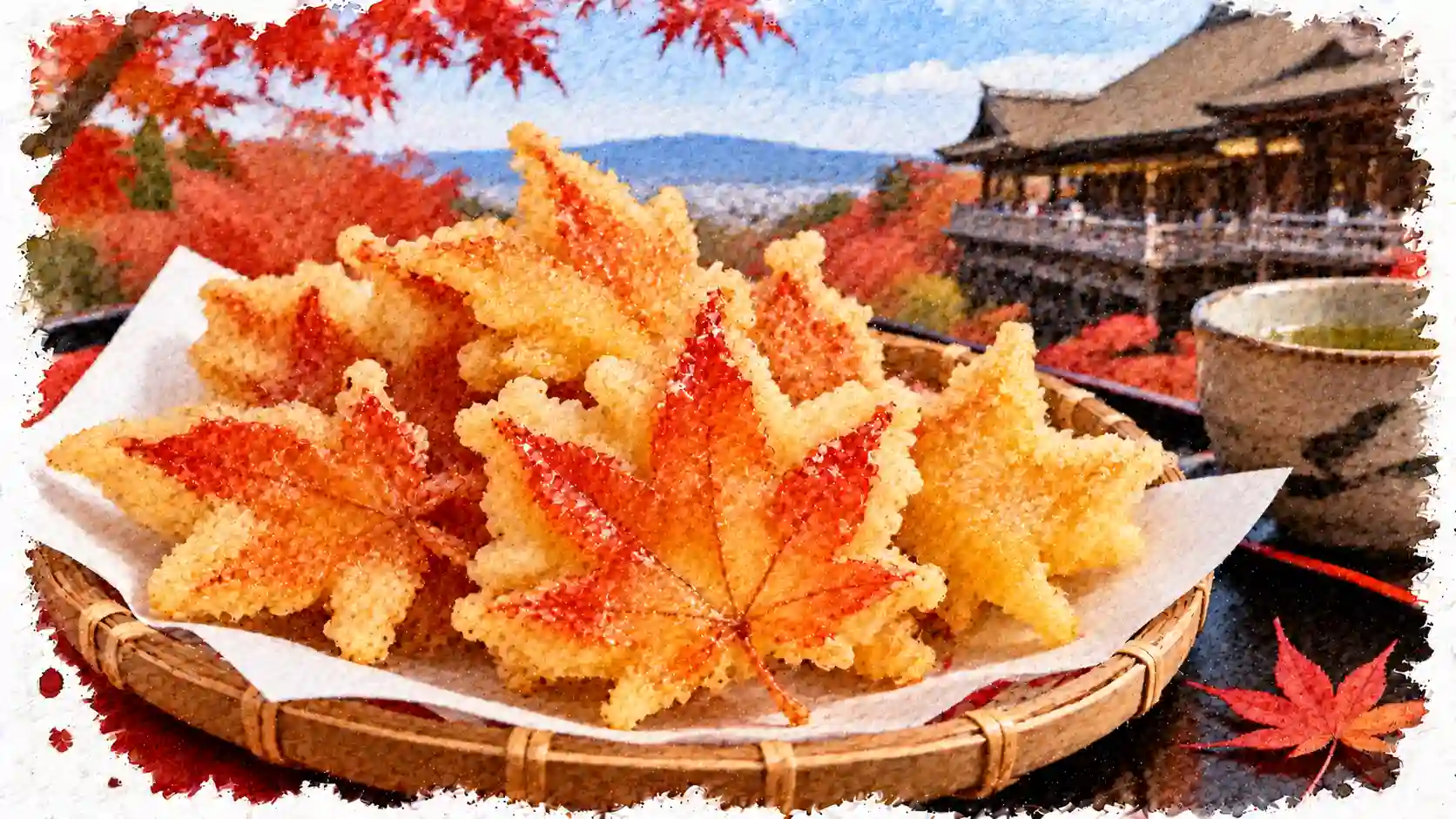
In Japan, autumn leaves are not only admired for their brilliant colors, they can also become a crunchy, sweet snack. Maple-leaf tempura, known as momiji tempura, is a regional specialty associated with Minoh in Osaka Prefecture. Specially selected maple leaves are preserved in salt for about a year, coated in a lightly sweetened batter, and deep-fried until crisp. Unlike vegetable tempura served as a savory dish, this unusual treat is closer to a delicate fried confection, with a crunchy coating and a leaf that gives the snack its distinctive shape.
What Is Maple-Leaf Tempura?
Maple-leaf tempura is a traditional Japanese snack made by frying specially cultivated or selected maple leaves in a sweet batter. The Japanese word momiji refers to autumn foliage, especially the colorful leaves associated with Japanese maples. The snack is also called momiji no tenpura.
Although it resembles ordinary tempura, its purpose and flavor are quite different. The leaf is salt-preserved before frying, while the batter supplies most of the sweetness and crunch. The finished snack is crisp, golden, and lightly sweet, with a toasted aroma from frying. The leaf itself has a mild flavor rather than a strong, recognizable maple taste.
The best-known version comes from Minoh, a city north of Osaka famous for its wooded valley, waterfall, and autumn foliage. There, momiji tempura is a popular souvenir and walking snack, especially for visitors exploring the scenic route toward Minoh Falls.
Quick Facts
- Origin: Japan, especially Minoh in Osaka Prefecture
- Japanese name: Momiji no tenpura
- Main ingredient: Specially selected edible maple leaves
- Preparation: Salt preservation followed by sweet-batter frying
- Preservation period: Traditionally around one year
- Texture: Crisp, crunchy, and brittle
- Flavor: Mild leaf flavor with a sweet, toasted coating
- Common occasion: A snack or souvenir during visits to Minoh
Common Ingredients
Momiji tempura uses a short ingredient list, but the choice and preparation of the leaves are central to its quality.
- Edible maple leaves: Traditional Minoh producers use leaves from the Ichigyōji maple, a variety valued for its relatively tender leaves and shallow lobes. The leaves are selected and grown for food production rather than gathered indiscriminately from roadside trees.
- Salt: The leaves are packed in salt for an extended period, traditionally about a year. This process helps preserve them and soften their texture.
- Wheat flour: Forms the base of the coating and creates the crisp outer layer.
- Sugar: Gives the batter its characteristic sweetness, distinguishing this snack from many savory tempura dishes.
- White sesame seeds: Commonly mixed into the batter for a nutty aroma and extra flavor.
- Frying oil: Rapeseed oil is traditionally associated with Minoh-style preparation, although methods can vary between makers.
Recipes and proportions differ between shops. Some use more sugar than others, and the choice of oil and frying technique can affect the final flavor and texture. The leaf is valued for its shape and texture as much as for its own mild flavor.
How Maple-Leaf Tempura Is Prepared
The process begins with harvesting suitable leaves, usually when they turn yellow in autumn. Minoh producers traditionally favor the Ichigyōji maple, whose relatively thin leaves and shallow lobes suit the preparation. Its yellow autumn color also helps the finished snack retain an attractive appearance.
After harvesting, the leaves are carefully washed and packed in salt, often in barrels, where they remain for about a year or longer. This extended preservation period helps reduce the leaves' harshness and soften their veins. Before frying, the leaves are soaked or rinsed to remove excess salt, then inspected and selected individually.
Next, each leaf is coated in a batter made from wheat flour, sugar, and white sesame seeds. The coated leaves are deep-fried in oil, traditionally rapeseed oil, until the exterior becomes crisp and golden. The frying process is relatively slow compared with many other tempura preparations, helping the coating develop its characteristic crunchy texture.
Although frying takes only part of the overall production time, the preparation requires patience and careful handling. Once fried, the leaves are drained and cooled before being packaged for sale as a takeaway treat or souvenir.
This traditional method should not be treated as a general recipe for eating leaves from any maple tree. Minoh producers use selected leaves intended for food production and follow a specific preservation and preparation process. Do not assume that leaves gathered from parks, roadsides, or ornamental trees are suitable to eat.
History & Origins
Momiji tempura is closely associated with Minoh, where colorful autumn foliage has attracted visitors for generations. Local tradition connects the snack to the Buddhist ascetic En no Gyōja, who is said to have admired the maple leaves near Minoh Falls and fried them in oil to offer to travelers visiting the mountain. This is a well-known origin story, but it is not independently verified history.
The snack's development as a commercial souvenir is more recent. Historical accounts place its sale around Minoh Falls in the late nineteenth century or early twentieth century. The opening of Minoh Park in 1898 and the arrival of a railway connection in 1910 helped increase tourism and brought more visitors to the area, supporting the growth of local food businesses.
Today, momiji tempura remains one of Minoh's best-known specialties. Its appeal combines the region's autumn scenery with a snack that preserves the recognizable shape of a leaf in an unusual edible form. Because the leaves are salt-preserved in advance, shops can make and sell the snack throughout the year, even outside the autumn foliage season.
Varieties & Differences
Traditional momiji tempura has a fairly consistent appearance, but individual shops may adjust their batter or offer newer flavor variations.
- Classic sweet momiji tempura: The familiar version, with a crisp, lightly sweet coating and a whole maple leaf inside.
- Sesame-rich versions: Batter containing white sesame seeds for a more pronounced nutty aroma.
- Brown-sugar variations: Some modern products use brown sugar to create a deeper, caramel-like sweetness.
- Green-tea versions: Some specialty shops offer variations that incorporate green tea flavor.
- Other flavored versions: Selected shops experiment with additions such as chili while retaining the recognizable leaf shape.
Availability varies by shop, and these flavored versions are modern variations rather than a single standard recipe. The traditional sweet version remains closely associated with Minoh.
Maple-leaf tempura should not be confused with momiji manju, a separate Japanese sweet associated with Hiroshima. Momiji manju is a small cake typically filled with sweet bean paste, whereas momiji tempura is made by frying a preserved leaf in batter.
How Maple-Leaf Tempura Is Enjoyed
In Minoh, momiji tempura is commonly eaten while walking between local shops and the area's natural attractions. It is also sold in bags as a souvenir, allowing visitors to take home a taste of the region. Its sturdy, crunchy texture makes it well suited to casual snacking.
The flavor is generally gentle and sweet, with the fried batter taking center stage. Sesame adds a toasted note, while the leaf gives each piece its distinctive silhouette. The snack pairs naturally with green tea or other unsweetened drinks, which balance the sweetness of the coating.
For many visitors, part of the pleasure comes from the contrast between the delicate appearance of a maple leaf and its unexpectedly crunchy texture. Although the snack is strongly associated with autumn sightseeing, the preservation process means it can be enjoyed throughout the year.
Did You Know?
The leaves used for traditional Minoh momiji tempura are commonly preserved in salt for about a year or longer before frying. The preparation therefore begins long before the snack reaches a shop counter, even though the finished treat is often eaten in just a few bites.
A Crunchy Taste of Japanese Autumn
Maple-leaf tempura turns the beauty of autumn foliage into an unusual edible specialty. Its carefully preserved leaves, sweet sesame-studded batter, and crisp finish make it distinct from both ordinary tempura and conventional sweets. Rooted in Minoh's local food culture, momiji tempura offers a memorable reminder that regional Japanese cuisine can celebrate not only the flavors of a place, but also its landscapes and seasons.