
Medlar
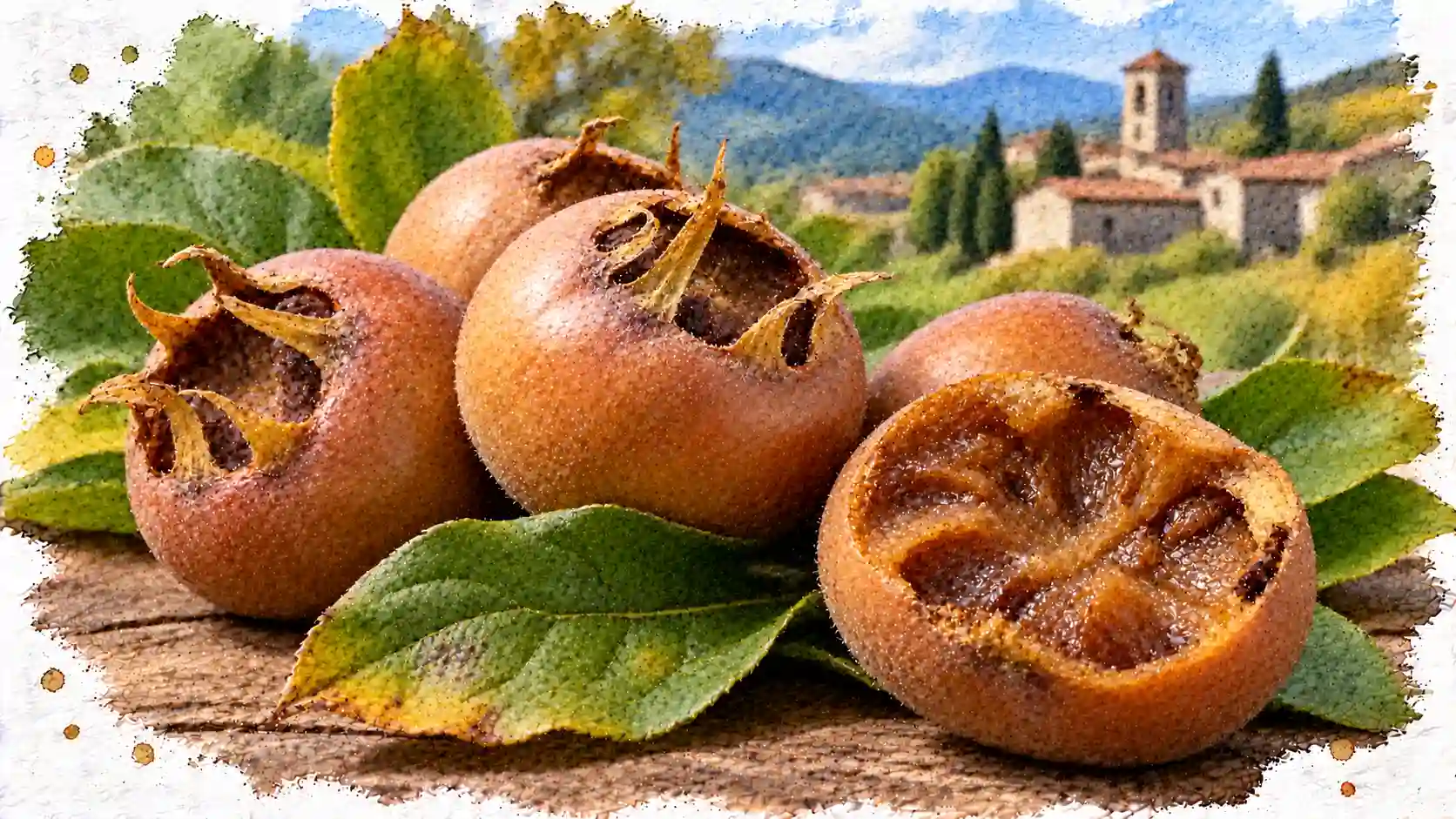
Medlar is an unusual old-world fruit that asks for patience before it can be enjoyed. Harvested in autumn, its small, brown-skinned fruits are traditionally left to soften through a process called bletting. During this transformation, the flesh becomes dark, tender, and almost spoonable, developing a sweet flavor often compared to applesauce, dates, or spiced fruit. Once prized across Europe and parts of Southwest Asia, medlar has become a rare sight in modern supermarkets, but it still has a place in heritage orchards, traditional preserves, and recipes that celebrate seasonal produce.
What Is Medlar?
Medlar is the fruit of Mespilus germanica, a small tree or large shrub in the rose family, Rosaceae. Despite its scientific name, the species is native to parts of Southwest Asia and southeastern Europe rather than Germany alone. It has been cultivated for thousands of years and was once a familiar fruit in European gardens and orchards.
The fruit is round, brownish, and topped with a prominent ring of persistent sepals that gives it a distinctive open-ended shape. It is relatively small, often compared in size to a large plum or small apple. When freshly picked, medlar is usually hard, astringent, and unpleasant to eat raw.
Its traditional appeal comes from bletting. After harvest, the fruit is stored until its flesh softens and darkens. The texture becomes almost like a thick purée, while the flavor turns sweeter and more complex. Properly bletted medlar is often described as mellow, fruity, and slightly tangy, with hints of applesauce, dates, or autumn spices.
Bletting is not simply leaving fruit to rot. It is a post-harvest softening process in which changes within the fruit reduce its harsh astringency. The fruit must still be checked carefully and discarded if it develops mold or signs of spoilage.
Quick Facts
- Food name: Medlar
- Scientific name: Mespilus germanica
- Region of origin: Southwest Asia and southeastern Europe
- Plant family: Rosaceae, the rose family
- Appearance: Small brown fruit with a wide, open-looking calyx
- Flavor: Sweet, mellow, fruity, and slightly tangy after bletting
- Texture: Firm when unbletted; soft and almost purée-like after bletting
- Key process: Bletting, or post-harvest softening
- Common uses: Eating after bletting, jellies, preserves, compotes, and fruit pastes
Common Ingredients
Medlar has traditionally been used in simple seasonal recipes that make the most of its distinctive texture and mellow flavor. Once the fruit has bletted, it can be eaten with a spoon or combined with other ingredients to create sweet dishes. Common pairings include:
- Bletted medlar pulp: The soft flesh is the main ingredient in purées, preserves, and fruit pastes.
- Sugar: Sweetens medlar jelly, jam, and other preserves.
- Lemon juice: Adds brightness and can help balance the fruit's sweetness.
- Apples or pears: Complement medlar in fruit compotes, sauces, and preserves.
- Cinnamon and other warm spices: Enhance its autumnal flavor in desserts.
- Honey: Provides sweetness in simple fruit preparations.
- Pastry ingredients: Flour, butter, and eggs can be used when medlar pulp is incorporated into cakes or tarts.
- Cheese: Medlar jelly or fruit paste can be served alongside cheese, much like other traditional fruit preserves.
Medlar does not need elaborate seasoning. Its flavor is subtle enough to work in simple recipes, while its soft pulp makes it particularly useful in preparations that benefit from a thick fruit base.
How Medlar Is Prepared
The defining step in preparing medlar is bletting. The fruit is generally harvested in autumn, often after it has reached full size but before the flesh has softened enough to eat. It is then placed in a cool, well-ventilated location and left until the flesh becomes brown and soft. Some traditional methods rely on autumn frosts or a period of storage to help the fruit reach an edible condition.
The time required varies with the fruit, its maturity, and storage conditions. During bletting, the flesh changes from firm and astringent to tender and much more palatable. The skin may wrinkle, and the interior becomes dark and soft. The fruit should be checked regularly, since excessive moisture or poor ventilation can encourage mold and spoilage.
Once properly bletted, medlar can be eaten by cutting it open and scooping out the soft pulp. The skin and hard seeds are generally avoided, and the fibrous central area may need to be separated from the flesh. Because the texture is so soft, medlar is often more practical to eat with a spoon than like a crisp apple.
Another traditional use is medlar jelly. The fruit is cooked with water to extract its flavor and natural pectin, then strained and combined with sugar. The result is a fragrant preserve that can be spread on bread or served with cheese and other savory foods. Medlar pulp can also be used in fruit pastes, compotes, sauces, and baked goods.
Although bletting is traditional, it should not be confused with uncontrolled spoilage. Use sound fruit, keep it in suitable conditions, and discard any fruit showing mold, unusual discoloration, or an unpleasant rotten odor. The aim is soft, edible flesh, not decomposition.
History & Origins
Medlar has been cultivated in parts of Southwest Asia and southeastern Europe for thousands of years. Ancient Greek and Roman writers knew the fruit, and it later became a familiar feature of medieval and early modern European orchards and gardens. Despite its scientific name, Mespilus germanica, it is not native to Germany alone.
Before modern refrigeration and the widespread availability of imported fruit, medlar offered a distinctive seasonal food that could be kept after harvest while it softened. Its unusual ripening requirement was part of both its appeal and its inconvenience: the fruit could not simply be picked and eaten like a ripe plum.
Medlar became especially associated with traditional English and French gardens, where it was grown for both its fruit and its ornamental value. The tree has attractive spring flowers and a spreading shape, while the fruit matures late in the year. Its popularity declined as other fruits became easier to buy and eat, but it has survived in heritage orchards and among gardeners interested in historic varieties.
The fruit also appears in older European writing, sometimes with humorous or crude references to its appearance and the way it softens. Those historical names reflect the medlar's unusual shape and texture, which made it memorable long before it became a niche fruit.
Varieties & Differences
Medlar is not as widely standardized in modern markets as apples or pears, but several cultivated selections have been grown for fruit size, shape, flavor, and quality. Different varieties may also differ in how much flesh they contain and how readily the fruit softens.
- Nottingham: A traditional English cultivar known for relatively small, flavorful fruit and reliable crops. The tree is fairly compact compared with some other selections.
- Royal: A cultivated type known for larger fruit than Nottingham, with a more upright growth habit.
- Dutch: A group of large-fruited selections associated with Dutch horticulture. These medlars generally produce larger fruit than the smaller traditional types.
- Iranian: A cultivar recommended by the Royal Horticultural Society for its early-ripening fruit and good flavor.
- Different stages of bletting: Fruit that has only partly softened may remain firm and astringent, while fully bletted fruit is much softer and more palatable.
For most cooks, the condition of the fruit matters at least as much as the cultivar. A well-bletted medlar can be enjoyable, while a hard, unbletted one may be unpleasant regardless of its variety.
How Medlar Is Enjoyed
Traditionally, medlar is eaten after bletting, when the flesh is soft enough to scoop out. Its mellow flavor makes it a distinctive autumn and early-winter treat, especially for people interested in historic fruits and old-fashioned orchard traditions. Some enjoy the pulp on its own, while others mix it with a little honey or use it as a base for desserts.
Medlar jelly is one of its best-known culinary uses. The preserve has a rich color and a gently fruity flavor, and it can be served on toast, with pastries, or alongside cheese. Medlar also works in compotes and sauces, where its soft texture blends easily with apples, pears, and warm spices.
Its rarity is part of the modern appeal. Medlar is not usually stocked in ordinary supermarkets, so people most often encounter it through specialist growers, heritage orchards, farmers markets, or home gardens. The tree is also valued as an ornamental plant, making it attractive to gardeners who want a fruit tree with a long history.
For anyone trying medlar for the first time, patience is essential. The fruit's firm, astringent state can be misleading, but proper bletting transforms it into something quite different. Once softened, medlar offers a glimpse of an older European food tradition built around seasonal harvests, careful storage, and preserving fruit for later enjoyment.
Did You Know?
Medlar is sometimes called an old-fashioned fruit because it was widely grown in European gardens before modern supermarket fruit became common. Its unusual preparation method, bletting, allows the hard, astringent fruit to soften into a sweet, spoonable pulp. The transformation is so distinctive that medlar is rarely eaten in the same firm state in which it is harvested.