
Miracle Fruit
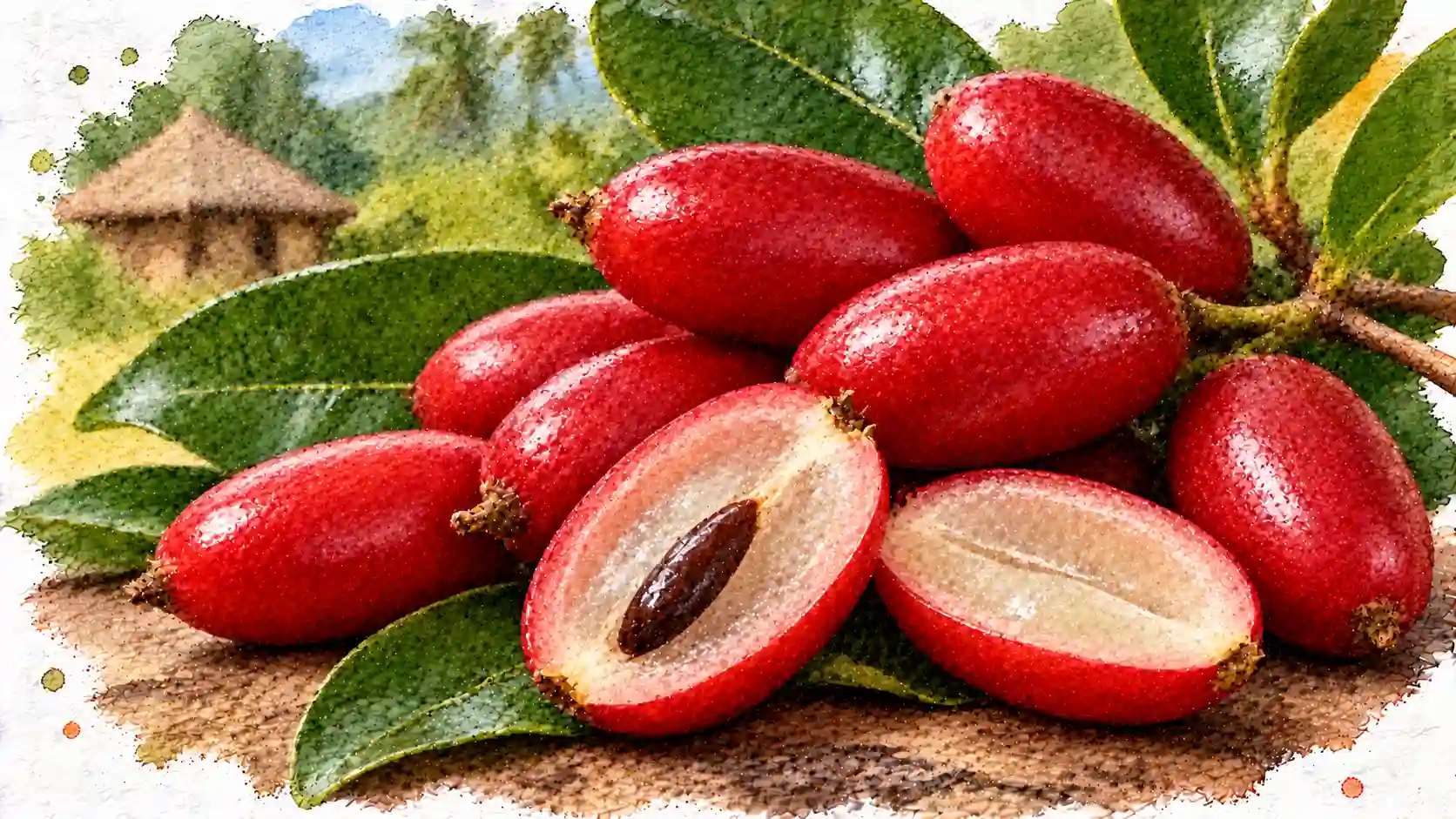
Miracle fruit is a small red berry with an extraordinary effect: after eating it, a slice of lemon can taste surprisingly sweet instead of sharply sour. Native to West Africa, this unusual fruit has fascinated food lovers and scientists because it temporarily changes how the tongue perceives certain flavors. Its secret is a protein called miraculin, which interacts with sweet taste receptors under acidic conditions and makes sour foods seem sweet. Although the berry itself has a mild flavor, its remarkable effect has inspired tasting experiences, culinary experiments, and research into alternative ways to modify perceived sweetness.
What Is Miracle Fruit?
Miracle fruit, also called miracle berry, is the fruit of Synsepalum dulcificum, an evergreen shrub native to tropical West Africa. The plant produces small, oval-shaped berries that turn bright red when ripe. Each berry contains a thin layer of pulp surrounding a relatively large seed.
On its own, the berry is not intensely sweet or especially flavorful. Its unusual reputation comes from what happens after the pulp coats the taste buds. Foods that are normally sour, particularly acidic fruits and drinks, can begin to taste sweet for a limited period after the berry is eaten.
The effect comes from miraculin, a naturally occurring glycoprotein found in the fruit's pulp. Miraculin does not taste like sugar by itself. Instead, it changes the response of the tongue's sweet taste receptors under acidic conditions, making sour foods produce a sweet sensation.
This does not mean that a lemon suddenly contains more sugar or that its acidity disappears. The fruit's chemical composition remains essentially the same; what changes is the way its flavor is perceived. The effect also varies depending on the acidity of the food and the individual tasting it.
Quick Facts
- Food name: Miracle fruit or miracle berry
- Region of origin: Tropical West Africa
- Scientific name: Synsepalum dulcificum
- Plant family: Sapotaceae
- Appearance: Small, oval, bright red berry
- Flavor on its own: Mild and relatively subtle
- Active compound: Miraculin, a taste-modifying glycoprotein
- Special property: Makes many acidic foods taste sweet temporarily
- Common uses: Fresh eating, taste-testing experiences, and food research
Common Ingredients
Miracle fruit is usually eaten by itself to create its taste-changing effect rather than mixed into a conventional recipe. During tasting sessions, it is commonly paired with acidic foods so people can experience the transformation firsthand.
- Fresh miracle fruit: The small red berry containing miraculin.
- Lemon: A classic tasting food because its sharp acidity can become surprisingly sweet.
- Lime: Offers another strong citrus flavor for testing the effect.
- Grapefruit: Combines acidity with natural bitterness, allowing tasters to explore a more complex flavor change.
- Unsweetened citrus juice: Provides an easy way to experience the effect in liquid form.
- Tart berries: Sour varieties can taste sweeter after the berry has been consumed.
- Plain yogurt: Its natural tanginess makes it another interesting tasting option.
- Other acidic foods: Certain sour fruits and carefully chosen acidic foods can be used in tasting experiments.
These foods are not necessarily ingredients in a single dish. They are more often served in small portions as a tasting lineup, allowing people to compare their normal flavors with the altered experience.
How Miracle Fruit Is Prepared
Fresh miracle fruit is generally eaten raw. The berry is gently chewed so its pulp spreads across the tongue and inside the mouth. The seed is discarded rather than swallowed.
After the berry is consumed, a person can try a small piece of lemon or another acidic food. The familiar sourness may be accompanied or replaced by a strong sweet sensation. Lemon can seem more like a sweet citrus treat, while tart berries may taste closer to a ripe, sweet version of themselves.
The effect does not last indefinitely. Its duration varies with the individual, the amount of fruit consumed, and the food being tasted. It commonly lasts around 30 minutes to an hour, although some studies and reports describe effects lasting longer. As the miraculin's influence on the taste receptors fades, ordinary taste perception gradually returns.
Miracle fruit can also be sold in freeze-dried forms or as processed products designed to deliver the taste-modifying effect. These products are not identical to fresh berries, and their quality and handling requirements can vary. Miraculin is sensitive to heat, so processing methods can affect its activity.
Because the experience can make very acidic foods seem pleasant and sweet, it is wise to begin with small portions rather than eating large amounts of lemon or drinking substantial quantities of acidic juice. The change in perceived flavor does not make those foods less acidic, and frequent exposure to acid can still affect tooth enamel.
History & Origins
Miracle fruit is native to tropical West Africa, where the berries have traditionally been used to influence the taste of sour foods and drinks. Its unusual property became known outside the region through botanical observation and scientific investigation.
Researchers began studying the fruit's taste-modifying effects in the twentieth century. In 1968, researchers reported isolating and characterizing miraculin, the substance responsible for making sour foods taste sweet. Subsequent studies have investigated how this protein interacts with the human sweet taste receptor.
The plant has also attracted interest from horticulturists and home gardeners. Although it originates in a tropical climate, it can be grown in suitable warm environments outside Africa. In places such as Florida, specialist growers cultivate it as an unusual fruiting shrub, though its growing requirements can make it more demanding than common backyard fruit plants.
In recent years, miracle fruit has gained attention through novelty tasting events, specialty food businesses, and research into flavor modification. It remains a relatively uncommon fruit in ordinary supermarkets, partly because fresh berries are delicate and do not store or ship as easily as many familiar fruits.
Varieties & Differences
Miracle fruit is generally discussed as one species rather than as a large group of familiar commercial varieties. The most important differences consumers encounter concern how the fruit is grown, harvested, and sold.
- Fresh berries: Bright red, ripe fruit with soft pulp that can be eaten directly.
- Freeze-dried fruit: A processed form designed to make the taste-changing experience easier to store and distribute.
- Tablets and powders: Specialty products made from processed miracle fruit, with effects that depend on their formulation, miraculin content, and quality.
- Home-grown fruit: Berries harvested from cultivated shrubs, where growing conditions and maturity can affect fruit size and quality.
Regardless of the form, the defining feature is miraculin. The effect is strongest with foods that provide suitable acidic conditions, so not every food will taste dramatically different. Sweet foods may remain much the same, while salty or savory foods do not reliably become dessert-like.
How Miracle Fruit Is Enjoyed
One of the most popular ways to enjoy miracle fruit is through a “flavor-tripping” tasting session. A berry is eaten first, followed by small samples of lemon, lime, grapefruit, tart berries, or other acidic foods. Participants compare notes as familiar foods seem to change character without being cooked or sweetened.
The experience is more than a novelty. Miracle fruit has attracted research interest because it may help some people explore food when their taste perception has changed. Small studies have investigated its potential for people experiencing taste disturbances, including those associated with cancer treatment. However, this research remains limited, and miracle fruit is not an established treatment or a substitute for medical care.
Miracle fruit has also been explored as a way to make acidic foods and beverages more appealing without adding sugar. Its role is different from that of a conventional sweetener: rather than supplying sweetness directly, it alters how the mouth responds to certain acidic foods. Whether it can be useful in a particular diet depends on the food, the individual, and the broader nutritional context.
For first-time tasters, the best approach is simple: use a reputable source, follow the product's instructions, and try small portions of familiar sour foods. The effect is temporary, but the contrast between a lemon's usual sharpness and its unexpected sweetness makes miracle fruit one of the most memorable examples of how perception shapes the experience of eating.
Did You Know?
Miracle fruit does not turn sour food into sugar. Its protein, miraculin, changes how sweet taste receptors respond in acidic conditions. A lemon still contains its natural acids after the berry is eaten; it simply tastes much sweeter for a short time. That is why the effect is considered a change in taste perception rather than ordinary sweetening.