
Mopane Worms
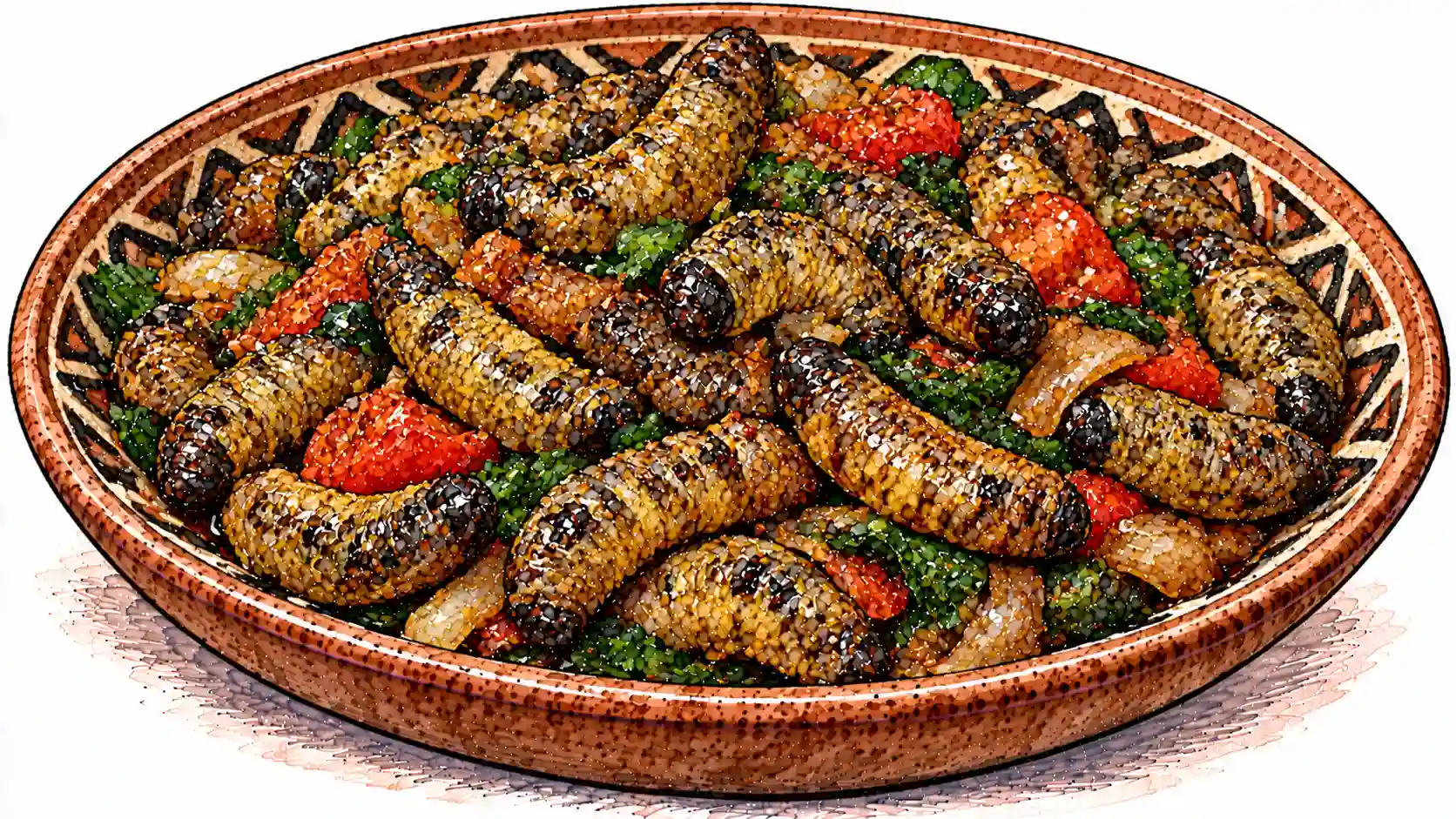
Large, meaty, and rich in tradition, mopane worms are a well-known Southern African delicacy that has nourished communities for generations. Despite their name, these edible creatures are caterpillars of an emperor moth, commonly known as Gonimbrasia belina or Imbrasia belina. They are often cleaned, dried, fried, or cooked with vegetables and seasonings. Especially popular in countries such as Zimbabwe, Botswana, and South Africa, mopane worms are valued for their distinctive taste, nutritional contribution, and role as a seasonal food. Harvesting and selling them can also provide important income for rural households, making them a significant part of regional food culture and local livelihoods.
What Are Mopane Worms?
Mopane worms are the caterpillar stage of an emperor moth, commonly identified as Gonimbrasia belina, also known as Imbrasia belina in scientific literature. They are named after the mopane tree, Colophospermum mopane, whose leaves are an important food source for the caterpillars. The larvae grow relatively large and are typically dark in color, with distinctive markings and spines along their bodies.
Although commonly called worms, mopane caterpillars are insects rather than true worms. They are harvested seasonally in parts of Southern Africa and prepared in several ways, including boiling, roasting, drying, and frying. Their flavor is often described as earthy, savory, and slightly nutty. Dried specimens have a firm, chewy texture, while frying can make them crispier. The final texture depends on the preparation method and whether the caterpillars are fresh or dried.
Quick Facts
- Food Category: Edible insects and traditional Southern African foods
- Origin: Southern Africa
- Main Ingredient: Emperor moth caterpillars
- Common Seasonings: Salt, tomatoes, onions, and chili
- Typical Flavor: Earthy, savory, and slightly nutty
- Preparation: Cleaned, boiled or roasted, dried, fried, or cooked in a sauce
- Common Uses: Snacks, stews, relishes, and traditional meals
Common Ingredients
Mopane worms can be prepared with just a few ingredients or incorporated into more elaborate dishes. Recipes vary among communities and households, but several ingredients are commonly used when the caterpillars are cooked as a meal.
- Mopane Worms: The main ingredient, cleaned and prepared fresh or dried.
- Salt: Enhances the flavor and may be used during cooking or preservation.
- Water: Used to boil fresh caterpillars or rehydrate dried ones before further cooking.
- Onions: Add sweetness and depth to cooked dishes.
- Tomatoes: Provide moisture and acidity when the caterpillars are prepared in a sauce.
- Chili Peppers: Add heat and complement the caterpillars' earthy flavor.
- Cooking Oil: Used for frying or sautéing the caterpillars with other ingredients.
Not every preparation includes all these ingredients. Some versions are simply boiled, roasted, or dried, while others are cooked with vegetables and seasonings to create a more substantial dish.
How Mopane Worms Are Prepared
Preparation begins with harvesting the caterpillars from mopane trees and surrounding vegetation in areas where they occur. They are collected by hand or carefully removed from branches. Traditional processing commonly involves removing the gut contents, washing the caterpillars with clean water, and preparing them for cooking or drying. Specific methods vary by community and local practice.
One common preservation method is drying the cleaned caterpillars in the sun after suitable preparation. This reduces their moisture content and makes them easier to store and transport. Some processors boil the caterpillars in salted water before drying them, while others roast them over hot coals. These different methods can affect the final texture, appearance, and flavor.
To prepare dried mopane worms for a meal, cooks may soak or boil them until they soften. They can then be fried until crisp or simmered with onions, tomatoes, and seasonings to create a savory dish. Fresh caterpillars may also be cooked directly after cleaning.
Proper cleaning, thorough cooking, and safe storage are important. Research has found that poorly handled or processed mopane worms can contain microorganisms and other contaminants. Sun-drying alone does not guarantee food safety, so clean processing conditions and appropriate cooking and storage practices matter. Wild-harvested caterpillars should be obtained from reliable sources and prepared using established food-safe methods.
History & Origins
Mopane worms have been eaten for generations by communities across Southern Africa, particularly in regions where mopane woodlands are widespread. They are an established part of the food traditions of countries including Zimbabwe, Botswana, and South Africa, as well as neighboring areas.
The caterpillars' importance is closely connected to their seasonal abundance. When large numbers appear, communities can collect substantial quantities for immediate consumption or preservation. Drying allows the harvest to be stored for later use, including periods when fresh caterpillars are unavailable.
For many households, harvesting and preparing mopane worms is more than a culinary activity. The caterpillars are traded in local markets and supply chains, providing income for harvesters, processors, and vendors. In some communities, this seasonal trade is an important source of household earnings and a way to pass traditional harvesting and processing knowledge between generations.
Today, mopane worms are sold fresh or dried in markets and shops throughout parts of Southern Africa. They remain part of traditional home cooking and have attracted interest from people exploring regional foods and alternative protein sources. However, their availability depends on seasonal conditions, harvesting practices, and the health of the woodlands where the caterpillars occur.
Varieties & Differences
Mopane worms generally refer to the caterpillar of the same moth species, but their texture and flavor vary depending on how they are processed and cooked. Common preparations include:
- Dried Mopane Worms: Cleaned and dried for storage, with a firm texture that can become softer when rehydrated and cooked.
- Fried Mopane Worms: Cooked in hot oil until crisp, often with salt or other seasonings.
- Boiled Mopane Worms: Simmered in water, sometimes salted, to soften them before serving or drying.
- Mopane Worm Stew: Cooked with onions, tomatoes, and seasonings to create a moist, savory dish.
- Fresh Mopane Worms: Prepared soon after harvesting, without first drying them for storage.
These methods produce noticeably different eating experiences. Dried caterpillars tend to be firm and chewy, while fried versions can become crisp. Those simmered in sauces become softer and take on some of the surrounding flavors. In some traditional processing methods, roasting also helps remove or loosen the caterpillars' spines.
How Mopane Worms Are Enjoyed
Mopane worms are eaten as snacks or served as part of a larger meal. Dried specimens may be further cooked before serving, while fried versions offer a crisp alternative that pairs well with simple seasonings.
In traditional home cooking, mopane worms may be served with staple foods such as sadza in Zimbabwe or pap in South Africa and Botswana. These maize-based dishes provide a mild accompaniment to the caterpillars' earthy flavor, particularly when they are cooked in a tomato and onion sauce.
Their versatility has helped mopane worms remain part of food traditions across different communities. Whether dried for storage, fried for a snack, or simmered into a hearty meal, they represent a distinctive part of Southern African food culture. Their role in seasonal harvesting and local trade also connects the food to livelihoods and knowledge of the natural environment.
Did You Know?
Mopane worms are not worms at all—they are the caterpillars of an emperor moth!
Their common name comes from their close association with mopane woodlands, where mopane trees provide an important food source for the caterpillars. When they appear in large seasonal numbers, harvesting them can provide both a valuable food supply and income for local communities.