
Nata de Coco
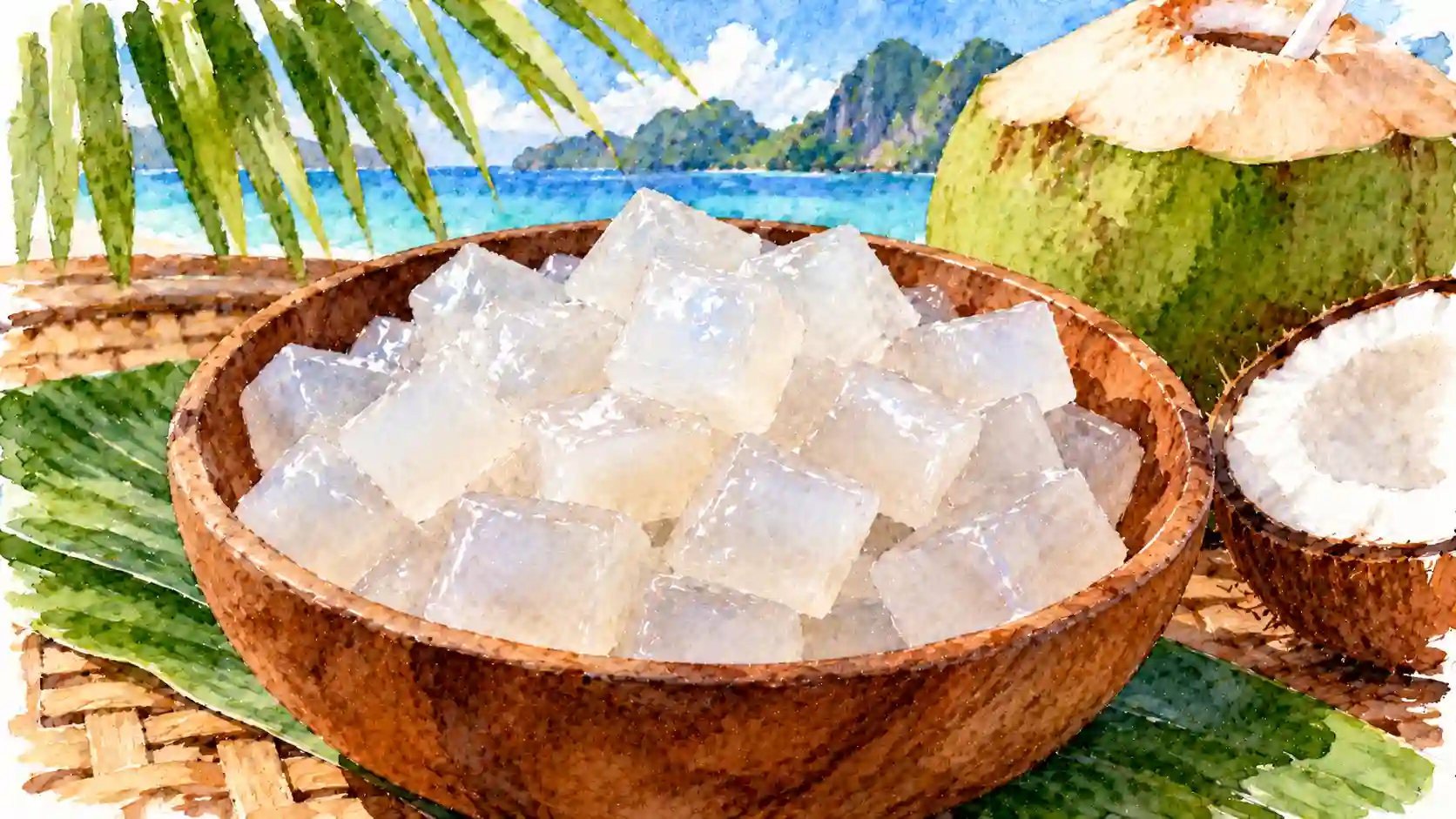
With its glassy appearance and satisfyingly springy bite, nata de coco brings a distinctive texture to Filipino desserts and refreshing drinks. This translucent coconut jelly is made by fermenting coconut water with cellulose-producing bacteria, transforming a simple liquid into a firm, chewy gel. Often sold in sweetened cubes, nata de coco is enjoyed in fruit salads, chilled desserts, and beverages throughout the Philippines and beyond.
What Is Nata de Coco?
Nata de coco is a jelly-like food that originated in the Philippines. Although it resembles gelatin, its structure comes from bacterial cellulose rather than animal-derived gelatin. During fermentation, certain bacteria produce a network of cellulose fibers that forms a thick, water-rich layer.
The finished product is usually translucent white or pale ivory, with a mild flavor that readily takes on sweetness from syrups and other ingredients. Its defining feature is texture: each cube feels firm at first, then yields with a pleasantly chewy, slightly crunchy resistance.
The name combines Spanish-derived wording with coco, meaning coconut, reflecting the Philippines' linguistic and culinary history. Today, nata de coco is recognized as a Filipino food product and a versatile ingredient in desserts and drinks across Asia and other parts of the world.
Quick Facts
- Origin: Philippines
- Main ingredient: Coconut water
- Type: Fermented coconut gel
- Texture: Chewy, springy, and slightly crunchy
- Appearance: Translucent white or ivory, often cut into cubes
- Key process: Bacterial fermentation that produces cellulose
- Common uses: Fruit salads, puddings, ice cream, and beverages
- Flavor: Mild, often sweetened before serving
Common Ingredients
Coconut water is the traditional foundation of nata de coco. Producers commonly add sugar to provide nutrients for fermentation, along with a suitable bacterial starter culture. Depending on the production method, the mixture may also contain an acidifying ingredient and other processing aids.
The key ingredient is the liquid inside the coconut, not simply grated coconut meat. During fermentation, bacteria such as Komagataeibacter xylinus, known in older scientific literature as Acetobacter xylinum, produce bacterial cellulose. This material forms the gel's structure and gives nata de coco its characteristic firmness and chewiness.
Once the gel has formed and been processed, it can be cut into cubes or other shapes. Commercial versions are frequently packed in sweet syrup, while flavored products may contain fruit flavorings, colorings, or additional sweeteners.
How Nata de Coco Is Prepared
Making nata de coco involves controlled fermentation rather than simply thickening coconut water. A prepared coconut-water medium is inoculated with a suitable culture and placed in shallow containers. In traditional surface fermentation, the bacteria need access to oxygen, and a thick cellulose layer gradually develops at the surface of the liquid.
When the layer reaches the desired thickness, it is harvested and washed to remove residual fermentation liquid and excess acidity. The gel is then cut into pieces and commonly boiled or otherwise heat-treated before being sweetened, packaged, or incorporated into other foods. Exact processing steps depend on the producer and the intended product.
Fermentation conditions matter. Contamination, unsuitable acidity, or poor handling can interfere with production and compromise food safety. Commercial manufacturing therefore relies on controlled methods, sanitation, and appropriate processing. Nata de coco should not be made by simply leaving coconut water to ferment under uncontrolled conditions.
History & Origins
Nata de coco developed in the Philippines, where coconuts have long been important to food and agriculture. The product also offered a useful way to turn coconut water, which can be a low-value byproduct of coconut processing, into a marketable food.
Published accounts trace the development of nata de coco as a commercial food product to the Philippines in the 1970s. It gained wider international attention as production and exports expanded, particularly when demand surged in Japan during the 1990s. Today, nata de coco is produced and enjoyed in several countries, while the Philippines remains closely associated with its origins.
Nata de coco belongs to a broader family of fermented gels made using bacterial cellulose. Nata de piña, for example, is made using pineapple juice or another pineapple-based liquid instead of coconut water. These foods demonstrate how fermentation can transform plant-based liquids into distinctive, chewy gels.
Varieties & Differences
Plain nata de coco has a mild flavor, making it a flexible addition to many recipes. Products differ in shape, sweetness, flavoring, and intended use.
- Plain nata de coco: Pale, mildly flavored pieces that can be added to homemade desserts or sweetened to taste.
- Sweetened nata de coco: Pieces packed in syrup, ready to mix into fruit salads or use as a topping.
- Flavored nata de coco: Versions with fruit flavorings or added colors to suit a particular dessert or beverage.
- Nata de piña: A related fermented gel made from pineapple-based liquid rather than coconut water.
Nata de coco should also be distinguished from coconut-flavored jelly made with gelatin, agar, or other gelling agents. Those products may look similar, but their ingredients and production methods differ. Nata de coco's characteristic structure comes from cellulose produced by bacteria during fermentation.
How Nata de Coco Is Enjoyed
In the Philippines, nata de coco is especially popular in chilled sweets. Its springy texture contrasts with soft fruit, creamy mixtures, and smooth puddings, adding interest without overpowering other flavors.
It is a familiar ingredient in Filipino-style fruit salad, where it may be mixed with fruit cocktail and a creamy dressing. It can also appear in buko pandan, a dessert commonly combining young coconut, pandan-flavored jelly, and a creamy base. In halo-halo, the colorful shaved-ice dessert, nata de coco can contribute another chewy element among the many toppings.
Beyond traditional desserts, nata de coco is often added to bottled drinks, fruit beverages, yogurt, and ice cream. Its relatively neutral taste makes it well suited to fruit-forward combinations, while its texture remains noticeable even when surrounded by liquid or cream.
Bacterial cellulose is a form of dietary fiber, but the nutritional profile of a serving depends on the finished product and serving size. Nata de coco packed in heavy syrup can contain substantial added sugar, so checking the nutrition label is useful for anyone monitoring sugar intake.
Did You Know?
Nata de coco is made largely of bacterial cellulose, a structural carbohydrate related to the cellulose found in plant cell walls. In this food, microorganisms produce the cellulose as a network of fine fibers that forms a water-rich gel during fermentation.
A Filipino Favorite with Global Appeal
Nata de coco shows how a simple ingredient can become something distinctive through fermentation. Its translucent appearance, resilient chew, and ability to complement many flavors have made it a lasting favorite in Filipino desserts and a familiar ingredient in sweet treats around the world. Whether stirred into fruit salad or added to a chilled drink, this coconut-derived jelly brings a texture that is difficult to mistake for anything else.