
Natto
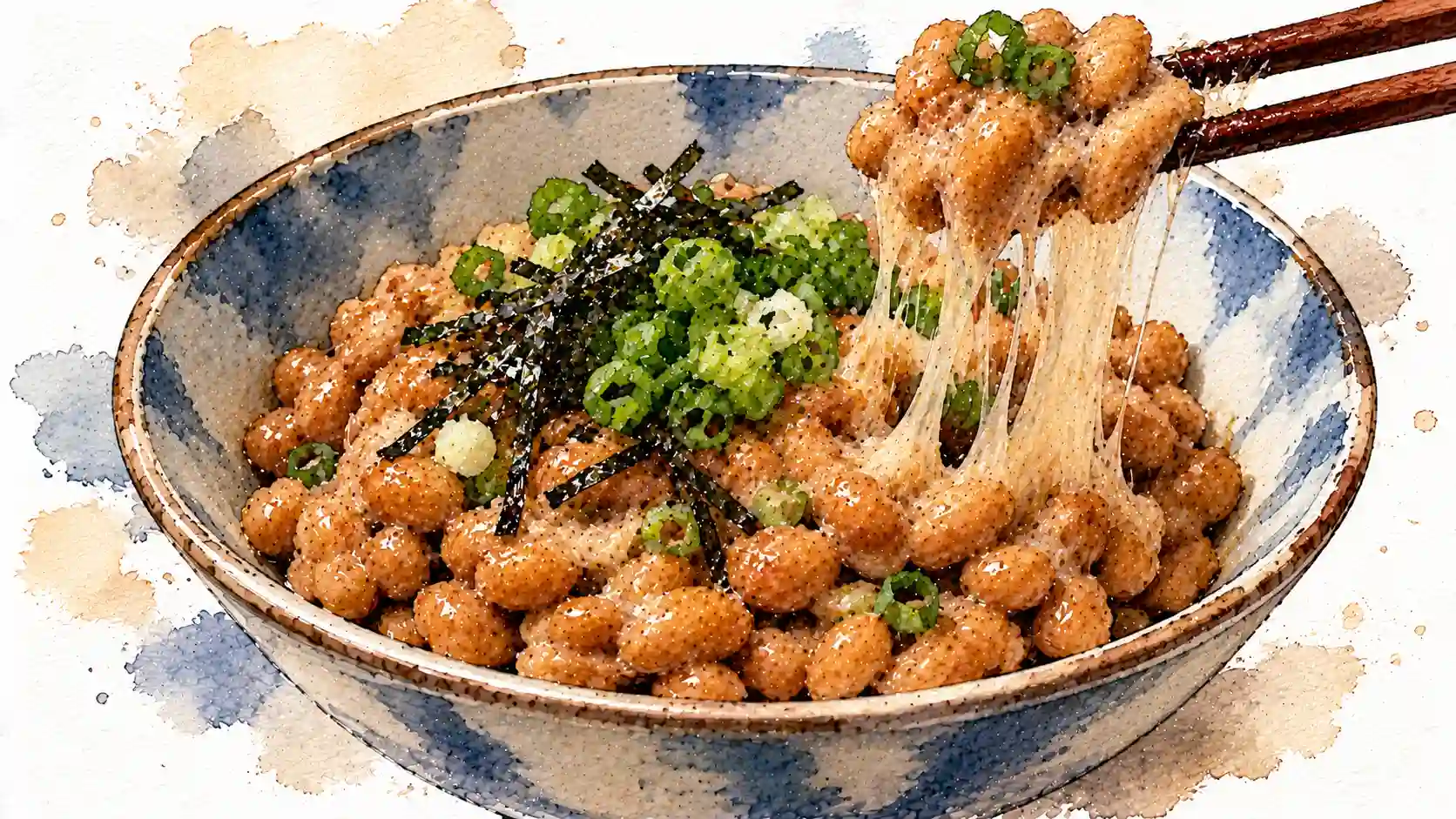
Natto is a traditional Japanese food made from fermented soybeans, famous for its sticky strands, distinctive aroma, and bold, savory flavor. Often served over steamed rice at breakfast, it is a familiar part of Japanese food culture, though its texture and smell can take some getting used to. Fermentation transforms cooked soybeans into a uniquely textured food that has been enjoyed in Japan for generations.
What Is Natto?
Natto is made by fermenting cooked soybeans with a bacterium commonly known as natto bacteria, Bacillus subtilis var. natto. During fermentation, the beans develop a characteristic sticky coating that forms long, stretchy strands when stirred. The finished food has a strong aroma, a savory, earthy taste, and a texture that is both soft and stringy.
The appearance of natto can be surprising to people encountering it for the first time. When chopsticks lift a portion from the container, the beans often trail fine, web-like strands behind them. Its aroma is sometimes compared to aged cheese or other fermented foods, although natto has a character of its own.
Natto is most commonly sold in small individual containers, often with packets of seasoning sauce and Japanese mustard. It is usually mixed before serving to distribute the seasonings and develop its familiar sticky texture. Although it can be eaten on its own, it is especially popular as a topping for hot rice.
Quick Facts
- Main Ingredient: Soybeans
- Country: Japan
- Production Method: Fermentation with natto bacteria
- Texture: Soft beans with sticky, stretchy strands
- Flavor: Savory, earthy, and distinctly fermented
- Common Accompaniments: Steamed rice, seasoning sauce, mustard, and green onions
- Typical Meal: Breakfast or a simple rice-based meal
Common Ingredients
Traditional natto requires relatively few ingredients. Its signature qualities come mainly from the soybeans and the fermentation process rather than from a complex blend of spices.
- Soybeans: The foundation of natto, providing the beans' soft texture and characteristic flavor.
- Natto Bacteria: Bacillus subtilis var. natto drives the fermentation that creates the sticky coating and distinctive aroma.
- Water: Used to soak and cook the soybeans before fermentation.
- Seasoning Sauce: Often included in packaged natto and added before eating to provide saltiness and savory flavor.
- Japanese Mustard: A common accompaniment that adds a sharp, slightly spicy note.
- Green Onions: Frequently chopped and mixed in for freshness and flavor.
- Steamed Rice: A traditional base for serving natto as part of a meal.
Some people also add egg, shredded nori, sesame seeds, grated daikon, or other toppings. These additions are serving choices rather than essential ingredients in the fermentation process.
How Natto Is Made
Natto production depends on carefully controlled fermentation. Temperature, moisture, cleanliness, and timing all influence the final aroma, texture, and flavor.
Soaking and Cooking the Soybeans
Dry soybeans are soaked in water until they absorb moisture and expand. They are then cooked, often by steaming, until sufficiently soft for fermentation. Traditional and modern producers may use different equipment, but the beans must be prepared consistently to support the fermentation process.
Introducing the Fermentation Culture
After cooking, the beans are cooled to a suitable temperature before the natto culture is introduced. The bacteria grow on the beans under warm, controlled conditions. During fermentation, they produce compounds that contribute to natto's aroma and the sticky substances responsible for its characteristic strands.
Fermenting and Chilling
The inoculated soybeans are held under controlled conditions, often for around a day, although the precise time varies with the production method. Once fermentation reaches the desired stage, the natto is cooled and typically allowed to mature under refrigeration. Chilling slows further changes and helps preserve the product's intended texture and flavor.
Commercial natto is generally packaged in small portions for convenience. Because fermentation depends on a suitable starter culture and carefully managed conditions, homemade production requires appropriate equipment and good food-safety practices.
Mixing Before Serving
Before eating natto, many people stir it with chopsticks until the beans become coated in a pale, foamy layer and long strands form. Sauce and mustard are often mixed in afterward, though preferences differ. The amount of stirring changes the texture and distribution of the seasoning, making it part of the familiar eating ritual.
History & Origins
Natto has a long history in Japan, but the exact circumstances of its invention are uncertain. One popular legend connects its discovery with the samurai Minamoto no Yoshiie, whose troops supposedly found that cooked soybeans wrapped in straw had fermented into sticky beans. This is a traditional origin story rather than a verified account of how natto was first made.
Natto became an established food in Japan over the centuries and was commonly eaten during the Edo period (1603–1867). It became particularly associated with eastern and northern Japan, including Ibaraki Prefecture and the city of Mito, which developed a reputation for its small-bean natto. Historical accounts describe natto being sold at Mito railway stations after rail service began in the late nineteenth century, helping spread its reputation beyond the region.
Traditional natto was sometimes made by wrapping cooked soybeans in rice straw, which naturally carries natto bacteria. The development of reliable starter cultures made production more consistent and supported wider commercial distribution. Today, natto is sold in supermarkets and convenience stores throughout Japan, although regional differences in its popularity remain.
Varieties & Differences
Natto is available in several forms, with differences in bean size, texture, and presentation.
- Small-Bean Natto: Uses small soybeans that are easy to mix and commonly found in individual packages.
- Large-Bean Natto: Made with larger soybeans that give the finished food a more pronounced bean texture.
- Hikiwari Natto: Made from soybeans that have been crushed or split before fermentation, creating a finer texture and greater exposed surface area.
- Traditional Straw-Wrapped Natto: Associated with fermentation in rice straw, which can provide the bacteria needed for the process. Modern straw-wrapped products may use controlled starter cultures.
- Seasoned Natto: Packaged with sauce, mustard, or other flavorings for convenient serving.
- Dried Natto: Natto that has been dried for a different texture and longer storage, depending on how it is processed.
These styles differ in mouthfeel, aroma, and convenience, but the familiar sticky varieties share the fermentation process that gives natto its defining texture and taste. Japan also has a different fermented soybean food known as tera natto or temple natto. It is made using koji and salt rather than natto bacteria, and it does not develop the same stringy texture.
How Natto Is Enjoyed
The classic way to eat natto is over a bowl of freshly steamed rice. The warm rice provides a mild contrast to the beans and their sticky strands, while seasoning sauce, mustard, and green onions add extra flavor. For many people in Japan, natto is a quick breakfast option that requires little preparation.
Natto can also be served with chopped vegetables, seaweed, or other toppings. Some cooks fold it into omelets, mix it with noodles, add it to miso soup, or use it in rice bowls and sushi rolls. These preparations offer ways to enjoy its flavor without relying on the most traditional serving style.
Natto provides protein, fiber, and other nutrients found in soybeans. Fermentation changes the beans' composition and produces the food's distinctive texture. Natto also contains vitamin K2, including menaquinone-7 (MK-7). Although it can be part of a balanced diet, natto should not be described as a cure or treatment for illness.
Vitamin K is particularly important for people taking warfarin, an anticoagulant medication, because changes in vitamin K intake can affect how the medication works. Natto contains high levels of vitamin K2, so people taking warfarin should follow their healthcare professional's advice and avoid making dietary changes without guidance.
For first-time tasters, starting with a small serving mixed with rice and familiar seasonings can make natto easier to approach. Its sticky strands and aroma are unusual, but they are also the qualities that make it instantly recognizable.
Did You Know?
Natto's famous sticky strands form during fermentation partly because the bacteria produce poly-γ-glutamic acid, a substance that contributes to the beans' stretchy, string-like coating.