
Noni
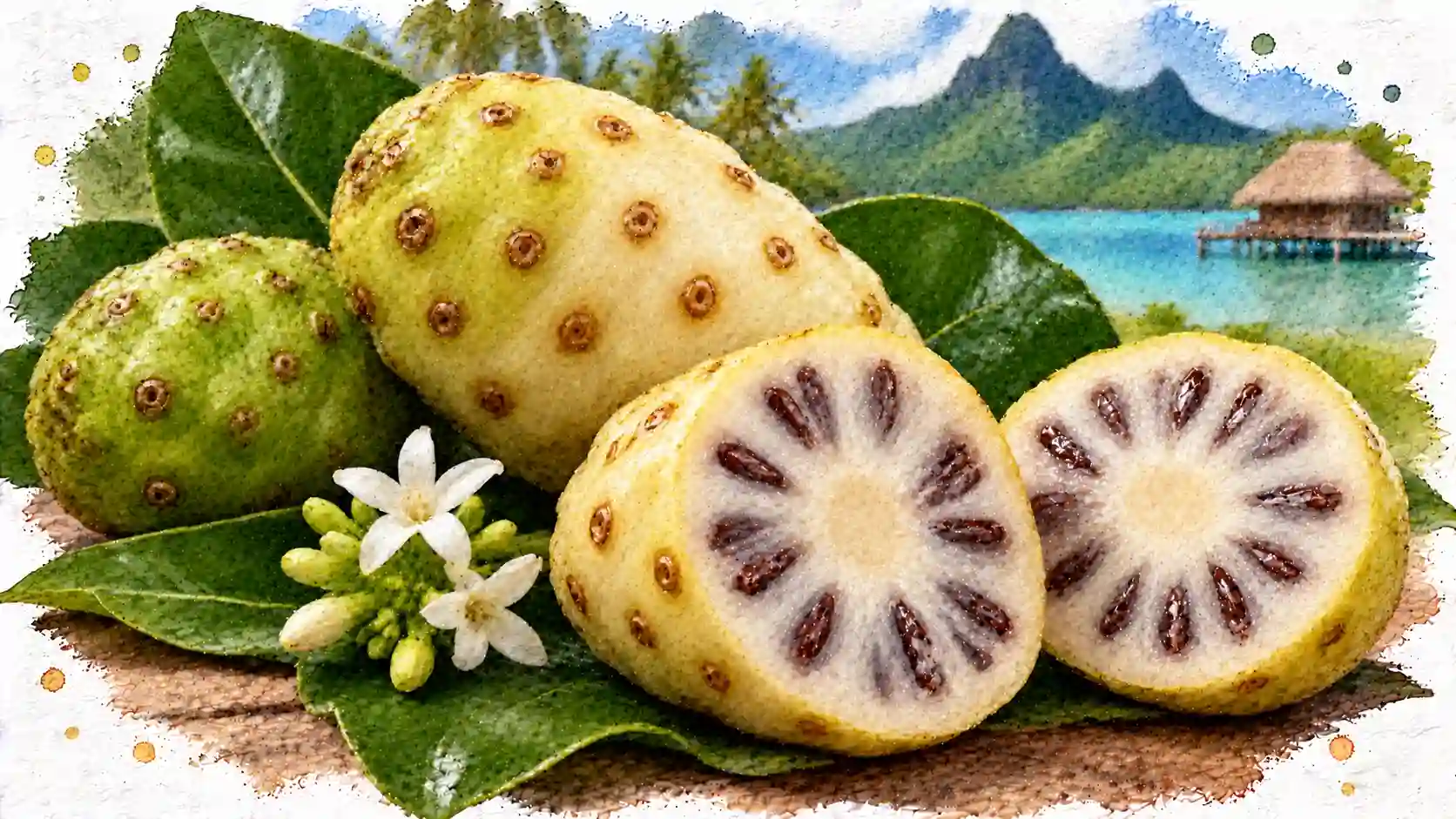
Noni is a tropical fruit famous for a smell that many people compare to strong cheese or fermented food. Native to a broad region of Southeast Asia and widely associated with the Pacific Islands, this pale, bumpy fruit has been used as food and in traditional plant remedies for generations. Its appearance is unusual, its flavor can be bitter and pungent, and its aroma becomes especially noticeable as it ripens. Despite its challenging reputation, noni has an important place in regional food traditions and is now sold internationally as fresh fruit, juice, and other processed products.
What Is Noni?
Noni is the fruit of Morinda citrifolia, an evergreen shrub or small tree in the coffee family, Rubiaceae. It is also known as Indian mulberry, cheese fruit, and by various local names across Asia and the Pacific. The plant has large, glossy leaves and produces clusters of small white flowers that develop into distinctive fruits.
The fruit is usually oval or somewhat potato-shaped, with a bumpy surface marked by small polygonal sections. It begins green and becomes pale yellow or whitish as it ripens. Inside, the soft, juicy flesh surrounds numerous small, hard seeds.
Noni's strongest identifying feature is its smell. Ripe fruit develops a pungent aroma often compared to mature cheese or fermented foods. Its flavor can be bitter, sharp, and slightly astringent rather than sweet and refreshing like many familiar tropical fruits. This combination of smell and taste makes noni an acquired taste for some people.
Although noni is frequently promoted today as a wellness product, it is also a traditional food. Its fruit may be eaten, squeezed for juice, or fermented, while other parts of the plant have their own culinary and cultural uses.
Quick Facts
- Food name: Noni
- Other names: Indian mulberry, cheese fruit
- Native range: Southeast Asia to Australia, with a long history of use across the Pacific Islands
- Scientific name: Morinda citrifolia
- Plant family: Rubiaceae
- Appearance: Bumpy, oval fruit that turns pale yellow or whitish when ripe
- Flavor: Bitter, pungent, and sometimes astringent
- Aroma: Strong and cheese-like when ripe
- Common uses: Fresh fruit, juice, fermented preparations, and traditional foods
Common Ingredients
Noni can be eaten or processed on its own, but its strong flavor means that it is often combined with other ingredients. Depending on the region and preparation, common pairings include:
- Ripe noni fruit: The main ingredient for fresh eating, juice, and fermented preparations.
- Water: Used to dilute the fruit's strong flavor or prepare drinks.
- Other fruit juices: Pineapple, citrus, or other tropical fruit flavors may be blended with noni to make the taste more approachable.
- Salt: Used in some savory preparations and regional recipes.
- Chili and spices: Can add heat and complexity when noni is incorporated into cooked dishes.
- Coconut milk: Used in some regional cooking, where its richness can balance stronger flavors.
- Fish, meat, and vegetables: Feature in dishes that use noni or its leaves as part of a broader meal.
- Sugar or honey: Sometimes added to commercial drinks or homemade blends to soften the fruit's bitterness.
There is no single universal noni recipe. Preparation varies across communities, and the fruit's role can range from a small component in a cooked dish to the main ingredient in a strongly flavored juice.
How Noni Is Prepared
Ripe noni fruit is soft and delicate, so it should be handled carefully. After washing, it may be eaten fresh, although its powerful aroma and bitter flavor can be challenging for people who have never tried it. Some traditional uses involve mashing the fruit or extracting its juice.
Noni juice is made by crushing or pressing the fruit, or by allowing fruit to soften and release liquid during processing. Some products are made from fermented fruit, while others are processed without a deliberate fermentation stage. The flavor, aroma, and consistency therefore differ between products. Commercial juices may also be blended with other fruit juices to make them easier to drink.
In some food traditions, noni is used in cooked dishes rather than consumed as a drink. Its leaves can also be used to wrap or flavor food during cooking. The fruit and leaves have different textures and flavors, so they are not interchangeable in every recipe.
Fresh noni is highly distinctive, and its smell can become stronger as the fruit softens. Anyone preparing it for the first time may prefer to work in a well-ventilated area and begin with a small amount to understand its flavor.
It is important to distinguish traditional food use from claims that noni products treat disease. Although the plant has been studied for various biological effects, reliable clinical evidence has not established that noni is an effective treatment for specific health conditions. Noni juice has also been associated with rare reports of liver injury. Its potassium content may be relevant for people with kidney disease or those taking medicines that affect potassium levels. Anyone considering concentrated noni juice or supplements for health reasons should consult a qualified health professional, especially if they have an existing medical condition or take prescription medication.
History & Origins
Noni is native to a broad tropical region stretching from Southeast Asia toward Australia. Over time, the plant became widely established across the Pacific Islands, where it developed a place in local food systems, traditional knowledge, and everyday life.
Some accounts of Pacific settlement describe noni as one of the useful plants carried by voyagers as they moved between islands. Its ability to grow in tropical environments and the many uses of its fruit, leaves, bark, and roots made it a valuable plant in communities where access to other resources could vary.
In parts of Polynesia, noni has long been used as a food and as a traditional remedy. The fruit and other parts of the plant were incorporated into local practices, although uses differed by island and community. The plant also had non-food applications, including the use of roots or bark for dyes.
Modern commercial interest has focused heavily on noni juice and supplements. These products have brought the fruit to consumers far beyond its traditional growing regions. However, the growth of the wellness market has sometimes outpaced scientific evidence, making it important to separate documented cultural history from unproven health claims.
Varieties & Differences
Noni is generally recognized as one species, Morinda citrifolia, rather than a fruit with many widely known commercial varieties. The differences most noticeable to consumers relate to ripeness, processing, and how the fruit is sold.
- Green, unripe noni: Firmer fruit that has not yet developed the soft texture and characteristic strong aroma of full ripeness.
- Ripe fresh noni: Usually pale yellow or whitish, soft, juicy, and strongly scented.
- Fresh noni juice: Extracted from the fruit and typically pungent, with a bitter or sharp taste.
- Fermented noni preparations: Produced through processing that can change the fruit's aroma, acidity, and flavor.
- Blended commercial drinks: Combine noni juice with other fruit juices to create a milder-tasting beverage.
Ripeness makes a substantial difference. The fruit's texture softens and its aroma becomes more pronounced as it matures. Processing can further change the flavor, so a bottled noni drink may taste quite different from freshly prepared fruit.
How Noni Is Enjoyed
Across parts of Southeast Asia and the Pacific, noni has been eaten in different ways depending on local customs. Some communities consume the ripe fruit as food, while others squeeze it for juice or use it in fermented preparations. In certain regional cuisines, the fruit or leaves may be incorporated into savory dishes rather than treated as a sweet snack.
Outside its traditional growing regions, noni is most often encountered as bottled juice, a blended beverage, or a dietary supplement. Its unusual flavor has helped make it recognizable, but many commercial drinks combine it with sweeter fruit juices to create a more approachable taste.
Noni's strong aroma is not necessarily a sign that the fruit has spoiled. A pungent, cheese-like smell is a recognized feature of ripe noni. Still, smell alone cannot establish whether any particular fruit or product has been stored safely, so it should be sourced and handled appropriately.
The fruit's reputation is also tied to its traditional medicinal uses. These practices are an important part of its cultural history, but they should not be confused with proof of medical effectiveness. Current evidence in people remains limited, and claims that noni can cure or prevent disease are not established.
For curious eaters, noni offers a chance to explore a fruit whose appeal is not based on sweetness or a delicate aroma. Its bold smell, bitter flavor, and long cultural history make it a distinctive part of the tropical food world.
Did You Know?
Noni is sometimes called “cheese fruit” because ripe fruit develops a pungent aroma often compared to strong cheese. Despite its unusual smell, it has been used as food in Pacific Island communities and elsewhere for generations. Its modern popularity as a juice and supplement is much more recent than its traditional culinary history.