
Omajova
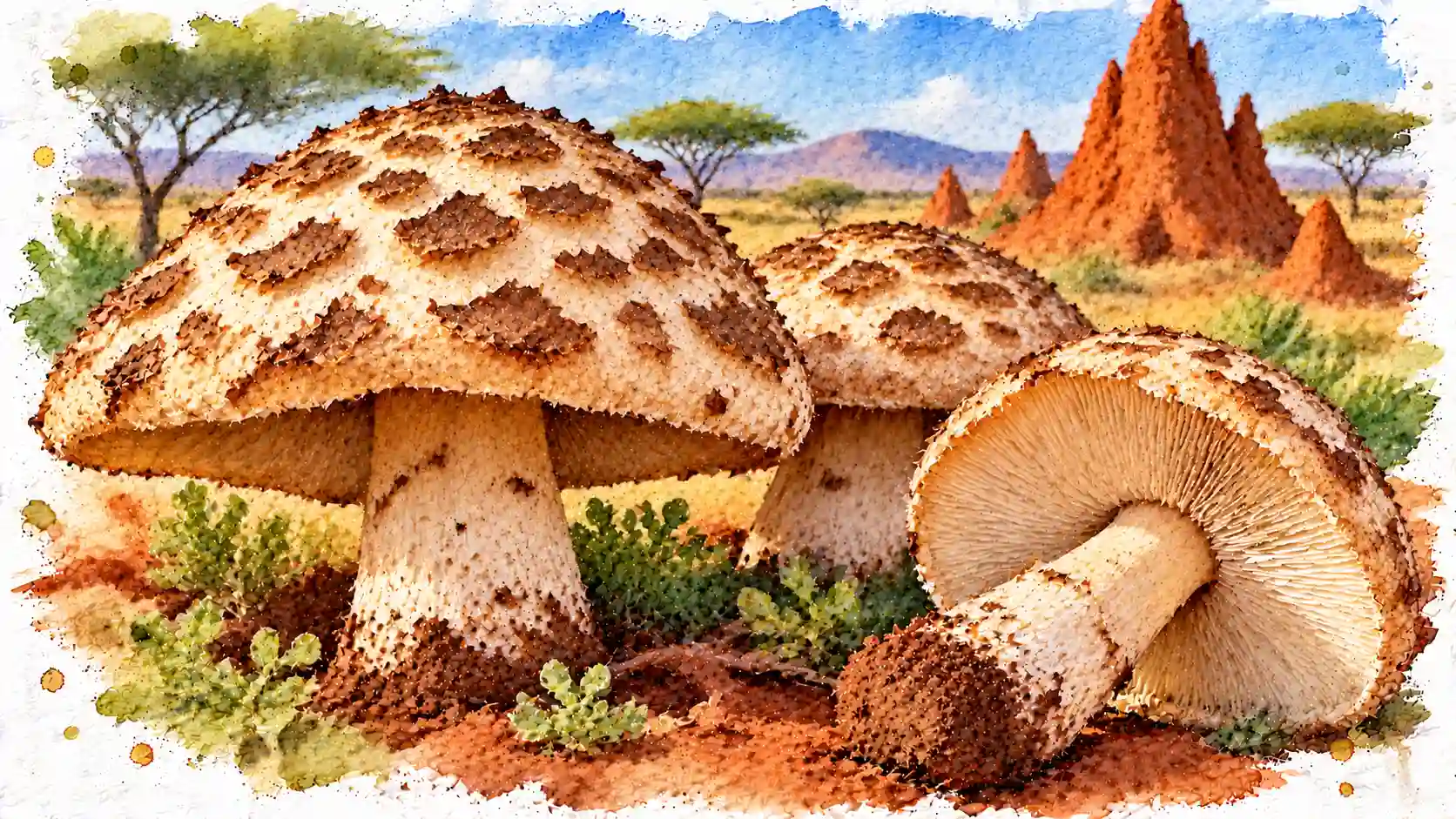
Omajova are enormous wild mushrooms that appear around termite mounds in Namibia after good seasonal rains. Prized as a local delicacy, these pale mushrooms can grow far larger than the familiar mushrooms found in grocery stores, with broad caps and thick, fleshy stems. Their flavor is often described as rich and savory, making them delicious fried in butter, added to soups, or cooked into stews. But omajova are more than an unusual food: they are part of a remarkable natural partnership between fungi and termites, and their brief appearance after the rains makes them a highly anticipated seasonal treat.
What Are Omajova?
Omajova are edible termite-associated mushrooms, most commonly identified in Namibia as Termitomyces schimperi. The name is also spelled omajowa or omayova in some sources. These names are associated with Otjiherero usage, while ejowa is used for an individual mushroom in some local naming traditions.
Unlike mushrooms that appear randomly across forest floors or grassy fields, omajova typically grow in groups around the bases of tall termite mounds. Their caps are usually pale gray, cream, or whitish, and can become exceptionally large. Under favorable conditions, a cap may reach around 40 centimeters across.
The mushrooms are associated with fungus-growing termites, particularly Macrotermes michaelseni in Namibia. These termites cultivate fungi in specialized underground chambers, where the fungal growth helps break down plant material. The mushrooms that emerge above ground are the visible fruiting bodies of this larger fungal system.
For people who gather and eat them, omajova offer a firm, substantial texture and a savory flavor. Their impressive size makes them easy to notice once they emerge, but their appearance is seasonal and depends heavily on rainfall and suitable growing conditions.
Quick Facts
- Food name: Omajova
- Other names: Omajowa, omayova, ejowa for an individual mushroom
- Region: Namibia, especially central and northern areas
- Scientific name: Termitomyces schimperi
- Food type: Wild edible mushroom
- Appearance: Large, pale mushroom with a broad cap and thick stem
- Flavor: Savory and earthy
- Texture: Firm and fleshy
- Season: Usually appears after favorable rains during the rainy season
- Common uses: Fried mushrooms, soups, stews, and other cooked dishes
Common Ingredients
Omajova have a substantial texture and a savory flavor that work well in simple, hearty cooking. They can be prepared with familiar ingredients or added to more elaborate dishes. Common pairings include:
- Fresh omajova mushrooms: The main ingredient, cleaned and cut into manageable pieces.
- Butter or cooking oil: Used to fry the mushrooms and develop their rich flavor.
- Garlic: Adds aroma and a savory edge.
- Onion: Provides sweetness and depth in fried dishes and stews.
- Salt and black pepper: Simple seasonings that bring out the mushrooms' natural flavor.
- Tomatoes: Add moisture and a gentle acidity to sauces and stews.
- Asparagus or other vegetables: Can be cooked alongside omajova for a seasonal dish.
- Eggs: Pair well with chopped mushrooms in omelets and breakfast dishes.
- Stock and herbs: Useful for soups and slow-simmered preparations.
Because omajova are often described as meaty and flavorful, they can take center stage in a dish rather than serving merely as a garnish.
How Omajova Is Prepared
Freshly gathered omajova must be cleaned thoroughly to remove soil, grit, and debris. Their large caps and thick stems may need to be cut into smaller pieces, especially when the mushrooms are intended for frying or cooking in a stew. Only mushrooms confidently identified as edible by a knowledgeable local expert should be prepared for food; wild mushrooms should never be identified by appearance alone.
One of the simplest preparations is to fry the mushrooms in butter or oil with garlic, onion, salt, and pepper. The heat helps develop their savory flavor while allowing the flesh to retain some of its substantial texture. Large pieces can be cooked much like a substantial vegetable or mushroom steak, although cooking time depends on their size and thickness.
Omajova can also be added to soups and stews, where their flavor enriches the cooking liquid. Chopped mushrooms may be combined with tomatoes, herbs, and other vegetables, or folded into an omelet. Their firm flesh makes them versatile enough for both simple roadside-style cooking and more elaborate home meals.
Some harvesters dry mushrooms for later use, extending the season beyond the short period when fresh omajova are available. Drying changes their texture and concentrates their flavor, so dried mushrooms are generally rehydrated or added to dishes with enough liquid to soften them.
Fresh mushrooms are perishable and should be handled hygienically and cooked promptly. Their large size does not mean that every mushroom found near a termite mound is safe to eat. Accurate identification is essential, particularly for people unfamiliar with local wild fungi.
History & Origins
Omajova are part of Namibia's seasonal food traditions, particularly in areas where tall termite mounds are common. Local communities have long recognized that the mushrooms appear after favorable rains, turning a brief natural event into an opportunity to gather a prized food.
The name is associated with Otjiherero, and the mushrooms are also known in German as Termitenpilz, meaning “termite mushroom.” Spellings such as omajowa, omajova, and omayova appear in different sources. Their local importance reflects both their impressive size and the fact that they are available only when environmental conditions allow them to fruit.
During the rainy season, omajova may be gathered for household meals or sold along roadsides and in local markets. For some sellers, the short harvest period provides seasonal income. The mushrooms' sudden appearance, large caps, and distinctive association with termite mounds make them a recognizable feature of Namibia's green season.
Scientific researchers have studied omajova because of the unusual relationship between the fungus and its termite partners. A 1991 botanical study identified the Namibian mushroom as Termitomyces schimperi and reported Macrotermes michaelseni as its associated termite. This relationship helps explain why the mushrooms are closely linked to particular mound environments rather than appearing evenly across the landscape.
Varieties & Differences
Omajova is most strongly associated with Termitomyces schimperi, the large termite mushroom commonly eaten in Namibia. Other species in the genus Termitomyces have also been reported in the country. These fungi share an association with fungus-growing termites but can differ in size, appearance, and distribution.
- Typical omajova: Usually refers to the large Termitomyces schimperi mushrooms gathered around tall termite mounds.
- Other termite mushrooms: Species such as Termitomyces microcarpus, Termitomyces umkowaani, and Termitomyces tylerianus have also been reported in Namibia.
- Young mushrooms: Newly emerged specimens have less-developed caps and may look different from fully expanded mushrooms.
- Mature mushrooms: Can develop very broad caps and thick stems, giving them their reputation as giant wild mushrooms.
These differences matter to mushroom specialists and harvesters, but not every mushroom growing near a termite mound should automatically be considered edible. Reliable identification is necessary before any wild mushroom is used as food.
How Omajova Is Enjoyed
In Namibia, omajova are valued as a seasonal delicacy and are often enjoyed simply, allowing their substantial texture and savory taste to stand out. Fried mushrooms with butter and salt are a straightforward favorite, while larger pieces can be served as the centerpiece of a meal.
They are also well suited to soups, stews, omelets, and vegetable dishes. Their firm flesh can provide a satisfying bite, and their flavor complements ingredients such as onion, tomato, and herbs. Dried mushrooms offer another way to enjoy their taste after the fresh season has passed.
The mushroom's seasonal nature is part of its appeal. After good rains, roadside sellers may appear with freshly harvested omajova, making the arrival of the mushrooms a recognizable event for people traveling through parts of Namibia. Their availability can be brief and unpredictable, since fruiting depends on rainfall and other local conditions.
Omajova also offer a reminder that some foods depend on relationships within an ecosystem. The mushrooms' connection with fungus-growing termites shapes where they appear and helps make their harvest possible. What looks like a giant mushroom emerging from a mound is the visible part of a much more complex partnership beneath the ground.
Did You Know?
Omajova mushrooms can develop caps around 40 centimeters wide, roughly the diameter of a large serving platter. They appear around termite mounds after favorable rains, and their brief seasonal arrival makes them a prized food in Namibia. The termites and fungi work together in a system that helps process plant material within the nest.