
Palolo
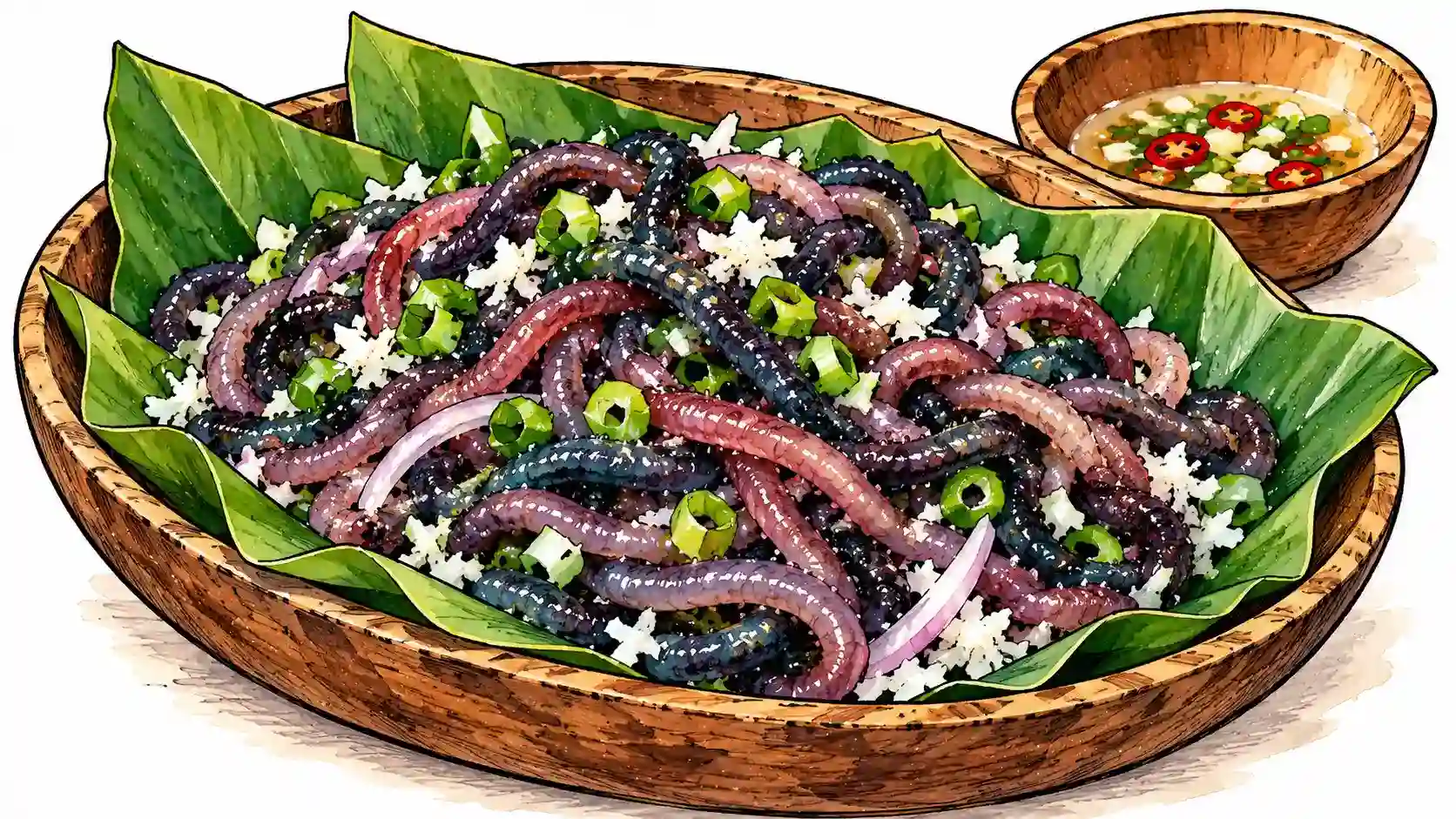
Once a year, the coastal waters of Samoa become the setting for one of the Pacific's most remarkable seafood traditions. Palolo, a marine bristle worm known for its unusual reproductive cycle, releases specialized reproductive sections that rise toward the ocean's surface during a brief spawning event. Local communities anticipate the event and gather along reefs and shorelines to collect the tiny, wriggling creatures. Eaten fresh or prepared in traditional ways, palolo is more than an unusual food: it is a seasonal delicacy closely connected to Samoan culture, coastal life, and generations of knowledge about the natural world.
What Is Palolo?
Palolo refers to a marine segmented bristle worm associated with coral reefs in parts of the tropical Pacific. The Samoan palolo is scientifically identified as Eunice viridis, a species in the family Eunicidae. Unlike earthworms, these animals live in marine habitats, where they spend much of their lives in tunnels and crevices within reef structures.
The worm's most remarkable feature is its reproductive cycle. At a particular time of year, mature worms develop specialized rear sections packed with reproductive cells. These sections, known as epitokes, detach from the rest of the worm and swim toward the surface, where they release eggs or sperm into the water. The remaining worm can regenerate the lost section.
In Samoa, the spawning event is closely associated with the final quarter of the moon in October or November. The exact date varies from year to year, and local knowledge of lunar phases and past spawning events helps communities anticipate the harvest. The event is often called the palolo rise.
During this brief period, reproductive sections gather near the water's surface and can be collected using nets and other tools. Because the harvest is seasonal and the opportunity to gather large quantities is short-lived, palolo is considered a special delicacy rather than an everyday seafood ingredient.
Quick Facts
- Common Name: Palolo
- Scientific Name: Eunice viridis
- Origin: Samoa and other parts of the tropical Pacific
- Animal Group: Marine segmented bristle worms
- Natural Habitat: Coral reefs and rocky reef structures
- Harvest Season: Usually October or November in Samoa
- Distinctive Feature: Mass spawning associated with the lunar cycle
- Texture: Soft and delicate, with a slightly slippery consistency
- Food Category: Seasonal seafood delicacy
Common Ingredients
Palolo is often prepared with a small number of ingredients that complement its delicate marine flavor. Recipes vary between households, and some preparations emphasize the freshly harvested worms while others combine them with familiar Samoan ingredients.
- Fresh Palolo: The main ingredient, collected during the brief spawning period.
- Coconut Milk or Coconut Cream: Adds richness and a characteristic flavor found in many Samoan dishes.
- Onions: Used in some cooked preparations to add sweetness and aromatic depth.
- Eggs: Sometimes fried with palolo to create a simple, savory dish.
- Bread: Palolo may be incorporated into bread as another way of preparing and enjoying the seasonal catch.
- Salt: May be used for seasoning, depending on the preparation.
- Banana or Other Suitable Leaves: Used in traditional cooking methods to wrap food before baking it in an earth oven.
These ingredients are not required in every recipe. Some people eat freshly collected palolo raw, while others cook it with eggs or coconut milk, bake it into bread, or use traditional earth-oven methods. The preparation depends on household preferences and local customs.
How Palolo Is Prepared
Preparing palolo begins with the harvest, which is an event in itself. Families and community members watch for the expected spawning period and head to suitable coastal locations when conditions are right. Since the reproductive sections appear in large numbers for a limited time, gathering them requires careful timing rather than a routine fishing trip.
Harvesters collect the floating palolo using nets, historically including small woven baskets and other traditional tools. The catch is gathered from the water's surface and sorted to remove unwanted material before being prepared for eating or preservation.
Palolo can be eaten raw shortly after collection, a traditional practice in some communities. Other preparations include frying it with eggs, cooking it with coconut milk and onions, or baking it into bread. It may also be wrapped in leaves and cooked in an umu, the Samoan earth oven made using heated stones.
Traditionally, some communities have preserved palolo for later use by cooking it and storing it in wrapped leaves with coconut milk. Such methods reflect the importance of making the most of a harvest that is available only during a short seasonal window.
Because palolo is collected from marine environments, careful handling matters. Harvesting from clean waters, protecting the catch from contamination, and keeping it properly chilled before preparation are important food-safety measures. Eating it raw carries risks associated with uncooked seafood, so thorough cooking is the safer option when the source or handling conditions are uncertain. Traditional preparation alone does not guarantee that a catch is free from hazards.
History & Origins
Palolo has a long-standing place in Samoan coastal culture. Its predictable appearance has allowed generations of people to develop detailed knowledge of local reefs, lunar phases, tides, and seasonal patterns. Rather than being available whenever someone wishes to catch it, palolo appears according to a natural reproductive cycle that communities anticipate.
The seasonal harvest is also a social occasion. People gather with relatives and neighbors, often heading to the shoreline at night or before dawn when the reproductive sections are expected to emerge. The experience combines food gathering with knowledge passed between generations about the timing and location of the event.
Scientific observations have documented the close relationship between Samoan palolo spawning and the lunar cycle. Historical records of spawning dates show that the event generally occurs in October and November, with the final lunar quarter providing an important guide to its timing. This connection between natural cycles and local harvesting knowledge is one of the most distinctive features of the tradition.
Palolo harvesting is not limited to Samoa. Related traditions are found in other Pacific island communities, including parts of Fiji and Tonga. However, local names, species, spawning dates, and customs can differ, so not every Pacific harvest described as palolo necessarily involves the same species or an identical tradition.
Varieties & Differences
The word palolo is associated both with particular marine worms and with the seasonal harvest itself. Similar reproductive events occur in different parts of the Pacific, but the species and local food traditions are not always the same.
- Samoan Palolo: Associated with Eunice viridis and a seasonal spawning event around October or November, closely linked to the lunar cycle.
- Other Pacific Palolo Harvests: Communities elsewhere in the region have their own seasonal worm harvests, with differences in species, timing, and preparation.
- Fresh Palolo: Collected during the spawning event and eaten soon afterward, sometimes raw according to local tradition.
- Palolo with Coconut Milk and Onions: A cooked preparation combining the marine worms with familiar ingredients from Pacific Island cooking.
- Palolo Fried with Eggs: A simple preparation documented in Samoan food traditions.
- Baked Palolo: Palolo may be incorporated into bread or wrapped in leaves and cooked using traditional methods.
The key distinction is not just how the dish is seasoned. Palolo is defined by its brief seasonal availability and its connection to a remarkable reproductive event in the ocean. Its place in Samoan food culture depends as much on the timing and communal harvest as on the recipes used afterward.
How Palolo Is Enjoyed
In Samoa, palolo is eagerly anticipated because the opportunity to harvest it is limited to a short period each year. When the spawning event arrives, families and friends may gather along the coast to collect the reproductive sections and share the catch. The short season gives the food a special status that ordinary seafood does not always have.
Palolo may be eaten raw or cooked with eggs, coconut milk, and onions. It can also be baked into bread or prepared in an umu. These methods offer different ways to enjoy the seasonal catch, from simple preparations that emphasize its natural flavor to richer dishes that incorporate familiar local ingredients.
Its soft texture and distinctive marine flavor make it unlike more familiar seafood such as fish or shellfish. For people who grew up with the tradition, the arrival of palolo can evoke memories of family gatherings, nighttime harvesting, and the anticipation of a seasonal event.
For visitors, the palolo rise offers a glimpse into the relationship between Pacific communities and the sea. It demonstrates how careful observation of animal behavior and natural cycles can become part of local cuisine and cultural identity. The experience is as much about the timing, gathering, and sharing as it is about the food itself.
Did You Know?
The palolo harvested for food is largely the reproductive rear section of the worm. During spawning, these specialized sections detach from the rest of the animal and rise toward the surface to release reproductive cells. The remaining worm can regenerate the lost section, while the brief spawning event creates an opportunity for communities to gather large quantities of palolo.