
Sea Cucumber
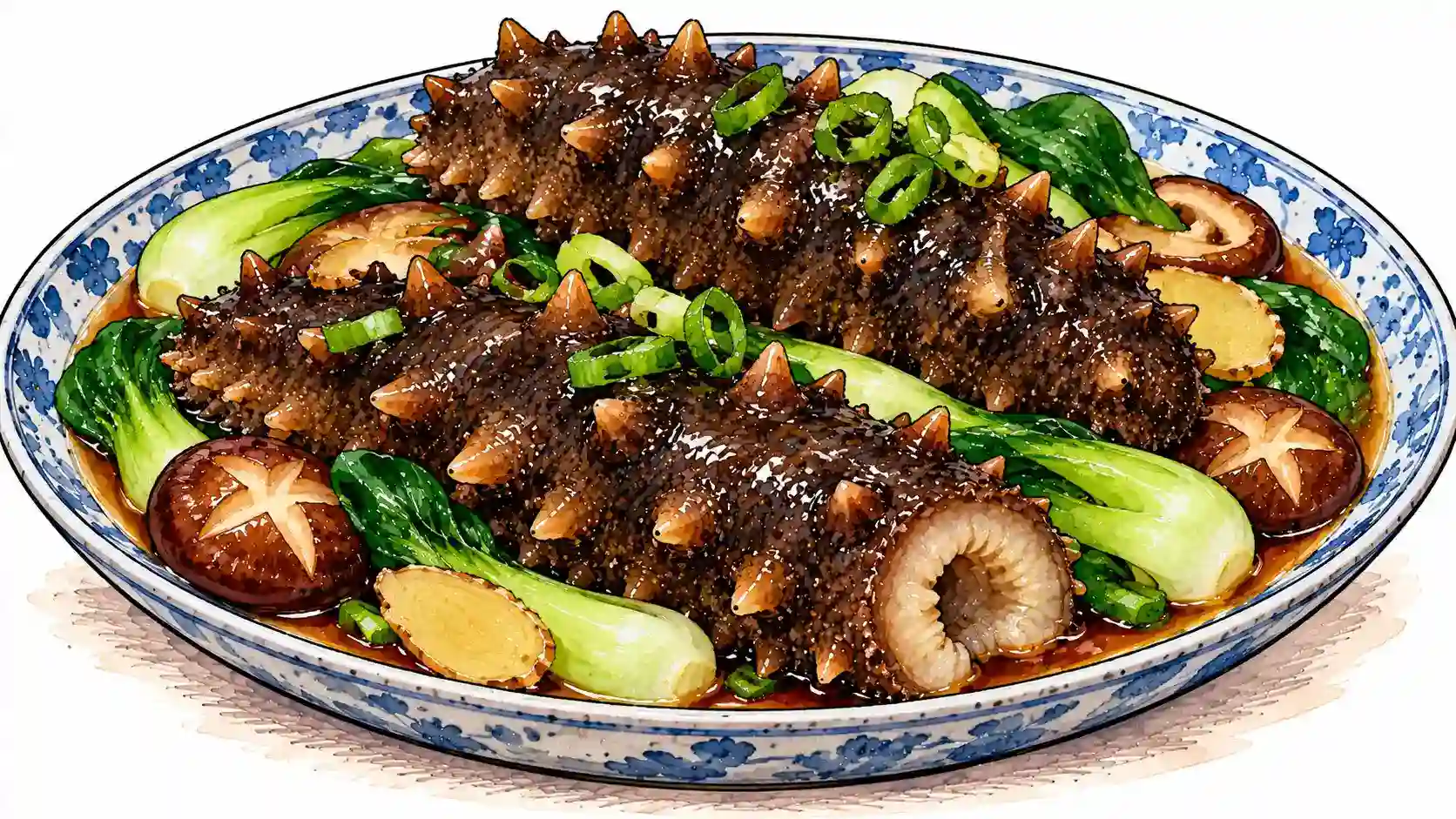
Soft, gelatinous, and unlike almost any other seafood, sea cucumber is a marine delicacy prized in Chinese, Japanese, and Korean cuisine. Despite its unusual appearance, this ocean-dwelling animal has been valued for centuries in East Asian food traditions, where it is often served in soups, braised dishes, and elaborate banquet meals. Dried sea cucumber is especially sought after because, once properly rehydrated, it readily absorbs the flavors of broths and sauces. Although its texture can take some getting used to, sea cucumber has earned a place in traditional cuisine for its distinctive mouthfeel, versatility, and status as a premium ingredient.
What Is Sea Cucumber?
Sea cucumbers are marine animals belonging to the class Holothuroidea, a group of invertebrates within the phylum Echinodermata. They are relatives of sea stars and sea urchins, not fish or plants. Most live on the ocean floor, where they feed on organic material in sediment or collect small food particles from their surroundings.
Many species have elongated, soft bodies with leathery skin and small projections that can resemble bumps or spines. Their appearance varies considerably: some species are dark and cylindrical, while others have more pronounced surface features. More than a thousand species are known, but only a portion are regularly harvested for food. Edible species are collected in many parts of the world, including the Indo-Pacific and other coastal regions.
Sea cucumber is especially valued for its unusual texture. Once properly prepared, the body wall can become tender, springy, or gelatinous, depending on the species and cooking method. Its flavor is generally mild, so it readily takes on the character of the broths, sauces, and aromatic seasonings used in cooking.
Quick Facts
- Food Category: Seafood and marine invertebrates
- Scientific Group: Class Holothuroidea
- Distribution: Marine habitats around the world
- Main Ingredient: Edible sea cucumber species
- Typical Flavor: Mild and subtly briny
- Texture: Soft, springy, or gelatinous, depending on preparation
- Common Preparations: Braised, simmered, or served in soups
- Common Uses: Banquet dishes and traditional seafood cuisine
Common Ingredients
Sea cucumber is usually prepared with ingredients that contribute flavor and aroma, since the animal itself has a relatively mild taste. Recipes vary between countries and regions, but several ingredients are frequently used in East Asian cooking.
- Sea Cucumber: The main ingredient, often sold dried and rehydrated before cooking.
- Soy Sauce: Adds saltiness and a deep, savory flavor to braised preparations.
- Ginger: Provides a fresh, aromatic note that complements seafood.
- Garlic: Adds depth and fragrance to sauces and broths.
- Scallions: Contribute a mild onion flavor and a fresh finishing touch.
- Chicken or Seafood Stock: Supplies a flavorful liquid in which the sea cucumber can simmer.
- Sesame Oil: Sometimes used in small amounts to add a nutty aroma.
- Oyster Sauce: Common in some Chinese-style braised dishes, where it adds sweetness and savory richness.
How Sea Cucumber Is Prepared
Sea cucumber requires careful preparation, particularly when it is sold dried. Fresh specimens can deteriorate quickly after harvesting, so they are often cleaned and processed promptly. Depending on the species and intended dish, preparation may involve removing internal organs or other parts. Some products are sold already cleaned or partially processed.
Dried sea cucumber typically requires an extended rehydration process before cooking. Traditional commercial processing often includes steps such as cleaning, cooking, salting, and drying. Before use, dried specimens are usually soaked and may need to be simmered and soaked again over several days. The exact procedure varies by species and product, so instructions from a reputable supplier should be followed carefully. Some commercially prepared products require much less preparation.
Once rehydrated, sea cucumber is often braised slowly in a seasoned broth. The cooking liquid may contain soy sauce, ginger, scallions, and stock, allowing the animal to absorb the surrounding flavors. Gentle cooking helps develop a tender texture, although the ideal consistency depends on the species and recipe.
Preparation methods vary considerably by product, so there is no single soaking or cooking method suitable for every sea cucumber. Follow the supplier's instructions and use appropriate food-handling practices, including proper refrigeration where required.
History & Origins
Sea cucumber has a long history as a food in East Asia, particularly in Chinese cuisine, where dried specimens became a valued ingredient in elaborate meals and formal banquets. Its mild flavor and ability to absorb rich sauces make it suitable for dishes featuring carefully prepared stocks and complementary ingredients.
Harvesting sea cucumbers has also been an important coastal activity in parts of China, Japan, Korea, and neighboring regions. Processing and drying the animals made them easier to store and transport, helping establish trade networks that supplied distant markets. The dried product is commonly known as bêche-de-mer or trepang, while Chinese culinary terminology includes hai shen for sea cucumber.
In Chinese culinary traditions, sea cucumber is often associated with celebratory meals and special occasions. Its status as a premium ingredient reflects the labor involved in harvesting and processing certain species, along with demand for high-quality dried products.
Today, sea cucumber remains important in East Asian seafood markets and restaurants. However, demand for some commercially valuable species has contributed to overfishing in several regions. Sustainable fisheries management, responsible aquaculture, and traceable sourcing can help reduce pressure on wild populations.
Varieties & Differences
More than a thousand sea cucumber species are known, but only some are commonly harvested for food. Differences in body shape, surface features, texture, size, and processing influence their culinary use and market value.
- Spiny Sea Cucumbers: Some species with prominent surface projections are prized in East Asian markets, particularly when processed and dried.
- Smooth Sea Cucumbers: Species with less pronounced surface features are also harvested for food, depending on regional preferences and market demand.
- Dried Sea Cucumber: A widely traded product that usually requires careful rehydration before cooking.
- Fresh Sea Cucumber: Used in some coastal cuisines after appropriate cleaning and preparation.
- Braised Sea Cucumber: Slowly cooked in a seasoned sauce or broth so it can absorb flavor.
- Sea Cucumber Soup: Prepared in broth with other ingredients, allowing its distinctive texture to complement the liquid.
Different species can vary significantly in texture, size, availability, and culinary value. As a result, the sea cucumber used in a traditional Chinese banquet dish may not be the same species commonly eaten in another coastal region.
How Sea Cucumber Is Enjoyed
Sea cucumber is often served as part of a larger meal rather than eaten alone. In Chinese cuisine, braised sea cucumber may appear alongside mushrooms, vegetables, or other premium ingredients, with a rich sauce providing much of the dish's flavor.
It is also used in soups and stews, where its soft or springy texture contrasts with firmer ingredients. Japanese and Korean cuisines have their own sea cucumber preparations, and some dishes emphasize a firmer, crunchier texture rather than the tender consistency associated with rehydrated dried products.
For first-time diners, the texture is often the most surprising feature. Sea cucumber is not flaky like fish or firm like a scallop. Depending on the species and cooking method, it may feel silky, springy, gelatinous, or slightly crunchy.
Its culinary appeal comes from this unusual mouthfeel and its ability to absorb complex flavors. For many diners, sea cucumber represents a traditional seafood ingredient whose value lies less in its natural taste than in the texture and richness it brings to a carefully prepared dish.
Did You Know?
Sea cucumbers are more closely related to sea stars and sea urchins than to fish! They belong to a group of marine animals called echinoderms. Adult echinoderms generally have a five-part radial body organization, although sea cucumbers have a distinctive elongated shape. Despite their soft appearance, they share an evolutionary group with some of the ocean's most recognizable spiny animals.