
Soibum
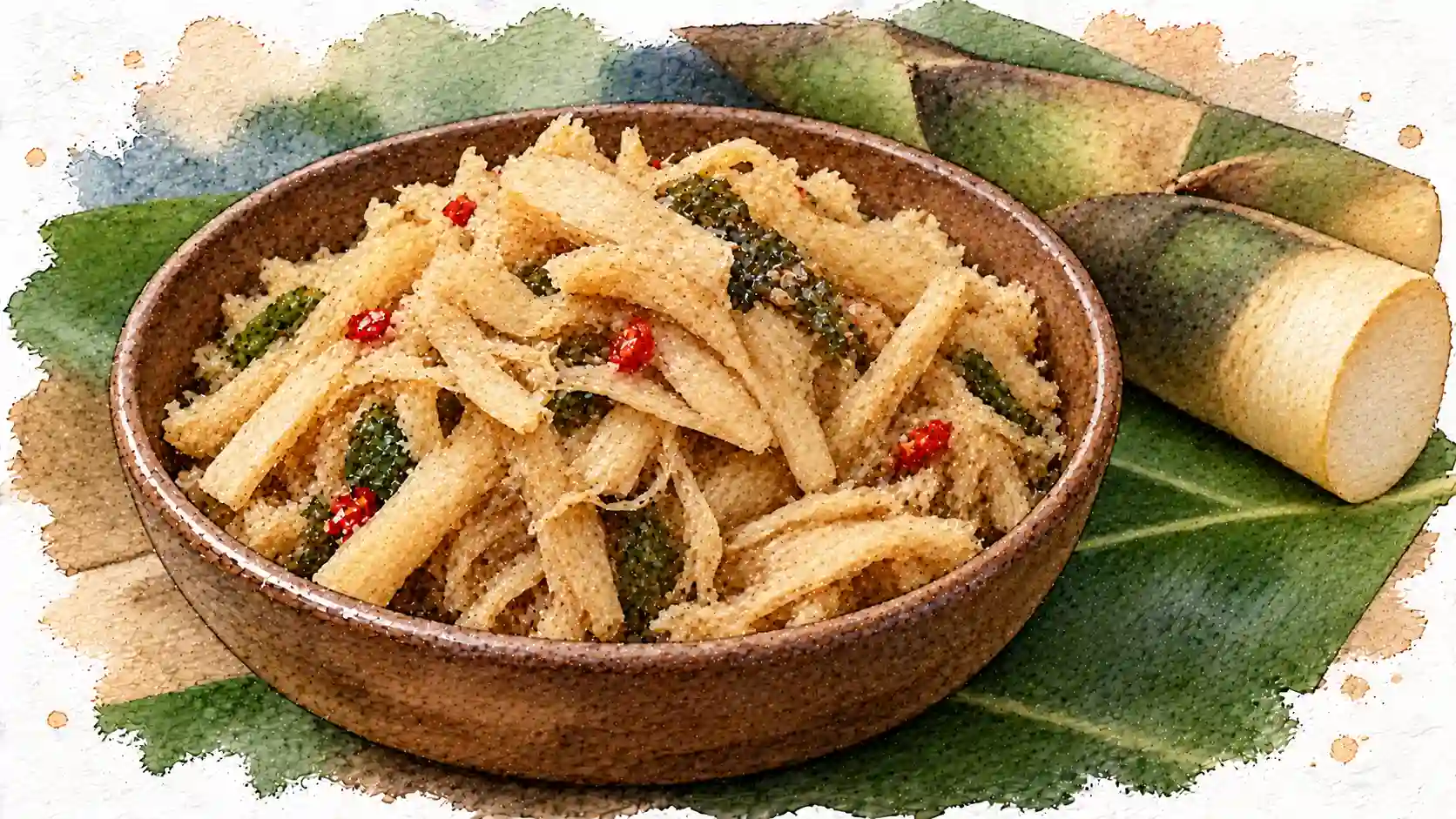
Soibum is a traditional fermented bamboo shoot food from Manipur, a state in Northeast India, where it has long been part of the region’s distinctive food culture. Made from tender bamboo shoots that are sliced and fermented, soibum develops a sour, earthy flavor and a soft texture that works well in curries, chutneys, and other savory dishes. Commonly prepared in households and sold in local markets, it reflects generations of knowledge about preserving seasonal ingredients and transforming them into flavorful foods.
What Is Soibum?
Soibum is a naturally fermented food made from the tender inner portions of young bamboo shoots. It is particularly associated with the Meitei community of Manipur, where fermented bamboo shoots are used in everyday cooking. The shoots are stripped of their tough outer layers, cut into pieces, and packed into suitable containers for fermentation.
During fermentation, microorganisms transform the bamboo shoots, producing the sour flavor and characteristic aroma associated with soibum. The finished product is generally pale in color, with a tender texture and pronounced tanginess. Its flavor can vary according to the bamboo species, preparation method, and length of fermentation.
Soibum is not usually eaten in the same way as a fresh vegetable. Instead, it is commonly cooked with other ingredients, including fish, meat, chilies, and aromatic seasonings. It can add acidity and depth to a dish, much as other fermented vegetables contribute distinctive flavors to regional cuisines.
Although fermented bamboo shoots are found across Northeast India and other parts of Asia, soibum is specifically associated with Manipur. Related foods, such as soidon, have their own preparation methods and should not be treated as identical products.
Quick Facts
- Main ingredient: Tender bamboo shoots
- Country: India
- Region: Manipur, Northeast India
- Associated community: Meitei
- Preparation method: Natural fermentation
- Flavor profile: Sour, earthy, and savory
- Common uses: Curries, cooked vegetable dishes, and chutneys
- Typical accompaniments: Rice, fish, meat, and chili-based seasonings
Common Ingredients
Traditional soibum is made from a relatively simple main ingredient: bamboo shoots. The shoots develop their distinctive flavor during fermentation, while additional ingredients are usually introduced when soibum is cooked into a meal.
- Tender bamboo shoots: The central ingredient, selected from edible bamboo species commonly used in Manipur.
- Water: Used during preparation and, depending on the method, as part of the fermentation process.
- Chilies: Often added when cooking soibum to give the finished dish heat.
- Garlic and other aromatics: Used in some recipes to deepen the savory flavor.
- Fish: A common ingredient in dishes combining fermented bamboo shoots with other traditional foods.
- Pork or other meats: Used in some preparations to create a richer, more substantial dish.
- Salt and seasonings: Added according to the recipe and cooking method rather than being essential to every traditional fermentation process.
The exact ingredients depend on the cook and the dish being prepared. Soibum may be combined with fish or meat, cooked with vegetables, or used in a strongly seasoned preparation. Its sourness helps balance richer ingredients and contributes a distinctive regional character.
How Soibum Is Prepared
Making soibum involves preparing young bamboo shoots and allowing them to ferment under conditions suited to the traditional method. Documented approaches include packing thinly sliced shoots into a lined fermentation chamber and fermenting shredded shoots in large earthen pots. The time required can range from weeks to several months, depending on the method and conditions.
Selecting and Preparing the Bamboo Shoots
Fresh, tender bamboo shoots are selected and their tough outer sheaths removed. The edible inner portions are then sliced or shredded into smaller pieces. This makes the shoots easier to pack into fermentation containers and helps the material ferment more evenly.
Proper preparation is important because fresh bamboo shoots from some species contain cyanogenic compounds that can release toxic cyanide. Suitable processing is necessary before they are eaten. Traditional knowledge of edible bamboo species and preparation methods is an important part of this food tradition.
Packing the Shoots for Fermentation
In one documented method, known as the kwatha or noney method, thinly sliced shoots are packed tightly into a specially prepared chamber lined with materials such as colocasia leaves or plastic sheeting. Another approach, associated with Andro, uses a large earthen pot filled with shredded bamboo shoots. More shoots may be added as fermentation proceeds.
These methods reflect local experience and available equipment. The way the shoots are cut, packed, and stored can influence fermentation, texture, and the final flavor of the soibum.
Allowing Fermentation to Develop
As the bamboo shoots ferment, naturally occurring microorganisms transform their sugars and other compounds. Lactic acid bacteria are among the microorganisms identified in fermented bamboo shoot products, contributing to acidity and characteristic flavor. Research on soibum describes fermentation periods of approximately three to twelve months, although the duration varies with the method and conditions.
Fermentation is not simply a matter of waiting until the shoots smell sour. Safe production depends on appropriate preparation, clean equipment, and suitable processing conditions. An unfamiliar batch should not be assumed safe based on its smell or appearance alone.
Cooking the Finished Soibum
Once the fermentation stage is complete, soibum is used as an ingredient in cooked dishes. It may be simmered with fish, pork, chilies, and other seasonings, or incorporated into curries and other savory preparations. Cooking allows its sour flavor to blend with the other ingredients while retaining the distinctive character of the fermented shoots.
Because fresh bamboo shoots can contain cyanogenic compounds, proper processing and cooking are essential. Traditional products should be obtained from reliable producers who follow established preparation methods rather than attempting fermentation from raw shoots without suitable food-safety knowledge.
History & Origins
Soibum is part of the long tradition of fermented foods in Manipur. The region is known for a variety of preserved and fermented ingredients, including bamboo shoots, fish, and soybeans. These foods reflect generations of experience in preserving seasonal harvests and developing distinctive flavors from locally available resources.
Bamboo grows in many parts of Northeast India, and young shoots provide a seasonal food source. Fermentation allows bamboo shoots to be preserved beyond their brief harvest period, making them available for use in later meals. Over time, different communities developed their own methods for preparing and using fermented shoots.
Among the Meitei people of Manipur, soibum became an established ingredient in regional cooking. Its production and sale also support local food economies, with fermented shoots appearing in vegetable markets and being prepared by household producers.
Today, soibum remains an important example of Manipur’s food heritage. Researchers have studied its fermentation process and the microorganisms involved, helping document a traditional food that is both culturally significant and of interest to food science.
Varieties & Differences
Fermented bamboo shoot foods vary across Northeast India. Differences in the type of bamboo used, the part of the shoot selected, and the fermentation method create distinct products with their own names and culinary uses.
- Traditional soibum: Made from tender bamboo shoots and commonly used in cooked dishes in Manipur.
- Different soibum methods: Some preparations use tightly packed shoots in lined fermentation chambers, while others use large earthen pots with additional shoots added as fermentation proceeds.
- Soidon: A related Manipuri fermented bamboo shoot product traditionally prepared from tender tips of bamboo shoots, often using a liquid starter from an earlier batch.
- Soijim: The sour liquid associated with certain soidon preparations, which can be retained and used as a starter for subsequent batches.
- Mesu: A fermented bamboo shoot product associated with Sikkim and made using a different traditional method.
- Other regional fermented shoots: Communities across Northeast India have their own products, processing techniques, and names for fermented bamboo foods.
These foods share the use of bamboo shoots and fermentation, but their methods and flavors are not identical. Soibum is distinguished by its strong association with Manipuri cuisine and its role as a versatile ingredient in savory cooking.
How Soibum Is Enjoyed
Soibum is commonly eaten as part of a meal with steamed rice, often alongside fish, meat, or vegetable dishes. Its sour flavor provides contrast to richer ingredients, while its aroma adds depth to the overall dish. Depending on the recipe, it may be cooked into a curry, incorporated into a spicy preparation, or served as a flavorful accompaniment.
In Manipur, fermented bamboo shoots are also sold in local markets, where households can purchase them for home cooking. This makes soibum more than a ceremonial or novelty food. It is part of a practical food tradition that connects seasonal ingredients with everyday meals.
For someone trying soibum for the first time, a cooked dish served with rice can be a good introduction. The fermentation gives the shoots a noticeable tang, but other ingredients help balance their flavor. Fish, meat, chilies, and aromatic seasonings can all change the character of the final dish.
Soibum also illustrates the importance of traditional food knowledge. Identifying edible bamboo, preparing the shoots correctly, and managing fermentation are all essential parts of the process. Because improperly prepared bamboo shoots can pose a poisoning risk, safe processing is crucial at every stage.
Did You Know?
Soibum is not just a traditional food but also a subject of microbiological research. Studies have identified lactic acid bacteria in fermented bamboo shoots, helping scientists understand how fermentation contributes to their sour flavor, aroma, and preservation.