
Stinky Tofu
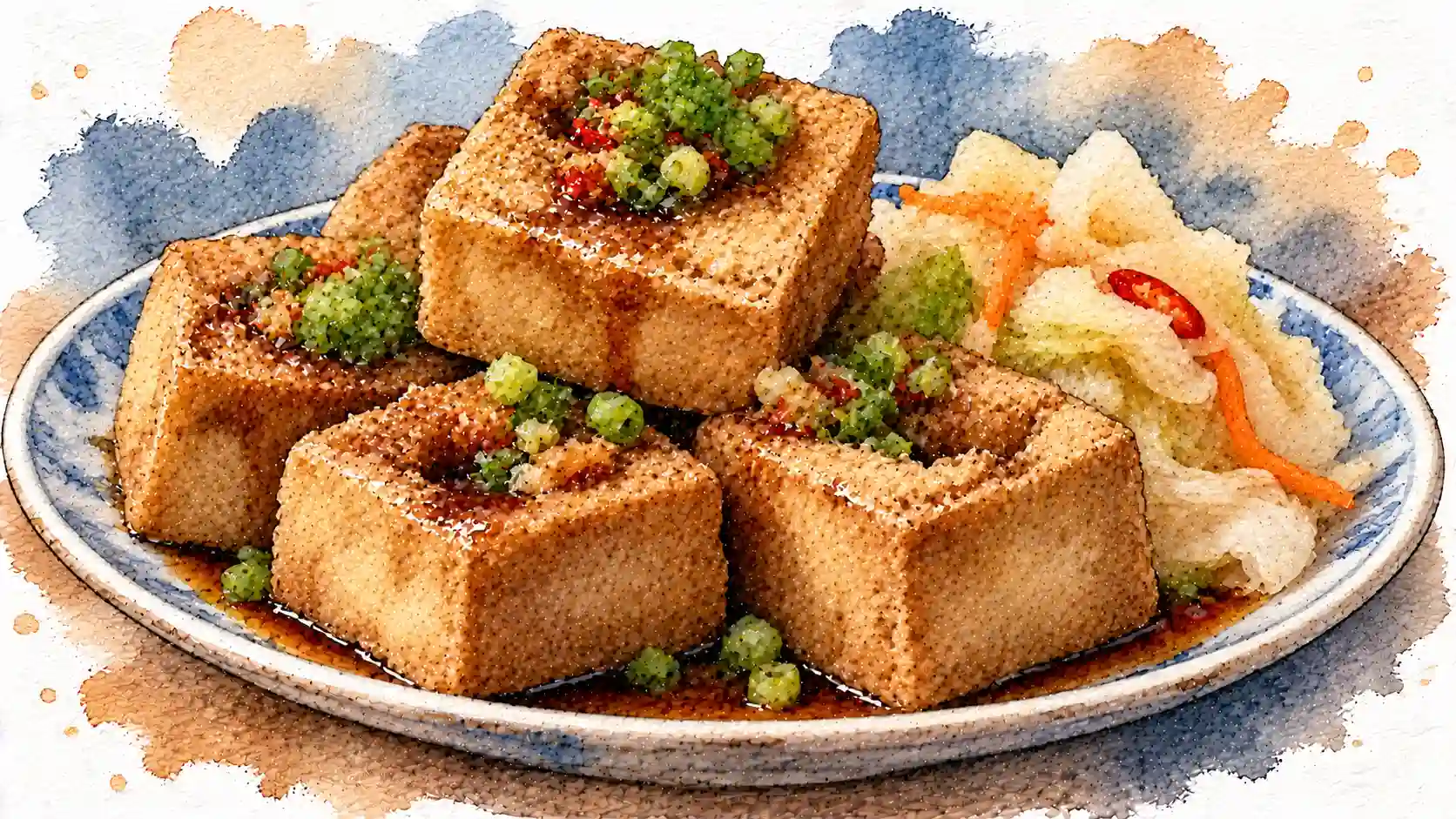
Stinky tofu is a fermented soy food famous for an aroma that can travel well beyond the stall where it is cooked. Popular in Taiwan and many parts of China, it is commonly sold at night markets, street-food stands, and casual eateries. Despite its powerful smell, stinky tofu can have a surprisingly rich, savory flavor, with a crisp exterior and soft interior when deep-fried. Its distinctive character comes from the fermentation brine, which gives this soybean food its unmistakable identity.
What Is Stinky Tofu?
Stinky tofu, known in Mandarin as chòu dòufu, is tofu that has been soaked in a pungent fermentation brine. The brine may contain fermented vegetables, salt, and other ingredients, with recipes differing between regions and producers.
The smell is the dish's most famous feature. Fermentation creates a mixture of aromatic compounds that can smell sulfurous, cheesy, earthy, or intensely funky. Yet the flavor is not necessarily as overpowering as the aroma suggests. Depending on the style and cooking method, the tofu may taste savory, mildly tangy, and rich in umami.
Stinky tofu is especially associated with Taiwanese night markets, where vendors often deep-fry cubes until their outsides become golden and crisp. In China, regional varieties may be fried, steamed, stewed, or served in other ways. The dish is not one standardized recipe. Its color, aroma, texture, and intensity vary with the brine and local tradition.
Quick Facts
- Main ingredient: Tofu made from soybeans
- Associated regions: Taiwan and China
- Preparation method: Brining or fermentation followed by cooking
- Signature characteristic: Strong, pungent aroma
- Common cooking methods: Deep-frying, steaming, and stewing
- Popular accompaniments: Chili sauce, pickled vegetables, garlic, and soy-based sauces
- Common setting: Night markets, street-food stalls, and casual restaurants
Common Ingredients
Stinky tofu has two main components: tofu and the brine or fermentation process that develops its characteristic aroma. The exact ingredients depend on the maker and regional style.
- Tofu: Usually firm tofu that can hold its shape during soaking and cooking.
- Fermented brine: The key flavoring medium, prepared according to a producer's recipe and fermentation method.
- Vegetables: Fermented amaranth stems, cabbage, bamboo shoots, or other vegetables may be used in some brines.
- Salt: Helps season the brine and can influence the fermentation process.
- Aromatics and spices: Ginger, garlic, or other seasonings may appear in certain regional preparations.
- Chili sauce: A common accompaniment for diners who prefer extra heat.
- Pickled vegetables: Add acidity and crunch, balancing the tofu's rich flavor.
- Soy-based sauces: May be served alongside the tofu to add further savory depth.
Some documented brine recipes have included ingredients such as dried shrimp or fish, while others rely primarily on vegetables and their fermentation. There is no universal formula, and not every version uses the same vegetables, seasonings, or fermentation culture. People with allergies or dietary restrictions should check the ingredients, since some preparations may contain seafood or other animal-derived components.
How Stinky Tofu Is Prepared
Stinky tofu production varies, but the process generally involves preparing tofu, exposing it to a specially prepared brine or fermentation system, and cooking it before serving. Commercial producers may use more standardized methods than small traditional makers.
Preparing the Fermentation Brine
In some traditional methods, vegetables are combined with water and other ingredients and allowed to ferment under controlled conditions. The resulting brine develops a complex microbial community and a strong aroma. Recipes vary, and some producers maintain brines over extended periods, while others use more standardized ingredients and fermentation cultures.
Because the brine's composition affects both flavor and food safety, its preparation requires suitable sanitation and process controls. Simply leaving vegetables or tofu in a container until they smell strong is not a safe way to reproduce the dish.
Soaking the Tofu
Firm tofu is cut into pieces and immersed in the prepared brine for a period determined by the producer's method. During this stage, the tofu takes on the brine's distinctive aroma and flavor. The time required can differ considerably between traditional and commercial products.
Some products undergo a more extensive fermentation process, while others are soaked primarily to develop the characteristic smell before cooking. These differences help explain why stinky tofu from two vendors can look and taste quite different.
Frying, Steaming, or Stewing
In Taiwan, deep-frying is one of the most recognizable ways to prepare stinky tofu. The cubes are fried until the exterior is crisp and golden, while the inside remains soft. The contrast between the crunchy exterior and the tender tofu is a major part of its appeal.
Other preparations may be steamed or simmered in a seasoned broth. These methods create a softer texture and allow the tofu to absorb additional flavors. The finished dish may be served with chili sauce, pickled cabbage, garlic, or other accompaniments.
History & Origins
Stinky tofu belongs to the broader tradition of fermented soybean foods in Chinese-speaking communities. Fermentation has long been used to transform ingredients, develop complex flavors, and create distinctive foods from familiar staples such as tofu.
A popular origin story credits a tofu seller named Wang Zhihe with developing a version of stinky tofu during the Qing dynasty. According to the traditional account, Wang was selling tofu in Beijing when unsold pieces were preserved in a container and developed a pungent aroma. He reportedly discovered that the resulting product had an appealing flavor. The story is widely repeated, but it should be understood as a traditional account rather than a fully verified explanation of the origins of all stinky tofu varieties.
Stinky tofu developed into numerous regional styles in China and became especially popular as a street food in Taiwan. Taiwanese night markets helped make fried stinky tofu a recognizable snack, with vendors offering their own accompaniments and preferred levels of pungency. Today, the dish remains a familiar part of the street-food landscape in both places, despite differences in local recipes.
Varieties & Differences
Stinky tofu is a family of related preparations rather than a single fixed dish. Regional techniques can change its appearance, smell, texture, and flavor.
- Taiwanese fried stinky tofu: Often served in crisp cubes with pickled cabbage, garlic, or chili sauce.
- Chinese regional styles: May be fried, steamed, stewed, or served with different sauces depending on the locality.
- Dark or black stinky tofu: Some regional varieties develop a dark appearance through their particular ingredients and processing methods.
- Golden fried tofu: A familiar Taiwanese presentation in which frying creates a crisp outer layer around the soft center.
- Stewed stinky tofu: Cooked in broth or sauce, producing a softer texture and a flavor shaped by the surrounding liquid.
- Different fermentation brines: Produce variations in pungency, saltiness, color, and savory depth.
Not every dark tofu is stinky tofu, and not every fermented tofu has the same production method. Stinky tofu is also different from fermented bean curd, which is often aged in seasoned mixtures and used as a condiment. Although the foods are related through their use of soybeans and fermentation, their preparation methods and typical uses differ.
How Stinky Tofu Is Enjoyed
In Taiwan, stinky tofu is a popular night-market snack. The smell often reaches visitors before they find the stall, making it one of the most recognizable aromas in a busy food market. Customers typically order freshly fried cubes, which are served hot with pickled vegetables and sauces.
Across China, stinky tofu may be sold by street vendors or served in casual eateries. Depending on the regional style, diners may enjoy it crisp and fried, soft in a broth, or accompanied by chili and other seasonings. It can be eaten as a snack, a side dish, or part of a larger meal.
For first-time tasters, the contrast between smell and flavor can be surprising. The aroma may seem overpowering, but a fried version can have a crisp exterior and a mellow, savory interior. Pickled vegetables add brightness, while chili sauce introduces heat.
As with other fermented foods, proper production and storage are important. Stinky tofu should be purchased from a reputable seller or producer that follows safe handling practices. An intense smell alone does not prove that a product has fermented correctly, and unsafe brine preparation can create food-safety risks.
Did You Know?
Scientific studies have found that stinky tofu brines contain diverse communities of bacteria and other microorganisms. These microbial communities help produce the compounds responsible for the food's distinctive aroma, and differences between brines contribute to the regional variation in flavor.