
Surströmming
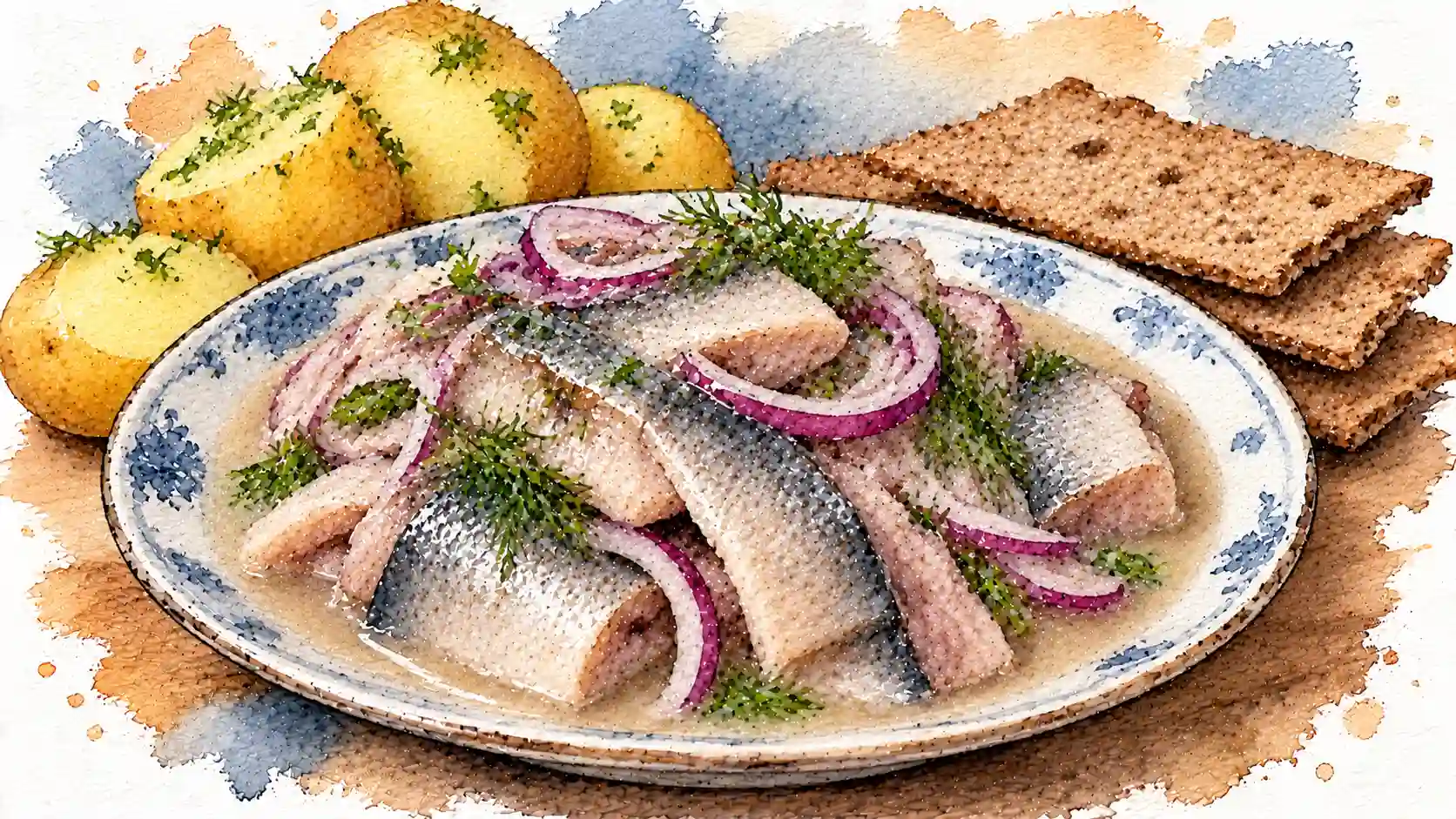
Surströmming is a traditional Swedish food made from Baltic herring that is salted and allowed to ferment, producing one of the most powerful aromas in the culinary world. Famous for its intense smell, this northern Swedish specialty is often eaten outdoors and served with flatbread, potatoes, onions, and sour cream. While its pungency can be challenging for newcomers, surströmming has a long history as a preserved fish and remains an important part of Sweden’s regional food culture.
What Is Surströmming?
Surströmming is fermented Baltic herring, a smaller herring traditionally caught in the brackish waters of the Baltic Sea. The fish is salted and allowed to ferment under controlled conditions before being packaged in cans, where fermentation may continue. The result is a soft, salty fish with a distinctive sour taste and an exceptionally strong odor.
The Swedish name combines sur, meaning sour, with strömming, the local name for Baltic herring. Its smell is often described as pungent or sulfurous, although individual reactions vary. The aroma can be overwhelming to people encountering it for the first time, but enthusiasts appreciate its distinctive flavor and cultural significance.
Despite its reputation, surströmming is not simply rotten fish. It is a traditional fermented product made through a deliberate preservation process. Fermentation changes the fish's flavor, texture, and aroma, creating a specialty that differs from fresh, smoked, or conventionally pickled herring.
Quick Facts
- Main Ingredient: Baltic herring
- Country: Sweden
- Preparation Method: Salting and fermentation
- Flavor Profile: Salty, sour, savory, and intensely fermented
- Signature Characteristic: Exceptionally strong odor
- Traditional Accompaniments: Flatbread, potatoes, onions, and sour cream
- Associated Region: Northern Sweden, particularly the High Coast
- Seasonal Tradition: Surströmming premiere on the third Thursday in August
Common Ingredients
Traditional surströmming requires relatively few ingredients. Its distinctive character comes mainly from the fish, salt, and fermentation process rather than from a complicated seasoning mixture.
- Baltic Herring: The small fish that form the foundation of the dish.
- Salt: Used during preparation to help regulate the fermentation process.
- Water and Brine: Used to salt the fish and provide the liquid environment in which fermentation develops.
- Thin Swedish Flatbread: Often used to wrap the fish and accompaniments into a portable meal.
- Potatoes: Commonly boiled and served alongside the fish or included in a traditional sandwich.
- Raw Onion: Adds sharpness and crunch that contrast with the soft fish.
- Sour Cream or Crème Fraîche: Provides a cool, creamy balance to the salty, pungent flavors.
- Butter: Sometimes spread on the bread as part of the traditional serving.
The bread, potatoes, onions, and dairy are accompaniments rather than essential ingredients in the fermentation itself. Different households and regions have their own preferred combinations. Some people also add dill, tomatoes, or other toppings.
How Surströmming Is Prepared
Producing surströmming involves careful salting, controlled fermentation, and appropriate packaging. It is not a dish that should be improvised by leaving fish to ferment under uncontrolled conditions.
Preparing and Salting the Fish
The herring is sorted and prepared before being placed in strong brine. Traditional production methods allow the fish to soak for a period before it is transferred to a weaker brine for fermentation. The salt concentration is important because it helps create the conditions needed for the characteristic fermentation process.
Fermenting the Herring
The salted fish is kept in brine under controlled conditions as fermentation develops. Enzymatic and microbial activity produces compounds that contribute to the fish's sour taste, softer texture, and powerful aroma. Unlike ordinary pickled herring, which is generally preserved in a vinegar-based mixture, surströmming develops its characteristic profile through fermentation.
The fermentation period varies with the producer's methods and the desired maturity. Temperature, salt concentration, and timing all influence the finished product, so commercial producers follow established processes rather than relying on smell alone to determine whether the fish is suitable for consumption.
Canning and Storage
The fermented herring is packaged in airtight cans, and fermentation may continue inside them. Gases produced during this process can create internal pressure, causing cans to bulge. This is a recognized characteristic of commercially produced surströmming, but the appearance of a can alone cannot establish that a product has been stored or handled safely.
Because the cans can be pressurized and the liquid has a powerful odor, people commonly open surströmming outdoors, following the manufacturer's instructions. Choose a product from a reputable producer, check its packaging and storage guidance, and do not consume a can that is leaking, damaged, or otherwise appears compromised. Fermented seafood requires proper production, storage, and handling; homemade versions made without a validated process can pose serious food-safety risks.
History & Origins
Surströmming developed in Sweden as a way to preserve fish for later consumption. Historically, salt could be expensive, and fermenting herring with less salt than was used in some other preservation methods offered a practical way to make a catch last longer. Historical records indicate that fermented fish was traded in Sweden by at least the 16th century.
The dish became particularly associated with northern Sweden and communities along the Baltic coast, including the High Coast and the islands around Ulvön. Over time, surströmming evolved from everyday preserved food into a regional specialty with its own seasonal customs and serving traditions. Its continued popularity reflects both the area's fishing heritage and the distinctive taste created by fermentation.
Today, surströmming is known far beyond Sweden because of its reputation for having an exceptionally strong smell. Videos of people opening cans and tasting it for the first time have helped turn it into an international food curiosity. Within Sweden, however, it is more than a novelty: for enthusiasts, it remains a traditional seasonal food linked to family gatherings and regional identity.
Varieties & Differences
Surströmming is a specialized product, but differences in fermentation, packaging, and serving style influence the experience.
- Whole Fermented Herring: Whole fish are commonly sold in cans and prepared for serving after opening.
- Filleted Surströmming: Some products offer fillets for easier serving and less preparation at the table.
- Differences in Fermentation: The degree of fermentation can affect the fish's softness, saltiness, and intensity of aroma.
- Traditional Flatbread Servings: Fish is combined with potatoes, onion, and creamy accompaniments in a bread-based meal.
- Simple Servings: Some enthusiasts prefer the fish with only a few accompaniments so its distinctive taste remains prominent.
Surströmming should not be confused with Swedish pickled herring, which is commonly preserved in vinegar, sugar, and seasonings. Both are traditional fish preparations, but their preservation methods and flavor profiles are different.
How Surströmming Is Enjoyed
Surströmming is often eaten during a seasonal gathering known as a surströmmingsskiva, or surströmming party. Friends and family gather to open the cans, prepare the accompaniments, and share a meal. The tradition is particularly associated with late summer and has become a recognizable part of northern Swedish food culture.
Sweden's annual surströmming premiere is traditionally held on the third Thursday in August. The date was established in 1940 to help ensure that the fish was sufficiently fermented before it went on sale. Although the date is no longer a legal sales restriction, the tradition continues.
One traditional way to eat surströmming is in a sandwich made with Swedish flatbread, boiled potatoes, sliced onion, and sour cream or crème fraîche. Butter may be added, and the fish is arranged with the other ingredients to balance its salty, fermented character. The combination of soft fish, creamy dairy, crisp onion, and hearty bread creates a more rounded meal than eating the fish alone.
The cans are commonly opened outdoors because the odor can linger indoors and cling to surfaces. Newcomers often react strongly to the smell, while experienced eaters tend to focus on the distinctive taste and familiar accompaniments.
Surströmming is best purchased from a reputable producer and handled according to the product's storage and opening instructions. Its reputation for intense fermentation should not be taken as permission to eat fish that has been improperly stored or prepared.
Did You Know?
Surströmming cans can swell because fermentation may continue after packaging, producing gas inside the container. This pressure is a recognized part of the product's production, which is one reason the cans are often opened outdoors. However, unusual damage or leakage should never be ignored.