
Svið
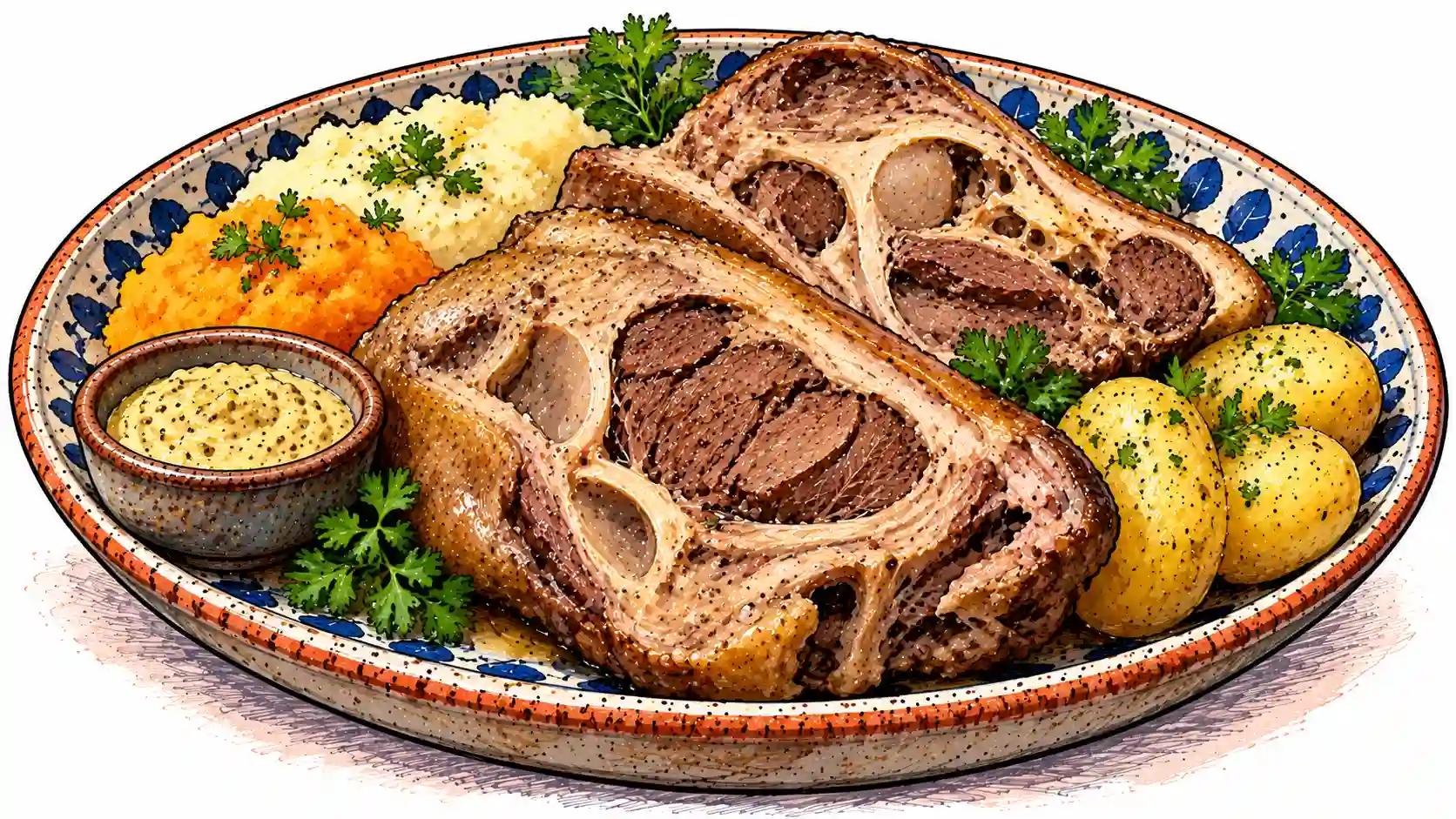
Few traditional dishes are as closely associated with Icelandic food culture as svið, a dish made from a cooked sheep's head. Usually served split in half, it retains the recognizable features of the head and reflects a long tradition of making full use of available livestock. Although its appearance can be challenging for newcomers, svið developed within Iceland's rural food culture, where using as much of an animal as possible was practical in a country with a demanding climate and a long history of seasonal food preservation. Today, the dish remains a recognizable part of Icelandic culinary heritage and is especially associated with Þorrablót, a midwinter celebration featuring traditional Icelandic foods.
What Is Svið?
Svið is a traditional Icelandic dish made by singeing, cleaning, splitting, and boiling a sheep's head. The wool is burned away, the skin is cleaned, and the head is generally split lengthwise before cooking. The brain is typically removed as part of the preparation, although details can vary.
The finished dish offers several different textures and flavors. The cheeks contain tender meat, while the tongue has a firmer texture and is often considered one of the tastiest parts. Other edible areas include the meat around the jaw and the tissues surrounding the bones. Some diners also eat the eyes, although preferences vary.
Svið is usually served hot, often with potatoes, mashed swede, or other simple accompaniments. Its flavor is broadly comparable to cooked lamb or mutton, while the different parts of the head offer their own textures and degrees of richness.
Today, svið remains a symbol of Icelandic culinary heritage. It is particularly associated with Þorrablót, a midwinter gathering at which people enjoy traditional foods that reflect earlier Icelandic food customs. Although it is not an everyday meal for everyone, it continues to appear in traditional food settings and seasonal celebrations.
Quick Facts
- Origin: Iceland
- Main Ingredient: Sheep's head
- Traditional Preparation: Singed, cleaned, split, and boiled
- Texture: Tender meat with varied textures around the head
- Flavor: Savory, similar to cooked lamb or mutton
- Common Accompaniments: Potatoes, mashed swede, and bread
- Cultural Connection: Icelandic rural food traditions and Þorrablót
- Related Dish: Sviðasulta, a pressed preparation made from meat from the head
- Food Category: Traditional Icelandic meat dish
Common Ingredients
Traditional svið requires relatively few ingredients. The preparation focuses on cleaning and cooking the sheep's head properly rather than masking its flavor with heavy seasoning.
- Sheep's Head: The main ingredient, usually singed to remove the wool, cleaned, and split lengthwise. The brain is generally removed during preparation.
- Water: Used to boil the head until the meat becomes tender.
- Salt: Commonly used to season the cooking water and meat.
- Potatoes: A common accompaniment that makes the meal more substantial.
- Swede or Rutabaga: Often boiled or mashed and served alongside the meat.
- Bread: Icelandic breads may accompany the dish, depending on the meal and local serving traditions.
- Additional Seasonings: Preparation is generally simple, although individual cooks may vary the seasoning.
How Svið Is Prepared
Preparing svið begins with singeing the wool from the sheep's head. The skin is then cleaned to remove remaining hair and residue. The head is generally split lengthwise, creating two halves that are easier to handle, cook, and serve. The brain is typically removed before cooking.
The prepared halves are placed in a pot of water and boiled until the meat is tender. Salt may be added, while other seasonings are generally kept simple. Cooking time depends on the size of the head and the method used, but the aim is to make the meat around the cheeks, jaw, and other edible areas tender.
Once cooked, the head is served in halves or portions. Diners remove the meat from the bone and choose the parts they prefer. The cheeks are particularly valued for their tender, meaty texture, while the tongue is firmer and distinctive.
A related Icelandic preparation is sviðasulta, sometimes translated as sheep's-head brawn or head cheese. It is made by chopping meat from the cooked head and pressing or setting it into a compact, gelatinous loaf. Some traditional versions are preserved in whey. Unlike svið itself, sviðasulta is served as a set preparation rather than as a whole cooked head.
History & Origins
Svið developed within Iceland's traditional farming culture, where sheep were important sources of meat, wool, and other useful materials. In a country with a challenging climate and a short growing season, making full use of available livestock was a practical way to provide food and reduce waste.
Using the head and other less familiar cuts helped households make the most of an animal after slaughter. Traditional Icelandic food culture also relied on preservation methods such as salting, drying, smoking, and fermenting or souring foods in whey. Svið itself is normally cooked rather than fermented, but it belongs to the wider history of resourceful cooking that helped communities manage seasonal food supplies.
For much of Iceland's rural history, foods now regarded as unusual traditional specialties were part of ordinary everyday eating. Svið and other preparations made from less commonly used cuts were practical foods rather than necessarily being reserved for festivals or special occasions.
The dish is now closely associated with Þorrablót, a midwinter celebration featuring traditional Icelandic foods. Although the name and customs draw on older Icelandic cultural traditions, the modern form of Þorrablót developed much later than the medieval period and was revived and popularized in the 19th and 20th centuries. The festival helped turn familiar rural foods into recognizable symbols of Icelandic heritage.
Today, svið continues to hold cultural significance even though modern Icelanders have access to a much wider range of ingredients and cooking styles. For some, it is a familiar traditional food; for others, it offers an opportunity to explore an older approach to Icelandic cooking.
Varieties & Differences
There is no single elaborate recipe for svið. The basic preparation remains fairly consistent, but serving styles, accompaniments, and related dishes vary between households and food establishments.
- Boiled Svið: The classic preparation, with the cleaned sheep's head split and boiled until tender.
- Svið Served by the Half: A traditional presentation in which diners receive one side of the cooked head and eat the meat directly from the bone.
- Svið with Root Vegetables: Served with potatoes, mashed swede, or other simple accompaniments for a hearty meal.
- Sviðasulta: A related preparation made from chopped meat from the sheep's head, pressed or set into a compact, gelatinous loaf.
- Þorrablót Servings: Svið may appear as part of a larger spread of traditional Icelandic foods during the midwinter festival.
The different parts of the sheep's head also offer different eating experiences. The cheeks are soft and meaty, the tongue is firmer, and the skin and other tissues have their own distinctive textures. Diners often develop personal preferences for particular parts.
How Svið Is Enjoyed
Svið is usually eaten as a hearty main dish, served hot with potatoes, swede, or bread. Because the head is often presented split in half, eating it can be a hands-on experience: diners remove the meat from the bone and choose the parts they want to try.
During Þorrablót, svið may be part of a shared table featuring several traditional Icelandic foods. Other dishes can include fermented shark, cured or sour-preserved meats, blood and liver puddings, dried fish, and traditional breads. The exact selection varies by gathering, and not every feast includes the same foods.
Although Þorrablót is now an important occasion for celebrating traditional Icelandic food, many of the dishes served at these gatherings were once ordinary rural foods. Their place on the modern festival table reflects a broader interest in preserving and celebrating Icelandic cultural heritage.
The dish is also a reminder that ideas about which foods are appealing vary widely between cultures. While a sheep's head may seem unusual to some diners, nose-to-tail cooking has long been practiced in many parts of the world. In Iceland, svið remains a recognizable expression of that tradition.
Did You Know?
Sviðasulta is made from the same part of the sheep but served in a completely different form. Meat from the cooked head is chopped and pressed or set into a compact, gelatinous loaf. This related preparation reflects the same Icelandic tradition of making use of as much of an animal as possible.