
Tamilok
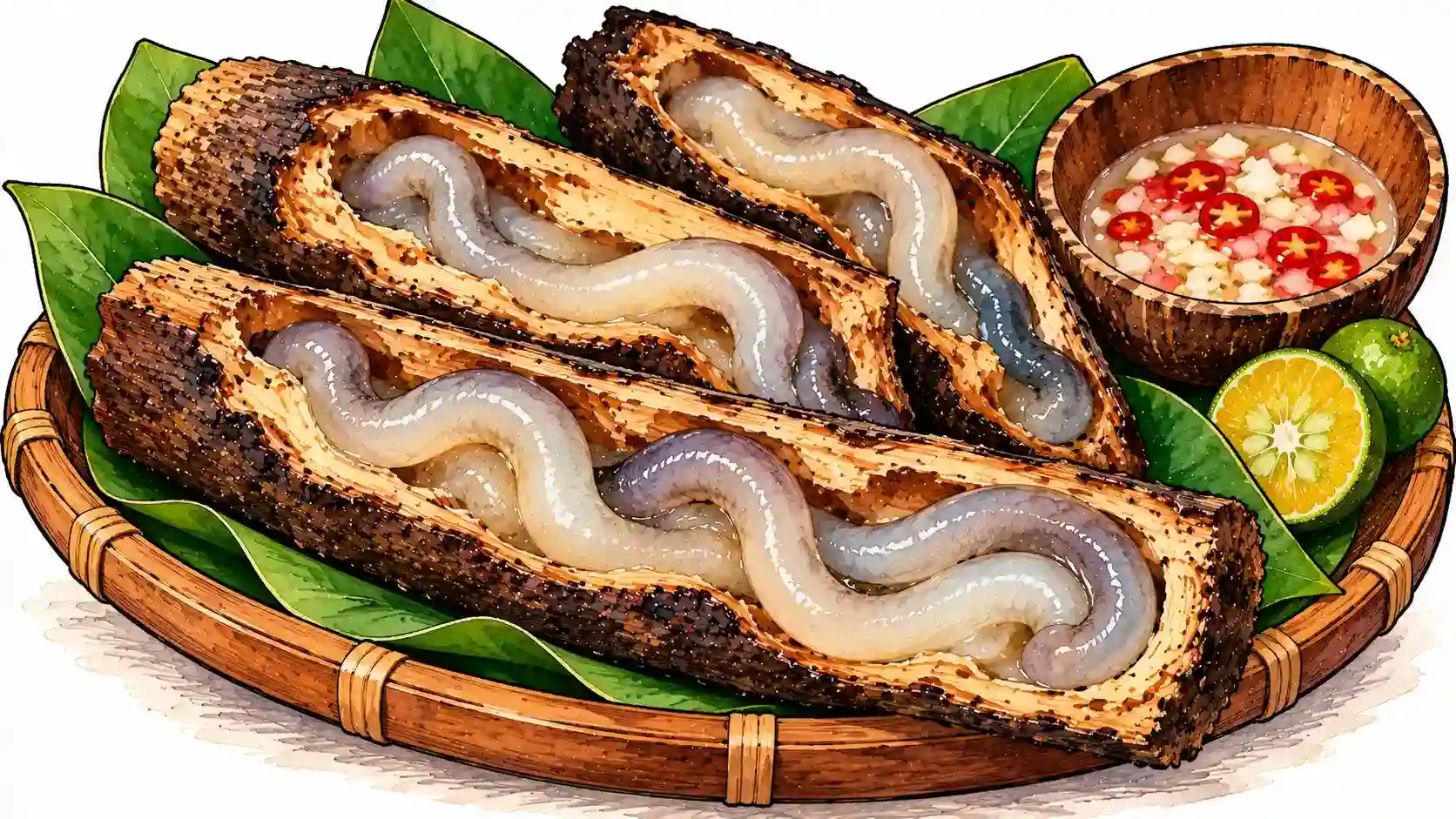
Hidden inside the waterlogged wood of mangrove forests, tamilok is one of the Philippines' most unusual seafood delicacies. Despite its nickname as a "woodworm," this creature is not a true worm at all. It is a marine bivalve mollusk related to clams and mussels, with a long, soft body adapted for boring into submerged wood. In parts of the Philippines, particularly Palawan, tamilok is eaten raw in a vinegar-based preparation known as kinilaw. Its appearance may surprise first-time diners, but its fans appreciate its briny flavor and soft, slippery texture. The delicacy also reflects the close relationship between coastal food traditions and the mangrove ecosystems where these unusual animals live.
What Is Tamilok?
Tamilok is a local name used in the Philippines for edible wood-boring marine mollusks known as shipworms. These animals belong to the family Teredinidae, a group of bivalves related to clams and mussels. Despite their wormlike shape, they are mollusks rather than earthworms, insects, or parasites.
Tamilok live inside submerged wood, including fallen mangrove trunks, branches, and driftwood. They use small, specialized shell structures near the front of their bodies to scrape and bore into the wood, creating tunnels where they live. Their bodies can grow much longer than these reduced shells, giving them their distinctive wormlike appearance.
Their unusual habitat is also what makes them interesting as food. Harvesters open suitable pieces of waterlogged timber and extract the animals from their tunnels. In parts of the Philippines, tamilok is traditionally served raw with vinegar, chili, and onion. The flavor is often compared to oysters or other briny shellfish, although its texture is notably softer and more slippery.
The name tamilok does not necessarily identify a single scientific species everywhere it is used. Different shipworms occur in Philippine coastal waters, and local names can vary by region. The animals sold as tamilok are therefore best understood as a regional food tradition involving edible shipworms rather than one universally established species.
Quick Facts
- Common Name: Tamilok or shipworm
- Origin: Philippines, especially associated with Palawan and parts of the Visayas
- Animal Group: Marine bivalve mollusks in the family Teredinidae
- Natural Habitat: Submerged wood, including dead mangrove timber and driftwood
- Texture: Soft, slippery, and sometimes slightly chewy
- Flavor: Briny and delicate, often compared to oysters
- Traditional Preparation: Raw kinilaw with vinegar, chili, and onion
- Food Category: Regional seafood delicacy
Common Ingredients
Tamilok is often served with a simple vinegar-based accompaniment rather than a complicated sauce. The seasoning adds acidity and heat while allowing the mollusk's natural marine flavor to remain noticeable. Ingredients vary between households and vendors.
- Fresh Tamilok: The main ingredient, harvested from submerged wood and prepared for eating.
- Vinegar: Provides the sharp, acidic flavor associated with kinilaw. Coconut or cane vinegar may be used, depending on local preferences.
- Red Onion or Shallots: Contribute sweetness, aroma, and a crisp bite.
- Chili Peppers: Add heat for diners who prefer a spicier preparation.
- Salt: May be used to adjust the seasoning.
- Citrus Juice: Calamansi or another citrus fruit may be included in some variations for additional acidity and fragrance.
- Other Seasonings: Household recipes may include additional ingredients, although vinegar, chili, and onion are among the commonly documented accompaniments.
How Tamilok Is Prepared
Harvesting tamilok begins in coastal areas where suitable submerged wood is available. Harvesters split or open waterlogged timber and extract the animals from the narrow tunnels they have bored into it. Because the mollusks live inside the wood, collecting them requires more than simply gathering shellfish from the shoreline.
After extraction, the animals are removed from the wood and cleaned. The exact handling practices vary between communities and vendors. The soft bodies are then prepared whole or cut into manageable pieces, depending on how the dish will be served.
One of the best-known preparations is tamilok kinilaw. The cleaned mollusks are served raw with vinegar, chopped onion, and chili. Some versions include citrus or other seasonings. The acidic dressing gives the dish a sharp flavor that contrasts with the tamilok's soft texture and briny taste.
Although vinegar is central to the preparation, it should not be mistaken for a reliable food-safety treatment. Acidic marinades do not consistently eliminate harmful bacteria, viruses, parasites, or other hazards in raw seafood. Eating raw tamilok can pose health risks, especially when its harvesting location or handling conditions are uncertain. Thorough cooking is the safer choice.
Harvesting practices also matter because shipworms depend on suitable submerged wood, including dead mangrove timber. Mangrove habitat loss can affect their availability, so responsible harvesting and the protection of coastal ecosystems are important to the long-term sustainability of this food tradition.
History & Origins
Tamilok is associated with coastal communities in the Philippines, where mangrove forests and sheltered shorelines support a wide variety of marine life. In places such as Palawan, the unusual mollusk has become both a local food tradition and a curiosity for visitors interested in regional cuisine.
Its use as food reflects a broader relationship between coastal communities and their surroundings. People living near mangroves gather a range of marine resources, including fish, crabs, clams, and other edible invertebrates. Tamilok stands apart because it is extracted from submerged wood rather than collected from the seabed or open water.
Shipworms have long been known for boring into wooden structures, boats, and submerged timber. Yet the same biological ability that made them a concern for maritime communities has also made them a source of food in parts of Southeast Asia and the Pacific. In the Philippines, harvesting edible shipworms remains a food-gathering activity as well as a source of income in some communities.
The nickname "woodworm" helps explain tamilok's reputation as an adventurous food, but it can also be misleading. Tamilok is a mollusk, not an insect larva or a parasitic worm. Its unusual appearance, habitat, and traditional raw preparation have helped make it one of the Philippines' best-known examples of distinctive regional seafood.
Varieties & Differences
The name tamilok is used locally for edible wood-boring mollusks, but shipworms include numerous species. Animals encountered in different coastal areas may therefore vary in size, anatomy, and habitat. Their local names and culinary traditions can also differ.
- Palawan Tamilok: Particularly associated with the region's coastal food culture and the raw, vinegar-based preparation popular with residents and visitors.
- Other Philippine Shipworms: Related species are harvested in other parts of the Philippines, including areas of the Visayas. Local names and harvesting practices vary.
- Fresh Tamilok with Vinegar: A familiar traditional presentation that emphasizes the mollusk's natural briny flavor and soft texture.
- Spicy Tamilok: Served with additional chili or a hotter vinegar dip for a stronger, more pungent taste.
- Cooked Tamilok: Shipworms can also be cooked, providing an alternative to the raw preparation.
- Other Shipworms: Related wood-boring mollusks occur in coastal waters around the world, although their local names, species, and culinary uses differ.
The key distinction is not just how the dish is seasoned. Tamilok is defined by the unusual biology of its main ingredient and the harvesting tradition associated with submerged wood. The particular species and preparation can differ by location.
How Tamilok Is Enjoyed
Tamilok is often eaten as an appetizer or specialty dish, especially in coastal destinations where it forms part of the local seafood experience. In Palawan, it is known as an adventurous food for visitors while also reflecting the region's connection to mangrove ecosystems and coastal resources.
The usual vinegar accompaniment helps balance the mollusk's briny flavor. Onion adds a little crunch, chili provides heat, and citrus can make the mixture more fragrant. Since tamilok is soft and slippery rather than firm like many cooked shellfish, its texture is a major part of the experience.
For anyone curious about trying it, food safety deserves as much attention as flavor. Raw tamilok should not be assumed safe simply because it is fresh, comes from a familiar location, or has been soaked in vinegar. Raw seafood can carry harmful pathogens, and cooking thoroughly is the safer option. People at higher risk of severe foodborne illness should avoid eating raw seafood.
Tamilok also highlights the importance of maintaining the mangrove habitats that support shipworms and many other coastal species. Responsible harvesting and healthy mangrove ecosystems help sustain both local biodiversity and the food traditions that depend on it.
Did You Know?
Tamilok is a mollusk that bores into wood—not a true worm. Shipworms use small shell structures to scrape tunnels into submerged timber, where their elongated bodies live. Their reduced shells and wormlike shape can be misleading, but biologically they belong to the same broad animal group as clams, mussels, and oysters.