
Tavuk Göğsü
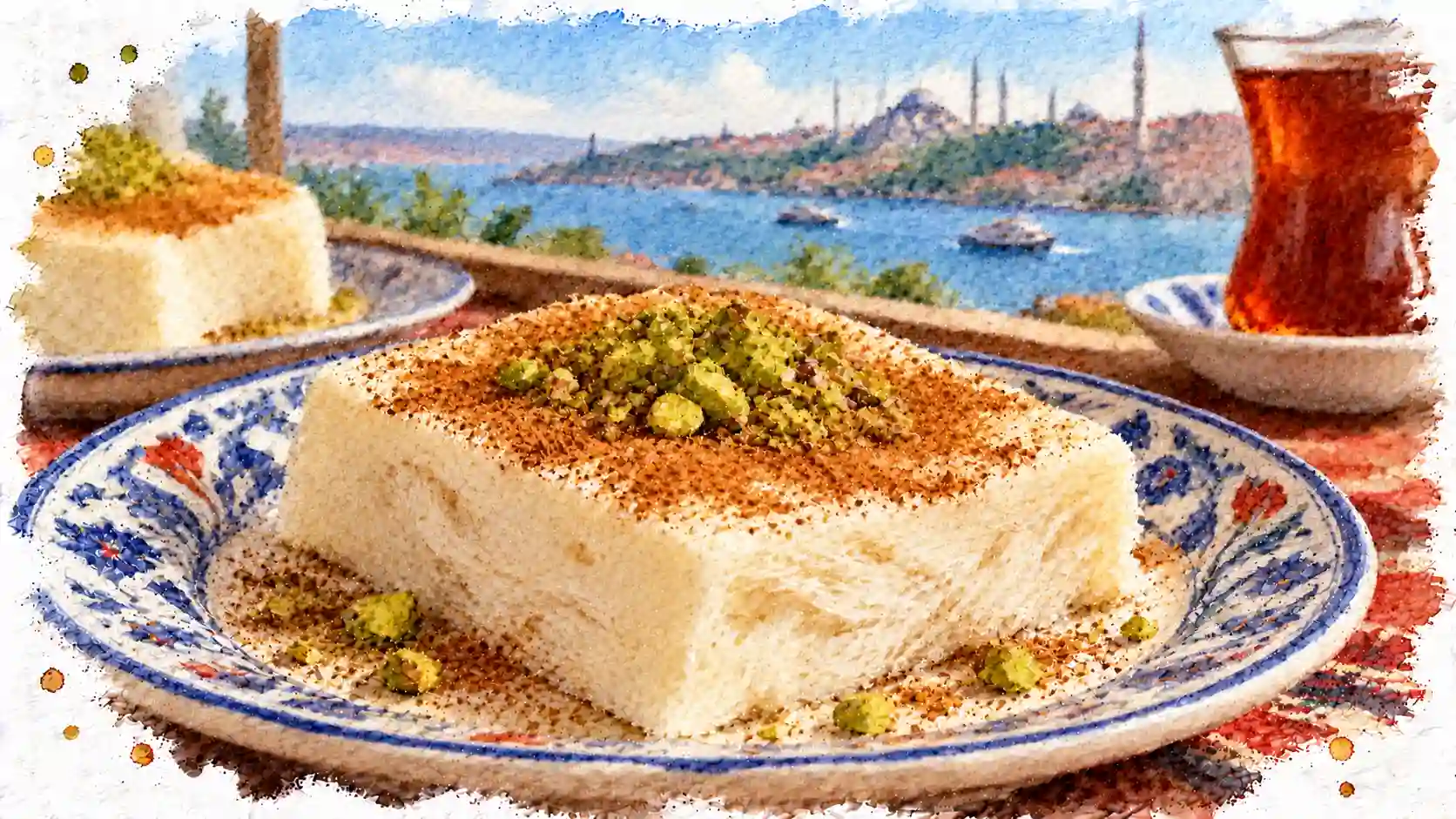
Tavuk göğsü is a traditional Turkish milk pudding with a surprising ingredient: finely shredded chicken breast. Despite containing meat, this famous dessert is sweet, pale, smooth, and delicate, with a texture closer to a firm custard than a conventional pudding. The chicken is cooked and separated into extremely fine fibers, then blended into milk, sugar, and a thickener until it becomes almost indistinguishable from the creamy base. Closely associated with Istanbul and Ottoman culinary traditions, tavuk göğsü is a memorable example of how historical cooking can challenge modern expectations about what belongs in a dessert.
What Is Tavuk Göğsü?
Tavuk göğsü, pronounced roughly “tah-vook guh-SOO,” takes its name from the Turkish words for “chicken breast.” It is a traditional Turkish dessert made by combining finely shredded, cooked chicken breast with milk, sugar, and a thickening ingredient such as rice flour or ground rice.
The finished pudding is typically white or pale cream, with a dense yet silky consistency. When prepared traditionally, the chicken fibers are so fine that they can be difficult to notice at first glance. The meat contributes texture rather than a strong savory flavor, allowing the milk and sugar to define the dessert's taste.
Unlike a conventional rice pudding, tavuk göğsü is not usually served with obvious grains of rice. Instead, rice flour or finely ground rice helps thicken the milk mixture. Cinnamon is a common finishing touch, adding warmth and a little color to the pale surface.
The dessert is especially associated with Istanbul and traditional Turkish pudding shops, known as muhallebicis. For anyone unfamiliar with the dish, the chicken may sound unexpected, but it is a genuine part of the traditional recipe rather than a modern novelty.
Quick Facts
- Food name: Tavuk göğsü
- Country: Türkiye (Turkey)
- Region associated with the dish: Istanbul and Ottoman culinary traditions
- Literal meaning: Chicken breast
- Main ingredients: Chicken breast, milk, sugar, and rice flour or ground rice
- Flavor: Mild, milky, creamy, and sweet
- Texture: Smooth and dense, with very fine chicken fibers
- Common garnish: Ground cinnamon
- Related dessert: Kazandibi, a dessert with a deliberately browned underside
Common Ingredients
Traditional tavuk göğsü uses a relatively short list of ingredients, but the preparation of the chicken is what makes the dessert distinctive. Common ingredients include:
- Chicken breast: Cooked and separated into very fine fibers before being incorporated into the pudding.
- Milk: Forms the creamy base and gives the dessert its pale color.
- Sugar: Provides the sweetness expected of a traditional pudding.
- Rice flour or ground rice: Thickens the mixture and helps it set into a firm, sliceable dessert.
- Cinnamon: Often sprinkled over the top before serving.
- Water: Used to cook the chicken and, in some recipes, to help prepare the thickening mixture.
- Rose water: Appears in some traditional recipes, although the ingredients and flavorings vary by recipe.
- Other starches: Some modern recipes use wheat starch or other thickeners alongside or instead of rice flour.
Some contemporary recipes use starches other than rice flour, but the defining feature of traditional tavuk göğsü is the inclusion of chicken breast finely worked into the sweet milk pudding.
How Tavuk Göğsü Is Prepared
Preparation begins by cooking the chicken breast until it is fully cooked and tender. The meat is then cooled and separated into extremely fine fibers. Traditional methods may involve repeatedly rinsing and working the fibers to reduce their recognizable chicken flavor and achieve the delicate texture associated with the dessert.
Milk is heated with sugar and a thickener such as rice flour or finely ground rice. The mixture must be stirred carefully as it cooks so that it thickens evenly and does not develop lumps or scorch on the bottom of the pan. The prepared chicken fibers are then incorporated and worked through the mixture until they are distributed as evenly as possible.
Once thickened, the pudding is poured into a shallow tray, serving dish, or individual bowls and left to cool. As it sets, it becomes firm enough to serve with a spoon or cut into portions, depending on the recipe. Cinnamon is often sprinkled over the top, and the dessert is usually served chilled.
The process takes patience because the chicken must be prepared finely enough to blend into the pudding. Large pieces would make the texture feel more like a savory dish, undermining the smooth consistency that defines tavuk göğsü.
Food safety matters throughout preparation. The chicken must be cooked thoroughly, handled hygienically, and kept at safe temperatures while the dessert cools and is stored. Because the finished pudding contains milk and cooked poultry, refrigerate it promptly and avoid leaving it at room temperature for extended periods.
History & Origins
Tavuk göğsü is closely associated with the culinary traditions of Istanbul and the Ottoman Empire. Sweet dishes made with meat, milk, and starch were known in medieval West Asian and European cooking, and historical recipes show that incorporating chicken into a sweet preparation is much older than the modern Turkish pudding shop.
The precise origin of tavuk göğsü is difficult to establish. It is sometimes linked to ancient Roman cooking, but a direct connection to a specific Roman recipe is disputed. A surviving recipe matching the modern dessert has not been identified in the commonly cited Roman cookbook attributed to Apicius. Food historian Utku Can Topçu has argued that medieval Arabic culinary traditions provide closer documented parallels for tavuk göğsü and related milk-based desserts.
During the Ottoman period, tavuk göğsü became associated with palace cuisine and elaborate sweet dishes. A nineteenth-century Turkish cookbook, later translated into English as A Manual of Turkish Cookery, includes a recipe for the dessert made with chicken breast, milk, rice flour, and sugar. Over time, tavuk göğsü also became a familiar specialty of Istanbul's pudding shops.
Today, tavuk göğsü remains available in Turkish restaurants, pastry shops, and dessert shops. Its continued popularity preserves a distinctive culinary tradition in which careful technique transforms an unexpected ingredient into a delicate sweet.
Varieties & Differences
There are several related versions of tavuk göğsü, with differences in texture, thickening ingredients, and presentation. The best-known related dessert is kazandibi, which develops a browned, caramelized underside during preparation.
- Classic tavuk göğsü: A pale milk pudding containing finely shredded chicken, usually served chilled and sometimes dusted with cinnamon.
- Kazandibi: A related Turkish dessert traditionally made from a milk-pudding mixture whose underside is deliberately browned against the cooking surface, adding a toasted, caramel-like flavor.
- Modern shop versions: Recipes may vary in firmness and use different starches or flavorings, depending on the maker.
- Yalancı tavuk göğsü: Literally “false chicken breast,” this chicken-free pudding imitates the texture and appearance of tavuk göğsü.
The distinction between the traditional pudding and its chicken-free imitation is important. Both can be enjoyable milk desserts, but only the traditional version contains the finely shredded chicken that gives tavuk göğsü its name and unusual texture.
How Tavuk Göğsü Is Enjoyed
Tavuk göğsü is usually served cold, cut into squares or rectangles, or spooned into individual dessert bowls. Its mild flavor makes it an easy finish to a meal, while cinnamon provides a familiar aromatic contrast. Presentation varies among pudding shops and home recipes.
For many visitors, the biggest surprise comes when they learn what the pudding contains. The chicken is not intended to make the dessert taste like a savory meal. Instead, its carefully prepared fibers contribute a distinctive texture that is difficult to reproduce exactly with starch alone.
Kazandibi offers a different experience, with a darkened underside that introduces a toasted, caramel-like note against the cool, milky interior. Both desserts demonstrate how a change in cooking technique can create a noticeably different result from a similar base mixture.
Outside Türkiye, tavuk göğsü is sometimes presented as a culinary curiosity because of its use of chicken in a sweet dish. In its home context, however, it is a traditional dessert with a long history and an established place in Turkish food culture.
Anyone trying it for the first time may find that the chicken is barely noticeable in the flavor. The pudding's real appeal lies in its creamy sweetness, delicate texture, and the skill involved in transforming the meat into such an unobtrusive part of the dessert.
Did You Know?
Tavuk göğsü literally means “chicken breast” in Turkish. Its chicken fibers are traditionally shredded so finely that they nearly disappear into the sweet milk pudding. A related dessert, kazandibi, is distinguished by its deliberately browned underside, which adds a toasted, caramel-like flavor to the creamy base. A chicken-free imitation is known as yalancı tavuk göğsü, or “false chicken breast.”