
Umibudō
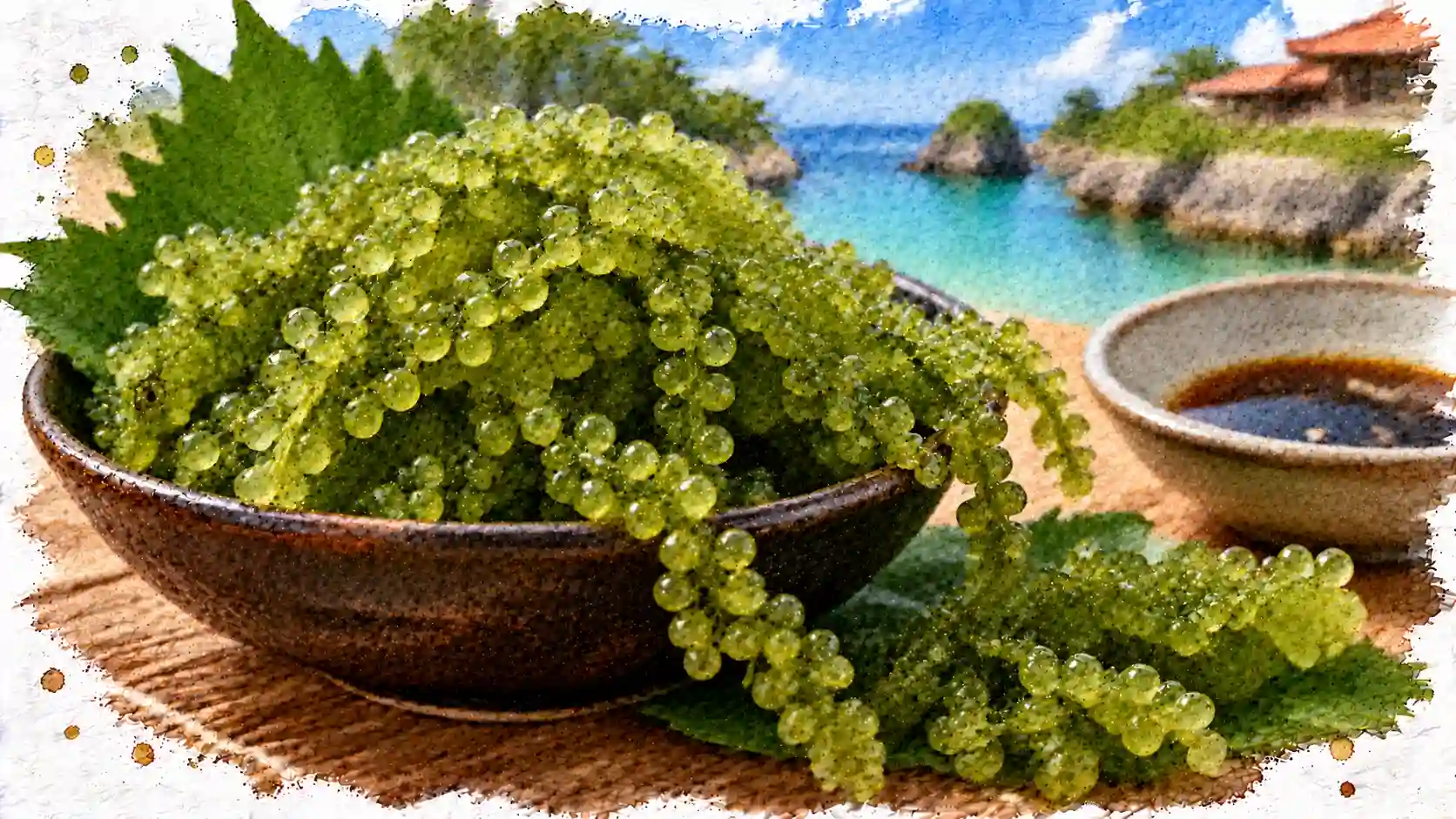
Umibudō, known in English as sea grapes or “green caviar,” is an edible green seaweed famous for its tiny, bead-like bubbles that pop when bitten. Especially associated with Okinawa, Japan, this unusual sea vegetable resembles miniature bunches of grapes growing underwater. Its flavor is fresh, lightly salty, and reminiscent of the ocean, while its delicate beads create a distinctive burst of texture. Usually served fresh with a dipping sauce or alongside seafood, umibudō is a memorable part of Okinawan cuisine that delights adventurous eaters and fans of unusual food textures.
What Is Umibudō?
Umibudō is a type of green marine alga, most commonly identified as Caulerpa lentillifera. Its Japanese name literally means “sea grapes,” referring to the tiny rounded structures that grow along branching stems. These bead-like structures are part of the alga itself and contain fluid that creates their characteristic popping sensation.
The seaweed grows in warm coastal waters and is cultivated in Okinawa and other tropical and subtropical parts of the Asia-Pacific region. Its bright green clusters look like miniature bunches of translucent pearls. When chewed, the beads burst gently in the mouth, releasing a briny flavor with a subtle vegetal freshness.
Umibudō is sometimes called “green caviar” because its bead-like appearance and popping texture resemble fish roe. However, it is a seaweed, not an animal product. Its appeal comes less from a powerful flavor than from the combination of ocean freshness, mild saltiness, and unusual texture.
Quick Facts
Quick Facts
- Food name: Umibudō or sea grapes
- Other name: Green caviar
- Region: Okinawa, Japan, and other parts of tropical Asia
- Scientific name: Caulerpa lentillifera
- Food type: Edible green marine alga
- Appearance: Bright green branching strands covered in tiny round beads
- Flavor: Lightly salty, fresh, and ocean-like
- Texture: Delicate beads that pop when chewed
- Common uses: Fresh salads, seafood bowls, sashimi accompaniments, and dipping dishes
Common Ingredients
Umibudō is usually served simply so its delicate texture remains the main attraction. It pairs well with light sauces and ingredients that complement its natural brininess without overwhelming it.
- Fresh umibudō: The main ingredient, served in loose clusters or small bunches.
- Ponzu sauce: A citrus-seasoned soy-based sauce that adds acidity and savory depth.
- Soy sauce: Provides a salty, savory dipping option when used sparingly.
- Rice vinegar: Adds a clean tang to dressings and dipping sauces.
- Citrus juice: Lime or Japanese citrus can brighten the seaweed’s fresh flavor.
- Sesame seeds: Offer a nutty contrast in salads and side dishes.
- Fresh seafood: Tuna, salmon, and other seafood can accompany sea grapes in rice bowls or sashimi dishes.
- Rice: Serves as a mild base for rice bowls topped with sea grapes and other ingredients.
The best-known preparations are relatively simple. A little ponzu or a light vinegar-based sauce is often enough, allowing the natural saltiness and popping texture to stand out.
How Umibudō Is Prepared
Umibudō is generally eaten fresh rather than cooked. Heating can damage its delicate bead-like structures, so the seaweed is usually cleaned, briefly rinsed if appropriate for the product, and served cool or at room temperature. If it arrives packed in salty liquid, follow the supplier’s directions for draining and rinsing it.
Its texture is sensitive to handling. A long soak in strongly seasoned sauces can cause the beads to lose some of their plumpness, so dipping sauce is commonly served on the side or added just before eating. This helps preserve the little bubbles and their signature pop.
One of the simplest ways to enjoy umibudō is to serve a small cluster with ponzu sauce. The citrusy acidity balances the mild sea flavor, while the beads burst between the teeth. It can also be placed on a seafood rice bowl, served with sashimi, or added to a light salad for a contrast in texture.
Unlike dried seaweed sheets, umibudō is usually sold fresh or in specially prepared packaging. Storage requirements differ by product, and fresh sea grapes are sensitive to low temperatures, which can cause them to shrivel or lose their texture. Follow the package instructions, keep the product within the recommended storage conditions, and consume it promptly after opening.
Because sea grapes are harvested from marine environments or aquaculture systems, they should be purchased from a reputable food supplier and handled hygienically. Fresh seaweed can carry microorganisms from the water in which it was grown. Follow the supplier’s preparation instructions and do not assume that every product is safe to eat straight from its container.
History & Origins
Umibudō is closely associated with Okinawa, the subtropical island chain in southern Japan. Seaweed has long been part of Okinawan food culture, and the region’s warm coastal waters provide suitable conditions for cultivating several kinds of edible marine algae.
Sea grapes became an iconic Okinawan specialty through local cultivation and seafood traditions. Their unusual shape and satisfying texture made them a familiar feature of restaurants and markets, where they are often served as an appetizer or alongside other seafood.
Aquaculture has helped make umibudō more widely available. Rather than relying only on wild collection, producers cultivate the seaweed in suitable coastal ponds and other systems, then harvest and sort the delicate strands for sale. Researchers also study its growth and biology because its grape-like form is unusual among algae.
Although Okinawa remains especially well known for umibudō, Caulerpa lentillifera is also cultivated and consumed elsewhere in tropical Asia and the wider Asia-Pacific region. The seaweed has gained a broader international audience as diners discover regional Japanese foods beyond familiar sushi rolls and dried nori sheets.
Varieties & Differences
Sea grapes sold as umibudō are most commonly associated with Caulerpa lentillifera, but their appearance and eating quality can vary with growing conditions, harvest timing, and handling. They are not divided into widely recognized culinary varieties in the way that apples or grapes are.
- Fresh cultivated sea grapes: Typically bright green, with plump beads and delicate branching strands.
- Wild-harvested sea grapes: May vary in appearance and availability depending on the local marine environment and harvesting practices.
- Salt-packed products: Prepared for transport and storage, often requiring draining and brief rinsing according to the package directions.
- Different bead sizes: The size and density of the bead-like structures can vary, affecting the seaweed’s appearance and texture.
Freshness and handling are often more noticeable than the differences between types. Plump, vivid-green beads generally provide the most satisfying texture, while dried-out or poorly handled sea grapes may look shriveled and feel less crisp.
How Umibudō Is Enjoyed
In Okinawa, umibudō is often served as a simple appetizer with ponzu or another light dipping sauce. Its salty, fresh flavor works well with the acidity of citrus and vinegar. Since the seaweed is delicate, sauces are usually kept light so they do not overwhelm its natural character.
Sea grapes can also be used as a topping for seafood rice bowls. They may be served over rice with fish or other seafood, creating a combination of soft rice, tender seafood, and popping seaweed. They can also accompany sashimi or add texture to salads.
For first-time eaters, the most memorable feature is often the sensation rather than the taste. The tiny beads burst gently when chewed, releasing a mild briny flavor. This is why the seaweed has earned its “green caviar” nickname, even though it is botanically unrelated to fish roe.
When choosing umibudō, look for a reputable seller and follow the storage and preparation instructions supplied with the product. Because the seaweed is delicate and perishable, appropriate handling and prompt consumption help preserve its characteristic texture and reduce food-safety risks.
Did You Know?
Umibudō is an unusual green alga with a body plan that is largely one giant, multinucleate cell rather than a collection of many separate cells. Its branching structure carries tiny bead-shaped portions that give the seaweed its grape-like appearance and distinctive popping sensation. In Okinawa, this unusual texture has helped turn a simple marine vegetable into a celebrated regional specialty.