
Witchetty Grubs
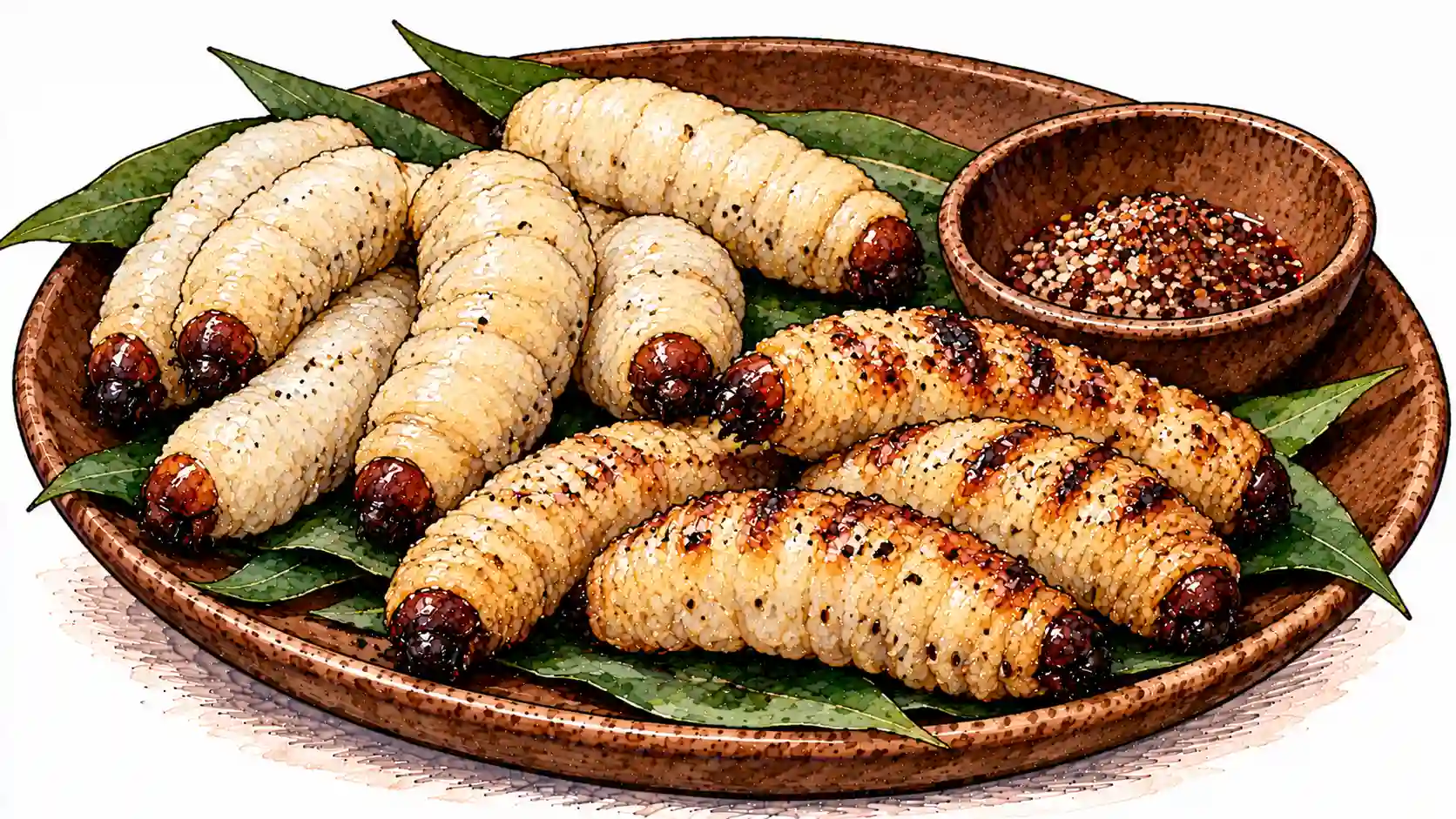
Plump, pale, and deeply rooted in Indigenous food traditions, witchetty grubs are among Australia's best-known native bush foods. These large edible insect larvae have long provided nourishment for Aboriginal peoples, particularly in parts of Central Australia. Traditionally, the grubs are collected from the roots of native plants or from woody material, depending on the species. They may be eaten raw in some traditions or lightly roasted over hot coals until the skin firms while the inside remains soft. Their mild, nutty flavor has made them familiar in discussions of Australian bush food, although their cultural significance extends well beyond their unusual appearance.
What Are Witchetty Grubs?
Witchetty grubs are large, pale insect larvae traditionally gathered as food in parts of Australia. The name is commonly associated with the larva of the cossid wood moth Endoxyla leucomochla, which feeds on the roots of the witchetty bush, Acacia kempeana. However, the term is also used more broadly for other edible wood-boring larvae, including those of certain moths and beetles.
These larvae have thick, cream-colored bodies and can grow several centimeters long. The best-known witchetty grub lives among the woody roots of its host plant, where it feeds on plant tissue and sap. When lightly roasted, its outer skin becomes firmer while the interior remains soft. Its flavor is often described as nutty, rich, or similar to scrambled eggs, although taste and texture vary with the species and preparation.
Quick Facts
- Food Category: Edible insect larvae and traditional bush food
- Origin: Australia, particularly Central Australia
- Main Ingredient: Edible native insect larvae, including certain wood-moth caterpillars
- Common Seasonings: Often eaten plain, without added seasoning
- Typical Flavor: Rich, mild, and often described as nutty or egg-like
- Preparation: Eaten raw in some traditions or lightly roasted over hot coals
- Common Uses: Traditional Indigenous food and contemporary native-food cuisine
Common Ingredients
Traditional witchetty grubs are often eaten with little or no added seasoning. The larvae themselves are the main ingredient, and their natural richness is a central part of the eating experience. Contemporary recipes may introduce additional ingredients, but these are not essential to traditional preparations.
- Witchetty Grubs: The main ingredient, collected from recognized edible species in their natural habitats.
- Hot Coals or Ashes: Traditionally used to roast the grubs, firming the skin while gently cooking the interior.
- Salt: May be added in some contemporary preparations, although it is not necessary for the traditional roasted version.
- Native Ingredients: Modern cooks may pair the grubs with other Australian native foods, depending on the dish.
Preparation differs among communities and species. Some traditional methods focus on eating the grub on its own, allowing its natural flavor and texture to take center stage.
How Witchetty Grubs Are Prepared
Traditionally, witchetty grubs are collected by locating the plants or woody material in which the larvae live. For the best-known species, experienced gatherers look for the witchetty bush and carefully investigate its roots. Other edible larvae may be found in tree trunks, fallen timber, or different host plants. Knowledge of habitats, seasonal availability, and collection techniques has been passed down through generations within Aboriginal communities.
One well-known preparation is roasting the grubs over hot coals or ashes. Light roasting firms the outer skin while leaving the inside soft and rich. The grubs are often eaten soon after cooking, without elaborate seasoning or sauces.
Some Indigenous food traditions also include eating suitable grubs raw. This practice depends on local knowledge and the type of grub being collected; it should not be taken as a general recommendation to eat unidentified wild larvae. Contemporary Australian cooks may also feature edible grubs in dishes that combine native ingredients with modern techniques.
Correct identification is essential because not every pale, plump grub found in the wild is edible. Research has documented a range of insect larvae included under the broad name witchetty grub, and some species may be unsuitable for consumption. Anyone interested in harvesting them should learn from knowledgeable Traditional Owners or other qualified local experts and follow appropriate food-safety practices.
History & Origins
Witchetty grubs are associated with longstanding food traditions among Aboriginal peoples in parts of Australia, particularly in arid and semi-arid regions. Indigenous communities developed detailed knowledge of native plants, insects, and seasonal food sources, making use of resources available on their traditional lands.
Gathering edible larvae formed part of a much broader food system that included seeds, fruits, roots, honey, and other native animals. Knowing where grubs lived, which plants hosted them, and how to collect them reflected an intimate understanding of local ecosystems. In Central Australia, witchetty grubs have been recognized as a valuable source of nourishment.
The name witchetty is strongly associated with the witchetty bush, a native plant whose roots provide habitat for the larvae of Endoxyla leucomochla. The Adnyamathanha people of South Australia's Central Desert have also used the name witjuri for the grub. However, English-language use of “witchetty grub” has broadened over time to include other edible larvae, so the name does not always identify a single species.
Today, witchetty grubs are widely recognized as an iconic Australian bush food. They are discussed in connection with Indigenous food knowledge and contemporary native-food cuisine, but their cultural meaning and use differ among communities. Respectful recognition means acknowledging the Traditional Owners and living knowledge holders whose practices and expertise sustain these food traditions.
Varieties & Differences
The term witchetty grub does not always refer to one particular species. Although the name is most closely associated with the larva of Endoxyla leucomochla, other edible moth and beetle larvae have also been called witchetty grubs. Their appearance, habitat, texture, and flavor can differ.
- Witchetty Moth Larvae: The best-known type is associated with Endoxyla leucomochla and the roots of the witchetty bush.
- Other Wood-Boring Larvae: Certain edible moth and beetle larvae live in tree roots, trunks, or other woody material and may also be called witchetty grubs.
- Roasted Witchetty Grubs: Lightly cooked over hot coals or ashes, developing a firmer exterior and soft interior.
- Raw Witchetty Grubs: Suitable grubs are eaten raw in some traditional practices, guided by knowledge of the species and its preparation.
- Contemporary Bush-Food Preparations: Modern cooks may incorporate edible grubs into dishes featuring other native ingredients.
These distinctions matter because a familiar common name does not guarantee that two larvae belong to the same species. Habitat, identification, local knowledge, and cultural practice all influence which grubs are gathered and how they are prepared.
How Witchetty Grubs Are Enjoyed
Traditionally, witchetty grubs may be eaten as a food in their own right, either freshly collected or lightly roasted, depending on local practice. Their soft interior and rich flavor make them quite different from crunchy insects such as toasted grasshoppers.
Lightly roasted grubs are often eaten directly after cooking, with little additional seasoning. Their flavor is frequently described as nutty or similar to scrambled eggs, although individual experiences and the characteristics of different species vary. The contrast between the firmer skin and soft center is an important part of the eating experience.
Today, witchetty grubs also appear in discussions of native Australian ingredients and contemporary bush-food cuisine. Their international recognition has sometimes turned them into a symbol of adventurous eating, but they are part of living Indigenous food traditions with histories, knowledge, and cultural significance that go far beyond novelty.
Did You Know?
“Witchetty grub” is a common name that can refer to several kinds of edible Australian insect larvae!
The name is most strongly associated with a wood-moth caterpillar that lives among the roots of the witchetty bush, but it has also been applied to other edible wood-boring larvae. This broader usage highlights the diversity of Australia's native insects and the specialized local knowledge used to identify traditional food sources.