
Balut
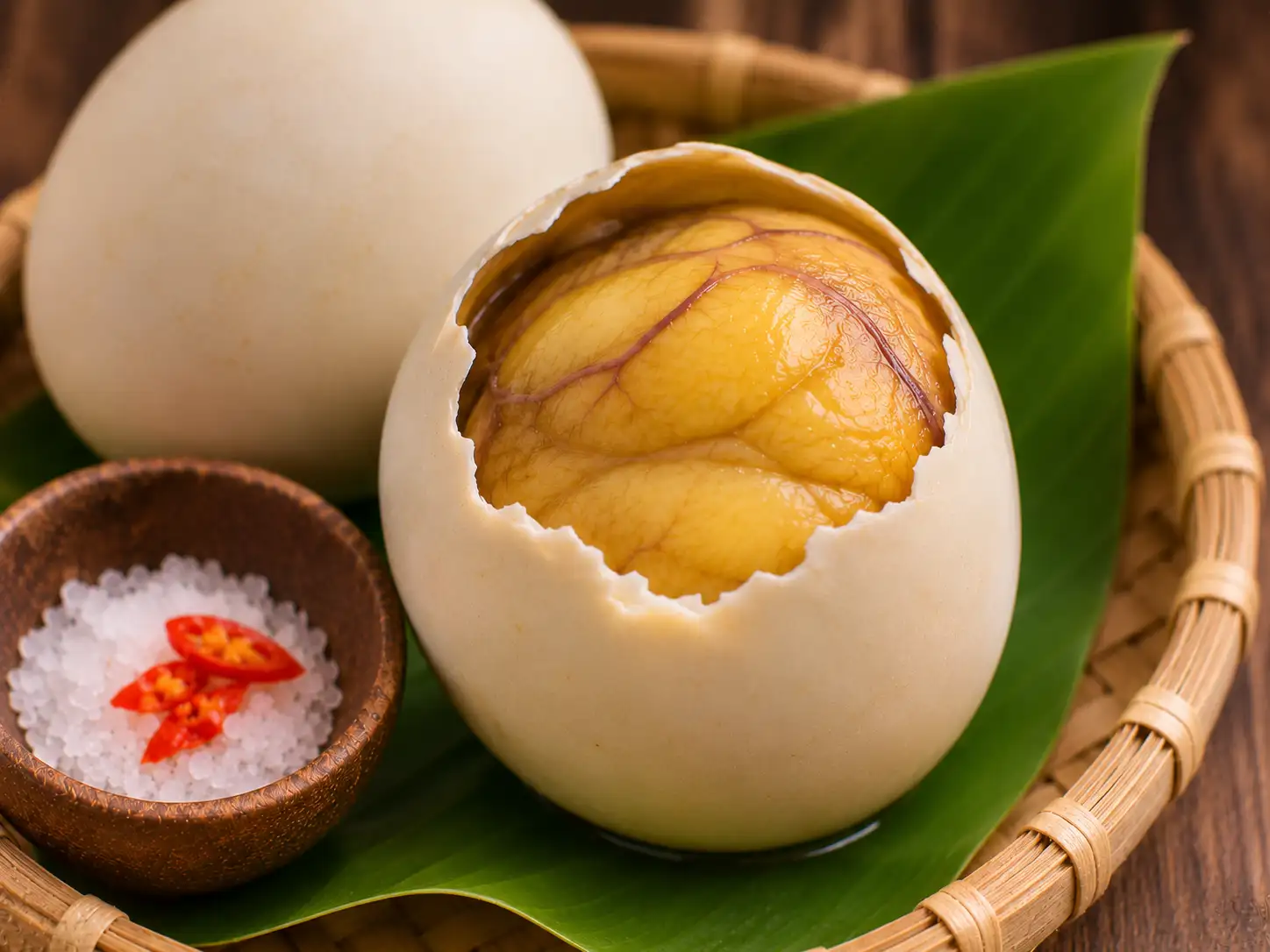
On Philippine streets after sunset, vendors can often be heard calling out a familiar word: “Balut!” Inside the warm eggs they carry is one of the country's most recognizable traditional snacks—a fertilized duck egg containing a developing embryo, boiled or steamed and eaten directly from its shell. Balut combines rich yolk, savory liquid, and tender meat-like textures in a way that differs from an ordinary hard-boiled egg. Far from being simply an unusual food, it is a longstanding part of Filipino street-food culture, duck farming, and everyday social life.
What Is Balut?
Balut is a fertilized duck egg that has been incubated long enough for an embryo to develop before being cooked. The eggs are commonly incubated for approximately 14 to 18 days, although the preferred stage varies among producers and consumers. The degree of development strongly affects the egg's texture and appearance.
Inside a typical balut are several distinct components: a rich yolk, savory liquid, the developing duck embryo, and a firmer portion of albumen. The liquid is often sipped first, followed by the yolk and embryo. Depending on personal preference, the firm white portion may be eaten or left behind.
Balut is especially associated with the Philippines, where it is a familiar street snack. Similar incubated egg dishes are also found in Vietnam, Cambodia, and other parts of Asia, although names, incubation preferences, and serving customs differ.
Quick Facts
Quick Facts
- Country of association: Philippines
- Main ingredient: Fertilized duck egg
- Typical incubation: Approximately 14–18 days
- Cooking method: Boiling or steaming
- Flavor: Rich, savory, and similar to concentrated egg and poultry broth
- Texture: A mixture of soft yolk, liquid, tender tissues, and firmer egg white
- Common seasonings: Salt, vinegar, chili, and garlic
- Serving style: Warm, usually eaten directly from the shell
- Cultural role: Street food, social snack, and traditional duck-egg product
Common Ingredients
Balut is unusual because almost the entire dish develops inside a single egg. Its familiar accompaniments are simple seasonings rather than elaborate sauces.
- Fertilized duck egg: The essential ingredient, commonly produced using domesticated ducks raised for egg production.
- Salt: Frequently sprinkled into the opened shell to enhance the savory flavor.
- Vinegar: Adds acidity that contrasts with the rich yolk and broth.
- Chili peppers: Sometimes mixed into vinegar for a spicy accompaniment.
- Garlic: May be added to seasoned vinegar for extra aroma.
Traditional street-style balut needs little beyond the egg itself. The seasonings are generally added when eating, allowing each person to adjust the balance of saltiness, acidity, and heat.
How Balut Is Prepared
Balut production starts with fertile duck eggs collected from breeding flocks. The eggs are inspected and placed under controlled incubation conditions, where warmth and humidity support embryo development.
Producers periodically examine the eggs using a light, a practice known as candling. This helps identify developing embryos and separate eggs that are infertile or unsuitable for balut production.
After the desired incubation period, the eggs are removed and cooked by boiling or steaming. Cooking stops further embryo development and transforms the egg into the finished food. The yolk becomes rich and set, while a small quantity of savory liquid remains inside the shell.
To eat balut, a diner usually taps the broader end of the egg and removes a small section of shell. After seasoning the opening, the warm liquid can be sipped. The remaining shell is peeled away to reveal the yolk and embryo.
Safe production requires carefully managed incubation, hygienic handling, and adequate cooking. Fertile eggs can carry foodborne pathogens, including Salmonella, so balut should come from reputable producers and be thoroughly cooked. Warm storage without appropriate temperature control can increase food-safety risks.
History & Origins
Balut has a longstanding place in Philippine food culture, although its exact introduction is difficult to establish. Historical accounts frequently connect incubated duck-egg consumption with Chinese culinary influences and migration, but the development of balut as a familiar Filipino street food reflects local production methods and preferences.
Duck raising has been particularly important in areas surrounding Laguna de Bay, where wetlands and agricultural landscapes supported duck farming. Pateros, now part of Metro Manila, became closely associated with the balut industry and remains well known for its duck-egg traditions.
Balut production eventually spread through different parts of the Philippines. Vendors selling warm eggs became a recognizable feature of evening street life, and the snack developed strong associations with casual gatherings and neighborhood food culture.
Academic research has emphasized that balut's Filipino identity comes not only from its ingredients but also from the traditions of producing, selling, sharing, and consuming it. Although related foods exist in other countries, balut has acquired a distinctive social and cultural role in the Philippines.
Varieties & Differences
The most important differences among incubated duck-egg products involve whether an embryo develops and how far incubation progresses.
- Traditional balut: A fertilized egg containing a developing duck embryo, typically cooked after roughly 14–18 days of incubation.
- Younger balut: An egg incubated for a shorter period, with a less-developed embryo and generally softer internal textures.
- More-developed balut: An egg incubated longer, producing more distinct anatomical features and firmer textures.
- Penoy: A related Filipino duck-egg product made from an incubated egg without a developing embryo. Its interior may be creamy or more solid, depending on preparation.
- Balut adobo: A cooked variation in which prepared balut is simmered in a savory sauce, often containing soy sauce, vinegar, garlic, and seasonings.
- Fried balut: A modern preparation in which the cooked egg is peeled, coated, and fried for a crisp exterior.
Balut is also related to Vietnamese trứng vịt lộn, an incubated duck-egg dish commonly accompanied by herbs and other seasonings. The underlying food is similar, but local serving traditions are different.
How Balut Is Enjoyed
Balut is commonly eaten warm as a snack, particularly in the evening. Street vendors may carry baskets or insulated containers filled with cooked eggs, keeping them warm for customers.
Eating balut is a hands-on experience. The shell serves as a natural container, and the different internal components are enjoyed in stages. Some people prefer a generous pinch of salt, while others add vinegar flavored with chili or garlic.
The taste is often more familiar than its appearance might suggest. The yolk is rich and creamy, the liquid is savory, and the embryo contributes a poultry-like flavor. Texture changes noticeably according to incubation age, which is one reason buyers may have particular preferences.
Balut can also appear in restaurant dishes and contemporary Filipino cooking, including sauced, battered, or fried preparations. Nevertheless, the simple warm egg sold by a street vendor remains its most recognizable form.
For many Filipinos, balut is an ordinary part of local food culture rather than a novelty. Discussions of the dish sometimes focus heavily on the embryo's appearance, but its broader significance includes family businesses, duck farming, neighborhood vendors, and shared food traditions.
Did You Know?
Balut and penoy can come from the same duck-egg production process, but they are not identical foods. Balut contains a developing embryo, while penoy is an incubated egg in which no embryo has developed. The distinction is usually identified during inspection of the eggs.
A Filipino Food Tradition Beyond First Impressions
Balut brings together a rich combination of flavor, texture, and cultural history. Its preparation depends on carefully managed duck-egg incubation, while its popularity is sustained by street vendors, producers, and generations of Filipino consumers. Whether enjoyed with a little salt or spicy vinegar, balut remains an important expression of Philippine food culture—one whose story reaches well beyond what is found inside the shell.