
Bird's-Nest Soup
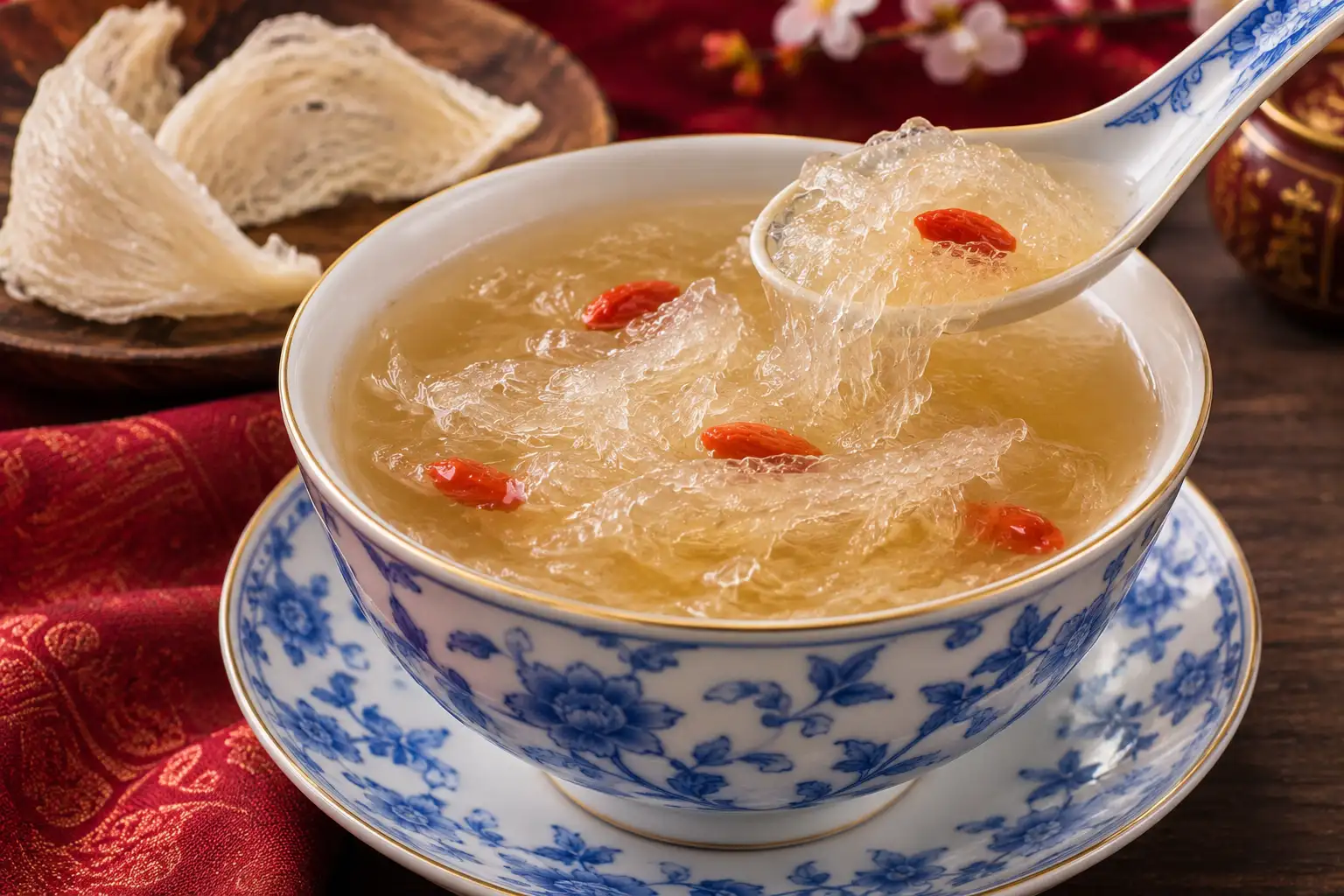
Delicate, translucent, and traditionally associated with luxury, bird's-nest soup is one of the most unusual specialties in Chinese cuisine. Its defining ingredient is not an ordinary bird's nest made from twigs or grass, but the hardened saliva of certain swiftlets that build their nests along cave walls and inside specially designed buildings. When cleaned and gently cooked, the edible nests soften into fine, silky strands with a subtle flavor. Prized for centuries in Chinese food culture, bird's-nest soup remains associated with hospitality, special occasions, and traditional ideas about nourishment, while its production raises important questions about authenticity, food safety, and wildlife conservation.
What Is Bird's-Nest Soup?
Bird's-nest soup is a Chinese delicacy made from edible nests constructed by certain swiftlet species. In Chinese, edible bird's nest is commonly called yànwō (燕窝), while the prepared soup is often known as yànwō tāng (燕窝汤).
The nests are formed primarily from saliva secreted by the birds during nest construction. The secretion hardens into thin, interconnected strands that create a small, cup-shaped structure attached to a surface.
One of the principal species involved is the edible-nest swiftlet (Aerodramus fuciphagus), native to Southeast Asia. Other swiftlet species, including the black-nest swiftlet (Aerodramus maximus), also produce nests used in the edible-bird's-nest trade.
Although bird's-nest soup is closely associated with Chinese cuisine, many of the nests sold commercially originate in Southeast Asian countries such as Indonesia, Malaysia, Thailand, and Vietnam.
After preparation, the nest strands develop a soft, slippery, slightly gelatinous texture. Their natural flavor is mild, allowing them to be used in both sweet and savory dishes.
Quick Facts
Quick Facts
- Culinary tradition: China and Chinese communities across Asia
- Main ingredient: Cleaned, edible swiftlet nests
- Chinese name: Yànwō (燕窝)
- Principal species: Edible-nest swiftlet (Aerodramus fuciphagus)
- Major production regions: Indonesia, Malaysia, Thailand, and Vietnam
- Appearance: Pale, translucent strands in a clear or lightly colored liquid
- Flavor: Delicate, mild, and relatively neutral
- Texture: Silky, soft, and slightly gelatinous
- Typical preparation: Gentle simmering or double-boiling
- Cultural role: Luxury dining, gifting, and traditional nourishing foods
Common Ingredients
Bird's-nest soup is usually prepared with only a few ingredients. The nest itself supplies most of the distinctive texture, while the surrounding liquid determines whether the dish is sweet or savory.
- Edible swiftlet nests: The defining ingredient, made primarily from hardened salivary secretions and carefully cleaned before cooking.
- Water: Used to rehydrate the dried nests and form the base of the soup.
- Rock sugar: A common ingredient in sweet preparations, providing gentle sweetness without overpowering the nest's delicate character.
- Red dates: Dried jujubes are sometimes added for their mild sweetness and fragrance.
- Goji berries: An optional addition that contributes color and subtle sweetness.
- Chicken broth: Used in certain savory versions, particularly those associated with banquet cooking.
- Ginger: Sometimes included for a light aromatic note.
Traditional preparations generally avoid heavy seasoning. The appeal of edible bird's nest lies in its unusual texture, scarcity, and cultural associations rather than an intense flavor of its own.
How Bird's-Nest Soup Is Prepared
Edible bird's nests are usually sold in dried form. Before they can be cooked, they must be inspected and cleaned to remove feathers, dirt, and other unwanted material.
Commercial processing may involve soaking, careful manual cleaning, sorting, drying, and quality inspection. Because the nests are delicate and can contain contaminants, proper processing is an important part of production.
For the finished soup, cleaned nest strands are rehydrated in water until they soften and expand. They are then gently heated, often using a method called double-boiling, in which a covered container is warmed indirectly in a surrounding water bath.
This technique helps maintain a gentle temperature and preserves the delicate strands. In a sweet preparation, rock sugar may be added to create a lightly sweetened dessert soup. Savory versions can use a clear broth instead.
When ready, the nest has a soft, silky texture that can be lifted with a spoon. It does not become a thick pudding in the same way as gelatin or starch-based desserts; the individual strands remain an important part of the eating experience.
Food safety requires particular attention. Improperly processed nests may contain microorganisms, excessive nitrites, allergens, or other contaminants. Consumers should purchase properly cleaned and tested products from reputable suppliers and follow the manufacturer's rehydration and cooking instructions.
History & Origins
Edible bird's nest has been valued in Chinese cuisine for centuries. Historical accounts connect it with wealthy households, banquets, and traditional Chinese medicinal practices.
Some modern histories trace its consumption to the Tang dynasty, while documentary evidence becomes more substantial in later Chinese sources, including writings from the Ming and Qing periods. Its exact earliest use is difficult to establish with certainty.
By the Qing dynasty, edible bird's nest had become a highly prized luxury ingredient. It appeared in culinary and medicinal writings and was associated with refinement, wealth, and the ability to obtain rare imported foods.
Much of the supply came from Southeast Asia, where swiftlets nested in coastal caves and other suitable environments. Collecting nests became part of regional trade networks connecting island communities with Chinese merchants and consumers.
The ingredient's reputation also became linked with traditional beliefs about vitality, skin health, and recovery from illness. These associations remain culturally significant, although modern clinical research has not established many of the specific health benefits attributed to edible bird's nest.
Today, bird's-nest soup continues to be enjoyed in Chinese households, restaurants, and specialty dessert shops. Commercial nest production has also expanded through the development of purpose-built swiftlet houses in Southeast Asia.
Varieties & Differences
Edible bird's nests vary in appearance, composition, source, and preparation. Some distinctions relate to the swiftlet species, while others involve processing and serving styles.
- White bird's nest: A pale nest commonly associated with the edible-nest swiftlet, widely used for soups and sweet desserts.
- Black bird's nest: A nest containing more feathers and other incorporated material, requiring careful cleaning before consumption.
- Red bird's nest: A reddish or orange-colored product sometimes marketed as blood bird's nest. Its color is not reliably explained by bird blood and may involve chemical reactions or environmental conditions.
- Rock-sugar bird's-nest soup: A classic sweet preparation combining cleaned nests with water and rock sugar.
- Savory bird's-nest soup: A preparation using clear chicken or other suitable broth, often associated with banquet-style cuisine.
- Ready-to-drink bird's nest: Commercially packaged beverages containing processed nest strands, sweeteners, and water.
Bird's-nest soup should not be confused with ordinary soup containing chicken or other poultry. Nor is it made from the twigs, moss, or leaves found in most bird nests. Its defining material is the hardened saliva of particular swiftlet species.
How Bird's-Nest Soup Is Enjoyed
Bird's-nest soup is traditionally served in relatively small portions, often in a porcelain bowl. Sweet versions may be enjoyed warm or chilled, depending on the recipe and occasion.
The flavor is gentle, especially when the soup contains only water and rock sugar. The nest strands contribute a slight slipperiness and a delicate chew, creating a texture unlike ordinary broth.
In Chinese food culture, edible bird's nest has often been given as a prestigious gift or served to guests on important occasions. Prepared bird's-nest desserts are also available commercially, allowing the ingredient to be enjoyed outside formal banquet settings.
Its reputation as a nourishing delicacy has contributed to its high market value. Scientific studies have identified proteins, glycoproteins, and other compounds in edible bird's nest, but laboratory findings do not prove that eating the soup improves skin condition, boosts immunity, or treats disease in humans.
Allergic reactions to edible bird's nest have also been reported, including serious reactions. People with a known bird's-nest allergy should avoid it, and anyone experiencing symptoms such as breathing difficulty or swelling after consumption should seek urgent medical attention.
Conservation & Responsible Sourcing
The demand for edible swiftlet nests has created both economic opportunities and conservation challenges across Southeast Asia.
Traditional cave harvesting can disturb breeding birds if nests are removed at unsuitable times. Scientific studies have documented cases in which heavy or poorly timed collection reduced reproductive success or placed pressure on local swiftlet populations.
In response to commercial demand, purpose-built swiftlet houses have become widespread in countries such as Indonesia and Malaysia. These buildings encourage free-flying swiftlets to nest in managed environments.
However, a nest harvested from a swiftlet house is not automatically guaranteed to be sustainable or ethically collected. Harvest timing, bird disturbance, local environmental impacts, legal compliance, and production standards all matter.
Consumers should look for products from traceable suppliers that can document their source, processing standards, and compliance with relevant wildlife regulations. Authenticity is also important because high prices can encourage mislabeling, adulteration, or the sale of poorly processed products.
Did You Know?
The edible nests used in bird's-nest soup are produced mainly from a swiftlet's own saliva. During nest building, the bird secretes a protein-rich substance that hardens into delicate strands. When the cleaned nest is soaked and cooked, those strands soften into the silky texture prized in the finished soup.
A Chinese Delicacy with a Southeast Asian Connection
Bird's-nest soup brings together centuries of Chinese culinary tradition and the natural history of Southeast Asian swiftlets. Its mild flavor and delicate, translucent texture distinguish it from familiar soups, while its high value reflects a long history of luxury dining and cultural symbolism. Today, appreciating this unusual food also means understanding the importance of authentic products, careful processing, responsible harvesting, and realistic expectations about its nutritional benefits. The story of bird's-nest soup is not just about a rare ingredient, but about the intricate connections between food, wildlife, trade, and tradition.